
Published Date 16th March, 2026
Australia’s eCommerce industry has undergone a remarkable transformation over the last decade, emerging as one of the most digitally advanced retail markets in the Asia-Pacific region. With widespread internet access, a tech-savvy population, and increasing consumer preference for online shopping, Australia has created the perfect environment for online marketplaces to thrive. Consumers increasingly prefer platforms where they can explore products from multiple sellers in one place, making marketplaces a dominant force in Australia’s digital commerce landscape.
What makes online marketplaces so appealing is the convenience and variety they offer. Instead of visiting multiple online stores, customers can browse thousands of products on a single platform, compare prices, read reviews, and complete purchases within minutes. This seamless shopping experience has significantly reshaped how Australians discover and buy products online, encouraging both established brands and independent sellers to join marketplace platforms.
According to industry estimates, Australia’s eCommerce market is expected to reach $3.26 biilion by 2030, growing at a CAGR of 23.9% from 2024 to 2030. As this marketplace-driven economy continues to grow, many entrepreneurs and businesses are exploring the opportunities to build their own eCommerce marketplace platforms in various niches, from fashion and electronics to digital products and services. With the help of modern eCommerce marketplace software, launching a scalable marketplace has become significantly easier than it was just a few years ago.
In this blog, we will explore some of the most profitable online marketplaces in Australia, understand how their business models work, and examine how a readymade solution like Yo!Kart helps entrepreneurs looking to build successful digital platforms.
Table of Contents
- What is an Online Marketplace?
- How Online Marketplaces Work?
- Most Profitable Online Marketplaces in Australia
- Top Online Marketplaces in Australia: Quick Overview
- Benefits of Building an Online Marketplace in 2026
- How Yo!Kart Can Help Build an Online Marketplace
- Top Marketplaces Powered by Yo!Kart
- Conclusion
What is an Online Marketplace?
An online marketplace is a digital platform where multiple independent sellers offer their products or services to customers through a single website or mobile application. Instead of buying from just one retailer, customers can browse offerings from many different sellers in one place, making it easier to compare options, prices, and product features.
Unlike traditional online stores that sell their own inventory, marketplaces primarily act as intermediaries connecting buyers and sellers. The platform owner provides the technology and infrastructure that allow sellers to create product listings, manage orders, process payments, and communicate with customers.
In return for facilitating these transactions, the platform earns revenue through commissions on sales, subscription plans, advertising services, and other monetization strategies.
Some of the most well-known examples of global marketplaces include:
- Amazon
- eBay
- Alibaba
- Etsy
These platforms connect millions of buyers and sellers worldwide, creating thriving digital ecosystems that support businesses of all sizes.
How Online Marketplaces Work?
Although each platform may operate slightly differently, most online marketplaces follow a similar process:
1. Seller registration: Vendors sign up on the platform, create accounts, and list their products or services.
2. Product listing and catalog creation: Sellers upload product information such as descriptions, pricing, images, and inventory information.
3. Customer browsing and purchasing: Buyers explore the platform, search for products, compare prices, and place orders through the marketplace.
4. Payment processing: The marketplace handles the payment transaction and later distributes funds to sellers after deducting its commission.
5. Order fulfillment: Sellers ship the purchased products to customers or deliver the service as agreed.
6. Customer feedback and reviews: Buyers leave ratings and reviews, which help maintain trust and transparency within the marketplace ecosystem.
Because the marketplace owner doesn’t usually hold inventory, this business model can scale rapidly while reducing operational complexity and financial risk.
Build a Platform That Connects Buyers and Sellers Seamlessly
Most Profitable Online Marketplaces in Australia
Australia hosts several successful marketplace platforms that generate billions of dollars in annual revenue. These marketplaces operate across a wide range of industries such as retail, fashion, digital goods, and peer-to-peer trading. Their success highlights how powerful the marketplace model can be when supported by strong technology, efficient logistics, and a large network of buyers and sellers.
Below are some of the most profitable online marketplaces in Australia, along with insights into their business models and revenue streams. Let’s have a look at them:
1. Amazon Australia
Amazon is currently the largest and most influential online marketplace operating in Australia. Although the company launched its Australian marketplace in 2017, it quickly became one of the most dominant players in the country’s eCommerce ecosystem.
Amazon’s success in Australia is largely due to its powerful logistics infrastructure, global seller network, and strong customer trust, which helped it gain the trust of millions of Australian customers.
a. Business Model
Amazon operates a hybrid model that includes:
- First-party retail, where Amazon sells products directly to customers
- Third-party marketplace seller offering products through the platform
- Subscription services like Amazon Prime
The majority of products sold on Amazon now come from independent sellers using its marketplace platform.
b. Revenue Streams
Amazon generates revenue through multiple channels, including:
- Seller commissions on product sales
- Fulfillment services (FBA: Fulfillment by Amazon)
- Advertising and sponsored product listings
- Subscription services like Prime
- Cloud services through AWS
Amazon’s Australian operations generate billions in annual sales, making it one of the most profitable online marketplaces in the region.
2. eBay Australia
eBay is one of the earliest online marketplaces to establish a strong presence in Australia. The platform entered the Australian market in 1999 and quickly became a popular destination for both individual sellers and businesses.
Even today, eBay remains one of the most widely used marketplaces in Australia, with millions of active users buying and selling products across a wide variety of categories.
a. Business Model
eBay primarily operates as a consumer-to-consumer (C2C) and business-to-consumer (B2C) marketplace.
The platform allows sellers to list products through:
- Auction-style listings
- Fixed-price listings
This flexible selling format played a key role in eBay’s early success and continues to attract sellers looking for different selling strategies.
b. Revenue Streams
eBay earns revenue through several sources, including:
- Listing fees
- Final value fees on completed sales
- Advertising services such as promoted listings
- Subscription plans for professional sellers
eBay continues to generate billions of dollars in marketplace sales globally.
Suggested Read: How Does eBay Make Money?
3. Etsy
Etsy is a globally recognized marketplace specializing in handmade goods, vintage items, and craft supplies. The platform has gained significant popularity among Australian artisans and small businesses looking to sell unique products online.
Unlike large retail marketplaces, Etsy specializes in creative and personalized products that cannot easily be found in traditional retail stores.
a. Business Model
Etsy connects independent creators and small businesses directly with buyers who are looking for personalized or handcrafted products. The platform’s niche positioning helps it maintain a strong and loyal community of buyers and sellers.
b. Revenue Streams
Etsy generates revenue through various channels, including:
- Listing fees for product listings
- Transaction commissions
- Payment processing fees
- Advertising services such as Etsy Ads
By focusing on creative and niche products, Etsy has become one of the most profitable niche marketplaces globally.
4. Temple & Webster Marketplace
Temple & Webster is one of Australia’s leading online marketplaces specializing in furniture, home decor, and lifestyle products. Founded in 2011, the platform has grown rapidly and now partners with hundreds of suppliers and brands offering a wide range of home-related products.
The marketplace has become a popular destination for Australian consumers looking for stylish and affordable furniture, decor items, lighting, and home accessories.
a. Business Model
Temple & Webster operates as a multi-vendor marketplace that connects suppliers, brands, and manufacturers with customers through a single online platform.
The platform allows vendors to list their products while Temple & Webster manages the customer experience, marketing, and platform operations.
b. Revenue Streams
Temple & Webster generates revenue through:
- Commissions on marketplace sales
- Product sales through supplier partnerships
- Promotional placements and advertising
- Logistics and fulfillment support services
With a strong focus on home and lifestyle categories, Temple & Webster has established itself as one of Australia’s fastest-growing online furniture marketplaces.
5. The Iconic
The Iconic is one of Australia’s leading online fashion marketplaces, offering a wide selection of fashion, beauty, sportswear, and lifestyle products. The platform partners with hundreds of global and local brands, making it a popular destination for fashion shoppers across Australia.
Known for its strong brand partnership and curated product offerings, The Iconic delivers a premium online shopping experience.
a. Business Model
The Iconic operates through a combination of:
- Direct retail sales
- Brand partnerships
- Marketplace sellers
This hybrid approach enables the company to maintain high-quality product offerings while expanding its range through partner brands and sellers.
b. Revenue Streams
The platform generates revenue through:
- Product sales
- Brand partnerships
- Advertising placements
- Promotional campaigns
The Iconic has grown into one of Australia’s most recognized eCommerce platforms.
Build a Multi-Vendor Marketplace Inspired by Industry Giants
6. Big W Market
Big W Market is an Australian marketplace focused primarily on home and lifestyle products. The platform became popular among consumers looking for furniture, home decor, and appliances at competitive prices.
By concentrating on home-related categories, Big W Market has carved out a strong niche within Australia’s eCommerce landscape.
a. Business Model
The platform operates as a pure marketplace platform, meaning it does not hold inventory. Instead, it connects independent sellers with customers.
This asset-light model allows Big W Market to expand its product catalog without managing warehouses or inventory.
b. Revenue Streams
Big W Market earns revenue through:
- Commissions on sales
- Seller subscription plans
- Advertising services
This structure enables the platform to scale efficiently while maintaining a large and diverse product offering.
7. Kogan Marketplace
Kogan.com is one of Australia’s most recognized online retailers and marketplace platforms. The company began its operations as an electronics retailer but later expanded its marketplace to include third-party sellers offering a wide range of products.
Today, Kogan offers a wide variety of product categories, including electronics, home goods, appliances, and everyday essentials.
a. Business Model
Kogan operates on a hybrid model combining:
- Private-label product sales
- Third-party marketplace sellers
Subscription programsThis combination allows the company to diversify its product offerings while maintaining strong control over its brand.
b. Revenue Streams
The company generates revenue through:
- Marketplace commissions
- Product sales
- Advertising services
- Subscription programs like Kogan First
Through this diversified model, Kogan has built a strong presence in Australia’s online retail and marketplace industry.
8. Gumtree
Gumtree is one of Australia’s most popular classifieds marketplaces, designed primarily for local peer-to-peer transactions. Unlike traditional retail marketplaces, Gumtree focuses on connecting buyers and sellers within specific geographic areas, making it easy for users to buy, sell, or trade items locally.
- On the platform, users can buy and sell items such as cars, furniture, electronics, and services. Because many transactions take place locally, Gumtree has become a popular platform for second-hand goods and community-based buying and selling.
a. Business Model
Gumtree operates as a local classifieds marketplace connecting buyers and sellers within specific geographic regions. The platform allows individuals and businesses to post listings and interact directly with potential buyers.
b. Revenue Streams
The platform earns revenue through:
- Paid listings
- Business advertising
- Premium account features
9. Redbubble
Redbubble is an Australian print-on-demand marketplace that allows artists to sell custom designs on products such as clothing, posters, and accessories. The platform has built a strong global community of creators who use Redbubble to monetize their designs.
a. Business Model
Artists upload digital designs to the platform, and Redbubble handles printing, shipping, and customer service. This allows creators to focus on designing while the platform manages the operational aspects.
b. Revenue Streams
Redbubble generates income through:
- Product sales
- Artist commissions
- Platform margins
This model allows creators to monetize their artwork globally without needing to manage manufacturing or logistics.
10. Envato Market
Envato is one of the world’s largest marketplaces for digital assets, serving designers, developers, marketers, and creative professionals. Through the Envato Market platform, creators can sell digital products that help businesses build websites, create media content, and develop software.
The marketplace offers a wide range of digital products, including website themes and templates, stock images and graphics, video templates, music tracks and sound effects, software scripts and plugins.
a. Business Model
Envato operates as a digital goods marketplace connecting creators with customers worldwide. Designers and developers upload their digital assets to the platform, and customers can purchase licenses to use them in their projects.
b. Revenue Streams
The company generates revenue through:
- Sales commissions
- Subscription services
- Licensing fees
By building a strong ecosystem for creative professionals, Envato has become one of the most successful digital asset marketplaces globally.
Top Online Marketplaces in Australia: Quick Overview
| Marketplace | Category | Business Model | Primary Revenue Streams |
| Amazon Australia | General retail marketplace | Hybrid model: first-party retail + third-party sellers | Seller commissions, fulfillment services (FBA), advertising, subscriptions (Prime), AWS |
| eBay Australia | General eCommerce marketplace | C2C and B2C marketplace | Listing fees, final value fees, promoted listings, seller subscriptions |
| Etsy | Handmade, vintage, and craft products | Niche multi-vendor marketplace for creators | Listing fees, transaction commissions, payment processing fees, and Etsy Ads |
| Temple & Webster | Furniture and home décor | Multi-vendor marketplace connecting suppliers and brands with buyers | Sales commissions, supplier partnerships, and advertising placements |
| Big W Market | Home and lifestyle products | Pure marketplace (asset-light, no inventory) | Sales commissions, seller subscriptions, and advertising services |
| Kogan Marketplace | Electronics and general retail | Hybrid model: private-label sales + marketplace sellers + subscription services | Product sales, marketplace commissions, advertising, subscription programs |
| Gumtree | Local classifieds marketplace | Peer-to-peer classifieds platform | Paid listings, business advertising, and premium seller accounts |
| Redbubble | Print-on-demand products | Artist marketplace with platform-managed production | Product sales, artist commissions, platform margins |
| Envato Market | Digital assets marketplace | Creator marketplace for digital products | Sales commissions, subscriptions (Envato Elements), licensing fees |
As these examples show, the marketplace model offers significant opportunities for growth and innovation. However, launching a scalable platform requires the right tools and infrastructure.
Benefits of Building an Online Marketplace in 2026
Launching an eCommerce marketplace has become one of the most attractive digital business opportunities. As eCommerce continues to grow globally, entrepreneurs are increasingly adopting the marketplace model because it allows them to scale faster, reduce operational complexity, and generate revenue from multiple sources.
Here are several reasons why entrepreneurs are investing in marketplace platforms:
1. Asset-Light Business Model
One of the biggest advantages of the marketplace model is that it does not require the platform owner to manage inventory or warehouses. Instead, sellers handle product inventory, packaging, and fulfillment, while the marketplace focuses on operations, marketing, and growth. This significantly reduces upfront costs and operational complexity compared to traditional eCommerce businesses.
2. Multiple Revenue Streams
Online marketplaces can generate revenue through various channels, which helps create a more stable and profitable business model. Common revenue sources include:
- Commissions on transactions
- Seller subscriptions
- Listing fees
- Advertising services
- Payment processing fees
This diversified income model improves profitability, maintains consistent growth, and long-term sustainability.
3. Network Effects
Marketplaces benefit from powerful network effects. As more sellers join the platform, product variety increases, giving customers more choices. This attracts more buyers, which encourages even more sellers to join the platform. Over time, this cycle strengthens the marketplace and increases its overall value.
4. Scalability
Once the platform infrastructure is established, marketplaces can scale rapidly. A single platform can support thousands of sellers, millions of product listings, and global customers. This ability to grow without proprotionally increasing operational costs makes marketplaces highly attractive to investors and entrepreneurs alike.
5. Growing eCommerce Adoption
Online shopping continues to grow across Australia and globally. Consumers increasingly prefer digital platforms that offer convenience, variety, and competitive pricing. This trend makes marketplaces one of the most promising and sustainable online business models.
How Yo!Kart Can Help Build an Online Marketplace
Building an online marketplace from scratch can be both complex and expensive. It typically requires significant development resources, robust security infrastructure, payment gateway integrations, vendor management systems, and many other technical components. For many businesses, developing all of this in-house can take months or even years.
This is where Yo!Kart comes in and simplifies the process.
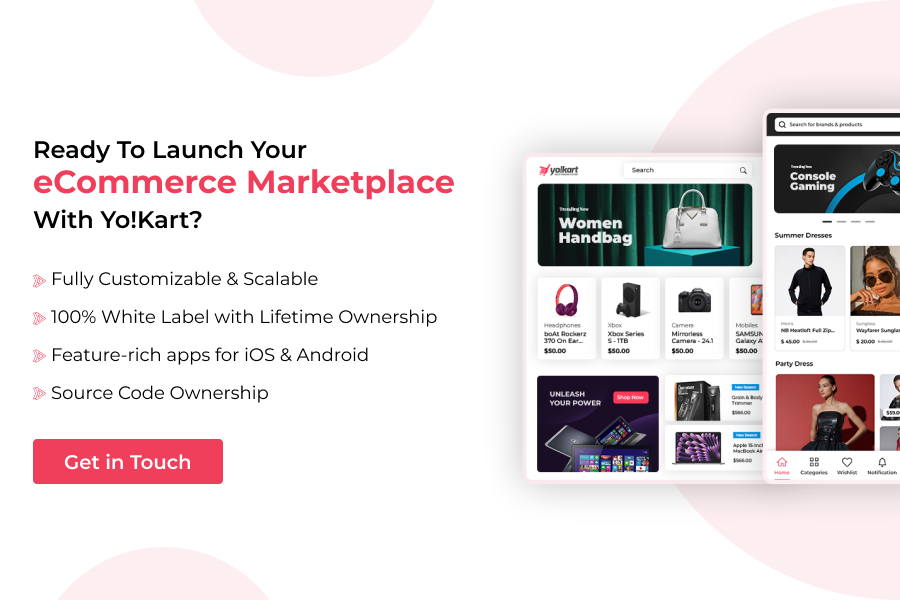
Yo!Kart is a powerful eCommerce marketplace software designed specifically for launching multi-vendor marketplaces. Instead of starting from scratch, businesses can use Yo!Kart’s readymade framework to quickly set up a fully functional marketplace and focus on growing their platform.
The software provides all the essential tools required to build, manage, and scale a marketplace efficiently.
Key Features of Yo!Kart
Yo!Kart offers a wide range of features designed to support marketplace operations, such as:
- Multi-vendor management system
- Product catalog management
- Secure payment gateways
- Shipping and logistics integrations
- Advanced analytics and reporting
- Marketing and promotional tools
With these capabilities, businesses can launch a fully functional marketplace without building the technology from scratch.
Benefits of Using Yo!Kart
1. Faster Marketplace Launch
Yo!Kart provides a ready-to-deploy solution that significantly reduces development time, allowing businesses to launch their marketplace quickly.
2. Scalable Architecture
The solution is designed to support high traffic volumes and large product catalogs, making it suitable for growing marketplaces.
3. Customizable Platform
Businesses can customize the marketplace according to their brand identity, design preferences, and business requirements.
4. Built-In Vendor Management
Yo!Kart includes comprehensive tools for managing vendors, product listings, commissions, and payouts from a centralized dashboard.
5. Secure and Reliable
Yo!Kart is built with advanced security features to ensure safe transactions, data protection, and reliable marketplace operations.
Book a Personalized Yo!Kart Demo
Top Marketplaces Powered by Yo!Kart
Several successful marketplaces around the world have been built using Yo!Kart technology. From travel experiences and digital asset platforms to niche retail marketplaces, these platforms demonstrate how flexible and scalable the solution can be for entrepreneurs worldwide.
Some examples include:
1. Voyij
Voyij is a travel and experiences marketplace based in Alaska that connects travelers with local tour operators and activity providers. The platform allows users to book tours, explore local experiences, and purchase products from local businesses through a single digital marketplace.
2. Myntist
Myntist is an Australia-based digital marketplace designed as a modern ecosystem for creators and users to trade physical products and digital assets. The platform supports both crypto and fiat payments, enabling users to monetize their skills, digital content, and collectibles.
3. 4GoodVibes
4GoodVibes is a niche marketplace focused on handmade, unique, and custom products. The platform connects buyers with independent sellers offering creative and personalized items, demonstrating how specialized marketplaces can thrive by targeting a passionate community of users.
4. NPK Marketplace
NPK Marketplace focuses on sustainable agriculture by connecting farmers and suppliers with buyers looking for organic soil nutrition and sustainable fertilizer solutions. The platform supports environmentally responsible trade while helping agricultural businesses access reliable suppliers online.
These platforms demonstrate how businesses across industries are leveraging marketplace technology to build scalable platforms that connect buyers and sellers while creating new digital commerce opportunities.
Conclusion
Australia’s digital commerce ecosystem continues to grow at a rapid pace, driven by increasing internet penetration, mobile adoption, and changing consumer behavior. As more people prefer the conveinece of online shopping, marketplaces have become a central part of the country’s eCommerce landscape.
Leading platforms such as Amazon, eBay, and Etsy have demonstrated how profitable online marketplaces can be when built on strong technology and scalable business models.
For entrepreneurs and businesses looking to enter the eCommerce space, launching a marketplace offers significant opportunities for growth and revenue generation. With the right strategy and the support of reliable eCommerce marketplace software like Yo!Kart, businesses can create successful platforms that connect buyers and sellers across the globe.
Want to Build a Marketplace Platform for the Australian Market
Get In TouchPopular Posts