
Etsy is one of the world’s most successful niche-focused eCommerce marketplaces, built exclusively for handmade, vintage, and creative goods. Founded in 2005, it has reshaped how independent artisans, small businesses, and creators sell their products online. Rather than competing with large retail giants, Etsy carved out a unique identity by empowering sellers who value creativity, craftsmanship, and personalization.
Etsy hosts millions of active sellers and buyers worldwide, with billions of dollars in annual gross merchandise sales. The platform thrives on community-driven commerce, where buyers look for unique, meaningful products rather than mass-produced items. This powerful positioning has inspired numerous entrepreneurs to build an eCommerce website like Etsy and replicate its marketplace success within their own niche.
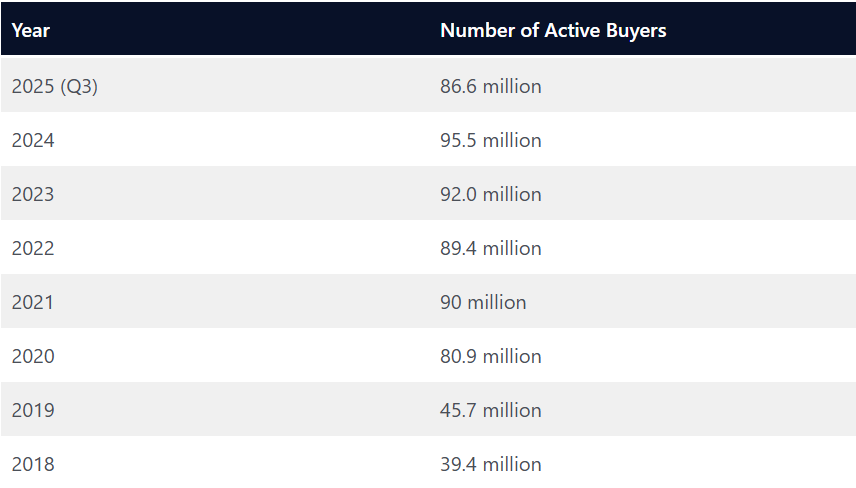
Source: Etsy Investor Relations
If you are an entrepreneur planning to build a website like Etsy, this comprehensive guide will walk you through everything you need to know, from understanding Etsy’s business model to choosing the right eCommerce website builder, estimating development costs, and launching a scalable eCommerce marketplace in 2026.
Table of Contents
Why Build a Website like Etsy?
Building a multi-vendor marketplace like Etsy presents a compelling opportunity for both startups and established enterprises alike. As consumer behaviour shifts toward personalization and community-driven commerce, Etsy-style platforms are proving to be highly sustainable and profitable. Here’s why this model continues to attract entrepreneurs:
1. Growing Demand for Niche Marketplaces
Modern consumers prefer curated platforms tailored to their interests and values. Whether it’s handmade crafts, digital products, or sustainable goods, niche marketplaces build trust, engagement, and loyalty faster than generic eCommerce stores.
2. Scalable Business Model
Unlike traditional eCommerce stores, where you manage inventory, a marketplace allows third-party sellers to list and manage products. This makes it easier to scale without increasing operational complexity.
3. Multiple Revenue Streams
Marketplaces like Etsy generate income through various streams, including listing fees, transaction commissions, advertising, subscriptions, and value-added services. These diversified revenue models create stable and predictable income as the platform grows.
4. Seller-Driven Growth
Sellers actively promote their own stores, indirectly bringing traffic to your marketplace. This built-in marketing effect fuels organic growth and significantly reduces marketing and acquisition costs.
5. Long-Term Brand Value
Over time, a successful marketplace evolves into a trusted digital ecosystem. As your platform gains authority and community trust, its overall valuation and business potential increase.
For entrepreneurs looking to build an eCommerce website, an Etsy-like marketplace offers a proven path to scalability, recurring revenue, and lasting brand quality.
Suggested Read: Guide to Create an Online Marketplace like Etsy
Etsy Business Model: How Does It Work?
Etsy operates as a two-sided marketplace that connects independent sellers with buyers looking for unique, handmade, or vintage products. Unlike traditional eCommerce stores, Etsy does not own or manage inventory. Instead, it focuses on facilitating transactions, reducing operational risk while fostering community engagement. This model allows Etsy to scale globally while maintaining a personalized and trustworthy shopping experience.
Further, let’s have a look at the workflow of Etsy:
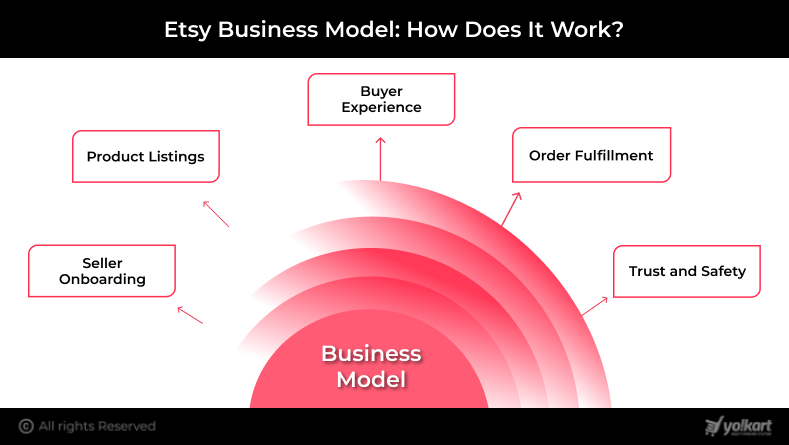
1. Seller Onboarding
Sellers can register, set up a personalized storefront, list products, and manage orders with minimal technical effort. Built-in tools for inventory management, shipping, and customer communication simplify operations, encouraging more sellers to join and expand the product catalog.
2. Product Listings
Sellers pay a small fee to list each product for a fixed period. Each listing includes product images, descriptions, pricing, and shipping details. This ability to add variations or customizable options allows sellers to offer unique products while generating revenue for Etsy.
3. Buyer Experience
Buyers can browse categories, search with filters, view recommendations, add products to the cart, and complete secure checkout. Moreover, reviews and ratings guide purchases and build confidence in sellers’ reliability.
4. Order Fulfillment
Sellers handle packaging and shipping, while Etsy facilitates payment processing and order notifications. By staying out of logistics, Etsy keeps operational costs low and remains focused on improving the marketplace experience.
5. Trust and Safety
Etsy maintains a secure marketplace through verified reviews, performance metrics, secure payments, and structured dispute resolution. These measures ensure both sellers and buyers feel confident using the platform.
In essence, Etsy’s business model works by empowering sellers, enhancing buyer experience, and generating revenue through listing fees, transaction commissions, and advertising. It serves as a proven blueprint for anyone looking to build an eCommerce website like Etsy.
Build a Buyer and Seller Friendly Marketplace Model
How Etsy Is Different from Its Competitors
While platforms like Amazon Handmade, eBay, and Shopify provide options for selling products online, Etsy stands out because of its unique approach to marketplace commerce. Its differentiation goes beyond product categories and lies in the experience it creates for both buyers and sellers. Understanding these differences is essential if you want to build a website like Etsy that appeals to a niche audience and fosters long-term loyalty.
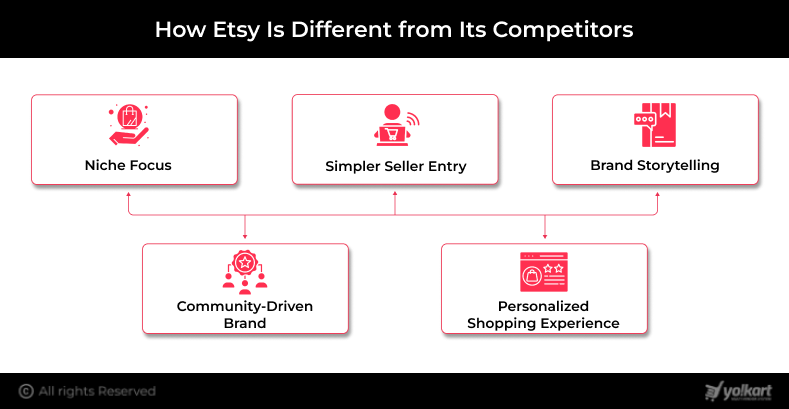
1. Niche Focus
Etsy is purpose-built for handmade, vintage, and creative items. Unlike broad marketplaces that cater to everything from electronics to apparel, Etsy offers a carefully curated shopping experience. This specialization helps buyers discover truly unique items and allows sellers to reach customers who specifically value originality and craftsmanship.
2. Community-Driven Brand
Etsy has positioned itself as a community of creators rather than a traditional marketplace. This community-driven approach fosters emotional connections between buyers and sellers. It allows customers to support independent artisans and small businesses, which enhances loyalty and engagement in ways mass-market platforms struggle to replicate.
3. Simpler Seller Entry
Etsy offers a low barrier to entry, making the platform accessible for small sellers and independent artisans. Sellers dealing with creative products can quickly create a shop, list products, and start selling without complex logistics or advanced technical knowledge. This simplicity encourages diverse participation and keeps the marketplace vibrant.
4. Personalized Shopping Experience
Etsy emphasizes uniqueness and personalization. Its product recommendations are shaped by buyers’ interests, past behavior, and trending items. This approach contrasts with competitors that often promote bestsellers or mass-market items, making Etsy feel more curated and tailored for individual shoppers.
5. Brand Storytelling
Etsy encourages sellers to share their stories, processes, and inspiration behind their products. This approach not only enhances the perceived value of products but also builds trust between buyers and sellers. The personal connection created through storytelling is a key factor that differentiates Etsy from larger, impersonal marketplaces.
Etsy’s success is driven by a combination of niche focus, community engagement, ease of seller participation, personalized shopping, and authentic storytelling. Hence, any entrepreneur aiming to build a website like Etsy must incorporate these elements to create a marketplace that resonates with both sellers and buyers and stands out in a crowded eCommerce landscape.
How Does Etsy Make Money?
Etsy makes money through a mix of small but steady revenue streams that add up across millions of transactions. It includes:
- Listing Fees: Sellers pay a flat $0.20 each time they list a product for sale.
- Transaction Fees: Etsy takes 6.5% of the sale price whenever an item is sold.
- Payment Processing Fees: It charges extra for handling payments, which vary depending on the seller’s region.
| Region / Country | Payment Processing Fee (Etsy Payments) |
| United States (USA) | 3% + $0.25 USD per order |
| United Kingdom (UK) | 4% + £0.20 GBP per order |
| Canada | 3% + $0.25 CAD (domestic or US orders) |
| Australia | 3% + $0.25 AUD (domestic orders) |
| South Africa | 4.5% + R8 ZAR per order |
| New Zealand | 3% + $0.30 NZD per order (domestic) |
- Advertising Revenue: Sellers can pay for Etsy Ads to boost their product visibility in search results.
- Subscription Services: Etsy Plus offers premium shop features for a monthly fee.
- Currency Conversion Fees: Applied when buyers and sellers transact in different currencies.
Together, these streams allow Etsy to stay profitable while keeping costs low enough for small businesses and independent creators to participate. Moreover, when you build an eCommerce website like Etsy, adopting multiple revenue streams ensures sustainability and profitability.
Suggested Read: How Does Etsy Make Money?
Steps to Build an eCommerce Website like Etsy
Building an eCommerce marketplace like Etsy goes far beyond developing a website. It involves creating a balanced digital ecosystem that connects sellers and buyers effectively while providing value for both. To achieve this, you need a clear plan, from market research and feature definition to development and promotion. Below is a detailed step-by-step guide to help you build a scalable Etsy-like marketplace:
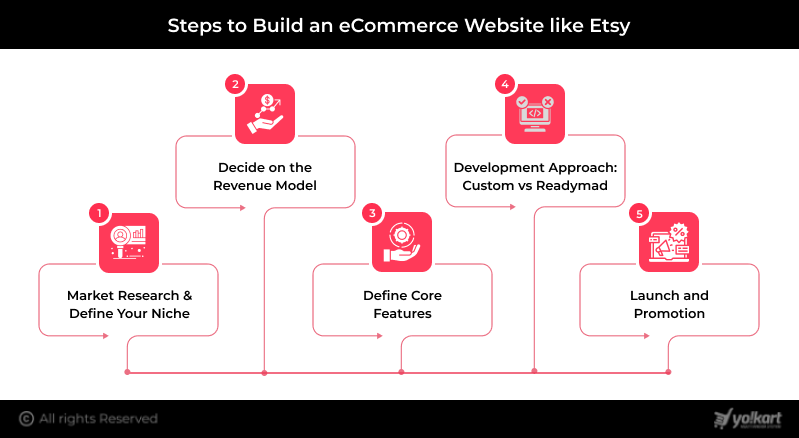
Step 1: Conduct Market Research and Define Your Niche
Market research lays the foundation of a successful eCommerce venture. Before you invest your time and resources into development, it is crucial to understand your audience, competitors, and market trends.
Key activities include:
- Identifying Your Niche and Target Audience: Decide the type of products your marketplace will focus on, such as handmade crafts, vintage goods, digital products, or another niche. Other than that, knowing your audience’s preferences, location, and purchasing behavior will guide your feature and marketing decisions.
- Analyzing Competitors and Market Gaps: Study existing platforms like Etsy, Amazon Handmade, and other niche marketplaces. Identify what they do well and where users experience friction. These gaps often reveal opportunities for differentiation.
- Understanding Buyer Behavior and Pricing Trends: Research how buyers make purchasing decisions in your niche, their preferred pricing ranges, and the factors influencing trust and loyalty.
- Validating Seller Demand: A marketplace cannot succeed without sellers. Conduct surveys or interviews with potential sellers to understand their challenges, expectations, and willingness to join your platform.
This research ensures that your platform is designed with real users in mind and prevents you from building features or workflows that your audience may not value.
Step 2: Decide on the Revenue Model
Choosing the right revenue model is critical for sustaining your marketplace. Etsy uses multiple revenue streams, and you should consider similar options depending on your niche and seller base.
Common revenue models include:
- Commission per Transaction: Charge a percentage of each sale, which scales as your marketplace grows.
- Seller Subscription Plans: Offer premium seller packages that include advanced tools, analytics, or promotional benefits.
- Featured Listings and Advertisements: Provide paid opportunities for sellers to increase visibility.
- Service Fees: Apply fees for payment processing, shipping support, or promotional services.
Your monetization strategy should balance profitability with affordability to ensure sellers are incentivized to join and remain active.
Step 3: Define Core Features
The next step is to define the features that will make your platform functional, attractive, and competitive. A well-structured feature list ensures smooth operations and sets clear expectations for development.
Seller Features
- Seller Registration & Dashboard: Sellers need a simple, intuitive dashboard to manage products, orders, earnings, and performance analytics, helping them make informed business decisions.
- Product Management: Allow sellers to easily add and update listings, upload multiple images, define variations, set pricing, and manage categories.
- Order & Shipping Management: Centralized tools for order tracking, shipping updates, returns, and notifications simplify seller workflows and improve fulfillment efficiency.
- Seller Reviews & Ratings: Reviews and ratings build trust, reward quality sellers, and help buyers make confident purchasing decisions.
Buyer Features
- User Registration & Profiles: Allows buyers to save preferences, manage orders, and track activity.
- Advanced Search & Filters: Powerful search and filtering options help users quickly find relevant products, improving engagement and conversions.
- Wishlist & Cart: Wishlists encourage return visits, while carts streamline the checkout journey.
- Secure Checkout & Multiple Payment Options: Integrate trusted payment gateways, digital wallets, and multiple currencies for convenience and trust.
- Order Tracking & Reviews: Buyers can monitor shipments and leave feedback to guide future customers.
Admin Features
- Vendor Management: Admins can onboard, monitor, and manage sellers efficiently.
- Commission & Revenue Settings: Configure platform fees, transaction commissions, and subscription plans.
- Content Moderation: Ensure quality listings by approving products, handling disputes, and monitoring reviews.
- Analytics & Reporting: Gain actionable insights into revenue, user behavior, seller performance, and growth trends.
Defining these features early ensures your development aligns with business goals and reduces costly rework later.
Launch a Feature-Packed Nice-Focused Marketplace
Step 4: Development Approach: Custom vs Readymade
The development approach you select will determine your platform’s cost, timeline, flexibility, and long-term scalability. Generally, two approaches are popular among entrepreneurs, it includes:
- Custom Development
Custom development involves building your marketplace from scratch according to your unique specifications.
- Advantages:
- Complete flexibility in design, features, and workflows.
- Ability to create a highly differentiated marketplace tailored to your vision.
- Full control over performance, security, and integrations.
- Challenges:
- Higher development costs, often ranging from $50,000 to $120,000, depending on complexity.
- Longer timeline for design, development, and testing.
- Requires ongoing maintenance and dedicated technical expertise.
Custom development is suitable for large enterprises or businesses with highly unique requirements that cannot be met by existing solutions.
- Readymade eCommerce Website Builder
Readymade solutions are pre-built platforms that provide most marketplace features.
- Advantages:
- Faster time-to-market, often ready within weeks instead of months.
- Lower upfront investment, with predictable subscription or licensing costs.
- Proven features and scalability without the need to build everything from scratch.
- Challenges:
- Limited customization compared to fully custom solutions, though most platforms offer flexible modules.
For startups and SMEs to enterprise-grade level marketplaces, using a readymade eCommerce website builder is often the most cost-effective and practical approach to build a website like Etsy.
Step 5: Launch and Promotion
Launching your marketplace is just the beginning. Success depends on how well you attract sellers, engage buyers, and build long-term momentum.
Key steps include:
- Launch MVP Version: Start with an MVP (Minimum Viable Product) that includes essential features, then gradually add advanced functionalities.
- Onboard Initial Sellers: Recruit early sellers to create a diverse product catalog, which attracts buyers and builds trust.
- Invest in Marketing: Leverage SEO, content marketing, social media, and paid advertising to drive traffic.
- Community Building: Encourage engagement through newsletters, social media groups, and loyalty programs to foster a sense of belonging among sellers and buyers.
A strategic launch combined with ongoing promotion ensures that your marketplace gains traction quickly and establishes credibility in its niche.
Cost to Build an eCommerce Website like Etsy.
The cost of building a marketplace like Etsy depends on various factors, including the development approach, team location, and feature complexity. Given below is a breakdown of the main options:
1. Custom Development Costs
Custom development involves building the marketplace from the ground up, giving you full control over design, features, and functionality. Therefore, this approach is ideal for enterprises or businesses with a large budget and a long-term vision.
Cost Breakdown:
- UI/UX Design: $5,000 – $15,000
Creating a user-friendly, visually appealing interface that enhances the buyer and seller experience.
- Frontend & Backend Development: $30,000 – $80,000
Developing core marketplace features, dashboards, search, and order management systems.
- Payment Integration & Security: $5,000 – $10,000
Ensuring secure, reliable payment processing and protecting user data.
- Testing & Deployment: $3,000 – $7,000
Conducting quality assurance, bug fixes, and launching a stable platform.
Total Estimated Custom Cost: $50,000 – $120,000+
Thus, custom development is best suited for businesses that need a highly unique platform with complete flexibility and are ready to invest a fortune in building the marketplace.
2. Hiring Developers Region-Wise
The cost of hiring a development team varies depending on location. Popular options include:
- North America: $80-150/hour
- Europe: $50-100/hour
- Asia: $20-50/hour
Choosing developers in lower-cost regions can significantly reduce expenses, though it may require careful management to ensure quality and timely delivery.
3. Readymade Solution Costs
Readymade eCommerce website builders provide a faster, cost-effective way to launch a marketplace like Etsy. They come with pre-built features, ready-to-use templates, and support for multi-vendor setups.
Benefits:
- One-time license or subscription costs
- Lower development and maintenance expenses
- Faster deployment, allowing you to launch quickly
Estimated Cost: $1,000 – $10,000, depending on features and scale
For startups and small businesses, readymade solutions offer the best balance between cost, speed, and functionality.
Recommendation: Best Approach for Businesses
For most startups and growing businesses, the best approach to build an eCommerce website like Etsy is to use a readymade solution. It is cost-effective, saves months of development time, reduces technical risk, and allows you to focus on seller acquisition and marketing instead of infrastructure.
Yo!Kart: Best eCommerce Website Builder in 2026
Yo!Kart is a leading multivendor eCommerce platform specifically built to help businesses build marketplaces like Etsy. Designed with scalability, performance, and ease of use in mind, it provides all the essential features needed to run a scalable, secure, and user-friendly online marketplace, making it an ideal choice for startups and SMEs looking to enter the eCommerce space quickly and efficiently.
By combining a ready-to-launch architecture with deep customization capabilities, Yo!Kart allows marketplace owners to focus on seller acquisition, buyer engagement, and growth instead of technical challenges.
Why Yo!Kart?
- Quick Deployment: Yo!Kart allows you to launch your marketplace within a few days, enabling you to enter the market faster and start onboarding sellers and buyers immediately.
- Customizable Features: The solution is flexible, allowing businesses to tailor features, designs, and workflows according to their target niche or industry.
- Scalability: Yo!Kart can handle millions of users and transactions simultaneously, ensuring your marketplace can grow without performance issues.
- One-Time Cost Model: Unlike subscription-based platforms, Yo!Kart offers a one-time license fee, which helps reduce long-term costs and makes budgeting easier for small and medium businesses.
Other Benefits of Yo!Kart
Yo!Kart comes with a wide range of built-in features designed to streamline operations for sellers, enhance the buyer experience, and simplify administration:
- Robust Seller Dashboards: Sellers can easily manage products, track orders, view earnings, and access analytics to optimize their sales performance.
- Secure Payment Integrations: Yo!Kart comes integrated with trusted payment gateways, supporting multiple payment options and ensuring smooth, secure transactions.
- SEO-Friendly Architecture: The software is designed to rank well in search engines, helping your marketplace attract organic traffic without heavy marketing spend.
- Multilingual and Multicurrency Support: Ideal for global marketplaces, enabling buyers and sellers to transact in their preferred language and currency.
- Mobile-Ready Design: With responsive design and mobile-first features, buyers can browse, shop, and checkout seamlessly on any device.
Get a Personalized Yo!Kart Demo
Yo!Kart Clients
Yo!Kart has powered a diverse range of successful marketplaces, demonstrating its versatility across industries:
- UNI Diamonds: A B2B diamond trading platform connecting buyers and sellers globally. The platform streamlines sourcing, pricing, and secure transactions while improving transparency, efficiency, and trust across the diamond supply chain.
- 4GoodVibes: 4GoodVibes is a handmade and custom products marketplace inspired by the Etsy business model. The platform empowers independent artisans and creators to sell personalized, creative items while offering buyers a curated shopping experience focused on originality and craftsmanship.
- Voyij: Alaska-based tours and experiences marketplace that helps travelers discover, book, and manage unique local experiences. The platform brings together tour operators and travelers, simplifying bookings, improving visibility for vendors, and delivering seamless travel planning experiences.
- Tajer: Tajer is a retail-focused online marketplace in Qatar that connects local sellers with digital-first consumers. It supports regional businesses by providing a centralized platform for product discovery, secure transactions, and efficient order management, helping accelerate local eCommerce adoption.
- Customize Your Truck LLC: Customize Your Truck LLC is a specialized online marketplace for aftermarket truck parts and accessories. It offers a wide product catalog, intuitive search, and a tailored shopping experience designed specifically for truck owners and automotive enthusiasts.
Explore marketplaces built using Yo!Kart
These examples highlight how Yo!Kart can cater to various industries, from B2B to retail to niche handmade products, proving its adaptability and reliability for businesses aiming to build an eCommerce website like Etsy.
Conclusion
Building a successful marketplace like Etsy requires strategic planning, a clear niche, the right features, and a scalable development approach. Whether you choose custom development or a readymade eCommerce website builder, your goal should be to deliver value to both buyers and sellers.
However, for businesses looking to build an eCommerce website like Etsy in 2026, readymade solutions such as Yo!Kart offers the perfect balance of cost, speed, and functionality. With the right execution, marketing strategy, and seller onboarding plan, your Etsy-like marketplace can become a thriving digital ecosystem with long-term growth potential.
Ready to Bring Your Etsy-Inspired Marketplace Vision to Life?
Get In TouchPopular Posts