

Back To Home

White-Label Marketplace Software: A Complete Guide for Building Scalable eCommerce Platforms
1404
Views
Published Date 28th January 2026
Online marketplaces have transformed the way people buy and sell products. From global giants like Amazon to niche platforms serving specific industries, marketplaces offer scalability, convenience, and strong revenue potential. As consumer preferences increasingly shift toward platforms that offer variety, competitive pricing, and seamless experiences, the marketplace business model continues to gain momentum.
However, building an eCommerce marketplace from scratch is often complex, time-consuming, and expensive. It requires careful planning, robust technology, and ongoing maintenance, which can slow down market entry and increase risk. This challenge has led many businesses to explore faster and more reliable alternatives.
White-label marketplace software has emerged as a practical solution. It enables entrepreneurs, startups, and enterprises to launch fully functional eCommerce marketplaces under their own brand, without starting from zero. Additionally, these solutions provide a ready foundation that can be customized and scaled based on business needs.
In this guide, you will explore what white-label marketplace software is, why businesses are investing in it, key features to look for, and how it helps organizations build scalable and future-ready eCommerce platforms.
Table of Contents
- What is White-Label Marketplace Software?
- Why Invest in Marketplace Software?
- Top eCommerce Marketplace Platforms Examples
- Why Startups Should Choose White-Label Marketplace Software Over Custom Solutions
- Quick Comparison: White-Label vs Custom Development
- Features to Look for in eCommerce Marketplace Platform Software
- How to Create an eCommerce Marketplace Platform with White-Label Software
- Top 5 White-Label Solutions for Building an eCommerce Marketplace
- Why Choose Yo!Kart?
- Case Studies: Marketplaces Successfully Launched Using Yo!Kart
- Conclusion
- FAQs
What is White-Label Marketplace Software?
White-label marketplace software is a pre-built eCommerce solution that allows businesses to launch an online marketplace under their own brand identity. Instead of developing the platform from the ground up, companies use ready-made software that already includes essential marketplace features and functionalities such as vendor management, product listings, order processing, and payments.
The term white-label means the software enables businesses to customize the platform’s design, domain, user experience, and operational workflows so it appears as a completely original product to end users. This way, organizations can focus on branding, customer acquisition, and growth rather than core development.
Unlike basic website builders or rigid SaaS tools, white-label marketplace software typically offers:
- Customizable source code access
- High levels of customization
- Scalable architecture to support business growth
- Freedom to define monetization models such as commissions, subscriptions, or listing fees
As a result, white-label marketplace software is widely used by startups, SMEs, and enterprises looking to build multi-vendor eCommerce platforms efficiently while maintaining long-term flexibility and control.
Why Invest in Marketplace Software?
Marketplace software enables businesses to adopt a proven digital business model that prioritizes scalability, efficiency, and long-term growth. As online buying behavior continues to evolve, customers increasingly prefer platforms that offer multiple sellers, wider product choices, competitive pricing, and convenience. Marketplace ecosystems are designed to meet these expectations while allowing businesses to grow without the limitations of traditional eCommerce models.
Key reasons businesses invest in marketplace software include:
- Lower operational risk, as sellers handle inventory, fulfillment, and logistics, allowing platforms to scale without added overhead or complexity.
- Multiple revenue streams through commissions, subscriptions, featured listings, advertising, and value-added services, creating a more stable and profitable business model.
- Built-in scalability that supports adding new vendors, categories, and regions without rebuilding or disrupting the platform.
- Greater operational efficiency through automated vendor onboarding, order management, and payments, reducing manual effort.
- Faster time-to-market with a proven foundation, allowing businesses to focus on user acquisition, experience, and growth rather than development.
Suggested Read: Ecommerce Marketplace Development: Complete Guide
Top eCommerce Marketplace Platforms Examples
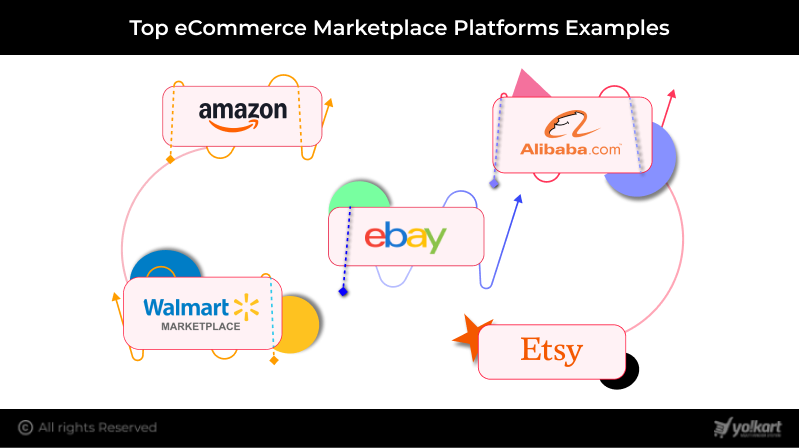
Some of the world’s most successful digital businesses are built on the marketplace model. These platforms demonstrate how connecting multiple sellers with a large customer base can drive scale, trust, and sustained long-term revenue. While each operates in a different segment, they share a common foundation, robust marketplace technology and well-defined operational processes.
1. Amazon
It is the most prominent example of a multi-vendor eCommerce marketplace. By allowing third-party sellers to list products alongside its own inventory, Amazon has created an ecosystem that offers unmatched product variety, competitive pricing, and fast fulfillment. Further, its marketplace-first approach is a key driver of its global dominance.
2. eBay
eBay pioneered the peer-to-peer marketplace model that continues to thrive by supporting both individual sellers and businesses. Its flexible selling formats, including auctions and fixed-price listings, highlight how marketplaces can cater to diverse seller and buyer needs.
3. Etsy
Etsy showcases the power of niche marketplaces. By focusing on handmade, vintage, and creative products, it has built a strong community-driven platform where sellers benefit from targeted audiences and a high level of brand trust.
4. Alibaba
The platform demonstrates how marketplaces can scale in the B2B segment. By connecting manufacturers, wholesalers, and global buyers, Alibaba enables large-volume transactions while simplifying global trade and procurement.
5. Walmart Marketplace
Walmart Marketplace reflects how established retail brands can leverage the marketplace model to expand product offerings without increasing inventory. By onboarding third-party sellers, Walmart enhances customer choice while maintaining quality standards and brand trust.
These platforms illustrate that marketplace success is not limited to one industry or business size. Whether B2C, C2C, or B2B, the marketplace model, when supported by the right technology, can be adapted to serve a wide range of business goals and market opportunities.
Suggested Read: Top 50 Multi-Vendor eCommerce Marketplaces Worldwide in 2026
Start Building a Marketplace Inspired by Industry Giants
Why Startups Should Choose White-Label Marketplace Software Over Custom Solutions
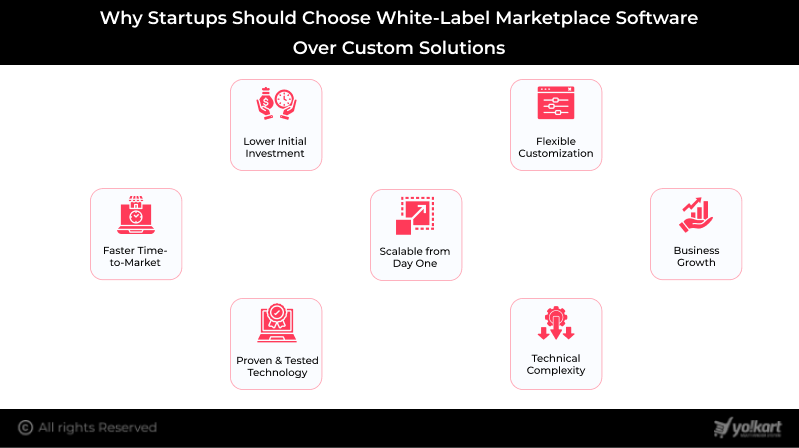
For startups, launching fast and managing costs are critical. White-label marketplace software offers a practical alternative to custom development by removing many early-stage barriers and helping founders launch faster with less risk. Here’s why it often makes more sense for startups:
1. Faster Time-to-Market
Launch a fully functional marketplace in weeks instead of spending months on planning, development, and testing. This allows startups to validate ideas quickly and capture early users quickly.
2. Lower Initial Investment
Custom development typically involves high upfront costs and ongoing engineering expenses. White-label software provides a predictable, one-time investment, helping startups manage budget and reduce financial risk.
3. Proven & Tested Technology
White-label platforms are built on frameworks already tested across multiple real-world use cases, reducing bugs, minimizing performance issues, unexpected bugs, and security vulnerabilities.
4. Scalable from Day One
Start small and scale as demand grows. Easily add vendors, categories, regions, and new revenue models without rebuilding the platform.
5. Flexible Customization
Unlike rigid SaaS-based tools, white-label solutions allow branding, feature, and workflow customization while retaining a stable and reliable core system.
6. Reduced Technical Complexity
Startups can avoid managing large development teams and infrastructure, freeing up time and resources for marketing and customer acquisition.
7. Focus on Business Growth
With the technology taken care of, founders can concentrate on partnerships, user experience, monetization strategies, and market expansion.
For startups entering competitive markets, white-label marketplace software delivers the right balance of speed, flexibility, and cost-efficiency, making it a smarter and more sustainable choice than custom development.
Quick Comparison: White-Label vs Custom Development
Choosing between white-label marketplace software and custom development is a critical decision that directly affects cost, launch speed, and long-term scalability. The table below highlights the key differences to help businesses make an informed choice:
| Criteria | White-Label Marketplace Software | Custom Marketplace Development |
| Time to Launch | Ready to deploy within weeks | Typically takes 6-12+ months |
| Upfront Cost | Fixed and predictable | High and often unpredictable |
| Development Risk | Low: proven and tested solution | High: architecture and features built from scratch |
| Customization | High within a stable framework | Unlimited, but time-intensive |
| Scalability | Built-in scalability | Depends on initial architecture |
| Maintenance | Vendor-supported updates & fixes | Requires ongoing in-house team |
| Security & Stability | Pre-tested with real-world use cases | Needs extensive testing and audits |
| Technical Expertise Needed | Minimal internal tech dependency | Strong technical team required |
| Focus Area | Business growth & user acquisition | Development & infrastructure management |
Features to Look for in eCommerce Marketplace Platform Software
Choosing the right eCommerce marketplace platform software plays a crucial role in the success and scalability of your marketplace. A reliable white-label solution should support smooth operations for admins, vendors, and customers alike. Below are the essential features to look for:
1. Multi-Vendor Management
A strong marketplace software should make it easy to onboard, approve, and manage multiple sellers from a centralized admin panel. Dedicated vendor dashboards allow sellers to manage products, track orders, and monitor earnings independently, reducing administrative overhead.
2. Flexible Commission & Monetization Models
The solution should support multiple monetization strategies, including commissions, subscriptions, or hybrid models. Flexible configurations at the vendor, category, or product level help businesses experiment with pricing strategies and optimize revenue as the marketplace evolves.
3. Product & Catalog Management
Efficient product and catalog management enables vendors to list products easily, upload items in bulk, and control inventory accurately. Support for multiple product types, variants, and attributes ensures flexibility across diverse categories and seller requirements.
4. Order, Shipping & Tax Management
A reliable system centralizes order tracking for admins, vendors, and buyers. Integration with multiple shipping providers and tax configurations ensures smooth fulfillment, accurate calculations, and a consistent checkout experience across regions and seller types.
5. Secure & Multiple Payment Gateways
The software should support popular local and global payment gateways to serve diverse markets. Secure payment processing with automated vendor payouts builds trust, ensures compliance, and simplifies financial operations for both marketplace owners and sellers.
6. Vendor Onboarding & Verification
Streamlined vendor onboarding workflows help marketplaces scale faster while maintaining quality standards. Built-in verification features such as document uploads, KYC checks, and compliance management ensure trust, authenticity, and regulatory alignment from the start.
7. User-Friendly Admin Dashboard
A centralized admin dashboard gives marketplace owners full visibility and control over vendors, users, transactions, and content. Real-time reporting and performance insights support informed decision-making and proactive marketplace management.
8. Analytics & Reporting Tools
Comprehensive analytics tools provide insights into sales, commissions, vendor performance, and customer behavior. These data-driven reports help businesses identify trends, optimize operations, and refine strategies to increase engagement and revenue.
9. Customization & Branding Capabilities
White-label marketplace software should offer full control over branding, UI, and UX. The ability to customize workflows and platform behavior ensures the marketplace aligns with specific business goals and delivers a distinct brand experience.
10. SEO & Marketing Readiness
SEO-friendly URLs, meta tags, and schema support help improve search visibility from day one. Built-in marketing tools such as discounts, coupons, and promotions support user acquisition, engagement, and conversion efforts.
11. Mobile Responsiveness
- A mobile-responsive design ensures a smooth user experience across smartphones, tablets, and desktops. Supporting mobile-first shopping behavior is essential for increasing reach, engagement, and conversions in today’s mobile-driven marketplace landscape.
12. Scalability & Performance
The solution must be capable of handling growing traffic, expanding vendor networks, and increasing transaction volumes. An optimized architecture ensures fast load times, platform stability, and consistent performance as the marketplace scales.
13. Third-Party Integrations & APIs
Easy integration with CRM, ERP, analytics, and marketing tools extends marketplace functionality. Open APIs allow businesses to add new features, automate processes, and adapt the platform as requirements evolve.
Power Your Marketplace With the Right Features
How to Create an eCommerce Marketplace Platform with White-Label Software
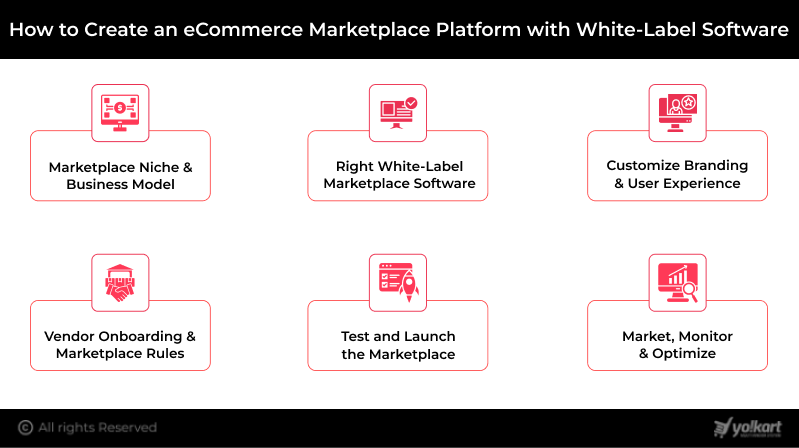
Building an eCommerce marketplace using white-label software simplifies what is otherwise a complex development process. Instead of starting from scratch, businesses can follow a structured approach to launch faster and scale efficiently. Here’s how the process typically works:
Step 1: Define Your Marketplace Niche & Business Model
Start by identifying your target audience and marketplace type, such as B2C, B2B, C2C, or a niche-specific platform. Clearly define how your marketplace will operate and generate revenue through commissions, subscriptions, listing fees, or a hybrid monetization model.
Step 2: Choose the Right White-Label Marketplace Software
Select a white-label marketplace solution that aligns with your business goals, scalability needs, and customization requirements. Hence, evaluate factors such as feature set, customizable source code access, flexibility, security, and long-term support to ensure a stable foundation.
Step 3: Customize Branding & User Experience
Apply your brand identity across the platform, including logo, color scheme, domain, and UI elements. Customize user journeys for buyers and sellers to ensure intuitive navigation, smooth onboarding, and a consistent experience that builds trust and engagement.
Step 4: Configure Vendor Onboarding, Products & Marketplace Rules
Set up vendor registration, approval workflows, commission structures, payout cycles, and marketplace policies. Upload initial products and onboard sellers with clear guidelines and support. Automation and defined rules help maintain quality and operational efficiency.
Step 5: Test and Launch the Marketplace
Test the platform thoroughly across admin, vendor, and customer roles. Validate checkout flows, payment processing, order management, and performance. Once testing is complete, go live with your marketplace. Monitor platform performance closely and be prepared to resolve early feedback or operational issues.
Step 6: Market, Monitor & Optimize
Promote your marketplace through digital marketing, partnerships, SEO, and campaigns. Use analytics and reports to track performance, optimize user experience, and refine monetization strategies to support long-term growth.
Suggested Read: White Label Marketplace Software: Easiest Way to Launch an Online Marketplace in 2026
Top 5 White-Label Solutions for Building an eCommerce Marketplace
Choosing the right white-label marketplace software can significantly impact your platform’s scalability, flexibility, and long-term ROI. Below is an honest comparison of popular white-label solutions, highlighting their strengths and limitations.
1. Yo!Kart
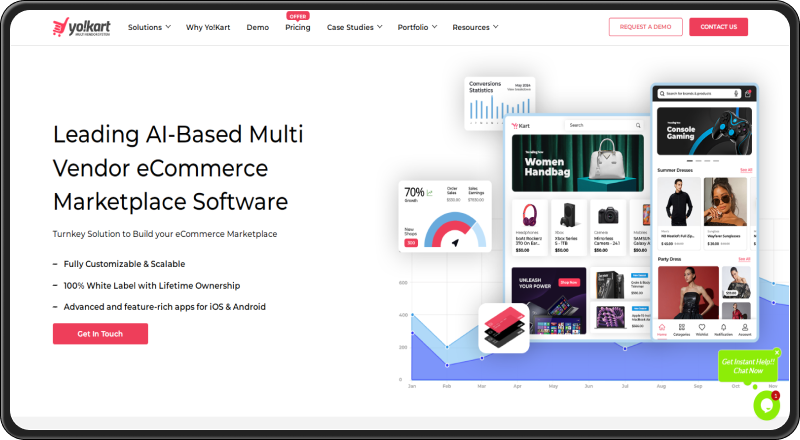
Yo!Kart is a self-hosted, white-label eCommerce marketplace software built for businesses that want full control over branding, features, and data. It comes with built-in multi-vendor functionality and supports a wide range of marketplace models, including B2C, B2B, and niche marketplaces. Businesses retain complete customizable source code ownership, allowing them to customize workflows, user experience, and monetization strategies while maintaining data independence.
Its scalable architecture supports the growing vendor bases, high traffic volumes, and complex transaction workflows, making it suitable for both startups and enterprises. By combining a proven marketplace foundation with deep customization capabilities, Yo!Kart enables faster launches while avoiding the cost and risk of full custom development.
Pros:
- Customizable source code ownership and self-hosted deployment
- Highly customizable workflows and marketplace logic
- No recurring marketplace commissions
- Scalable for large vendor bases and high transaction volumes
- Suitable for long-term growth and differentiation
Cons:
- Need to meet the minimum server requirement to host the marketplace
See Yo!Kart in Action
2. CS-Cart Multi-Vendor
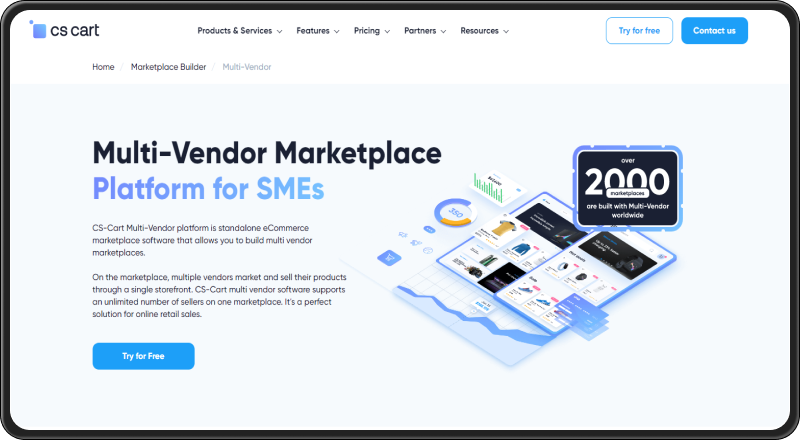
CS-Cart Multi-Vendor is a well-established marketplace platform with a large global user base. It offers a comprehensive set of features and an extensive add-on marketplace, making it a popular choice for standard multi-vendor eCommerce setups.
Pros:
- Feature-rich
- Large extension and add-on ecosystem
- Active global community and documentation
- Supports multiple monetization models
Cons:
- Heavy reliance on paid add-ons for advanced functionality
- Customization beyond standard use cases can become complex
- Performance may require optimization as the marketplace scales
3. Sharetribe (Self-Hosted Version)
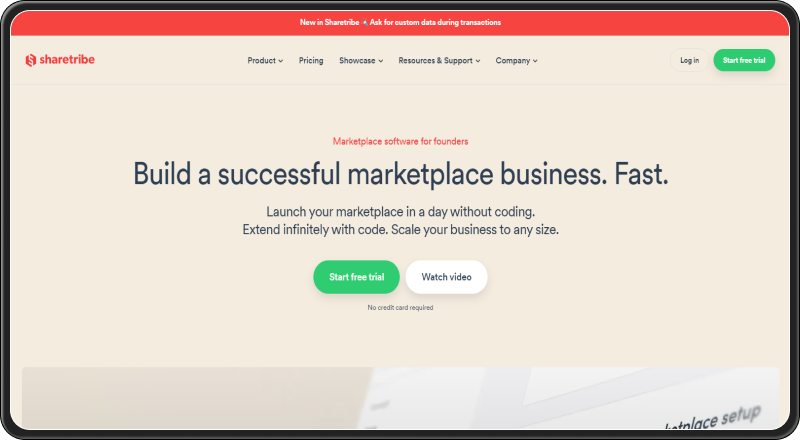
Sharetribe is designed for fast marketplace launches, particularly for niche, community-driven, or service-based platforms. Its self-hosted version offers more control than the SaaS variant but is still better suited for simpler marketplace requirements rather than large-scale eCommerce operations.
Pros:
- Faster setup compared to many self-hosted solutions
- Clean and simple user experience
- Suitable for niche or service-based marketplaces
Cons:
- Limited flexibility for complex eCommerce workflows
- Scaling beyond basic use cases can be challenging
- Fewer built-in eCommerce-specific features
4. Mirakl

Mirakl is an enterprise-grade marketplace platform designed for large retailers and global brands. It focuses heavily on automation, vendor management, and operational scalability, making it suitable for high-volume marketplaces with complex operational requirements.
Pros:
- Robust enterprise-level functionality
- Advanced vendor and catalog management
- Proven scalability for high-volume marketplaces
Cons:
- High implementation and licensing costs
- Longer setup and onboarding timelines
- Limited flexibility for smaller or fast-moving businesses
5. Arcadier

Arcadier is a cloud-based marketplace solution designed for businesses that want quick deployment without deep technical involvement. It allows businesses to launch marketplaces rapidly but offers limited customization compared to self-hosted platforms.
Pros:
- Easy to set up and use
- No infrastructure management required
- Suitable for quick MVP launches
Cons:
- Limited control over platform customization
- Ongoing subscription costs
- Scalability and feature flexibility can be restrictive over time
Why Choose Yo!Kart?
When selecting a white-label marketplace solution, businesses often look for a solution that offers the right balance between control, scalability, and cost efficiency. Yo!Kart stands out in this space by addressing the common limitations found in both SaaS-based tools and fully custom-built solutions.
Here’s why many businesses consider Yo!Kart, a practical choice for building an eCommerce marketplace:
1. Complete Ownership & Long-Term Control
Yo!Kart is a self-hosted solution that provides customizable source code ownership. This means businesses are not tied to recurring platform commissions or restrictive usage policies. As the marketplace grows, owners retain complete control over data, features, and future enhancements.
2. Built Specifically for Marketplace Models
Unlike generic eCommerce solutions that require heavy extensions to function as marketplaces, Yo!Kart is purpose-built from the ground up for multi-vendor operations. Core functionalities such as vendor management, commission handling, and order splitting are built in, ensuring stability and consistency.
3. Highly Customizable
Yo!Kart allows businesses to customize workflows, UI/UX, and monetization models while relying on a proven and stable core system. This makes it possible to create a differentiated marketplace experience without the risks and delays of full custom development.
4. Scalable for Growing Marketplaces
Whether starting with a limited number of vendors or planning for large-scale expansion, Yo!Kart’s architecture is designed to scale. Businesses can add new categories, vendors, regions, and revenue models as demand grows, without the need of rebuilding the platform.
5. Cost-Effective Alternative to Custom Development
Building a marketplace from scratch often involves high development and maintenance costs. Yo!Kart significantly reduces time-to-market and initial investment while still offering flexibility comparable to custom solutions.
6. Supports Multiple Marketplace Use Cases
Yo!Kart can be adapted for:
- B2C marketplaces
- B2B procurement platforms
- Niche and vertical-specific marketplaces
- Hybrid marketplace models
This adaptability makes it suitable for a wide range of business ideas and industries.
7. Focus on Business Growth, Not Just Technology
With core marketplace functionalities already in place, businesses can allocate more resources toward vendor acquisition, marketing, partnerships, and customer experience, areas that directly influence marketplace success.
Case Studies: Marketplaces Successfully Launched Using Yo!Kart
The true value of a white-label marketplace software lies in its ability to adapt to diverse business needs. Yo!Kart has been used to build a wide range of marketplaces across industries, regions, and business models, demonstrating its flexibility far beyond standard eCommerce use cases.
Below are examples of how different businesses leveraged Yo!Kart to bring their marketplace ideas to life:
1. UNI Diamonds: Digital B2B Diamond Trading Platform
UNI Diamonds modernized the traditional diamond trading by launching an online B2B marketplace that connects verified buyers and sellers. Leveraging Yo!Kart, the platform, enables users to browse detailed diamond specifications, compare pricing, participate in bidding, and complete transactions online, bringing structure and transparency to a complex, high-value industry.
2. Enterprise Liquor Marketplace: Regulated Digital Commerce Platform
A global enterprise partnered with Yo!Kart to build a compliant online liquor marketplace. The platform supports industry-specific requirements such as age verification and location-based purchasing, along with features like online ordering and in-store pickup. This digital shift helped modernize customer experience while maintaining regulatory control.
3. Voyij: Marketplace for Tours & Outdoor Experiences
Voyij launched a location-focused marketplace that connects travelers in Alaska with local tour operators and activity providers. Built on Yo!Kart, the platform supports experience-based listings, flexible pricing tiers, time-slot bookings, and multi-location availability, making it easier for travelers to discover and book unique adventures.
4. Watersorted: B2B Water & Infrastructure Procurement Marketplace
Watersorted developed a B2B marketplace to simplify procurement for water management products and services. Using Yo!Kart, the platform, enables bulk ordering, supplier management, and streamlined purchasing workflows, helping businesses source specialized products efficiently within a centralized platform.
5. Tajer: Multi-Category Online Marketplace for the Qatar Region
Tajer is a region-focused online marketplace designed to connect consumers in Qatar with a mix of local and international sellers. Covering categories such as fashion, electronics, and lifestyle products, the platform leverages Yo!Kart’s customization capabilities to deliver a localized shopping experience aligned with regional buying behavior.
6. Customize Your Truck LLC: Aftermarket Automotive Parts Marketplace
This niche marketplace caters to truck owners and automotive parts vendors. Powered by Yo!Kart, the platform supports complex product catalogs, vendor-specific listings, and tailored customer experiences, helping connect a specialized audience with relevant aftermarket accessories.
7. Mining Watchdog: B2B Marketplace for Mining Equipment
Mining Watchdog serves buyers and sellers in the Canadian mining industry by offering a marketplace for new and pre-owned mining equipment. The platform includes advanced integrations such as cryptocurrency wallets and third-party APIs, highlighting Yo!Kart’s ability to support technically sophisticated and industry-specific requirements.
8. 4GoodVibes: Handmade & Vintage Goods Marketplace
4GoodVibes is a community-driven marketplace focused on handmade, vintage, and creative products. The platform empowers independent artisans and small sellers to reach a broader audience while offering customers a curated shopping experience centered around unique, handcrafted items.
9. Bozinga: Wholesale B2B Marketplace Platform
Bozinga operates as a wholesale marketplace connecting manufacturers, distributors, and service providers with buyers across regions. Built on Yo!Kart, the platform, supports B2B-specific workflows such as bulk pricing, RFQ processes, and negotiated transactions tailored to complex B2B procurement processes.
10. Regake: Digital Gaming Products Marketplace
Regake is a niche marketplace dedicated to digital gaming products, including game keys and gift cards. The platform showcases Yo!Kart’s capability to handle digital product delivery alongside traditional marketplace functionalities like vendor management and order processing.
11. Myntist: Hybrid Marketplace Supporting Crypto & Traditional Payments
Myntist combines physical products and digital assets within a single marketplace ecosystem. The platform supports both fiat and cryptocurrency transactions, demonstrating Yo!Kart’s flexibility in adapting to modern payment preferences and emerging commerce models.
Conclusion
Building a successful eCommerce marketplace requires more than just a website. It demands a robust, scalable, and flexible platform that can support multiple vendors, secure transactions, and seamless user experiences. White-label marketplace software offers a practical alternative to custom development, enabling businesses to launch faster, reduce costs, and focus on growth rather than technical complexities.
Solutions like Yo!Kart demonstrate how businesses can achieve this balance by offering a proven, customizable, and scalable solution suitable for B2C, B2B, niche, and hybrid marketplaces. With real-world success across industries, from B2B trading and regulated marketplaces to digital products and travel experiences, Yo!Kart proves how businesses can build differentiated marketplaces efficiently while retaining control, ownership, and scalability.
For startups, growing businesses, or even established enterprises looking to expand into multi-vendor eCommerce, white-label solutions like Yo!Kart provide a smart, future-ready foundation for long-term marketplace success.
FAQs
Q 1. What is white-label marketplace software?
Ans. White-label marketplace software is a ready-to-use solution that businesses can brand, customize, and launch as their own. It eliminates the need for building a marketplace from scratch while offering control over features, design, and monetization, helping businesses launch faster and more efficiently.
Q 2. How is white-label software different from custom development?
Ans. White-label software is pre-built, market-tested, and ready to deploy, which sifgnificantly reduc cost and time-to-market. Custom development allows you to develop the platform from scratch, allowing unlimited customization, but it usually requires significant time, money, and technical resources.
Q 3. Can I customize a white-label marketplace software to match my brand?
Ans. Yes, you can customize a white-label marketplace software to match your brand. Most white-label solutions, including Yo!Kart, allows businesses to apply their own branding, configure workflows, set up commission models, and even add industry-specific features.
Q 4. Is white-label marketplace software scalable?
Ans. Yes, white-label marketplace software are scalable. Solutions like Yo!Kart are designed to handle growing vendor networks, high transaction volumes, and multi-category marketplaces, making them suitable for both startups and enterprises.
Q 5. What types of marketplaces can I build using white-label software?
Ans. White-label software supports a wide range of marketplace models, including B2C, B2B, niche, hybrid, or service-based marketplaces. Yo!Kart, for instance, supports physical products, digital goods, experiences, and even marketplaces with crypto payments.
Q 6. How long does it take to launch a marketplace with white-label software?
Ans. Launch timelines depend on customization requirements, but most white-label marketplaces can typically be launched within a few weeks to a couple of months. This is significantly faster than custom-built platforms, which often take many months to complete.
Q 7. Can I integrate third-party tools with a white-label marketplace?
Ans. Yes, you can integrate third-party tools with a white-label marketplace. Most white-label platforms, including Yo!Kart, supports integrations with payment gateways, shipping providers, analytics tools, CRM, and other essential business software. It allows businesses to extend their functionality as their marketplace evolves.
Q 8. Is white-label software cost-effective compared to custom development?
Ans. Yes, compared to custom development, white-label softwares are cost-effective. The solutions have predictable costs, lower development expenses, and minimal technical overhead, making them ideal for startups and growing businesses looking to minimize risk.
Want to Launch a Scalable eCommerce Platform?
Get In TouchPopular Posts