
In an era where consumers are making purchases with sustainability in mind, eCommerce is undergoing a profound transformation. The digital landscape is no longer just a place for convenience. It has become a proving ground for sustainability and ethical responsibility. Hence, for entrepreneurs looking to align their business with future-forward standards, building an online eco-friendly marketplace represents a timely and powerful opportunity.
Thus, this blog provides a detailed blueprint for creating a purpose-driven, profitable, and highly relevant multi-vendor platform that meets the rising demand for green products.
Table of Contents
The Rise of Eco-Friendly Products
The shift toward sustainability is no longer a niche trend but a global, demographic, and economic imperative. Consumers, especially Millennials and Gen Z, are actively seeking out brands and products that minimize their environmental footprint, practice ethical labor, and promote the green economy. This collective shift has created an explosive market for eco-friendly goods.
Market Dynamics and Consumer Behavior
- Accelerated Growth: Products explicitly marketed as sustainable are consistently growing 2 to 3 times faster than conventional alternatives.
- The Willingness to Pay a Premium: As per a report by NielsenIQ, 72% of consumers globally are willing to pay more for products or brands that work to improve society and the environment. This indicates that sustainability is a powerful value-add, not just a marketing gimmick.
- Digital Transparency and Accountability: The proliferation of social media and digital platforms has empowered consumers to demand greater transparency from brands. Businesses that demonstrate genuine commitment to sustainability gain higher loyalty, engagement, and conversion rates.
- Focus on Specific Sectors: The eco-friendly revolution is particularly pronounced in industries like:
- Fashion: A shift toward organic fabrics, recycled materials, slow fashion, and ethical labor.
- Food & Beverage: Increased demand for plant-based foods, organic produce, and zero-waste packaging.
- Beauty & Personal Care: The rise of clean beauty, with consumers demanding chemical-free, cruelty-free, and biodegradable options.
- Home Goods: Focus on energy-efficient appliances and products made from recycled or reclaimed materials.
- Online Dominance: Sustainable products often perform better in terms of market share when sold through online eCommerce marketplace software rather than in physical stores. The online environment allows for better communication of complex sustainability claims and certifications.
This convergence of consumer demand, digital transparency, and rapid market growth confirms that an online eco-friendly marketplace is one of the most compelling business ventures of the decade.
What is an Eco-Friendly Marketplace?
An eco-friendly marketplace is a specialized type of multivendor eCommerce platform dedicated to selling products that adhere to strict environmental and ethical criteria. Unlike a general eCommerce site (like Amazon) that might have a small ‘eco’ section, an eco-friendly marketplace is curated with a clear mission.
The platform itself acts as a gatekeeper and verifier, connecting environmentally conscious consumers with verified sustainable and ethical brands and artisans.
Moreover, the products sold on such a platform typically meet one or more of the following criteria:
- Material: Made from recycled, upcycled, organic, biodegradable, or renewable materials.
- Production: Ethically manufactured with fair wages, cruelty-free processes, and minimal waste.
- Packaging: Shipped using compostable, minimal, or recycled packaging.
- Consumption: Designed for reusability, durability, and a circular economy model.
- Impact: Actively support carbon offsetting, fair trade, or other positive social/environmental initiatives.
In essence, an eco-friendly marketplace becomes a trusted ecosystem where shoppers do not have to perform their own extensive research. The platform has already done the ethical verification for them.
Launch a Future Ready Eco-Commerce Platform
Benefits of Building an Eco-Friendly Marketplace
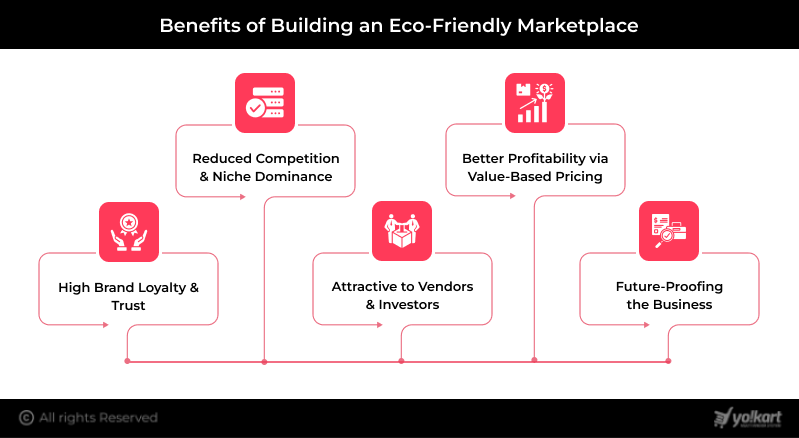
The decision to create an eco-friendly marketplace is not just an ethical one but a smart business strategy with significant competitive advantages. As sustainability moves from a trend to a global priority, businesses that integrate environmental responsibility into their core model gain a measurable competitive edge. Moreover, this provides a strong foundation for differentiation, brand credibility, and sustained profitability in a rapidly changing digital economy.
1. High Brand Loyalty and Trust
In an era where “greenwashing” is common, trust is the most valuable currency. By meticulously evaluating vendors and clearly communicating sustainability metrics, your platform establishes itself as an authority. This creates intense brand loyalty among eco-conscious consumers, one of the most engaged and valuable customer segments.
2. Reduced Competition and Niche Dominance
While general eCommerce is saturated, the market for a verified sustainable marketplace still offers significant room for niche dominance. By focusing on a specific vertical, such as zero-waste home goods, ethical fashion, or sustainable tech and maintaining strict standards, you reduce direct competition from generalist retailers.
3. Attractive to Vendors and Investors
To compete with giant marketplaces, sustainable brands often keep their prices low. Your eco-friendly platform is an attraction for customers who value quality and ethics over cost, leading to better vendor recruitment and retention. Similarly, socially responsible investors (SRI) actively seek out mission-driven businesses, making fundraising easier.
4. Better Profitability through Value-Based Pricing
Eco-friendly products demand premium pricing due to the higher cost of ethical sourcing and sustainable production. This enables vendors and your platform to charge a price that reflects the true value and positive impact of the product, resulting in potentially healthier profit margins.
5. Future-Proofing the Business
As climate change accelerates and environmental regulations become stricter, such as single-use plastic bans, carbon taxes, businesses built on sustainable foundations will thrive. A marketplace designed around these principles is inherently future-proof against regulatory and consumer shifts.
Must-Have Features in Your Eco-Friendly Marketplace
To succeed as an eCommerce marketplace for eco-friendly products, your platform must go far beyond basic product listings and checkout tools. It needs to function as both an educational resource and a verification framework that helps consumers make informed decisions. Therefore, it is essential that your marketplace incorporate the following features:
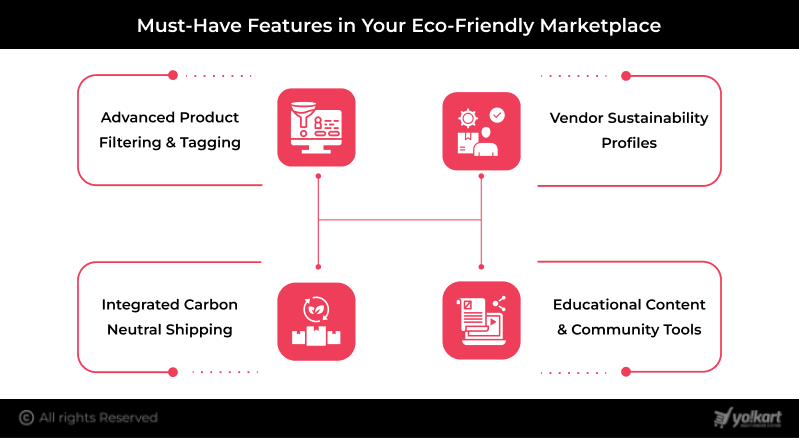
1. Advanced Product Filtering and Tagging
One of the most critical features is the ability for buyers to filter products based on verifiable sustainability criteria, such as:
- Certification Tags: Allow customers to filter by certifications like Fair Trade, B-Corp, USDA Organic, Vegan/Cruelty-Free, FSC Certified, etc.
- Impact Tags: Filters for specific impact goals, such as Zero Waste, Recycled Content (>50%), Carbon Neutral, Water-Saving, Made in USA/Local Sourced.
- Materials Filter: Search by materials like hemp, bamboo, post-consumer plastic (PCP), or organic cotton.
2. Vendor Sustainability Profiles (Transparency Hub)
For eco-conscious buyers, the credibility of the seller is just as important as the product. A detailed vendor profile builds trust and allows shoppers to understand the brand behind the product.
- Mission Statement: Vendors should be able to clearly state their environmental and ethical commitments to help buyers connect with authentic brand values.
- Impact Metrics: Display metrics like ‘Waste Diverted,’ ‘Carbon Offset,’ or ‘Water Saved’ calculated based on their product sales through your platform.
- Ethical Sourcing Map: A simple visual or map detailing from where the raw materials are sourced and where manufacturing occurs.
3. Integrated Carbon Neutral Shipping Options
Shipping is one of the most critical areas of eCommerce sustainability. Thus, your platform must make sustainable shipping seamless.
- Offset Checkout: An optional, one-click feature at checkout that allows the buyer to pay a small fee to offset the delivery’s estimated carbon footprint (integrated with a third-party carbon removal project API).
- Sustainable Packaging Badges: Highlight products that use 100% compostable or minimal packaging.
- Local Pickup/BOPIS Support: The software should facilitate “Buy Online, Pick-up In-Store” to eliminate transit carbon for local vendors.
4. Educational Content and Community Tools
A successful eco-marketplace should not only facilitate transactions but also inspire and educate buyers on sustainable living. Thoughtful content and community features reinforce your mission and strengthen customer engagement.
- Impact Calculator: A feature where a user can view the collective impact of their purchases over time (e.g., “You have saved 5 pounds of plastic this year!”).
- Eco-Swap Guides: Seamless integration of blog content that educates users on switching from conventional to sustainable products.
- Enhanced Ratings & Reviews: Allow buyers to rate not just the product quality, but also the vendor’s adherence to their stated claims (e.g., “Packaging was minimal”).
Build Your Own Feature-Rich Eco-Friendly Marketplace
Approaches to Build an Online Eco-Friendly Marketplace
Once you have defined your mission and features, the next critical step is choosing the development path. For that, the choice is between custom development and a readymade multi-vendor eCommerce software solution. Moreover, the choice will impact your budget, time-to-market, and long-term flexibility. Let’s dive into both approaches:
1. Custom Marketplace Development
This involves hiring a team of developers (in-house or outsourced) to code every single component of your marketplace, from the database and API architecture to the front-end user interface, from the ground up.
| Aspect | Custom Development |
| Time-to-Market | Very Slow (9-18+ Months). Involves extensive planning, coding, quality assurance, and iterative development. |
| Initial Cost | Very High (Typically starts from $150,000 and scales up rapidly). You pay for every line of code written. |
| Flexibility | Unlimited. You have full control to build any unique feature or integration required by your specific niche. |
| Ownership | Own the IP, which gives you complete control over future evolution. |
| Risk & Maintenance | High Risk. Higher probability of unexpected bugs, security flaws, and an ongoing high cost for maintenance and updates. |
Best For: Extremely niche business models that require complex, non-standard functionality (e.g., a marketplace that also manages decentralized recycling logistics using blockchain).
2. Readymade Multi-vendor eCommerce Software
This involves purchasing a pre-built solution specifically designed for building multi-vendor marketplaces. The core architecture, user panels (Admin, Seller, Buyer), and standard eCommerce features are already in place.
Further, the table below outlines the key considerations for choosing a readymade multi-vendor marketplace solution:
| Aspect | Readymade Solution |
| Time-to-Market | Very Fast (Days to Weeks). The foundation is ready; launch involves configuration, design customization, and vendor onboarding. |
| Initial Cost | Low to Moderate. Lower upfront cost, either through a one-time license fee or manageable monthly subscriptions. |
| Flexibility | Good to Excellent (Depends on the platform). Modern readymade solutions are highly customizable and offer open APIs. |
| Ownership | Varies. With SaaS, you rent the software. With a licensed solution, you often get Lifetime Source Code Ownership (a significant advantage). |
| Risk & Maintenance | Low Risk. The platform is already market-tested, stable, and the vendor handles core security updates. |
Best For: Over 90% of entrepreneurs who want to quickly launch, test the market, and start generating revenue using a robust, scalable foundation.
The Right Approach to Build: Readymade Software
For nearly all entrepreneurs aiming to build an online eco-friendly marketplace, the readymade approach stands out as a superior strategy. It delivers speed, cost-efficiency, and proven stability, essential components for a rapidly evolving sustainable market.
In a fast-moving market like sustainability, time-to-market is the ultimate competitive advantage. The ability to launch fast allows you to capture consumer attention, onboard the best vendors, and start collecting crucial market data.
The key is selecting a readymade solution that offers the best of both worlds: speed of deployment plus the customizability and ownership required for a specialized niche like eco-commerce. This balance ensures you can launch quickly while still retaining the freedom to tailor the platform to your unique sustainability vision.
Introducing Yo!Kart Multivendor eCommerce Marketplace Software to Build an Eco-Friendly Marketplace
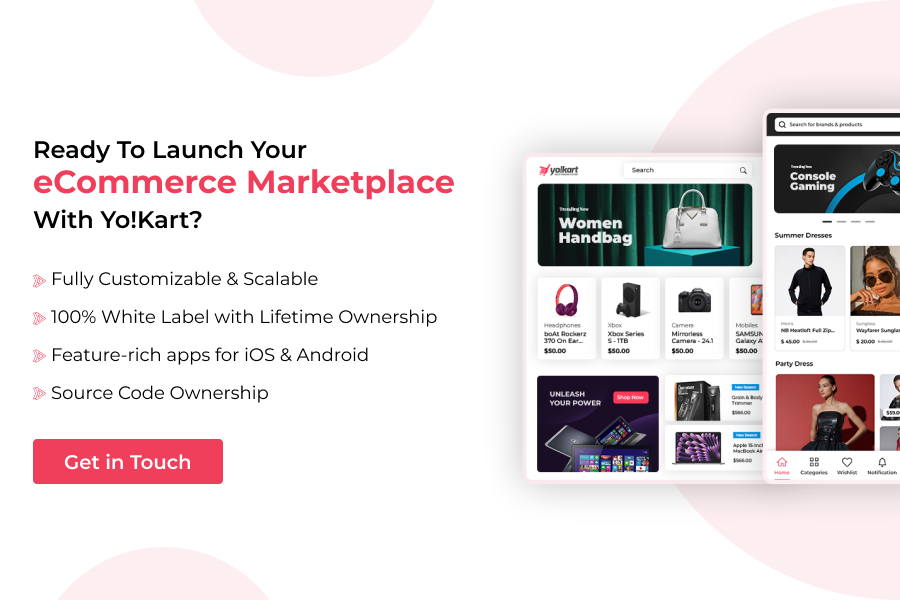
Yo!Kart is a robust, self-hosted multi-vendor eCommerce software specifically designed for entrepreneurs and enterprises to launch large-scale, customized marketplaces. It provides a powerful, pre-built framework that is ideal for creating an eco-friendly marketplace. Apart from it, its focus on customization, scalability, and ownership makes it an ideal choice for most entrepreneurs.
Choosing a solution like Yo!Kart allows you to bypass the year-long headache and immense cost of custom development while retaining the freedom to mold your platform to your unique ethical standards.
Key Benefits of Yo!Kart for an Eco-Friendly Marketplace
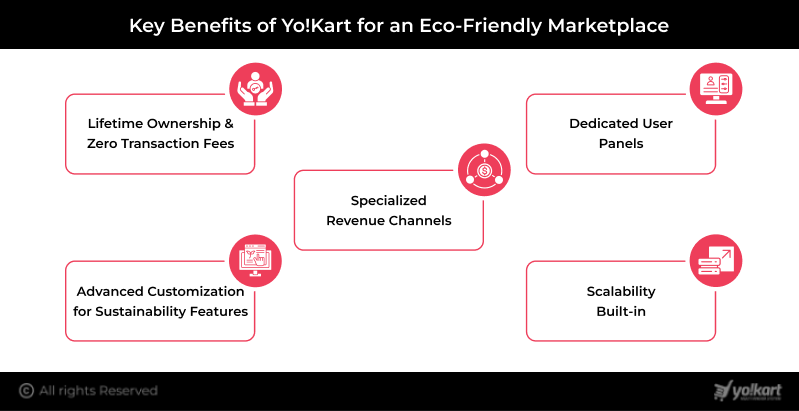
1. Lifetime Ownership and Zero Transaction Fees
- Yo!Kart offers a one-time purchase that includes the complete source code, giving you lifetime ownership.
- This is crucial because, unlike SaaS models that take a percentage of every sale, you pay zero transaction fees, allowing you to keep all your revenue.
2. Specialized Revenue Channels
The platform supports multiple revenue streams essential for a healthy marketplace model, such as:
- Commission: Flexible, tiered commission structures on vendor sales.
- Subscription Packages: Charge vendors for premium features like advanced analytics or enhanced storefront customization.
- Advertising & PPC: Generate extra revenue by allowing vendors to promote their eco-friendly products within the marketplace.
3. Advanced Customization for Sustainability Features
While it is readymade, Yo!Kart is built to be highly configurable. You can seamlessly integrate the must-have eco-features:
- Custom Fields: Easily add the necessary fields for vendors to upload Certification IDs or Impact Metrics (e.g., Carbon Footprint data) to their product pages.
- Open API: Use the open APIs to integrate with crucial third-party services like:
- Carbon Offset Calculators (e.g., Ecocart, Shopify Planet).
- Sustainability Rating Engines to vet vendor claims automatically.
- Specialized shipping services focused on low-impact logistics.
4. Scalability Built-in
Yo!Kart is architected to handle high traffic and thousands of vendors. As your eco-friendly community grows, from a few hundred vendors and buyers to thousands, your platform scales without any performance degradation.
5. Dedicated User Panels
The solution provides separate, fully functional dashboards for the Admin, Vendors, and Buyers. This allows the admin to focus on vetting and marketing, while vendors efficiently manage their sustainable inventory and orders.
By leveraging a solution like Yo!Kart, the conscious entrepreneur, can focus their resources and time on the two most important aspects of the business. i.e., meticulous vendor curation and powerful mission-driven marketing, rather than fighting development battles.
Get Your Personalized Yo!Kart Demo
Conclusion
The shift toward ethical, transparent, and environmentally responsible commerce is reshaping how modern marketplaces operate. As eco-friendly demand accelerates, choosing the right technological foundation becomes critical. While custom development offers control, the most practical and cost-efficient approach is using a readymade, flexible multivendor eCommerce solution.
Solutions like Yo!Kart delivers faster time to market, predictable costs, full ownership, and extensive customization to align the marketplace with your sustainability standards. With features that support transparency, ethical sourcing, and verified product impact, you can build not just an online store but a credible, purpose-driven ecosystem. This positions your marketplace as both a profitable venture and a facilitator for meaningful environmental change.
FAQs
Q 1. Is it better to create a custom-built marketplace or use a readymade platform?
Ans. Whether you want to create a custom-built marketplace or use a readymade platform depends on your specific needs:
- Custom-built platforms offer complete control over features, design, and functionality but require significant time, money, and technical expertise.
- Readymade solutions like Yo!Kart are a quicker, more cost-effective solution that offers flexibility, scalable infrastructure, and customization. They come with pre-built features, reducing the complexity and development time, allowing you to focus more on your business.
Q 2. What are some common challenges when building an eco-friendly marketplace?
Ans. Some challenges while building an eco-friendly marketplace include:
- Sourcing Sustainable Products: Not all suppliers may adhere to eco-friendly practices, so vetting suppliers is essential.
- Logistics and Shipping: Managing eco-friendly delivery options can be complex, especially if you’re working with vendors globally.
- Consumer Awareness: Educating customers about the importance of eco-friendly products and practices is key to building a loyal audience.
Q 3. How can I ensure that sellers on my marketplace follow sustainable practices?
Ans. To ensure that sellers on your marketplace follow sustainable practices, you can implement the following strategies:
- Set guidelines for eco-friendly practices, such as requiring sustainable packaging or ethical sourcing of materials.
- Evaluate vendors carefully before allowing them on your marketplace, ensuring they meet your environmental standards.
- Offer incentives for sellers who comply with your sustainability criteria, like showcasing them in a special eco-friendly section of the marketplace.
Q 4. Can an eco-friendly marketplace be profitable?
Ans. Yes, eco-friendly businesses can be very profitable. Today’s consumers are becoming more environmentally conscious, which is raising the demand for sustainable products. Thus, by focusing on eco-friendly products and practices, you can tap into this market segment, often willing to pay a premium for products that align with their values.
Q 5. What are the best marketing strategies for an eco-friendly marketplace?
Ans. The best marketing strategies for an exo-friendly marketplace include:
- Content Marketing: Share educational content about sustainability and eco-friendly living.
- Influencer Collaborations: Partner with eco-conscious influencers to reach a wider audience.
- Eco-certifications: Get your marketplace certified by eco-friendly organizations, which can build trust with consumers.
- Community Engagement: Build a community around sustainability, such as hosting webinars or events.
Q 6. Can Yo!Kart help me build an eco-friendly marketplace?
Ans. Yes, Yo!Kart can help you build an eco-friendly marketplace. It is a customizable solution that offers multi-vendor functionality, payment integrations, and customizable shipping and product options, making it a great choice for those looking to build an online marketplace that emphasizes sustainability.
Q 7. What is the cost of building an eco-friendly marketplace with Yo!Kart?
Ans. The cost of building an eco-friendly marketplace with Yo!Kart depends on the specific features and level of customization you choose. However, Yo!Kart offers a cost-effective solution compared to custom-built marketplaces, providing a range of pricing plans that suit various budgets.
Q 8. How long will it take to launch an eco-friendly marketplace with Yo!Kart?
Ans. The time to launch an eco-friendly marketplace with Yo!Kart depends on the complexity of the customizations you require. However, it allows you to launch much faster than building from scratch. Typically, you can have a functional marketplace up and running in a few weeks.
Want to Launch Your Sustainable Eco-Friendly Marketplace
Get In TouchPopular Posts