


Published Date 26th May, 2026
Globally, more than 6 billion people worldwide use the internet, representing roughly 74% of the global population. These users engage with a vast ecosystem of digital products, including over 5 billion social media users and roughly 2.5 billion online shoppers. This widespread digital adoption is reflected in everyday consumer behavior.
Moreover, at some point, you must have enrolled in some kind of online course, downloaded a PDF, read an eBook, or subscribed to a creative website for templates or designs. All this not only signifies the influence of digitalization or the internet on our daily lives, but also presents a promising business opportunity for developing a digital product marketplace.
Digital products like stock media, digital art, templates, and others are now consumed at an unprecedented rate. As the demand for these products continues to grow, launching a digital marketplace offers a high-potential business opportunity. Hence, this guide works as a complete roadmap, including leading players, market trends, revenue strategies, and challenges.
Table of Contents
- Understanding the Digital Product Marketplace Ecosystem
- Popular Platforms Dominating the Digital Products Industry
- Foresighted Trends Shaping the Future of the Digital Product Industry
- Proven Revenue Strategies for Digital Product Marketplaces
- From Idea to Launch: Roadmap to Develop a Digital Product Marketplace
- Navigating the Challenges of Digital Product Marketplace Development
- Yo!Kart: A Smarter Way to Tackle Digital Marketplace Development Challenges
- Final Verdict
- FAQs
Understanding the Digital Product Marketplace Ecosystem
A digital product marketplace is a multi-sided platform that connects sellers dealing in digital products with individuals. Unlike eCommerce marketplaces trading in physical products or services, these marketplaces exclusively facilitate buying and selling of intangible assets, such as eBooks, music, podcasts, videos, templates, software, digital art, and more.
Compared to traditional marketplaces, digital product marketplaces are more efficient and easily scalable. Their key advantages include:
- Asset-light operations
- Unlimited inventory availability
- No dependency on logistics or delivery partners
- Automated sales and delivery
- Highly scalable
- Instant product delivery
Workflow of Digital Product Marketplace
- Seller Registration & Product Listing: Sellers register on the marketplace, creating a storefront, and upload their digital products with descriptions, pricing, and other important details.
- Browsing & Product Discovery: Buyers explore products based on their requirements. Features like filtering and sorting help streamline the browsing process and find the required asset quickly.
- Secure Checkout and Payment Processing: Once the product is selected and added to the cart, buyers complete the checkout process and make payment using integrated gateways such as Stripe, RazorPay, and others.
- Instant Product Delivery: After the payment process, the marketplace grants download access or delivers the purchased product via email, account dashboard, or app.
- Review and Rating: Buyers can share feedback through ratings and reviews. This also helps build trust, improve credibility, and support better purchase decisions for future buyers.
Types of Digital Products Sold Online
- eBooks and Audio Books: Digital books and audiobooks are gaining popularity for their versatility and downloadable format. Platforms like Kindle and Audible are specifically built for this category.
- Digital Templates: Many professionals, students, and designers turn to digital marketplaces for templates and design inspiration. It helps them save time and improve their productivity.
- Photos and Videos: Stock photos, illustrations, video footage, animations, and editing assets are widely purchased by marketers, content creators, and businesses for branding and campaigns.
- Online Courses: The demand for online courses, tutorials, recorded classes, and certifications is on the rise. Platforms like Udemy, Coursera, and more cater to this niche specifically.
- Software and Plugins: Software applications, SaaS tools, plugins, themes, and extensions help businesses and individuals streamline operations. Moreover, they automate tasks, enhance functionality, and improve digital experiences.
- Games: Digital games, in-game assets, downloadable content (DLC), and gaming modifications generate strong demand across mobile, web, and PC gaming communities.
Suggested Read: Launch a Digital Products Marketplace: Complete Guide
Popular Platforms Dominating the Digital Products Industry
The digital product industry is a growing niche that is gaining traction with each passing day, and a few players are leveraging this opportunity. For entrepreneurs looking forward to entering this space, knowledge of the key players dominating the industry becomes essential. Hence, a list of them is given below:
1. Amazon Kindle

- Founded In: 2007
- Estimated Revenue: $17 billion
- Active Users: 20 million
Amazon Kindle is a go-to platform for selling eBooks and audiobooks. Developed by the Amazon research team, the platform enables authors to self-publish books and cater to a global audience.
2. GumRoad
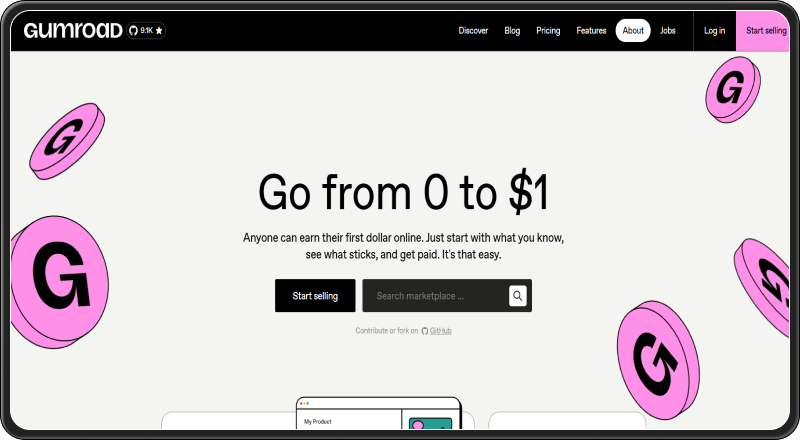
- Founded In: 2011
- Estimated Revenue: $24 million
- Active Users: 0.146 million
Gumroad is a beginner-friendly digital product marketplace, built especially for writers, artists, developers, and freelancers. The platform offers built-in marketing tools, including email campaigns, upsells, and subscription analytics.
3. 500px

- Founded In: 2009
- Estimated Revenue: $15 million
- Active Users: 4 million
500px is a photography-focused digital marketplace. It enables photographers to showcase, license, and sell high-quality images to a global audience. The platform is particularly popular among creators looking to monetize stock photography and build professional visibility.
4. Sellfy
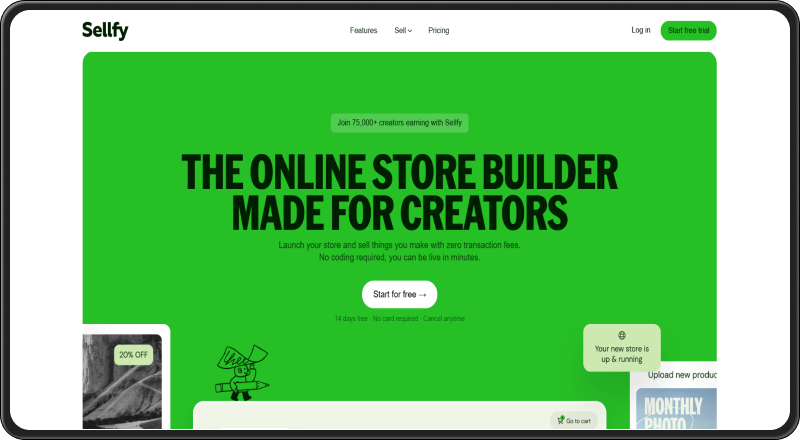
- Founded In: 2011
- Estimated Revenue: $5.8 million
- Active Users: 10,000+
Sellfy is an eCommerce platform that is designed for creators to sell digital products, such as ebooks, music, videos, designs, and more. It offers a customizable storefront, supports subscriptions, and provides built-in analytics tools. Beyond digital products, it also allows the selling of physical products.
5. Etsy

- Founded In: 2005
- Estimated Revenue: $2.88 billion
- Active Users: 90 million
Typically, Etsy is popular for selling physical goods, but it also allows vendors to sell digital products, including downloadable art, templates, and more. The platform supports instant downloads and custom options. One of the biggest advantages sellers get is access to a vast number of users.
Build Your Own Digital Product Marketplace Inspired by the Industry Giants
Foresighted Trends Shaping the Future of the Digital Product Industry
As we step into the era of technology, consumer expectations are also transforming. To keep up with the expectations and stay relevant, entrepreneurs inclined to enter the industry should be familiar with the ongoing trends that are shaping the future of the digital product industry. A few of the foresighted trends include:
1. Integrating Artificial Intelligence
AI and generative technologies are contributing significantly to the creation, distribution, and consumption of digital products. For entrepreneurs building a digital product marketplace, AI can help in generating product descriptions, giving personalized recommendations, improving search accuracy, and automating customer support via chatbots. Moreover, it also enables predictive analytics for user behavior.
2. Hyperautomation Across the Lifecycle
For automating workflows and increasing operational efficiency, hyperautomation combines AI, ML, and RPA (Robotic Process Automation). For a digital product business, it can help in content moderation processes, customer support management, marketing, and email automation. This trend is helping businesses reduce operational costs, improve efficiency, and scale their digital product ecosystem seamlessly.
3. Ethical by Design: Prioritizing Privacy, Security, and Trust
With the rise of digital marketplaces, concern for data collection and its misuse is also increasing. Due to these concerns, the trend of integrating features for privacy, security, and transparency is non-negotiable. Thus, for future-focused marketplaces, it is essential to prioritize secure payments, strong data privacy practices, user consent management, and cybersecurity-focused infrastructure.
4. Composable Architecture and the Modular Future
Modern digital businesses are moving away from rigid systems toward composable architecture, where different technologies, APIs, and modules work together flexibly. This modular approach enables businesses to add new features faster, integrate third-party services easily, customize digital experiences, and scale infrastructure efficiently. Furthermore, a composable architecture helps upgrade systems without major disruptions.
5. Sustainable Technology and Green Coding
Sustainability is becoming increasingly important in technology development. Businesses are focusing on energy-efficient coding practices, optimized infrastructure, and environmentally conscious digital operations. Additionally, green technology initiatives include lightweight website architecture, optimized server usage, energy-efficient cloud hosting, and reduced code complexity. As sustainability awareness grows, digital businesses adopting greener technology strategies gain brand credibility and efficiency benefits.
6. Hyper-Personalization Through Data and Analytics
Modern consumers increasingly expect experiences tailored to their preferences, behaviors, and purchasing habits. Hyper-personalization can improve product recommendations, personalized pricing and offers, search relevance, user engagement, and customer retention strategies. In addition to that, personalized experiences can significantly improve conversions, satisfaction, and long-term customer loyalty.
Proven Revenue Strategies for Digital Product Marketplaces
One of the biggest advantages of a digital product marketplace is the revenue strategy. Since it never runs out of inventory and does not rely on delivery personnel for product delivery, the operational cost is very low, ultimately leading to increasing revenue potential. Moreover, a digital product marketplace offers you the flexibility of generating revenue via various channels.
Key Revenue Drivers
- Listing Fee: The marketplace can charge vendors a fixed fee to list their products on the marketplace. This revenue channel ensures income generation, irrespective of product sales, and encourages sellers to curate their listings.
- Commission Fee: For each transaction made on the platform, the marketplace can deduct a commission, ensuring a consistent revenue flow, directly tied to the seller’s performance and transaction volume.
- Bundled Product Sales: Offering a bundle of digital products into a single package is an effective way to increase AOV. By combining complementary assets at a discounted price, you can attract more customers to the platform.
- Feature Listing: Feature listings provide sellers with premium visibility in exchange for an additional fee. This way, the marketplace owners can generate additional income while supporting sellers’ marketing efforts.
- Advertising Fee: Digital product marketplaces can monetize the growing number of users by offering advertising opportunities to sellers, creators, and third-party businesses. It helps them increase visibility while generating extra income.
Recurring Revenue Channels
1. Subscription Fee: Subscription-based monetization strategies help marketplaces generate predictable and recurring income while offering premium benefits to users. Subscription can be charged from buyers as well as sellers.
- Buyer Subscription: Introduce membership plans for buyers, offering benefits, such as exclusive product access, discounts, early access to new releases, and unlimited downloads.
- Seller Subscription: For sellers, subscription benefits can include more product listings, premium storefront customization, lower commission rates, and enhanced marketing capabilities.
2. Paid Content Access: Marketplaces can monetize premium digital products such as premium templates, educational materials, exclusive design assets, or creator-led content by restricting exclusive content behind paywalls.
3. Partnership: Businesses can collaborate with software providers, creators, affiliate partners, or service providers to generate additional income through sponsored campaigns, affiliate commissions, or co-branded offerings.
4. Licensing Model: Licensing is a highly effective monetization strategy for marketplaces dealing with digital assets such as stock images, videos, music, or templates. Buyers purchase specific usage rights based on licensing terms.
Access All Possible Revenue Streams For Digital Product Marketplace
From Idea to Launch: Roadmap to Develop a Digital Product Marketplace
Digital products are the emerging niche of today’s time. Undoubtedly, there present innumerable platforms, built specifically for digital products. But each has its own USPs and target users. Similarly, inspired by these platforms and catering to underserved users, you can develop a thriving digital product platform. Thus, to turn your vision into reality, a 7-step roadmap to develop a digital product marketplace is given below:
Step 1: Conduct Market Research
Before diving straight into the development process, it is essential to conduct thorough market research to understand the industry, ongoing trends, and leading platforms. Apart from providing insights, market research helps identify customers’ pain points, validate your business ideas, and reduce the risks of investing in an unsustainable model. Comprehensive research builds the foundation of a successful marketplace and ensures smart decision-making throughout the journey.
Furthermore, key research areas include:
- Analyze market demand and consumer behaviour
- Study competitors, their business models, and strategies
- Identify underserved customer segments and niche opportunities
- Evaluate current market trends and growth potential
- Assess regional demand, delivery patterns, and pricing expectations
Step 2: Define Your Idea & Select Business Model
After you are done with market research, it’s time to decide the niche and business model on which your platform will operate. Since there are so many digital products present in the industry. You can decide either to deal in a single category or multiple categories at the same time. The niche you decide on will help you decide the business model your marketplace will operate on.
A well-defined niche and business model help provide you with operational clarity and decide how your marketplace will generate revenue.
Some of the popular business models include:
- B2B Model: A B2B (Business-to-Business) model allows your marketplace to connect businesses. Typically, a digital product marketplace operating on this model deals in software, business templates, stock footage, and more. Beyond that, key characteristics of this model include RFQ, bulk ordering, and legal contracts.
- B2C Model: In the B2C (Business-to-Consumer) model, multiple sellers register on the marketplace, and the buyers are individual consumers who want digital products for personal use, entertainment, and self-improvement. Key characteristics of the B2C model include mass market appeal, standard pricing, and short sales cycles.
- Hybrid Model: marketplaces operating on this model cater to both businesses and individuals. This model combines the features of both B2B and B2C models.
Step 3: Finalize the Feature-Set
Once you decide on the business model, the next step is to finalize the feature set required to support your platform’s operations and user experience. Prioritize features based on customer expectations, operational efficiency, and long-term scalability. The goal is to build a platform that streamlines the user experience, payments, and management of all stakeholders.
Do not integrate every feature from day one; begin with essential functionalities for your MVP (Minimum Viable Product) and gradually introduce advanced features as your marketplace grows. A structured process helps avoid unnecessary development costs and ensures faster market entry.
Core Features include:
- Easy Registration and Seller Onboarding: To attract users and offer a streamlined experience, your marketplace should offer easy registration, profile management, seller verification, and guest login. A registration process and clear onboarding reduce friction and improve seller retention.
- Advanced Search and Filtering: Search and filtering are crucial features for a digital marketplace. It enables users to quickly search and find what they are looking for. Additionally, it improves product discoverability and enhances the overall experience.
- User-Friendly Service Listing: A comprehensive listing with detailed descriptions, pricing, images, and availability helps users make informed decisions. A well-structured listing page reduces confusion and improves buyer confidence.
- Secure Payment and Checkout System: Your marketplace should support secure payment gateways, multiple payment methods, wallet systems, and a smooth checkout experience. Moreover, secure transactions improve trust while reducing payment friction for users.
- Instant Download: This feature allows buyers to access purchased files immediately after payment. Secure file delivery, download tracking, and purchase verification help improve convenience and user trust. Additionally, instant download enhances customer satisfaction and reduces manual effort.
- Ratings and Reviews: It helps establish trust and transparency within the marketplace ecosystem. In addition to that, buyers often rely on customer feedback before making decisions, while sellers benefit from credibility and improved visibility.
- Order and Booking Management: A centralized management system for tracking orders, bookings, payments, refunds, and delivery status helps streamline operations for both admin and sellers. Efficient management tools also improve operational transparency.
- Communication and Notification: In-app communication, messaging, and notifications enable seamless communication between buyers, sellers, and administrators. Moreover, automated notifications for order updates, promotions, and reminders improve user engagement.
- Analytics and Reporting: Analytics dashboards provide valuable insights into customer behavior, sales trends, vendor performance, and platform activity. These insights help marketplace owners make informed business decisions and optimize performance.
- Mobile Responsiveness: Since the majority of users browse marketplaces via smartphones, a mobile-friendly design is essential. A responsive platform ensures a consistent user experience across devices and improves accessibility.
Suggested Read: Start a Digital Product Marketplace With Yo!Kart
Step 4: Choose the Technology
A digital product marketplace can be developed through different approaches depending on your budget, business goals, required customization, and expected time-to-market. Therefore, selecting the right technology approach is essential for ensuring operational efficiency, scalability, and long-term business success. Businesses generally choose between custom development and readymade software solutions.
1. Custom Development
Custom development involves building your marketplace from scratch based on unique business requirements. Undoubtedly, this approach provides complete flexibility in terms of features, workflows, UI/UX, and integrations. Additionally, it allows businesses to tailor every functionality according to their operational needs and target audience preferences.
However, custom development often requires significant investment, longer development timelines, dedicated technical teams, and ongoing maintenance. It is generally suitable for enterprises with highly specific requirements and substantial budgets.
2. Readymade Software
Readymade marketplace software offers a faster and more cost-effective alternative to custom development. These pre-built solutions come equipped with essential marketplace features, helping businesses reduce development complexity and accelerate market entry. Moreover, businesses can customize branding, workflows, and functionalities according to their needs without building the platform from the ground up.
In addition to that, a readymade software significantly reduces time-to-market, minimizes technical challenges, and lowers overall development costs. This makes it an ideal choice for startups, SMEs, and entrepreneurs looking to launch quickly while maintaining scalability.
| Basis | Custom Development | Ready-Made Solution |
| Time to Market | Takes months to build and test | Fast launch with pre-built features |
| Development Cost | High upfront investment, ranging from $50,000 to $250,000+ | More cost-effective, usually starting from $2,000 |
| Maintenance | Requires dedicated technical support | Vendor manages updates and fixes |
| Technical Expertise | Needs skilled developers | Minimal technical involvement |
| Risk Factor | Higher risk of delays and overruns | Lower implementation risk |
| Feature Availability | Features built from scratch | Comes with built-in features |
| ROI | Better for long-term customer needs | Faster ROI with quicker launch |
Leverage a Reliable Readymade Software to Launch Your Marketplace Seamlessly
Step 5: Attract and Onboard Sellers
Sellers are one of the most important stakeholders in a digital product marketplace. Without quality sellers and product offerings, attracting and retaining buyers becomes difficult. Therefore, businesses should focus on building a strong seller base before launch.
For that, start by identifying creators, businesses, freelancers, or vendors operating within your target niche and communicate the value proposition of your marketplace. Additionally, offering simplified onboarding, low commission rates, promotional benefits, or early adopter incentives can encourage seller participation. A seamless seller onboarding process improves platform adoption and reduces friction.
Key seller acquisition strategies include:
- Outreach campaigns and partnerships
- Early seller incentives and promotional offers
- Easy onboarding and verification process
- Seller-friendly commission structures
- Dedicated support and training resources
A strong seller network helps create marketplace credibility, improves product variety, and strengthens customer acquisition efforts.
Step 6: Launch Strategy and Promotion
Once your marketplace is ready and sellers are onboarded, the next step is to create a well-planned launch strategy. For a successful marketplace launch, businesses must focus on creating awareness, attracting initial users, and building momentum within the target audience.
Begin with a soft launch to test platform performance, identify technical issues, and collect user feedback before full-scale deployment. Beyond that, leverage digital marketing channels such as:
- SEO
- Content marketing
- Email campaigns
- Influencer partnerships
- Paid advertising
- Social media promotions
This helps gain more visibility. Moreover, referral programs, discounts, exclusive launch offers, and community-building strategies can help accelerate user acquisition and increase engagement during the early growth phase.
Step 7: Optimisation and Expansion
Launching your digital product marketplace is only the beginning; long-term success depends on continuous optimization and strategic expansion. For that, businesses should regularly monitor performance metrics, such as customer behavior, sales performance, user engagement, seller activity, and operational bottlenecks, and improve marketplace experiences accordingly.
Additionally, gathering customer feedback helps businesses refine platform functionalities and improve satisfaction. As the marketplace grows, businesses can introduce advanced features, expand into new product categories, target international markets, and diversify monetization strategies to support long-term scalability.
Continuous optimization ensures your marketplace remains competitive, scalable, and aligned with evolving market expectations.
Navigating the Challenges of Digital Product Marketplace Development
Building a digital product marketplace comes with its own set of challenges. Businesses often encounter multiple operational and technical hurdles throughout the development journey. Moreover, understanding potential roadblocks early helps improve operational efficiency and build a scalable marketplace prepared for long-term growth.
Given below are a few challenges that entrepreneurs experience while developing a digital product marketplace:
1. Managing Digital Piracy and Copyright Protection
Digital products are highly vulnerable to unauthorized sharing, duplication, and copyright infringement. Purchased files can be distributed easily, which makes protecting intellectual property a major challenge for marketplace owners.
How you can address this challenge:
Businesses should implement secure file hosting, encrypted downloads, license management, watermarking, and access controls to minimize piracy risks and protect seller content.
2. Ensuring Marketplace Scalability and Performance
As the marketplace grows, handling increasing traffic, product listings, transactions, and downloads can become challenging. In addition to that, poor marketplace performance often leads to slow loading times, system crashes, and poor user experiences.
How you can address this challenge:
Businesses must invest in scalable infrastructure, cloud hosting, and performance optimization strategies to support long-term growth without affecting platform reliability.
3. Attracting High-Quality Sellers and Digital Creators
Quality and diversity of products available play a significant role in the success of a digital product marketplace. However, attracting experienced creators, vendors, and trusted sellers can be difficult during the early stages.
How you can address this challenge:
Businesses should focus on offering competitive incentives, simplified onboarding, strong seller support, and attractive revenue opportunities to build a high-quality seller network.
4. Maintaining Content Quality and Marketplace Trust
Low-quality products, misleading listings, duplicate content, or poor customer experiences can negatively impact user trust and retention. Thus, maintaining marketplace credibility is essential for long-term success.
How you can address this challenge:
Implement content moderation, seller verification, ratings, reviews, and quality assurance mechanisms. This will help maintain platform standards and improve buyer confidence.
5. Adapting to Rapid Technology Advancements
Technology and customer expectations continue to evolve rapidly, making continuous innovation essential for marketplace success. Additionally, to regularly improve, changing user preferences, emerging technologies, and increasing competition is required.
How you can address this challenge:
Businesses should regularly upgrade platform features, integrate emerging technologies, strengthen security measures, and optimize user experiences. Moreover, staying adaptable helps marketplaces respond to evolving market demands and changing digital consumption behaviors.
Yo!Kart: A Smarter Way to Tackle Digital Marketplace Development Challenges
Yo!Kart is an efficient readymade solution, which helps entrepreneurs launch and manage digital product marketplaces with reduced development complexity, faster deployment, and long-term scalability. The software comes equipped with several built-in features specifically designed to address common digital marketplace challenges.
For instance, it supports secure digital product selling with easy download capabilities, helping businesses streamline digital file delivery while maintaining content control. Other than that, Yo!Kart offers advanced seller management, product catalog management, order tracking, and analytics tools to simplify day-to-day marketplace operations.
Yo!Kart’s scalable architecture helps businesses handle growing traffic, increasing product listings, and higher transaction volumes without compromising performance. Furthermore, its self-hosted and fully customizable framework also allows businesses to tailor workflows, branding, and functionalities according to their niche-specific requirements.
This flexibility makes Yo!Kart suitable for marketplaces selling digital products such as eBooks, software, videos, templates, music, graphics, and online learning resources.
Some of the major capabilities offered by Yo!Kart includes:
- Secure digital product selling and instant downloads
- Multi-vendor seller management
- White-label customization capabilities
- Advanced product catalog management
- Multi-language and multi-currency support
- Pre-integrated APIs and payment gateways
- Analytics and reporting dashboards
- Mobile-responsive marketplace experience
- Scalable and self-hosted architecture
Beyond that, businesses can leverage white-label capabilities, multilingual and multi-currency support, pre-integrated APIs, and mobile compatibility to expand globally and deliver seamless customer experiences.
By offering a ready-to-launch and highly customizable marketplace ecosystem, Yo!Kart helps businesses overcome key marketplace development challenges while accelerating their path to market.
Experience Yo!Kart FirstHand
Final Verdict
Demand for digital products is growing rapidly, presenting a promising opportunity for entrepreneurs inclined to enter this space. Digital products continue to gain widespread adoption across industries, including eBooks, templates, software, stock media, music, and online courses. That said, building a successful digital product marketplace is not just about a unique idea; it requires a clear vision, a well-defined business strategy, a comprehensive set of features, and an effective launch strategy.
Furthermore, as discussed, digital product marketplaces must address operational and technical challenges in the early stages for a smooth launch and sustainable growth. For that, businesses can leverage Yo!Kart is a one-stop solution that not only simplifies the launch process but also provides 1 year of free technical support to ensure a frictionless journey. Additionally, it is a future-ready software that helps businesses adapt to evolving customer expectations while supporting sustainable growth and long-term success.
Frequently Asked Questions
Q 1. Is developing a digital product marketplace beneficial?
Ans. Yes, developing a digital product marketplace can be highly beneficial due to growing consumer demand for downloadable products such as eBooks, software, templates, music, online courses, and digital assets. Additionally, digital marketplaces typically involve lower operational costs, automated delivery, and higher scalability compared to traditional eCommerce businesses.
Q 2. What is the cost of building a digital product marketplace?
Ans. The cost of building a digital product marketplace depends on factors such as platform complexity, feature requirements, customization level, technology stack, and development approach. While custom development generally requires a higher investment ranging from $50,000 to $250,000+, readymade marketplace software like Yo!Kart offers a more cost-effective alternative, offering packages starting from $1249.
To know more about pricing, click here.
Q 3. How quickly can I launch my digital product marketplace?
Ans. The launch timeline depends on the development approach selected. Custom-built marketplaces may take several months due to design, development, testing, and deployment requirements. However, readymade marketplace software like Yo!Kart can significantly reduce time-to-market and help businesses launch much faster.
Q 4. Which business model is best for a digital product marketplace?
Ans. The ideal business model depends on your target audience and marketplace goals. A B2B model works well for business-focused digital assets, a B2C model caters to individual consumers, while a hybrid model enables businesses to serve both audiences simultaneously.
Q 5. What are the benefits of using ready-made marketplace software?
Ans. Readymade marketplace software helps businesses reduce development time, minimize technical complexities, and lower overall investment costs. Moreover, it comes with pre-built marketplace functionalities, scalability support, and customization flexibility to accelerate launch and business growth.
Q 6. Is Yo!Kart suitable for building a digital product marketplace?
Ans. Yes, Yo!Kart is suitable for building a digital product marketplace as it offers essential functionalities such as secure digital product selling, instant downloads, seller management, payment integrations, white-label customization, analytics, and scalability support. Additionally, it helps entrepreneurs launch marketplaces faster while reducing development challenges.
Looking for Expert Guidance to Develop a Digital Products Marketplace?
Consult Our ExpertsPopular Posts