
Published date 10th June, 2026
The United States remains one of the world’s most mature and competitive eCommerce markets, with online marketplaces becoming one of the most profitable business models for entrepreneurs and enterprises alike. From niche marketplaces catering to specific audiences to large-scale platforms connecting thousands of buyers and sellers, the demand for marketplace businesses has grown significantly.
According to industry reports, consumers increasingly prefer marketplaces because they offer greater product variety, competitive pricing, and convenience in one place. For marketplace owners, this business model provides an opportunity to generate revenue through commissions, subscriptions, advertising, and premium vendor services without the burden of managing inventory directly.
However, launching a successful marketplace requires choosing the right multi-vendor eCommerce platform. The software you select can impact your marketplace’s scalability, vendor experience, customization capabilities, and long-term operational costs. With numerous options available in the market, finding the ideal multi-vendor eCommerce solution can be challenging. Some platforms cater to startups seeking affordability and quick deployment, while others are designed for enterprises requiring advanced functionality and extensive customization.
To help simplify the decision-making process, this guide compares the 10 best multi-vendor eCommerce platforms in the US. We evaluate their key features, strengths, limitations, pricing approaches, and ideal use cases. Whether you’re planning to build a B2C marketplace like Etsy, a B2B procurement platform, or a niche marketplace targeting a specific industry, this list will help you identify the right solution for your business goals.
Table of Contents
- What is a Multi-Vendor eCommerce Solution?
- What is a Multi-Vendor eCommerce Platform?
- Essential Features to Look for in a Multi-Vendor Marketplace Solution
- Best Multi-Vendor eCommerce Software to Launch a Marketplace
- Why Yo!Kart is the Best Multi-Vendor eCommerce Solution
- US-Based Marketplace Platforms Built Using Yo!Kart
- Conclusion
- Frequently Asked Questions (FAQs)
What is a Multi-Vendor eCommerce Solution?
A multi-vendor eCommerce solution is a software system that enables businesses to create and manage online marketplaces where multiple independent sellers can list, manage, and sell their products or services through a single website or mobile application.
A robust multi-vendor eCommerce solution typically includes:
- Separate vendor dashboards
- Product catalog management
- Order and inventory management
- Commission management systems
- Secure payment processing
- Customer review and rating systems
- Marketing and promotional tools
- Reporting and analytics capabilities
- Mobile responsiveness or native applications
Popular marketplace examples such as Amazon, Etsy, and Walmart Marketplace operate using the multi-vendor business model. Choosing the right solution allows entrepreneurs to streamline marketplace operations, enhance vendor experiences, and scale their businesses efficiently.
Create a Marketplace That Grows With Your Business
What is a Multi-Vendor eCommerce Platform?
A multi-vendor eCommerce platform refers to the underlying software infrastructure used to build and operate an online marketplace. It provides the tools, infrastructure, and functionality required to manage vendors, products, transactions, customer interactions, and marketplace operations from a centralized system.
While the terms “solution” and “platform” are often used interchangeably, there is a subtle distinction:
| Parameter | Multi-Vendor eCommerce Solution | Multi-Vendor eCommerce Platform |
| Definition | A complete package that includes software, support, customization, and deployment services. | The software framework that powers and manages an online marketplace. |
| Scope | Covers both technology and business implementation needs. | Focuses primarily on technical functionality and infrastructure. |
| Includes | Software, setup, customization, support, training, and maintenance. | Vendor management, product management, payments, and marketplace features. |
| Purpose | Helps businesses launch and operate a marketplace end-to-end. | Provides the core technology needed to run marketplace operations. |
- Key Takeaway: A multi-vendor eCommerce platform is the technology that powers a marketplace, while a multi-vendor eCommerce solution includes the platform along with the services, support, and resources needed to launch and grow the marketplace successfully.
Essential Features to Look for in a Multi-Vendor Marketplace Solution
The best multi-vendor eCommerce solution provides businesses with ready-to-use marketplace capabilities while offering flexibility to adapt the platform according to unique business requirements.
When evaluating a solution, businesses should consider several critical factors that directly influence the success and sustainability of their marketplace. Beyond the initial launch, the right solution should support growth, streamline operations, and deliver a seamless experience for both vendors and customers.
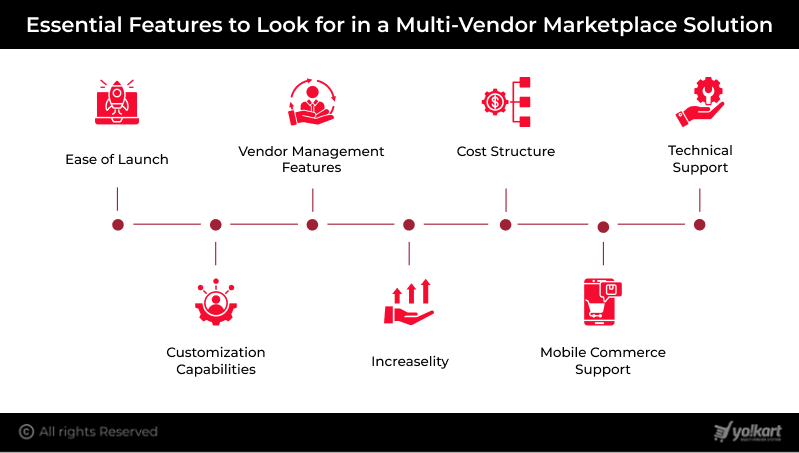
1. Ease of Launch
How quickly can you launch your marketplace? Solutions with ready-made marketplace functionalities, intuitive interfaces, and implementation support can significantly reduce time-to-market and help you capitalize on emerging opportunities faster.
2. Customization Capabilities
Can the solution accommodate unique workflows and branding requirements? Every marketplace has distinct business needs, so it’s important to choose a solution that allows design modifications, feature enhancements, and integrations with third-party tools.
3. Vendor Management Features
Does it offer dedicated vendor dashboards and administrative controls? Effective vendor management tools enable sellers to manage products, orders, inventory, and payouts independently while giving administrators complete oversight of marketplace activities.
4. Increaselity
Can it support business growth and increase traffic? As your marketplace expands, the solution should be able to handle a growing number of vendors, products, transactions, and users without compromising performance.
5. Cost Structure
Does the pricing align with your budget and long-term objectives? Evaluate not only the upfront investment but also recurring subscription fees, transaction charges, hosting expenses, and future customization costs to understand the total cost of ownership.
6. Mobile Commerce Support
Are native mobile apps available to enhance user engagement? With a significant portion of online purchases occurring on mobile devices, mobile-friendly experiences and dedicated apps can improve accessibility, retention, and conversions.
7. Technical Support
What level of assistance is provided post-launch? Reliable technical support, regular updates, security patches, and access to knowledgeable experts can help ensure smooth marketplace operations and minimize downtime when issues arise.
Best Multi-Vendor eCommerce Software to Launch a Marketplace
Choosing the right multi-vendor eCommerce software is one of the most important decisions for entrepreneurs planning to launch an online marketplace. The ideal solution should offer scalability, vendor management capabilities, customization flexibility, and long-term value.
To help simplify your decision, we’ve compared some of the leading multi-vendor marketplace platforms available in the US, highlighting their strengths, limitations, and ideal use cases:
1. Yo!Kart
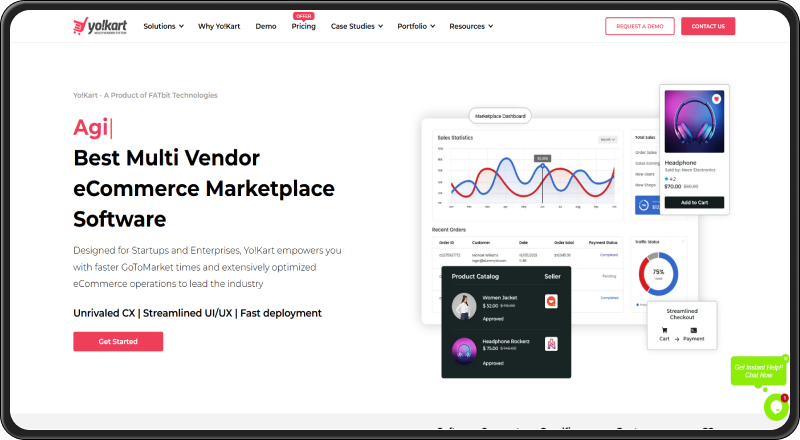
Yo!Kart is a self-hosted multi-vendor eCommerce solution designed specifically for businesses looking to build scalable online marketplaces. Developed by FATbit Technologies, the solution offers a comprehensive set of marketplace features out of the box, allowing entrepreneurs to launch B2C, B2B, hyperlocal, rental, wholesale, and niche marketplaces efficiently.
Unlike SaaS-based solutions that charge recurring subscription fees, Yo!Kart operates on a one-time license model, providing businesses with lifetime ownership and greater control over their marketplace infrastructure.
Its extensive feature set, customization flexibility, and dedicated support services have made it a preferred choice for sups, SMEs, and growing enterprises across the US.
Key Highlights:
- One-time license fee with lifetime ownership
- Fully self-hosted marketplace software
- Source code ownership available
- Separate dashboards for buyers, sellers, and administrators
- Built-in commission management system
- Multi-currency and multilingual functionality
- Native mobile applications available
- GDPR-compliant architecture
- SEO-friendly framework
- Advanced product catalog management
- Multiple payment gateway integrations
- Tax and shipping management capabilities
- Dedicated technical support and onboarding assistance
Pros:
- No recurring subscription costs
- Comprehensive marketplace functionality available from the start
- Highly customizable to suit diverse business models
- Faster deployment compared to custom development
- Scalable infrastructure to support future growth
- Strong support ecosystem for implementation and maintenance
- Suitable for B2C, B2B, rental, and niche marketplaces
Cons:
- Hosting infrastructure must be managed separately
- Advanced customizations may require development expertise
- Initial investment can be higher than entry-level SaaS subscriptions
Ratings:
- G2: 4.6 / 5
Schedule a Personalized Yo!Kart Demo
2. Shopify + Multi-Vendor Marketplace App
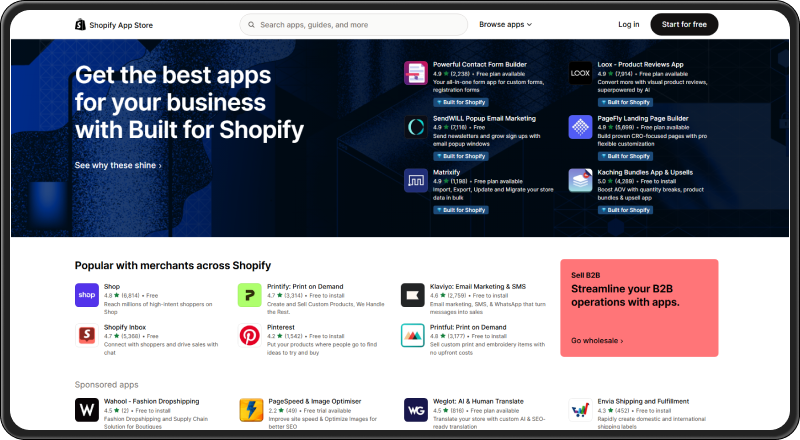
Shopify is a popular SaaS eCommerce platform that can be transformed into a multi-vendor marketplace through third-party marketplace applications. Known for its ease of use, hosted infrastructure, and extensive app ecosystem, Shopify allows businesses to launch marketplaces quickly. However, marketplace functionality largely depends on external apps, which can increase costs and limit flexibility over time.
Key Highlights:
- Cloud-hosted SaaS platform
- Large ecosystem of marketplace apps and integrations
- Easy-to-use interface
- Secure hosting included
- Multiple payment gateway options
- Extensive theme marketplace
Pros:
- Quick and simple marketplace setup
- Minimal technical expertise required
- Reliable hosting and security
- Strong ecosystem of integrations
- Excellent user experience
Cons:
- Multi-vendor functionality relies on third-party apps
- Recurring subscription and app fees
- Limited backend flexibility compared to self-hosted solutions
- Customization can become expensive
Ratings:
- G2: 4.4/5
3. Adobe Commerce (Magento)
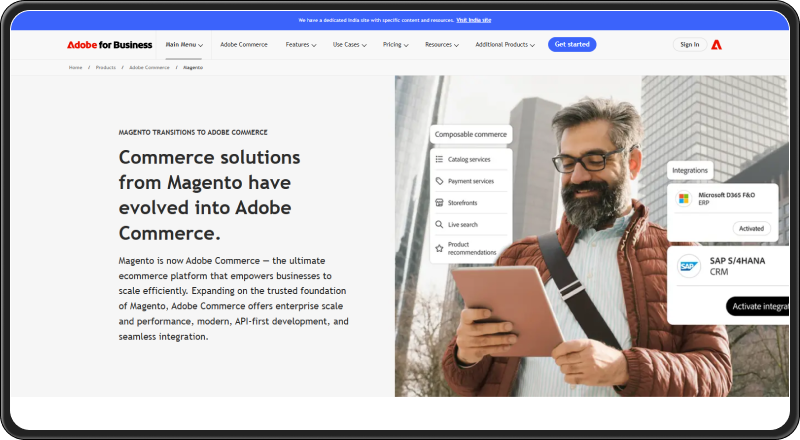
Adobe Commerce, formerly Magento Commerce, is an enterprise-grade eCommerce platform offering extensive customization capabilities. Businesses can build sophisticated marketplaces by integrating dedicated multi-vendor extensions. Its flexibility and scalability make it a preferred choice for large organizations with complex requirements.
Key Highlights:
- Enterprise-level architecture
- Extensive customization capabilities
- Large developer community
- Advanced B2B functionalities
- Scalable infrastructure
Pros:
- Highly flexible platform
- Suitable for large-scale marketplaces
- Strong B2B capabilities
- Extensive extension marketplace
Cons:
- High implementation costs
- Requires experienced developers
- Longer development timelines
- Marketplace features require extensions
Ratings:
- G2: 4.0/5
4. CS-Cart Multi-Vendor
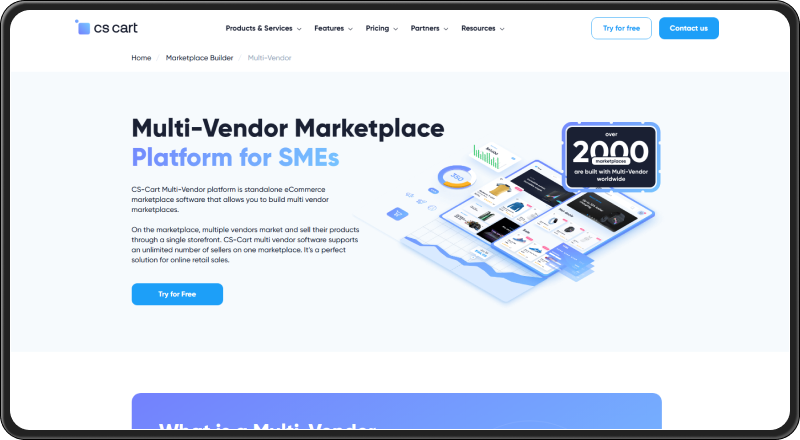
CS-Cart Multi-Vendor is a dedicated marketplace software solution designed specifically for launching online marketplaces. It comes with built-in vendor management features, making it easier to establish and manage multi-seller businesses. With self-hosted deployment and one-time licensing options, it appeals to businesses seeking marketplace-focused functionality without recurring subscription costs.
Key Highlights:
- Purpose-built marketplace software
- Self-hosted deployment
- Vendor-specific storefronts
- Multiple revenue models
- Comprehensive administration panel
Pros:
- Ready-made marketplace functionality
- One-time license options available
- User-friendly backend
- Extensive add-on marketplace
Cons:
- Additional costs for advanced add-ons
- Customization may require technical expertise
- Mobile apps available separately
Ratings:
- G2: 4.5/5
5. BigCommerce
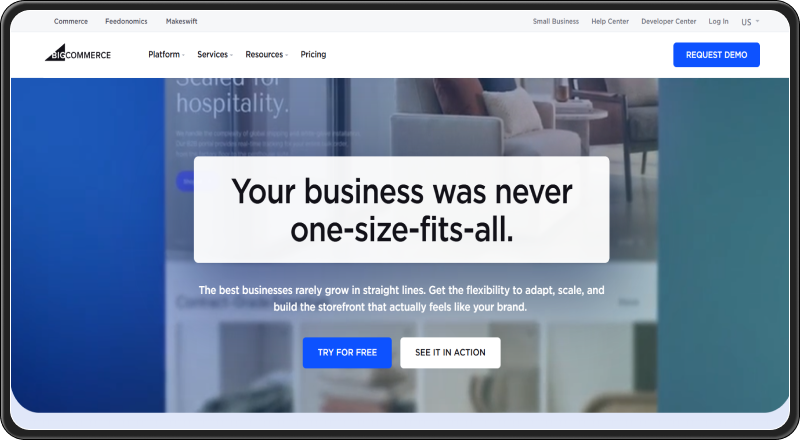
BigCommerce is a SaaS eCommerce platform that supports marketplace creation through integrations with third-party applications. It offers enterprise-level scalability, strong API capabilities, and secure hosted infrastructure. Businesses looking for a reliable cloud-based solution often consider BigCommerce, although marketplace functionality typically requires additional tools and integrations.
Key Highlights:
- Hosted infrastructure
- Enterprise-grade scalability
- Omnichannel selling capabilities
- Extensive API support
- Strong security standards
Pros:
- No hosting management required
- Scalable architecture
- Excellent support for growing businesses
- Rich integration ecosystem
Cons:
- Marketplace functionality requires external applications
- Recurring subscription costs
- Customization limitations compared to open-source solutions
Ratings:
- G2: 4.2/5
6. Sharetribe
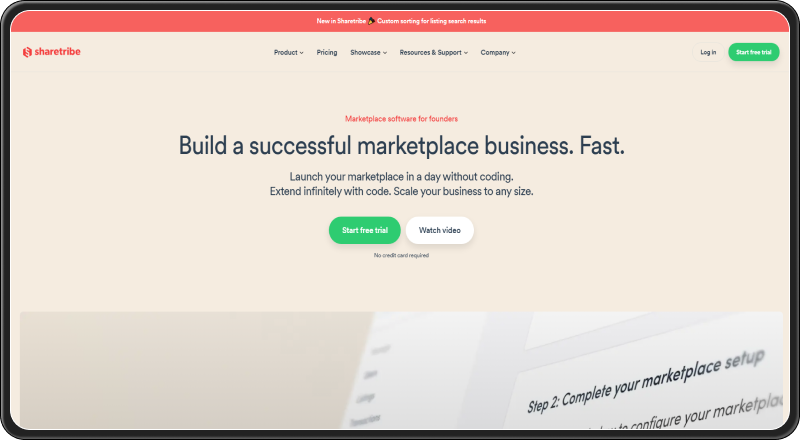
Sharetribe is a marketplace-focused SaaS platform that enables entrepreneurs to launch service, rental, and product marketplaces quickly. Its no-code approach, flexible APIs, and marketplace-specific functionality make it attractive for startups seeking rapid deployment. However, customization flexibility may vary depending on the selected pricing plan.
Key Highlights:
- Marketplace-specific architecture
- No-code deployment options
- Flexible APIs
- Hosted infrastructure
- Built-in payment workflows
Pros:
- Faster marketplace launch
- Minimal technical requirements
- Designed specifically for marketplaces
- Strong support resources
Cons:
- Limited flexibility on lower-tier plans
- Recurring monthly fees
- Advanced customizations may require developer resources
Ratings:
- G2: 4.7/5
7. Mirakl
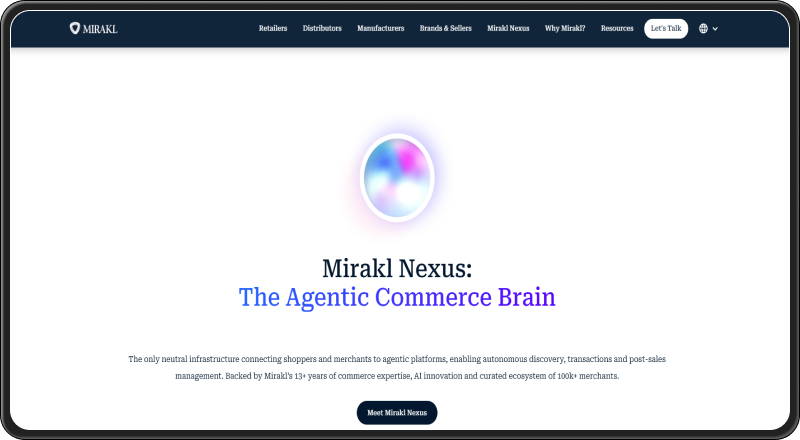
Mirakl is an enterprise marketplace platform widely adopted by large retailers and B2B organizations. It helps businesses expand their product offerings through third-party seller integrations. With its enterprise-focused architecture, Mirakl is best suited for organizations seeking large-scale marketplace expansion and operational efficiency.
Key Highlights:
- Enterprise marketplace capabilities
- Vendor onboarding automation
- Advanced analytics
- Global marketplace support
- Robust API framework
Pros:
- Highly scalable
- Strong automation features
- Enterprise-level security
- Excellent B2B functionality
Cons:
- Premium pricing
- Longer implementation timelines
- May be excessive for startups
Ratings:
- G2: 4.2/5
8. Arcadier
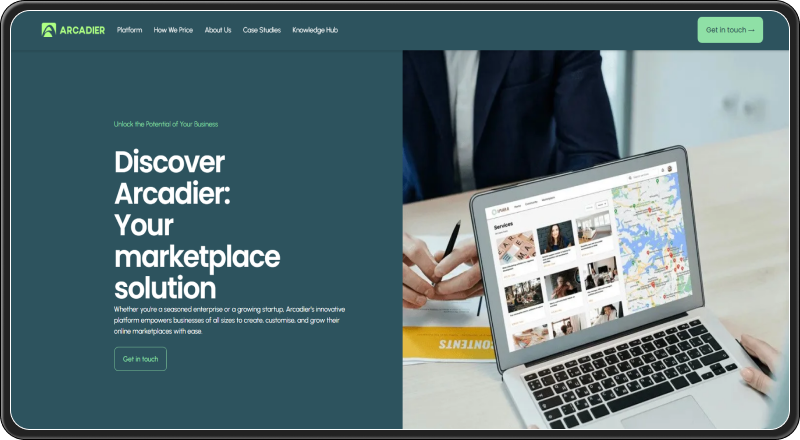
Arcadier is a SaaS-based marketplace builder that supports product, service, rental, and procurement marketplaces. It offers customizable templates, white-label capabilities, and marketplace management tools. Its flexibility and lower initial investment requirements make it a viable option for SMEs exploring marketplace commerce.
Key Highlights:
- Multiple marketplace models supported
- Hosted infrastructure
- White-label capabilities
- API integrations available
- Marketplace management tools
Pros:
- Faster deployment
- User-friendly administration
- Supports diverse marketplace types
- Lower initial investment
Cons:
- Recurring subscription fees
- Limited flexibility compared to self-hosted platforms
- Advanced features available on higher plans
Ratings:
- G2: 4.3/5
9. Marketplacer
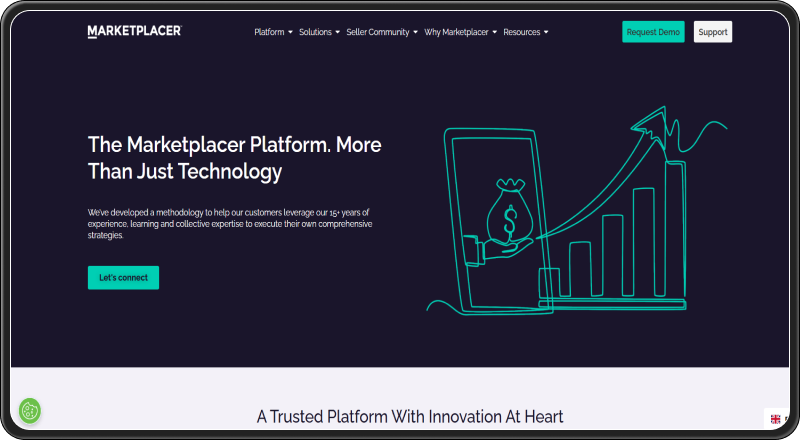
Marketplacer is an enterprise marketplace platform designed to help established businesses launch and scale marketplaces efficiently. It offers advanced seller management, omnichannel commerce support, and integration capabilities. Businesses seeking to scale existing operations through third-party sellers often choose Marketplacer for its robust infrastructure and enterprise-grade functionality.
Key Highlights:
- Enterprise-grade infrastructure
- Advanced seller management
- Strong integration capabilities
- Omnichannel support
- Scalable architecture
Pros:
- Suitable for large marketplaces
- Robust operational controls
- Strong partner ecosystem
- Supports rapid expansion
Cons:
- Higher pricing structure
- Not ideal for early-stage startups
- Requires implementation planning
Ratings:
- G2: 4.6/5
Looking for the Right Marketplace Software for Your Business?
10. Nautical Commerce
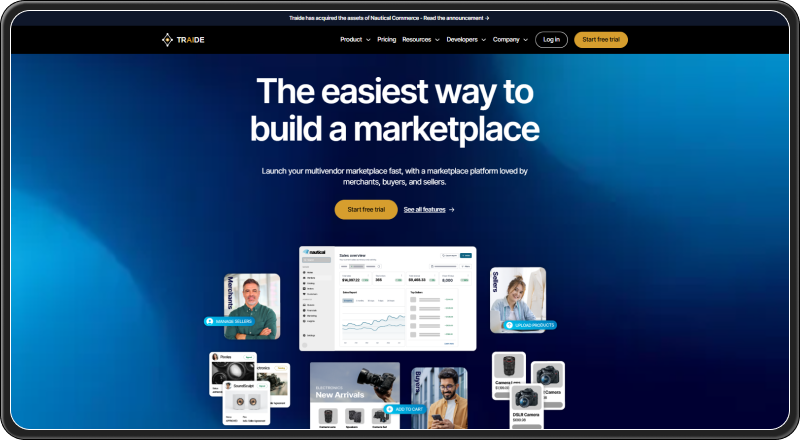
Nautical Commerce is a modern marketplace platform designed specifically for businesses building multi-vendor ecosystems. Its API-first architecture, modular design, and headless commerce capabilities provide flexibility for custom marketplace experiences. The platform is particularly appealing to businesses seeking modern technology stacks and scalable marketplace infrastructure.
Key Highlights:
- Marketplace-native architecture
- Modular functionality
- Vendor onboarding workflows
- Headless commerce capabilities
- API-first approach
Pros:
- Designed exclusively for marketplaces
- Strong operational controls
- Modern technology stack
- Flexible integrations
Cons:
- Limited market presence compared to older platforms
- Pricing information is not publicly available
- May require technical assistance for implementation
Ratings:
- G2: 4.8/5
Comparison of Best Multi-Vendor eCommerce Platforms in the US
| Platform | Deployment | Pricing Model | Source Code Ownership | Marketplace Features | Mobile Apps |
| Yo!Kart | Self-hosted | One-time license | Yes | Built-in | Available |
| Shopify | SaaS | Monthly subscription + app fees | No | Third-party apps | Available |
| Adobe Commerce | Self-hosted/Cloud | Enterprise pricing | Limited | Extensions required | Available |
| CS-Cart Multi-Vendor | Self-hosted | One-time license | Yes | Built-in | Available separately |
| BigCommerce | SaaS | Monthly subscription | No | Third-party integrations | Available |
| Sharetribe | SaaS | Monthly subscription | No | Built-in | Limited |
| Mirakl | Cloud | Custom enterprise pricing | No | Built-in | Available |
| Arcadier | SaaS | Monthly subscription | No | Built-in | Available |
| Marketplacer | Cloud | Custom pricing | No | Built-in | Available |
| Nautical Commerce | Cloud | Custom pricing | No | Built-in | Available |
Why Yo!Kart is the Best Multi-Vendor eCommerce Solution?
Selecting the right multi-vendor eCommerce solution is one of the most critical decisions for entrepreneurs planning to launch an online marketplace. While many platforms offer marketplace functionality, they differ significantly in terms of pricing structure, scalability, ownership, flexibility, and long-term value. The ideal solution should not only support your current business requirements but also provide the flexibility to grow alongside your marketplace.
After comparing the teaching marketplace platforms available in the US, Yo!Kart emerges as a strong contender for businesses looking to balance affordability with enterprise-grade capabilities.
Here’s why many entrepreneurs and organizations choose Yo!Kart over other alternatives.
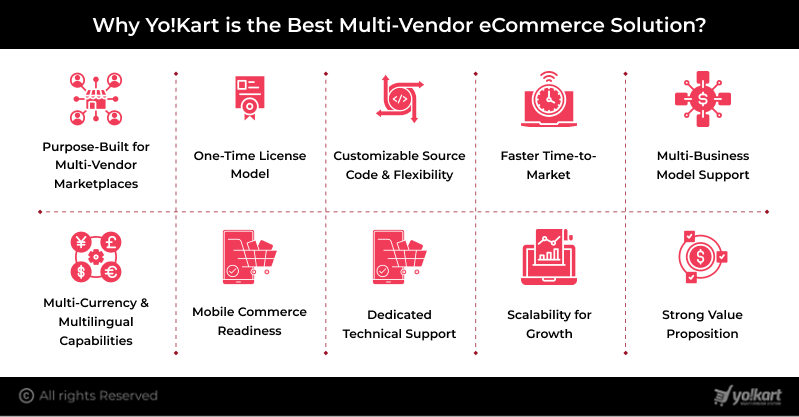
1. Purpose-Built for Multi-Vendor Marketplaces
Unlike traditional eCommerce platforms that require multiple third-party applications or extensions to enable marketplace functionality, Yo!Kart is designed specifically for multi-vendor businesses. It comes equipped with essential marketplace features out of the box, helping entrepreneurs launch faster while reducing operational complexity.
Key capabilities include:
- Vendor registration and management
- Independent seller dashboards
- Commission management systems
- Product approval workflows
- Shipping and tax management
- Order tracking capabilities
- Review and rating systems
- Multi-vendor catalog management
This reduces dependency on external plugins and simplifies marketplace operations.
2. One-Time License Model
One of Yo!Kart’s biggest differentiators are its one-time licensing model. Many SaaS-based multi-vendor eCommerce platforms charge recurring monthly or annual subscription fees. As your marketplace grows, these costs can increase substantially.
With Yo!Kart, businesses pay a one-time fee and gain access to the software without worrying about escalating subscription expenses.
Benefits include:
- Lower long-term ownership costs
- Greater predictability in budgeting
- Improved return on investment
- Freedom from recurring software charges
For startups and SMEs operating within fixed budgets, this pricing model can be particularly advantageous.
3. Customizable Source Code and Flexibility
As marketplaces evolve, businesses often require custom workflows, integrations, and unique features to remain competitive. Yo!Kart offers customizable source code that provides greater control over platform customization and future development.
This flexibility enables organizations to:
- Integrate third-party systems
- Develop custom modules
- Enhance user experiences
- Implement industry-specific functionalities
Businesses seeking long-term independence often view this capability as a major advantage.
4. Faster Time-to-Market
Building a marketplace from scratch can take months or even years. Yo!Kart’s ready-made architecture significantly accelerates deployment timelines. Businesses can launch quickly because many core marketplace functionalities are already built into the platform.
As a result, entrepreneurs can:
- Validate ideas faster
- Generate revenue sooner
- Respond quickly to market opportunities
- Reduce development complexities
5. Multi-Business Model Support
Every marketplace has unique operational requirements, customer expectations, and revenue strategies. Yo!Kart is designed to accommodate a variety of marketplace types, allowing businesses to tailor the platform to their specific industry needs while maintaining a seamless user experience.
- B2C Marketplaces
Ideal for businesses that connect multiple vendors with end consumers through a centralized online marketplace. These marketplaces typically focus on delivering a broad product selection and convenient shopping experiences.
- B2B Marketplaces
Suitable for wholesale operations and supplier networks, enabling businesses to manage bulk orders, vendor relationships, and procurement processes more efficiently.
- Rental Marketplaces
Designed to support businesses offering products or assets on a rental basis. Features such as booking workflows and availability management help streamline rental operations.
- Hyperlocal Marketplaces
Built for location-based commerce, these marketplaces facilitate transactions within specific geographic areas, making them well-suited for local delivery and community-focused services.
- Niche Industry Marketplaces
Perfect for entrepreneurs targeting specialized audiences with industry-specific products or services. The platform’s flexibility allows businesses to create tailored experiences that resonate with their target market.
By supporting multiple marketplace models, Yo!Kart provides businesses with the flexibility to launch in their chosen niche today while retaining the ability to evolve and expand into new opportunities as their marketplace grows.
6. Built-In Multi-Currency and Multilingual Capabilities
Businesses targeting international audiences require localization capabilities that support diverse customer and vendor bases.
Yo!Kart offers support for:
- Multiple currencies
- Multiple languages
- Region-specific settings
These features help businesses expand into new markets while delivering localized experiences to customers and vendors.
7. Mobile Commerce Readiness
With mobile commerce continuing to drive online purchases, businesses need marketplace solutions that deliver seamless experiences across devices. Yo!Kart offers mobile-responsive interfaces and native mobile applications to support modern shopping behaviors.
Benefits include:
- Improve customer engagement
- Increase accessibility
- Enhance vendor convenience
- Drive higher conversions
This enables marketplace owners to meet the expectations of modern consumers.
8. Dedicated Technical Support
Technical assistance plays an important role during marketplace implementation and post-launch operations. Yo!Kart provides dedicated assistance to help businesses navigate implementation and ongoing marketplace operations.
Support services include:
- Installation assistance
- Onboarding guidance
- Technical troubleshooting
- Upgrade support
- Platform optimization
This support infrastructure can help reduce operational disruptions and improve launch experiences.
9. Scalability for Growth
As marketplaces grow, they need platforms capable of handling increased activity. Yo!Kart is designed to accommodate expanding business requirements without compromising user experience.
The solution can support:
- Expanding vendor networks
- Larger product catalogs
- Growing customer bases
- Increasing order volumes
This scalability enables businesses to build confidently without needing immediate platform migration.
10. Strong Value Proposition
When evaluating the combination of features, ownership benefits, flexibility, and total cost of ownership, Yo!Kart delivers strong overall value. It provides a balanced combination of affordability and enterprise-grade functionality, making it suitable for startups, SMEs, and scaling businesses alike.
While enterprise platforms may offer specialized capabilities for large corporations, Yo!Kart delivers an impressive balance of functionality and affordability for startups, SMEs, and scaling organizations.
Launch Your Multi-Vendor Marketplace With Yo!Kart
US-Based Marketplace Platforms Built Using Yo!Kart
One of the strongest indicators of a platform’s reliability is its real-world implementation. Over the years, Yo!Kart has powered marketplaces across a wide range of industries, helping entrepreneurs and businesses launch scalable multi-vendor platforms tailored to their unique requirements.
The following examples highlight how businesses in the United States have leveraged Yo!Kart’s flexibility and marketplace-focused architecture to build thriving online marketplaces.
1. Voyij
Industry: Travel and Tourism
Voyij is a travel marketplace designed to connect travelers with authentic local experiences. The platform enables experience providers to list and manage their offerings while allowing travelers to discover and book curated adventures through a seamless online interface. By simplifying vendor onboarding and booking management, Voyij has created a convenient ecosystem for both travelers and tour operators.
Why It Stands Out:
- Experience-based marketplace model
- Vendor management capabilities
- User-friendly booking workflows
2. NPK Marketplace
Industry: Agriculture and Farming Equipment
NPK Marketplace is an online marketplace catering to the agricultural sector, connecting buyers and sellers of farming-related products and equipment. The platform brings together multiple vendors within a centralized marketplace, making it easier for agricultural businesses and farmers to discover, compare, and purchase equipment from trusted suppliers.
Why It Stands Out:
- Industry-specific marketplace functionality
- Efficient vendor management capabilities
- Scalable infrastructure for growing product catalogs
3. TopAfricans.com
Industry: Ethnic and Specialty Products Marketplace
TopAfricans.com is a multi-vendor marketplace that provides customers in the United States access to a diverse range of African products and services. By bringing together independent vendors on a single platform, the marketplace creates a dedicated destination for culturally relevant products while helping sellers reach a broader audience.
Why It Stands Out:
- Supports multiple independent vendors
- Niche marketplace catering to a targeted audience
- Seamless shopping experience with diverse product categories
These marketplace success stories demonstrate Yo!Kart’s ability to support diverse business models across industries, from travel and tourism to agriculture and specialty retail.
Conclusion
The US eCommerce landscape presents tremendous opportunities for entrepreneurs and enterprises looking to build successful online marketplaces. However, selecting the right multi-vendor eCommerce platform remains a foundational decision that can influence scalability, operational efficiency, and long-term profitability.
Each platform featured in this guide serves different business needs. Shopify and Sharetribe are popular among startups seeking quick deployment, while Adobe Commerce and Mirakl cater to enterprises requiring advanced functionality. CS-Cart Multi-Vendor, Arcadier, Marketplacer, BigCommerce, and Nautical Commerce offer varying levels of flexibility and marketplace capabilities.
For businesses seeking a purpose-built marketplace solution with strong ownership benefits, scalability, and extensive built-in features, Yo!Kart presents a compelling option. Ultimately, the best platform is the one that aligns with your business model, budget, operational requirements, and long-term growth strategy.
Frequently Asked Questions (FAQs)
1. What is a multi-vendor eCommerce platform?
A multi-vendor eCommerce platform is software that enables multiple independent sellers to list and sell products through a single online marketplace. The marketplace owner manages operations, while vendors handle their listings, inventory, orders, and customer interactions independently..
2. What is the best multi-vendor eCommerce solution in the the US?
The best multi-vendor eCommerce solution depends on your business requirements. Popular options include Yo!Kart, Shopify, Mirakl, CS-Cart Multi-Vendor, and Adobe Commerce, each offering unique features for different marketplace models and growth stages.
3. Is Yo!Kart suitable for startups?
Yes, Yo!Kart is well-suited for startups. Its built-in marketplace features, one-time licensing model, and scalable architecture help entrepreneurs launch quickly while avoiding recurring software costs that can impact early-stage business budgets.
4. Can I customize Yo!Kart, according to my business needs?
Yes, Yo!Kart offers customization flexibility, enabling businesses to tailor the platform to specific requirements. Customizable source code options also provide greater flexibility for long-term platform development.
5. Does Yo!Kart support B2B marketplaces?
Yes, Yo!Kart supports B2B marketplace models in addition to B2C, rental, hyperlocal, and niche marketplace configurations. This flexibility enables businesses to launch industry-specific platforms while adapting to changing market demands over time.
6. Which multi-vendor eCommerce platform has the lowest long-term cost?
Platforms with one-time licensing models often provide lower long-term ownership costs than subscription-based solutions. Options such as Yo!Kart and CS-Cart Multi-Vendor can help businesses reduce recurring software expenses while maintaining full marketplace functionality.
7. How much does it cost to launch a multi-vendor marketplace?
Marketplace development costs vary based on the platform, customization needs, integrations, hosting, and business requirements. Depending on the project’s complexity, investments can range from a few thousand dollars to significantly larger budgets for enterprise-grade marketplaces.
8. Do I need technical expertise to launch a marketplace?
Not necessarily. SaaS solutions such as Shopify and Sharetribe require minimal technical knowledge. However, self-hosted solutions may involve setup and customization tasks, making technical support or development assistance beneficial during implementation and scaling.
9. Can multi-vendor marketplaces scale as the business grows?
Yes, Most leading multi-vendor eCommerce platforms are designed to support growth. They can handle increasing numbers of vendors, products, customers, and transactions, allowing businesses to expand their operations without needing to switch platforms prematurely.
10. Why should I choose Yo!Kart over other marketplace platforms?
Businesses often choose Yo!Kart, because it is purpose-built for multi-vendor marketplaces. Its one-time licensing model, built-in marketplace functionality, customization flexibility, scalability, and ownership advantages make it a compelling option for long-term marketplace growth.
Build Your Marketplace With Ready-Made Software
Get StartedPopular Posts