
Last Updated: Feb 13, 2026
Entrepreneurs and businesses in large numbers are planning to launch their own eCommerce platform, and they often compare YoKart and Shopify to decide on the best solution to get started with.
Are you also one of them? Great! This blog is for you.
In this informative blog post, we will be comparing Yo!Kart and Shopify on different critical factors that one should consider when deciding on any one. However, before we get to the key differences, let’s get a brief on why you need an eCommerce multi-vendor marketplace platform.
If you want to grow your business at a large scale, reach a wider audience, run a global business, build a digital ecosystem and generate revenue from multiple revenue channels, a multi-vendor marketplace is the destination for all your goals. It’s the only way to help you establish your dominance in the eCommerce world, similar to Amazon, eBay, Alibaba, and others.
At the same time, you can’t ignore the growing numbers of the eCommerce industry, whether it’s about the increasing number of online shoppers or the market size. According to Grand View Research, the global eCommerce market size is projected to reach 83.26 trillion by 2030, growing at a CAGR of 18.9%. At the same time, the number of online shoppers is about 33 to 34% out of 6 billion, an estimated number of internet users worldwide, according to Statista.
Therefore, building an online multi-vendor marketplace platform is a strategic move to capitalize on the rapidly expanding eCommerce ecosystem. With consumers increasingly preferring digital shopping and businesses seeking scalable online sales channels, multi-vendor marketplaces offer a sustainable and growth-oriented business model.
Moreover, the advantages of multi-vendor platforms for sellers, buyers, and marketplace owners—such as wider product variety, competitive pricing, streamlined vendor management, and diversified revenue streams—make this model even more compelling.
To make an informed decision while choosing the right marketplace solution, it is essential to compare leading platforms based on features, scalability, customization, and total cost of ownership.
Suggested Read: A detailed comparison between Yo!Kart and CS-Cart Multi-Vendor to understand which solution aligns best with your business goals.
Table of Contents
Why Yo!Kart is the Best Alternative to Shopify Multivendor – Overview
What is Shopify Multivendor?
Shopify is a SaaS-based (Software-as-a-Service) eCommerce platform that helps you create an online store. However, when it comes to building a multi-vendor marketplace, Shopify relies on multi-vendor marketplace plugins or extensions such as Webkul and Shipturtle. Shopify is not a dedicated multi-vendor marketplace software, but it can transform an existing online store into a multi-vendor marketplace via third-party integration.

The Shopify Multi-Vendor plugin allows you to add unlimited vendors, products, and sync products from other eCommerce stores.
What is Yo!Kart?
Unlike Shopify, Yo!Kart is a license-based eCommerce multivendor platform, designed to support multi-vendor features inherently. It provides complete control and ownership over the marketplace. It helps eCommerce startups, existing online vendors, and retailers to launch a multivendor marketplace effortlessly. Today, Yo!Kart is one of the best multi-vendor marketplace software and is a preferred choice for entrepreneurs, startups and existing business owners looking for a solution that is easy to set up and offers complete control without any limitations. The solution supports out-of-the-box multi-vendor features required alongside advanced reporting, analytics, SEO and marketing features.
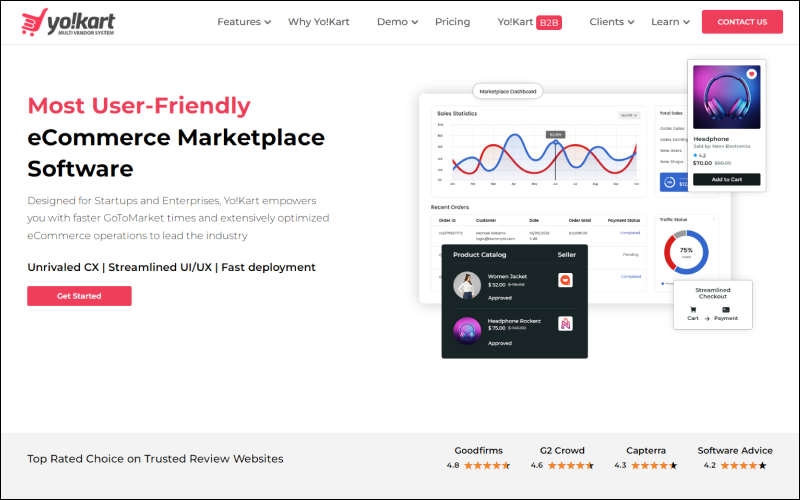
Being a standalone multivendor eCommerce platform, Yo!Kart is undoubtedly among the best alternatives to Shopify Multivendor.
Yo!Kart vs Shopify Multivendor: Key Comparisons to Decide on the Best Multi-Vendor Marketplace Software
Key Comparisons
1. Pricing
By getting started with Shopify, you need to pay a monthly recurring subscription fee, alongside a monthly fee for the multi-vendor extension that ranges between $15 to $69 (Webkul: $15-$60 and Shipturtle: $19 to $69 monthly) and more depending on the extension you choose. Shopify pricing may range from $39/month for the basic plan to $399/month for the advanced and $2300/month for Shopify Plus. In addition, Shopify also charges for domains, themes and templates, Shopify developer apps integrations, email hosting, and more, alongside transaction fees. The cheapest one is Basic Shopify, which gives you all the basic eCommerce functions. This plan is suitable for starting a business. The next plan, “Shopify” comes at $105/month, which offers some additional features. Shopify Advanced comes with advanced eCommerce features at $399 monthly. Yo!Kart doesn’t charge you monthly recurring fees as Shopify does. Instead, this multi vendor marketplace software comes with a one-time payment plan starting at $1249(GoQuick). However, it offers different multivendor marketplace packages tailored to your business needs. All include free installation, zero transaction fee, and a lifetime license. You can pick a plan best suited for you.
In addition, Yo!Kart offers digital marketing services free for 1 month. Their experts will help you launch a custom marketing plan with your own content marketing strategies, competitive analysis, and website traffic generation techniques, among others. In the short term, Shopify Multivendor Marketplace software might be cheaper than Yo!Kart but in a long-term scenario, Yo!Kart offers a more reasonable pricing policy and that gives you another reason to consider it as an alternative to Shopify Multivendor.
2. Features
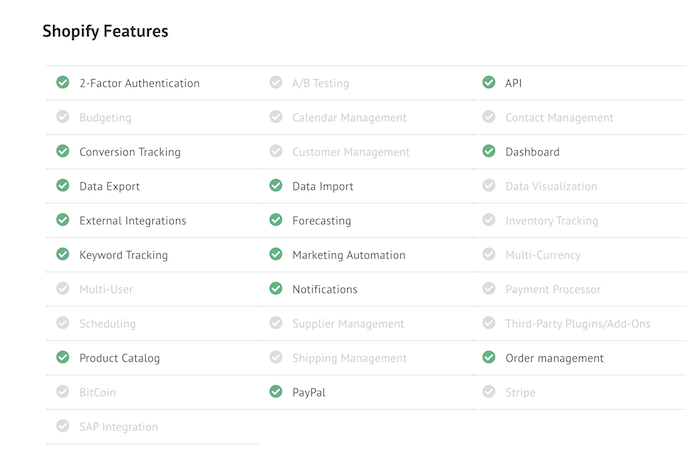
If you use Shopify with the Multi-Vendor Marketplace plugin, it’s a great tool to convert your store into a marketplace. It offers a variety of multi-vendor features such as 2-Factor Authentication, Conversion Tracking, Product Catalog, Marketing Automation, Order Management, External Integrations, and more.
In addition, Shopify also has many additional feature apps.
- Payment Methods such as Stripe Connect for split payment between Admin and Seller
- Auction for Sellers
- Mobile App for Customers
- Multiple shipping options
- Sync your Seller products from their own eCommerce store (Shopify, WooCommerce)
- Direct buyer-seller communication channel
- Admin can assign badges to sellers
- Membership plan for Sellers
- Favorite Product/Seller
- Multi-vendor API
- Sub-admins can be added
- Commission Management System.
- Global Commission: Applied to all the sellers
- Individual Commission for Seller: If an admin wants a different commission rate for individual sellers, then they can do it with individual commission management. Also, the commission can be either a fixed amount or a certain percentage for global as well as individual commissions.
Please note that you need to pay additional costs to access several features when operating with Shopify Multivendor.
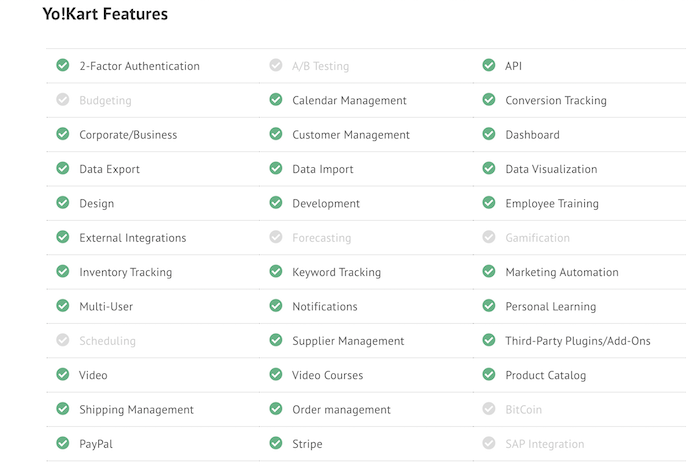
If it’s a game with multi-vendor features, Yo!Kart can lead this round. This white-label multivendor marketplace software is specially designed to support multi-vendor features. It offers more features than Shopify Multivendor. From dedicated vendor management tools to commission management, AI-based product listing to separate storefronts and robust catalog management to advanced reporting and in-built marketing tools, Yo!Kart offers out-of-the-box features.
Yo!Kart also has an inbuilt CMS to get your customers hooked up to your website through regular blog posts and other marketing tactics. Moreover, it also includes some notable marketing features like PPC advertisements, Affiliate modules, social media sharing, and many more to help you reach a wider audience.
You can check a more detailed list of multivendor eCommerce features on Yo!Kart website.
Other notable features of Yo!Kart includes:
- AI-based Product Listing
- Services Listing and Slot Booking Options
- Classified Listings, making P2P Commerce Seamless
- Easy User Management Tools
- Commission Management and Subscription Add-on Features
- Catalog Management System
- PPC Modules for Sellers
- 25+ Payment Gateways for Vendor Payouts
- EffortlessOrder Management
- Multilingual with RTL Support
- Multi-currency Support
- Custom Push Notifications
- Easy Product Comparison
- Pre-integrated with QuickBooks, TaxJar, Avalara, ShipStation, etc.
3. 3rd Party Integration
An eCommerce multi-vendor marketplace hardly runs independently without third-party APIs and tools because they are crucial for the success of the business. These tools may include ERP systems, order management systems, tax tools, shipping platforms, optimization tools, and many more
Since Shopify is SaaS-based, Shopify store owners are tied to using SaaS APIs for integration with existing business systems. It is not always possible to integrate an eCommerce store with all of your existing business applications because the APIs are limited. Unfortunately, a SaaS-based multi-vendor marketplace platform like Shopify doesn’t offer complete flexibility with third-party integrations.
With License-based multivendor eCommerce platforms like Yo!Kart, owners have the luxury to get custom integrations generated to incorporate existing business system applications seamlessly. Yo!Kart offers source code ownership and this multi-vendor marketplace software can be integrated with almost any API. It also comes with 30+ pre-integrated APIs and tools like PayPal, Stripe Connect, Google Analytics, ShipStation, Taxjar, Avalara and other popular third-party applications.
4. Customizability
Shopify is best known for its huge library of themes and plugins. It offers over 70 themes, including paid and free ones to choose from for your eCommerce marketplace. You can modify colors, language strings, and more either by yourself or you can work with a Shopify development company to customize the front end. Even better, you can buy a theme that meets your needs out of the box. However, due to its SaaS nature, Shopify is not fully flexible with customization.
On the other hand, Yo!Kart is a fully customizable multi-vendor eCommerce platform. You can customize your website however you want using its robust and easy-to-use CMS. In addition, if you seek in-depth code-level customization, Yo!Kart allows. It provides source code ownership, allowing users to modify and implement code-level changes to meet in-depth customization requirements.. In short, Yo!Kart makes it easy for business owners to target the right audience by aligning the platform specifically to their requirements. This is a big plus for Yo!Kart over Shopify Multivendor Plugin in this round.
5. Support
Besides the basic support, such as FAQs, blogs, Documents, Tutorials, the biggest advantage of Yo!Kart support is that it offers FREE 12-months technical support to resolve any bugs/errors found in the system. Further, it also extends its technical support on its terms. . There is no free technical support for the Shopify multi-vendor marketplace apps. However, you can still use all the support from Shopify for eCommerce stores. Shopify provides help via various channels. including phone, email, and live chat. Plus, you can also go to its community forum, help center, business courses, and video tutorials. Other than that, you can hire professional Shopify experts to ensure optimal problem resolution and seamless business operation.
6. Client Reviews
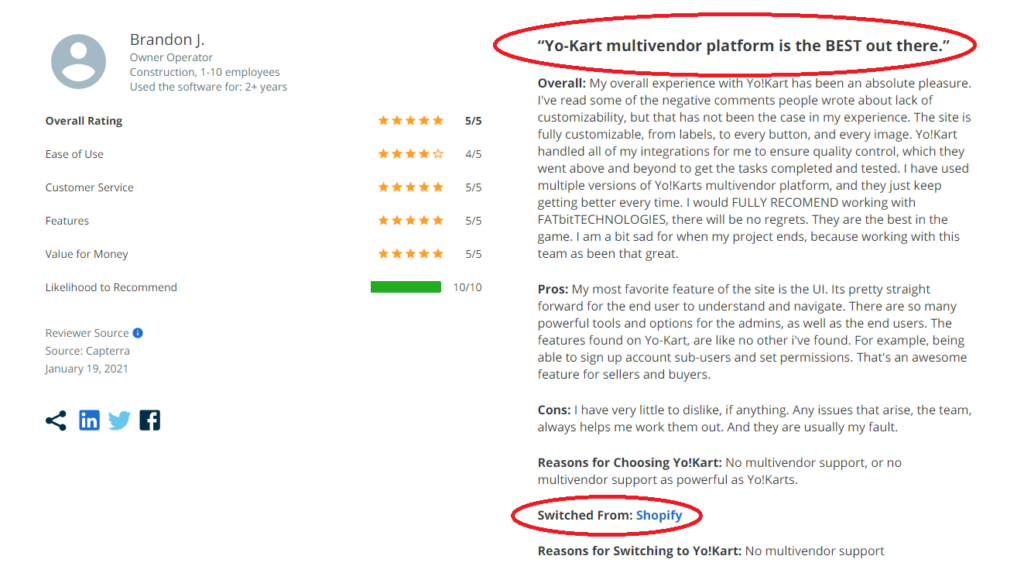
Let’s go through a review on Capterra where the user stated that he switched from Shopify to Yo!Kart multi-vendor eCommerce platform. He mentioned that he switched because Shopify’s multi-vendor system is not as powerful as Yo!Kart.
Check the complete review here.
Conclusion
To sum up, Yo!Kart has surpassed Shopify in the game of Multi-Vendor and is a more reliable multi-vendor marketplace platform. Yo!Kart has all the necessary features required for a multi-vendor marketplace, most of which are additionally charged in the Shopify Plans. Yo!Kart’s all-in-one package for $1249 is not bad. The more interesting part is that Yo!Kart is available at a one-time payment. It offers a lifetime license to use this white-label multi-vendor marketplace software by paying once. Other than that, the report can amazingly predict trends, and the frontend has plenty of features for buyers to play around with.
In other words, you can customize and tailor the platform based on your specific requirements. ,
In contrast, Shopify could be the best multi-vendor marketplace platform for those who are operating existing Shopify stores. However, when it comes to independent multi vendor marketplace software, Shopify could not be an optimal solution for merchants to choose. It still lacks some important features for a multi-vendor marketplace. You need to pay extra for the additional applications on your website. In case you want to migrate your current website to Yo!Kart, we highly recommend using LitExtension, a shopping cart migration expert. You can migrate all of your data, including products, customers, and orders, to the target site quickly, seamlessly, and at a reasonable price, too. Also, a FREE DEMO is available if you want to know how the migration works.
We hope that this article will help you choose a suitable platform for your marketplace. Trusted by 5500+ eCommerce businesses across different niches such as Liquor Marketplace, Groceries, B2B Wholesale, Diamond B2B Trading, and more, Yo!Kart is a popular destination to start a multi-vendor marketplace and undoubtedly the best alternative to Shopify Multivendor. In case of any query, please reach out via the support center.
Frequently Asked Questions:
Q1. Which is the best alternative to Shopify Multivendor Platform?
Ans. Yo!Kart is the leading alternative to Shopify multivendor marketplace platform. Unlike Shopify that uses multi-vendor plugins built by third-party developers to convert its e-commerce store into a marketplace, Yo!Kart is inherently designed as a multivendor platform. Plus, it is a self-hosted, scalable, and highly customizable solution.
Q2. How many people use Shopify?
Ans. There are a significant number of businesses currently around the globe that use Shopify to empower their eCommerce operations. While these numbers are great, it is interesting to note that very few businesses rely on Shopify for their multi-vendor marketplace needs.
Q3. How many people use Yo!Kart?
Ans. Currently, there are over5500+ marketplaces powered by Yo!Kart and the number has been growing continuously. Several entrepreneurs, as well as Fortune 500 companies, trust Yo!Kart to start their online marketplace.
Q4. Is Shopify a multi-vendor platform?
Ans. No, Shopify isn’t a standalone multi-vendor platform. It is a SaaS-based eCommerce platform that allows you to set up and start an online store. Further, you may install third-party multi-vendor plugins to convert your Shopify store into a multi-vendor marketplace, but this charges extra per month.
Q5. Does Shopify have multi-vendor apps?
Ans. Yes, there are multi-vendor apps from various third-party service providers listed in the Shopify plugin library.
Q6. What is the pricing difference between Yo!Kart and Shopify?
Ans. There is a big difference on the pricing front. For instance, Yo!Kart base package is priced at $1249 – a one-time license fee, while Shopify plans range from $29 to $299/month with an additional fee for several integrations or plugins required.
Choose Yo!kart To Launch A Multi-vendor Ecommerce Marketplace
Contact UsPopular Posts