


Published Date 05th Aug, 2026
TL;DR
- Compare the top 10 white label marketplace solutions for launching marketplaces that sell software, templates, courses, and other digital products.
- Evaluate software based on customization, scalability, multi-vendor capabilities, digital products support, security, licensing, and long-term business value.
- Discover the essential features and evaluation criteria to choose marketplace software that aligns with your business model and future growth plans.
- Learn why Yo!Kart by FATbit Technologies stands out with its marketplace-first architecture, self-hosted deployment, extensive built-in features, and flexible customization options.
The digital economy has evolved far beyond eBooks and downloadable PDFs. Today, creators, educators, software developers, designers, agencies, and businesses are generating billions of dollars by selling digital products such as online courses, software licenses, templates, themes, stock assets, AI prompts, music, videos, plugins, digital artwork, and subscription-based content.
As this market continues to expand, entrepreneurs are moving beyond selling standalone products and embracing multi-vendor digital product marketplaces. These platforms enable multiple creators to list, sell, and manage their digital offerings under a single, branded marketplace, creating a diverse ecosystem that attracts both buyers and sellers.
Leading platforms such as Creative Market, Envato Market, Gumroad, ThemeForest, CodeCanyon, Udemy, and Adobe Stock demonstrate the immense potential of this business model. By bringing together thousands of vendors and millions of buyers, they have transformed how digital products are discovered, purchased, and distributed.
However, building a marketplace from scratch can require months of development, significant investment, and continuous maintenance. This is where white label software to build a digital products marketplace becomes an attractive alternative.
To help you choose the right solution, this guide compares the top 10 white label software solutions to build a digital products marketplace in 2026, evaluating each solution based on its features, scalability, customization, digital product support, and overall business value.
Table of Contents
- What is White Label Software for a Digital Products Marketplace?
- Why Do Businesses Prefer White Label Marketplace Software?
- How We Selected These White Label Platforms
- Top 10 White Label Software to Build a Digital Products Marketplace in 2026
- How to Choose the Right White Label Software for Your Digital Products Marketplace
- Essential Features Every Digital Marketplace Should Have
- Common Mistakes to Avoid
- Why Yo!Kart a Strong Choice for Digital Products Marketplaces?
- Final Thoughts
- Frequently Asked Questions (FAQs)
What is White Label Software for a Digital Products Marketplace?
White label marketplace software is a pre-built solution that allows businesses to launch their own branded online marketplace without developing the core technology from scratch. It provides the essential infrastructure needed to create, manage, and scale a multi-vendor marketplace while allowing complete control over branding and user experience.
Unlike standard eCommerce platforms that primarily support a single seller, marketplace software enables multiple vendors to register, upload products, manage orders, receive payouts, and grow their businesses, all from one centralized platform.
For digital products, the software typically supports:
- Digital file uploads
- Instant downloads
- License management
- Secure payment processing
- Vendor management
- Commission management
- Customer accounts
- Product reviews
- Coupon management
- Analytics and reporting
As a white label solution, the software can be fully customized to reflect your brand identity. Businesses can personalize the domain, branding, workflows, interface, and overall user experience without displaying the software provider’s branding, creating a seamless and professional marketplace experience.
Why Do Businesses Prefer White Label Marketplace Software?
Developing marketplace platform from the ground up can take anywhere from 12 to 24 months and often requires a significant investment in development, testing, and maintenance. For businesses looking to enter the market quickly, white label marketplace software offers a faster, more cost-effective alternative.
White label solutions offer several advantages:
1. Faster Launch
Instead of developing marketplace functionality from the ground up, businesses can launch with a proven, market-ready solution and significantly reduce their time to market.
2. Lower Development Costs
By eliminating the need to build core marketplace functionality from scratch, ready-made software reduces development costs, minimizes engineering effort, and lowers project risks.
3. Proven Marketplace Features
White label solutions come equipped with essential capabilities such as vendor onboarding, commission management, product moderation, payment integration, and reporting. This allows businesses to focus on growth rather than rebuilding standard features.
4. Complete Brand Ownership
Businesses can fully customize the marketplace with their own branding, domain, design, and workflows, delivering a seamless customer experience without exposing the software provider’s identity.
5. Better Scalability
A robust marketplace platform is designed to grow alongside your business, supporting expanding vendor networks, larger product catalogs, increasing customer demand, and higher transaction volumes without compromising performance.
Launch Your Digital Products Marketplace Faster
Essential Features Every Digital Marketplace Should Have
Choosing the right marketplace software goes beyond comparing pricing and deployment models. To build a secure, scalable, and user-friendly digital products marketplace, ensure your chosen solution includes these essential features:
- Multi-vendor management
- Digital file delivery
- Secure payment processing
- Commission management
- Product moderation
- Vendor analytics
- Customer reviews and ratings
- Discount and coupon management
- Tax configuration
- Multi-language support
- Multi-currency support
- Mobile responsiveness
- Buyer and seller dashboards
- Marketing tools
- Analytics and reporting
- API integrations
- Security and compliance features
A platform equipped with these built-in capabilities reduces reliance on third-party plugins, simplifies marketplace management, and lowers long-term development and maintenance costs. It also provides a strong foundation for delivering a seamless experience to both vendors and customers while supporting sustainable business growth.
How We Selected These Platforms
Not every marketplace solution is designed to meet the unique requirements of selling digital products. To ensure this list is practical and valuable, we evaluated each platform using criteria that matter most to businesses launching digital marketplaces.
Our assessment focused on:
- White-label capabilities
- Digital product support
- Multi-vendor functionality
- Customization flexibility
- Scalability
- Security
- Payment gateway integrations
- Mobile responsiveness
- Licensing model
- Ease of administration
- Overall value for investment
- Long-term product development and support
Rather than ranking these platforms solely by popularity, we assessed their overall capabilities, flexibility, and suitability for building and scaling a successful digital products marketplace. This approach ensures the recommendations are based on real business value rather than market recognition alone.
Top 10 White Label Software to Build a Digital Products Marketplace in 2026
The demand for digital products continues to grow, making it essential to choose marketplace software that aligns with your business goals. From startups validating an idea to enterprise scaling global platforms, the right white label solution can accelerate your launch, simplify operations, and support long-term growth.
Below, we’ve compared the top 10 white label marketplace software solutions based on their features, flexibility, scalability, and suitability for selling digital products:
1. Yo!Kart
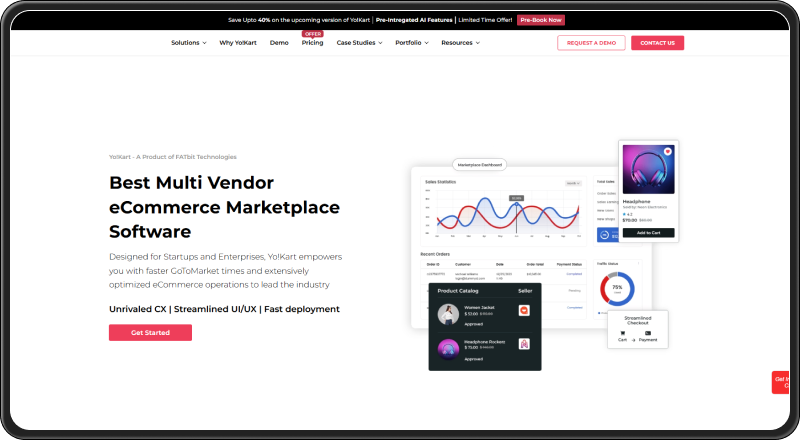
When it comes to building a digital products marketplace, Yo!Kart stands out as one of the most comprehensive and flexible white label marketplace solutions available. Unlike many eCommerce platforms that require extensive modifications to support marketplace functionality, Yo!Kart is purpose-built for multi-vendor commerce. This means that essential marketplace capabilities are built into the software from the outset, reducing the need for third-party extensions or custom development.
Whether you are building a marketplace for software, templates, eBooks, online courses, stock media, or other downloadable assets, Yo!Kart stands out as a scalable, self-hosted solution with extensive customization capabilities to support diverse business models.
Key Features
- Fully white-label marketplace solution
- Self-hosted deployment
- Multi-vendor management
- Digital product selling support
- Secure digital downloads
- Commission management
- Vendor dashboards
- Order and transaction management
- Product moderation tools
- AI-assisted product description generation
- SEO-friendly architecture
- Multi-language support
- Multi-currency support
- Mobile apps for buyers and sellers
- Marketing and promotional tools
- Analytics dashboard
- Role-based access controls
Why It Stands Out
Yo!Kart combines extensive built-in marketplace functionality with the flexibility to customize branding, workflows, commission structures, and integrations to align with their unique marketplace requirements.
Its self-hosted deployment model also provides greater control over data and infrastructure, making it an attractive choice for businesses planning long-term marketplace growth without relying on multiple plugins or recurring platform limitations.
Best For
- Digital downloads marketplaces
- Software marketplaces
- AI prompt marketplaces
- Template marketplaces
- Stock media marketplaces
- eBook marketplaces
- Multi-vendor digital commerce
- Enterprise digital marketplaces
Schedule a Personalized Demo to See Yo!Kart in Action
2. Sharetribe

Sharetribe has become a popular option among startups and entrepreneurs looking to launch marketplace businesses quickly. Its no-code marketplace builder enables rapid MVP development with minimal technical expertise, while API support allows businesses to extend functionality as they scale. This combination makes Sharetribe a practical choice for validating marketplace ideas before making larger technology investments.
Key Features
- Vendor onboarding
- Listing management
- Digital and service listings
- Secure payments
- Messaging
- Reviews and ratings
- Responsive storefront
- API support
Limitations
As businesses scale, advanced workflows, deeper customization, and enterprise-level capabilities may require additional development through APIs or external engineering resources.
Best For
- Marketplace MVPs
- Creator marketplaces
- Small digital businesses
- Startup marketplaces
Suggested Read: Key Reasons to Choose Yo!Kart Over Sharetribe
3. CS-Cart Multi-Vendor
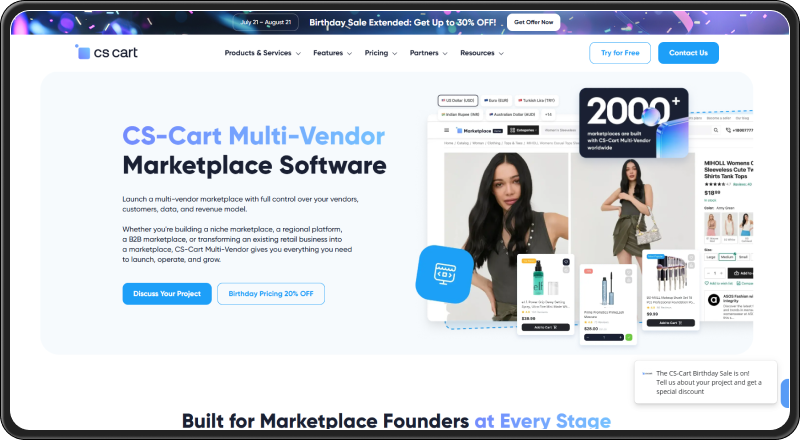
CS-Cart Multi-Vendor is another established white label marketplace platform capable of supporting digital product marketplaces. Originally designed for multi-vendor eCommerce, the platform can also be configured to sell downloadable products such as software, digital files, music, templates, and eBooks. Its flexible architecture and extensive add-on ecosystem enable businesses to tailor the platform to evolving marketplace requirements.
Key Features
- Multi-vendor management
- Product catalog management
- Vendor dashboards
- Order management
- Marketing tools
- SEO features
- Payment gateway integrations
- Reporting
- Mobile-responsive design
Considerations
While the platform offers extensive flexibility, some advanced capabilities depend on paid add-ons, and larger customizations often require developer involvement.
Best For
- Digital downloads
- Creative marketplaces
- Growing online businesses
- Mid-sized enterprises
4. Arcadier
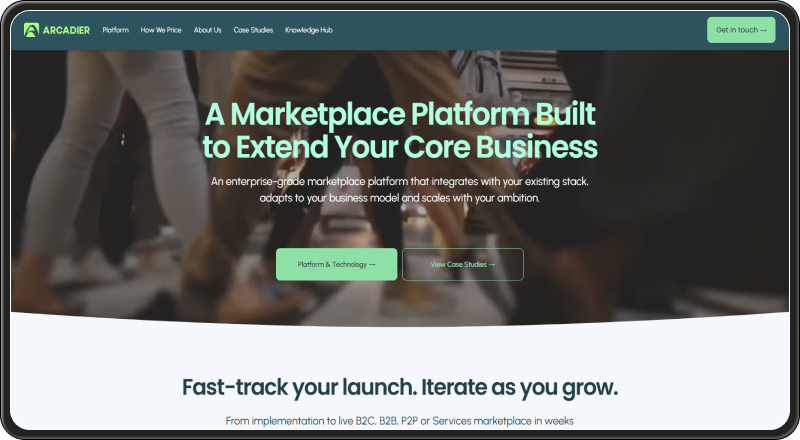
Arcadier is a cloud-based marketplace platform that supports digital products, physical goods, rentals, and service marketplaces. Its no-code approach and modular architecture simplify marketplace deployment, while API support enables additional customization as business needs evolve. This makes it a suitable option for entrepreneurs seeking a balance between ease of use and flexibility.
Key Features
- White-label marketplace
- Digital product listings
- Vendor onboarding
- Commission management
- Payment gateway integrations
- Product moderation
- Analytics dashboard
- API-first architecture
- Mobile-responsive storefront
Limitations
As a SaaS platform, Arcadier provides less control over infrastructure and deep customization than self-hosted solutions, which may be a consideration for businesses with complex operational requirements.
Best For
- Creator marketplaces
- Small digital product businesses
- MVP launches
- Entrepreneurs validating new ideas
5. Marketplacer
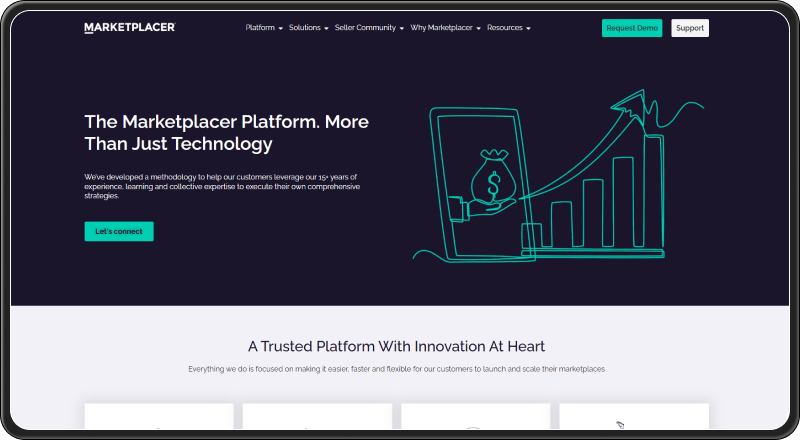
Marketplacer is an enterprise marketplace platform trusted by large retailers and established brands. Rather than focusing solely on startups, it is designed for organizations that require robust integrations, complex workflows, and large-scale marketplace operations. Its API-first architecture enables seamless integration with ERP, CRM, PIM, and other enterprise systems. The platform emphasizes operational efficiency, automation, and scalability for businesses with sophisticated marketplace requirements.
Key Features
- Enterprise marketplace management
- Vendor onboarding
- Product information management
- API-first architecture
- Inventory synchronization
- Multi-channel commerce
- Reporting and analytics
- Third-party integrations
Limitations
The platform’s enterprise capabilities often involve higher implementation costs, longer deployment timelines, and greater technical investment, making it less practical for early-stage businesses.
Best For
- Enterprise marketplaces
- Digital asset marketplaces
- Large B2B ecosystems
- Established brands
6. Nautical Commerce

Nautical Commerce is a modern marketplace platform designed specifically for businesses looking to launch and scale multi-vendor marketplaces. Its API-first architecture and headless capabilities provide flexibility for organizations building custom digital commerce experiences. The platform supports various marketplace models, including digital products, physical goods, and services.
Key Features
- Multi-vendor management
- API-first architecture
- Headless commerce support
- Vendor payouts
- Product catalog management
- Order orchestration
- Payment integrations
- Reporting tools
Limitations
Businesses without dedicated technical resources may face a steeper learning curve, as the platform is designed for organizations comfortable with API-driven development.
Best For
- Technology companies
- SaaS marketplaces
- Software marketplaces
- Growing digital businesses
7. Dokan

Built as a multi-vendor plugin for WordPress and WooCommerce, Dokan allows businesses to transform an existing WooCommerce store into a marketplace. For entrepreneurs already using WordPress, Dokan provides a familiar environment with access to the extensive WooCommerce ecosystem. This allows them to add marketplace functionality without migrating to a new platform or rebuilding their existing storefront.
Key Features
- Multi-vendor marketplace
- Vendor dashboards
- Product management
- Commission management
- WooCommerce compatibility
- Payment gateway support
- Review system
- Responsive design
Limitations
Performance, scalability, and maintenance depend heavily on hosting quality and third-party plugins. As the marketplace grows, managing multiple extensions can increase operational complexity.
Best For
- Small businesses
- Creator marketplaces
- WordPress users
- Budget-conscious startups
8. Mirakl
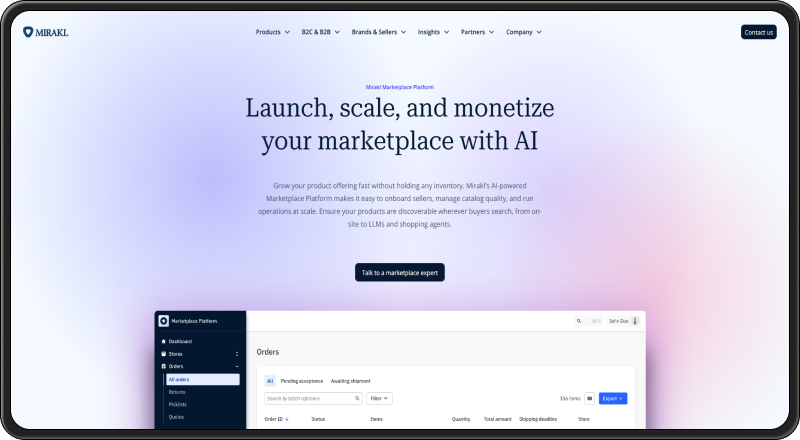
Mirakl is one of the most recognized enterprise marketplace platforms in the world. It is designed to help large organizations build, manage, and scale online marketplaces with advanced automation and operational controls. The platform powers marketplaces for several global enterprises across retail, manufacturing, and B2B commerce.
Key Features
- Enterprise marketplace management
- Vendor lifecycle management
- Catalog management
- AI-powered automation
- Payment integrations
- Advanced reporting
- API ecosystem
- Enterprise security
Limitations
Its enterprise-focused pricing, implementation requirements, and deployment complexity make it a stronger fit for large organizations than startups or growing SMBs.
Best For
- Enterprise digital marketplaces
- Large retailers
- Manufacturing marketplaces
- Global commerce platforms
Suggested Read: Best Mirakl Alternative to Launch Multi-vendor Marketplace
Launch Your Digital Marketplace With the Right Technology
9. Shopify Plus with Marketplace Extensions
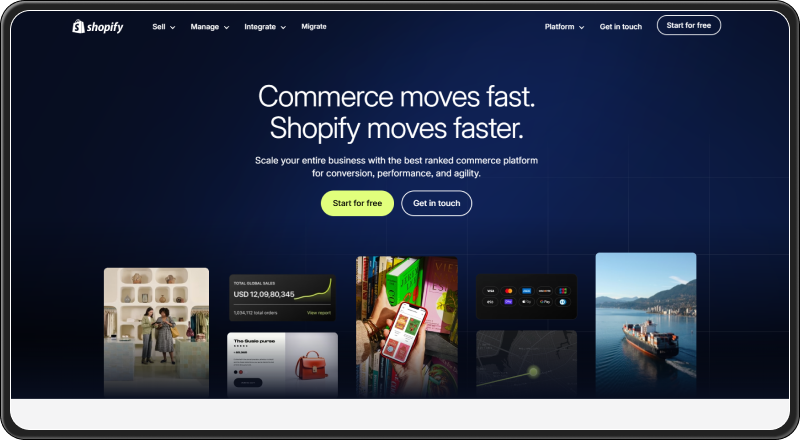
Although Shopify is primarily known as an eCommerce platform, businesses can build marketplace functionality using Shopify Plus combined with marketplace applications and custom development. This approach enables companies to leverage Shopify’s user-friendly interface while extending it for multi-vendor commerce to support digital commerce initiatives.
Key Features
- Shopify ecosystem
- Extensive app marketplace
- Digital product support
- Payment integrations
- Responsive themes
- Marketing tools
- APIs
- Analytics
Limitations
Since marketplace functionality is not native, businesses often rely on multiple third-party applications and custom integrations, which can increase recurring costs and ongoing maintenance.
Best For
- Existing Shopify merchants
- Creator businesses
- Small digital marketplaces
- Businesses requiring rapid deployment
10. OroMarketplace

OroMarketplace is an enterprise B2B marketplace platform developed for organizations with sophisticated procurement and commerce requirements. It provides extensive workflow customization and is particularly suitable for manufacturers, wholesalers, and distributors that want to digitize complex buying and selling processes.
Key Features
- B2B marketplace capabilities
- Vendor management
- Workflow automation
- Role-based permissions
- Product catalog management
- API integrations
- Advanced reporting
- Enterprise security
Limitations
Its enterprise-oriented architecture and implementation complexity make it more suitable for large organizations than businesses seeking a quick or low-cost marketplace launch.
Best For
- B2B digital marketplaces
- Procurement platforms
- Enterprise commerce
- Manufacturing ecosystems
Quick Comparison of the Top 10 White Label Marketplace Platforms
| Software | Best For | White Label | Digital Products | Multi-Vendor | Self-Hosted |
| Yo!Kart | SMBs & Enterprises | Yes | Yes | Yes | Yes |
| Sharetribe | Marketplace MVPs | Yes | Yes | Yes | Partial |
| CS-Cart Multi-Vendor | Retail & Digital Commerce | Yes | Yes | Yes | Yes |
| Arcadier | Startup Marketplaces | Yes | Yes | Yes | No |
| Marketplacer | Enterprise Retail | Yes | Yes | Yes | Enterprise |
| Nautical Commerce | API-first Commerce | Yes | Yes | Yes | Cloud |
| Dokan | WordPress Marketplaces | Yes | Yes | Yes | Yes |
| Mirakl | Global Enterprises | Yes | Yes | Yes | Enterprise |
| Shopify Plus | Existing Shopify Stores | Partial | Yes | Via Apps | Cloud |
| OroMarketplace | B2B Enterprises | Yes | Limited | Yes | Yes |
How to Choose the Right White Label Software for Your Digital Products Marketplace?
After reviewing the top 10 software, the next step is identifying the one that best aligns with your business goals. The ideal solution depends on your marketplace model, target audience, technical requirements, and long-term growth strategy.
Instead of selecting software based solely on popularity, evaluate it against the following factors.
1. Support for Digital Product Sales
Selling digital products requires capabilities beyond those of a traditional eCommerce platform. Look for software that offers features such as:
- Secure file uploads and downloads
- Automated digital delivery
- Download limits
- License key management
- Product version control
- Access expiration (if applicable)
- Subscription-based digital products
- Instant order fulfillment
These capabilities help protect digital assets while delivering a seamless purchasing experience for customers.
2. Multi-Vendor Management
An efficient vendor management system is the backbone of every successful digital marketplace. Choose software that streamlines operations through features like:
- Seller registration and approval
- Vendor dashboards
- Product listing management
- Commission management
- Payout tracking
- Order management
- Sales analytics
- Communication between buyers and sellers
Strong vendor management tools simplify administration, improve seller satisfaction, and create a better marketplace experience for everyone.
3. Customization and White-Label Capabilities
Every marketplace has unique branding and operational requirements. A true white label solution should give you complete control over your marketplace by allowing you to customize:
- Logo and branding
- Homepage layout
- Product pages
- Checkout flow
- Commission models
- User roles and permissions
- Vendor onboarding process
- Email notifications
- Integrations with third-party tools
This level of customization enables you to create a fully branded marketplace without exposing the software provider’s identity.
4. Scalability for Long-Term Growth
Your marketplace may launch with a limited number of vendors and products, but the right platform should be ready to support future expansion. Look for software that can efficiently handle:
- Thousands of sellers
- Large product catalogs
- High traffic volumes
- International customers
- Multiple currencies
- Multiple languages
- Additional revenue streams
Choosing a scalable solution from the outset helps you avoid costly migrations and ensures your marketplace can grow alongside your business.
5. Built-In Marketing and SEO Features
Launching your marketplace is only the first step; attracting qualified traffic is equally important. Prioritize software with built-in marketing and SEO capabilities, including:
- SEO-friendly URLs
- Meta title and description management
- Schema markup support
- XML sitemaps
- Canonical URLs
- Blog integration
- Social media sharing
- Email marketing integrations
These features strengthen your marketplace’s online visibility, improve search engine rankings, and help drive sustainable organic traffic over time.
Suggested Read: How to Choose the Right eCommerce Marketplace Platform
Common Mistakes to Avoid
Selecting the right white label marketplace software is a strategic decision that can significantly impact your marketplace’s long-term success. Avoid these common mistakes to build a scalable, secure, and future-ready digital products marketplace.
1. Choosing Software Based Only on Price
While budget is an important consideration, selecting software based only on its upfront cost can lead to higher long-term expenses. Platforms that rely heavily on paid extensions, frequent custom development, or costly migrations often become more expensive as your marketplace grows.
2. Ignoring Future Growth
Your marketplace may start small, but it should be equipped to handle increasing numbers of vendors, digital products, customers, and transactions. Choosing scalable software from the outset helps you avoid performance bottlenecks and costly platform migrations in the future.
3. Overlooking Vendor Experience
The success of a digital marketplace depends on its ability to attract and retain quality sellers. Look for software that offers intuitive vendor dashboards, streamlined onboarding, efficient product management, and transparent payout processes to deliver a positive seller experience.
4. Neglecting Security
Digital products are particularly vulnerable to unauthorized access and distribution. Prioritize software with secure file delivery, access controls, trusted payment gateways, and robust security measures to protect your marketplace, vendors, and customers.
5. Failing to Evaluate Vendor Support
Reliable technical support and continuous product development are essential for keeping your marketplace secure, competitive, and compatible with evolving technologies. Choose a software provider that offers regular updates, comprehensive documentation, and responsive support to ensure long-term success.
See How Our Robust White Label Software Prevents These Risks
Why Yo!Kart Stands Out as a Strong Choice for Digital Products Marketplaces?
While each solution featured in this guide offers unique strengths, the right choice depends on your specific business model, technical requirements, and long-term goals. However, Yo!Kart consistently stands out for businesses seeking a flexible, scalable, and fully branded marketplace solution.
Unlike many solutions that rely on multiple third-party plugins or extensions to enable marketplace functionality, Yo!Kart is purpose-built for multi-vendor ecommerce software. Its marketplace-first architecture includes essential capabilities such as vendor management, commission handling, secure digital product descriptions, multilingual and multi-currency support, SEO-friendly architecture, mobile applications, and extensive customization options. This simplifies implementation and provides a more cohesive experience for marketplace owners, vendors, and buyers.
The platform is also highly versatile, making it suitable for a wide range of digital marketplace models, including:
- Software marketplaces
- AI tools and prompt marketplaces
- eBook stores
- Design template marketplaces
- Digital asset libraries
- Online course marketplaces
- Music and video marketplaces
- Stock image platforms
- Plugin and theme marketplaces
- Multi-category digital commerce platforms
For businesses seeking complete brand ownership, marketplace scalability, and the flexibility to customize their platform without recurring platform limitations, Yo!Kart offers a compelling balance of functionality, performance, and long-term value. Its comprehensive feature set enables entrepreneurs and enterprises to launch, manage, and grow a future-ready digital products marketplace with confidence.
Final Thoughts
The rapid growth of the creator economy and the digital commerce landscape has unlocked new opportunities for entrepreneurs and businesses to launch specialized marketplaces for software, digital assets, online courses, AI prompts, templates, and other downloadable products.
Choosing the right white label software to build a digital products marketplace is a strategic decision that will influence your platform’s ability to scale, attract vendors, and deliver a seamless customer experience.
While all the platforms featured in this guide have their strengths, Yo!Kart stands out for its comprehensive marketplace capabilities, extensive customization options, self-hosted architecture, and support for diverse marketplace models. Its combination of built-in functionality and long-term flexibility makes it a compelling choice for startups, growing businesses, and enterprises alike.
Frequently Asked Questions (FAQs)
1. What is white label software for a digital products marketplace?
White label software is a ready-made marketplace solution that enables businesses to launch a fully branded platform where multiple vendors can sell digital products such as software, templates, eBooks, online courses, music, videos, and other downloadable assets, without building the marketplace from scratch.
2. Can I sell different types of digital products on one marketplace?
Yes, most modern white label marketplace platforms support multiple digital product categories, allowing vendors to sell digital products, such as
- Software
- Graphics
- Templates
- Digital art
- Educational content
3. What are the benefits of using white label marketplace software instead of building from scratch?
White label software helps businesses launch faster, lower development costs, and access proven marketplace functionality. It also offers customization options and easier scalability, allowing businesses to focus on growing their marketplace rather than developing core features from the ground up.
4. Which industries can benefit from digital marketplace software?
Digital marketplace software can be used across industries such as:
- Software and SaaS
- Education and eLearning
- Graphic design
- Photography
- Music and entertainment
- Publishing
- Marketing
- Artificial Intelligence
- Gaming
- Professional services
5. What features should I prioritize when choosing marketplace software?
Look for features such as:
- Multi-vendor management
- Secure digital downloads
- Payment gateway integrations
- Commission management
- Scalability
- Customization options
- SEO tools
- Mobile support
- Analytics
- Robust security
Looking for a White Label Software to Build a Digital Marketplace?
Get In TouchPopular Posts