


Published Date 01st Jun, 2026
Online marketplaces are becoming one of the most profitable digital business models for enterprises worldwide. From B2B trade platforms and niche marketplaces to hyperlocal commerce and service aggregation platforms, businesses are increasingly investing in multi-vendor marketplaces to connect buyers and sellers within a unified ecosystem.
However, building an enterprise-grade marketplace from scratch can be expensive, time-consuming, and technically challenging. This is where white-label multi-vendor marketplace software comes into play.
Modern enterprises are now adopting white-label marketplace solutions to launch platforms faster, reduce development costs, and accelerate time-to-market. These solutions provide readymade marketplace functionalities while allowing businesses to customize branding, workflows, and features according to their operational requirements. In addition, they are scalable and fully customizable, which makes them a preferred choice.
In this blog, we will explore the top 10 white-label multi-vendor marketplace software for enterprises, understand their advantages over custom development, and discuss a solution that stands out as one of the leading marketplace software solutions for enterprises.
Table of Contents
- What is White-Label Multi-Vendor Marketplace Software?
- Benefits of White-Label Multi-Vendor Marketplace Software Over Custom Marketplace Development
- Top 10 White-Label Multi-Vendor Marketplace Software for Enterprises
- Key Pointers to Validate Before Choosing Any White Label Marketplace Software
- Why Yo!Kart is the Best Marketplace Software for Enterprises
- Successful Marketplaces Built with Yo!Kart
- Conclusion
- FAQs
What is White-Label Multi-Vendor Marketplace Software?
White-label multi-vendor marketplace software is a readymade eCommerce solution that enables businesses to launch and manage online marketplaces under their own branding. These platforms support multiple sellers, allowing vendors to create storefronts, list products, manage inventory, process orders, and communicate with buyers from a centralized system.
Unlike SaaS marketplace builders that often come with recurring fees and limited control and access, white-label marketplace software provides greater customization flexibility and control.
Whether you are planning to launch a B2B, B2C or C2C marketplace, choosing the right solution can help you achieve your development goals. These solutions bring all the necessary features and functionality required.
The primary advantage of white-label marketplace software is that businesses can launch quickly without spending years developing the platform architecture from scratch. These solutions help enterprises focus more on scaling operations and customer acquisition rather than handling lengthy development cycles. Moreover, they are cost-effective; you can get started with your multi-vendor marketplace with a minimum investment.
Benefits of White-Label Multi-Vendor Marketplace Software Over Custom Marketplace Development
Many enterprises initially consider custom marketplace development due to the promise of flexibility, control and access. However, custom development often introduces several operational, financial, and technical challenges.
White-label multi-vendor marketplace software is a much more efficient and scalable alternative. Let’s explore the benefits of choosing a white-label multi-vendor marketplace software.
1. Faster Time-to-Market
Building a marketplace from scratch can take several months or even years, depending on project complexity and other associated factors. On the other hand, a white-label marketplace software significantly reduces deployment time by offering readymade features and functionalities based on pre-tested workflows. Using a readymade white-label marketplace software, enterprises can launch their marketplace quickly and start onboarding vendors and customers faster.
2. Lower Development Costs
Custom marketplace development requires extensive investment, while readymade marketplace software reduces these costs substantially by providing a pre-built framework with enterprise-ready functionalities.
3. Proven Marketplace Architecture
Enterprise marketplaces require robust performance, security, and scalability. Established white-label marketplace software providers already offer tested and optimized systems capable of handling large-scale marketplace operations. This reduces the technical risks associated with custom-built platforms. However, the selection of the right solution is critical.
4. Easier Scalability
As enterprises grow, their marketplace requirements evolve. White-label marketplace software often includes scalable architecture that supports growth and expansion. It can handle the increased number of users, listings, transactions and more without affecting the marketplace performance. :
5. Ongoing Technical Support and Updates
With custom marketplace development, enterprises are responsible for platform maintenance and troubleshooting. In contrast, white-label marketplace software providers offer technical support, feature upgrades, security updates and version updates. Of course, a white-label solution reduces the burden of maintenance expenses.
6. Customization Flexibility
Modern white-label multi-vendor marketplace software solutions offer extensive customization options, enabling enterprises to modify and tailor the platform according to their unique requirements. They create unique marketplace experiences.
Top 10 White-Label Multi-Vendor Marketplace Software for Enterprises
From a large number of available white-label readymade software, deciding on the top 10 was not an easy task. We have curated the list after conducting in-depth market research and exploring real-life examples. You can explore the list and find the best white-label multi-vendor marketplace software for your idea.
1. Yo!Kart
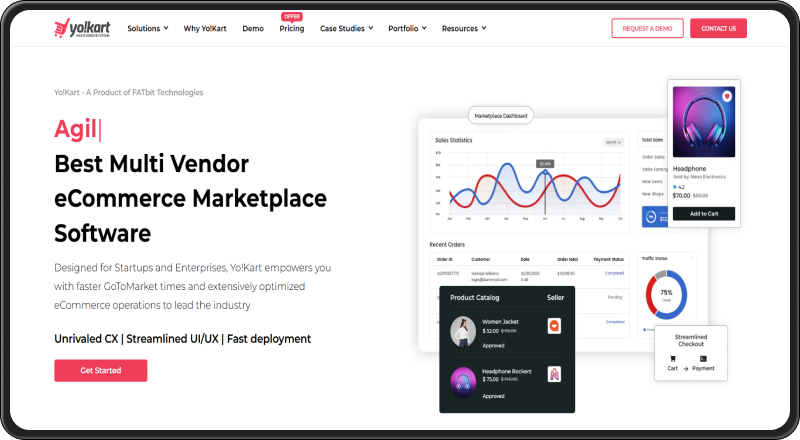
Yo!Kart is a self-hosted white-label multi-vendor marketplace software built for startups, SMBs, and enterprises looking to launch their online multi-vendor marketplaces. The platform is designed to support a wide range of business models, including B2B, B2C, C2C and more.
One of Yo!Kart’s strongest advantages are the scalable architecture that makes it an ideal selection for enterprise-level platforms. It supports growth and expansion and grows according to the business’s demand. In addition, the balance between flexibility and control is also important.
By getting started with Yo!Kart, businesses get complete control over their marketplace with a one-time license model, making it a practical option for enterprises seeking long-term scalability without recurring platform dependency.
Yo!Kart offers a comprehensive set of built-in marketplace features that help businesses streamline vendor management, product operations, and customer experiences. The software is designed with scalability in mind and supports marketplace growth across regions and industries.
Key features:
- Separate vendor dashboards
- Multi-vendor management
- Multi-language support
- Multi-currency functionality
- Tax and commission management
- Product catalog management
- API integrations
- Mobile responsiveness
- SEO-friendly architecture
- Analytics and reporting tools
Its customizable framework allows enterprises to tailor workflows, branding, and integrations according to their operational requirements.
Pros
- One-time payment with lifetime ownership
- Self-hosted architecture for greater control
- Extensive customization capabilities
- Suitable for multiple marketplace business models
- Built-in multilingual and multicurrency support
- Dedicated technical support available
Cons
- Hosting setup is required
- Advanced customizations may require development assistance
Key Highlights
- Fully white-label marketplace solution
- Supports B2B,and B2C and C2C marketplaces model
- GDPR compliant
- Mobile apps available
- Scalable for enterprise operations
Ratings
- G2: 4.6/5
- Capterra: 4.25
Looking for a Scalable White-Label Marketplace Software?
2. Sharetribe
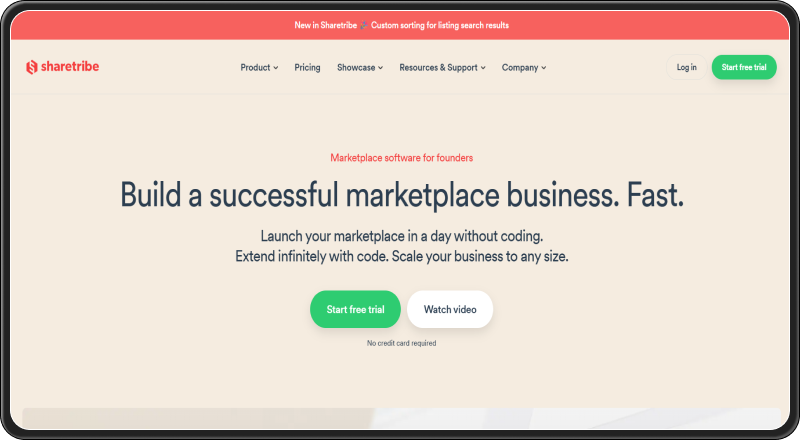
Sharetribe is a marketplace software platform that enables businesses to launch service, rental, and product marketplaces quickly. It is commonly used by startups and growing businesses looking for a marketplace solution with flexible workflows. Sharetribe provides cloud-hosted marketplace infrastructure along with APIs and customization tools for developers. The platform focuses on simplifying marketplace deployment while offering flexibility for different transaction models.
Pros
- Fast marketplace deployment
- API-first architecture
- Flexible marketplace workflows
- User-friendly interface
- Suitable for service marketplaces
Cons
- Limited customization in lower-tier plans
- Recurring subscription pricing
- Advanced scalability may require custom development
Key Highlights
- Flexible transaction models
- Developer-friendly APIs
- Supports rental and service marketplaces
Ratings
- G2: 4.7/5
- Capterra: 4.5/5
3. CS-Cart Multi-Vendor
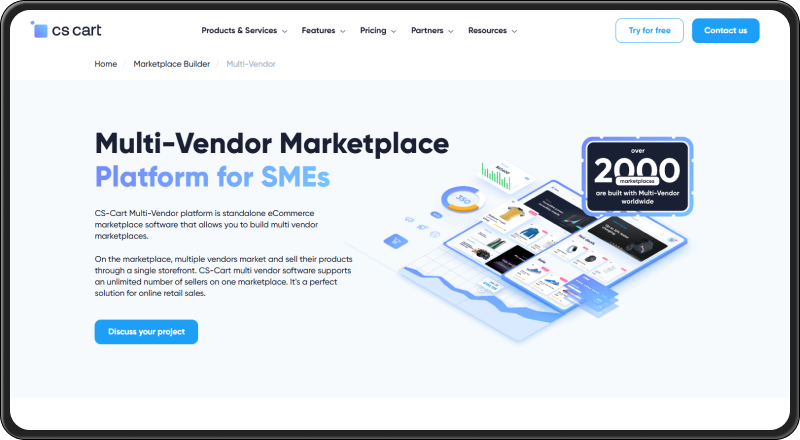
CS-Cart Multi-Vendor is another marketplace software solution designed for businesses building product-based online marketplaces. It offers vendor management tools and a large ecosystem of add-ons. The platform includes features for storefront management, vendor onboarding, promotions, and order handling. CS-Cart is often preferred by businesses looking for ownership and flexibility through a self-hosted setup.
Pros
- Self-hosted ownership model
- Large add-on marketplace
- Multi-vendor functionality
- Strong product management tools
- Flexible vendor storefronts
Cons
- Interface may feel outdated for some users
- Several advanced features require paid add-ons
- Customization may require technical expertise
Key Highlights
- Vendor-specific storefronts
- Marketing and promotion tools
- Multiple payment integrations
- Mobile-responsive design
Ratings
- G2: 4.85
- Capterra: 4.6/5
4. Mirakl

Mirakl is an enterprise marketplace platform widely used by large retailers and global enterprises to launch scalable B2B and B2C marketplaces. Mirakl focuses heavily on automation, vendor onboarding, and enterprise marketplace management. The platform is designed for organizations handling large-scale marketplace ecosystems and complex operational workflows.
Pros
- Enterprise-focused infrastructure
- Advanced automation capabilities
- Strong vendor onboarding tools
- Scalable marketplace architecture
- Omnichannel commerce support
Cons
- High implementation costs
- Better suited for large enterprises
- Longer deployment timelines
Key Highlights
- Enterprise marketplace automation
- API integrations
- Omnichannel commerce support
- Advanced analytics and reporting
Ratings
- G2: 4.15
- Capterra: 4.5/5
5. Arcadier

Arcadier is a SaaS-based marketplace builder that supports product, booking, rental, and service marketplaces through modular marketplace solutions. Arcadier offers customizable templates, plugins, and APIs that help businesses launch marketplaces without extensive development efforts. It is suitable for businesses seeking quick deployment and operational simplicity.
Pros
- Quick marketplace deployment
- Supports multiple marketplace models
- Plugin marketplace available
- User-friendly setup process
- Responsive marketplace templates
Cons
- Subscription-based pricing
- Limited backend customization
- Advanced scalability may require additional development
Key Highlights
- SaaS-based marketplace infrastructure
- Multiple marketplace business models
- Custom APIs available
- Responsive marketplace templates
Ratings
- G2: 4.35
- Capterra: 05
6. Magento with Marketplace Extension
Adobe Commerce, previously Magento, combined with marketplace extensions, enables enterprises to build multi-vendor marketplaces with enterprise-grade eCommerce capabilities. It provides a robust eCommerce foundation, while third-party marketplace extensions add vendor management and marketplace functionality. It is commonly used by enterprises requiring extensive customization and integrations.
Pros
- Highly customizable platform
- Strong enterprise ecosystem
- Large developer community
- Advanced scalability
- Extensive integration capabilities
Cons
- Expensive implementation process
- Requires technical expertise
- High maintenance and development costs
Key Highlights
- Enterprise eCommerce infrastructure
- Marketplace extension ecosystem
- Advanced integrations
- Powerful catalog management
Ratings
- G2: 4.0/5
- Capterra: 4.⅗
Discover the Multi-Vendor Marketplace Features That Can Help Your Platform Thrive
7. Dokan
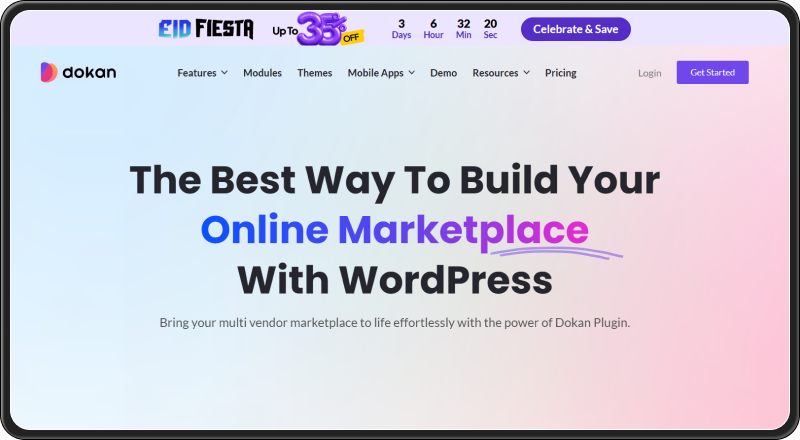
Dokan is a WordPress-based multi-vendor marketplace plugin developed for WooCommerce users. Dokan allows businesses to convert WooCommerce stores into multi-vendor marketplaces with vendor dashboards, commission management, and storefront functionality.
Pros
- Easy WooCommerce integration
- Budget-friendly setup
- Large WordPress ecosystem
- Beginner-friendly interface
- Flexible commission management
Cons
- Limited enterprise scalability
- Plugin dependency challenges
- Performance may vary with large marketplaces
Key Highlights
- Vendor dashboards
- WooCommerce compatibility
- Flexible commission structures
- WordPress plugin ecosystem
Ratings
- G2: 4.6/5
- Capterra: 4.2/5
8. Marketplacer

Marketplacer is an enterprise marketplace platform designed for retailers and brands looking to launch scalable online marketplaces. The platform focuses on enterprise integrations, operational scalability, and omnichannel commerce experiences. It supports businesses managing large vendor ecosystems.
Pros
- Enterprise integrations
- Omnichannel commerce capabilities
- Scalable infrastructure
- Flexible API architecture
- Advanced seller onboarding
Cons
- Higher implementation complexity
- Enterprise-level pricing is considerably higher
- Longer onboarding process
Key Highlights
- Enterprise marketplace management
- API-first architecture
- Advanced seller onboarding
- Omnichannel commerce support
Ratings
- G2: 4.8/5
- Capterra: 4.7/5
9. Nautical Commerce
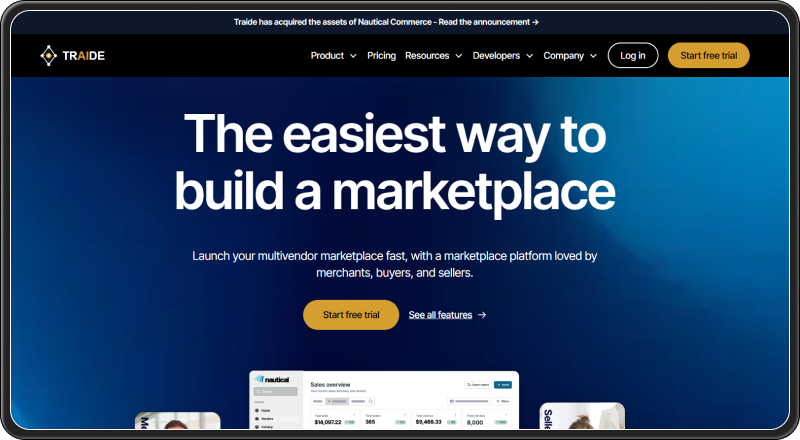
Nautical Commerce is a modern headless marketplace platform designed for enterprises adopting composable commerce strategies. The platform supports enterprise-grade APIs, flexible integrations, and headless marketplace architecture for businesses seeking modern commerce infrastructure.
Pros
- Headless marketplace architecture
- Modern API ecosystem
- Scalable infrastructure
- Flexible integrations
- Composable commerce support
Cons
- Requires technical implementation
- May not suit non-technical businesses
- Custom setup can increase deployment time
Key Highlights
- Composable commerce architecture
- Enterprise APIs
- Headless marketplace setup
- Flexible vendor workflows
Ratings
- G2: 4.6/5
- Capterra: 4.8/5
10. Jungleworks
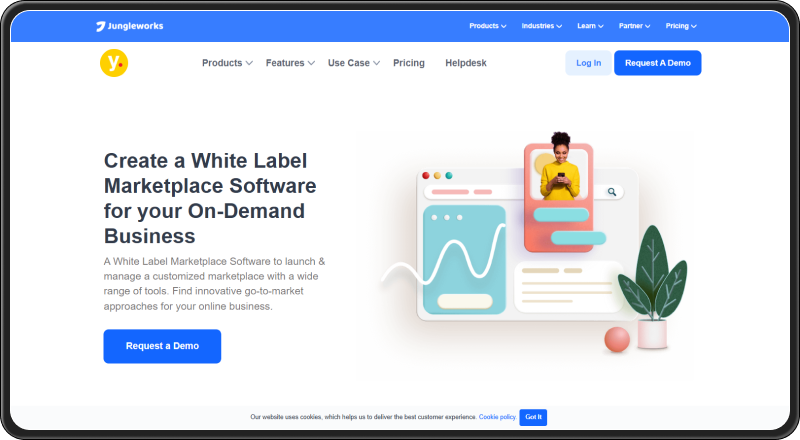
Jungleworks provides marketplace and hyperlocal commerce solutions for businesses operating delivery and service aggregation platforms. The platform supports hyperlocal commerce operations with delivery management, logistics integrations, and real-time tracking capabilities.
Pros
- Hyperlocal marketplace support
- Delivery management features
- Mobile-ready solutions
- Real-time tracking
- Logistics integrations
Cons
- Best suited for hyperlocal business models
- Advanced customization may be complex
- Limited suitability for broader marketplace categories
Key Highlights
- Hyperlocal commerce tools
- Logistics integrations
- Mobile applications
- Delivery management system
Ratings
- G2: 4/5
- Capterra: 4.6/5
Key Pointers to Validate Before Choosing Any White Label Marketplace Software
Selecting the right white-label multi-vendor marketplace software is a critical decision for enterprises planning to build scalable digital commerce ecosystems. Since the marketplace platform acts as the foundation of the entire business operation, companies must carefully evaluate several technical, operational, and financial factors before investing. Choosing the wrong solution can lead to scalability issues, limited customization, higher operational costs, and poor user experiences in the long run.
Below are some of the most important factors enterprises should validate before selecting any white-label marketplace software solution.
1. Scalability
Scalability is one of the most important considerations for enterprises because marketplace businesses are designed to grow continuously over time. The software should be capable of handling increasing operational demands without compromising performance, speed, or user experience.
A scalable marketplace solution ensures that businesses can expand into new regions, onboard more sellers, and manage larger customer bases without requiring a complete platform rebuild. Enterprises should also evaluate server architecture, database optimization, and cloud compatibility to ensure long-term operational stability.
Ensure the platform can support:
- Growing vendor counts
- Large product catalogs
- Increasing traffic volumes
- Multi-country operations
- High transaction volumes
- Simultaneous user activity
2. Customization Capabilities
Every enterprise marketplace has unique business requirements, workflows, and branding strategies. Customization capabilities become especially important for enterprises operating in niche industries or multiple regions where customer expectations and operational requirements may vary significantly.
Businesses should also verify whether the platform supports API integrations and third-party extensions for future enhancements. Therefore, the marketplace software should offer extensive customization flexibility to help businesses create differentiated user experiences.
The software should allow flexibility in:
- Branding
- User interface
- Workflows
- Integrations
- Vendor commission models
- Checkout processes
- Marketplace policies
3. Ownership and Licensing
Understanding the control structure and licensing model of the marketplace software is essential before making a purchase decision. Different software providers offer varying levels of control, hosting flexibility, and recurring costs.
It significantly impacts long-term operational costs and business control. Self-hosted solutions generally provide greater customization freedom and access, while SaaS platforms may offer easier maintenance but often come with recurring subscription fees and platform limitations.
Understand whether the platform is:
- Self-hosted
- SaaS-based
- Subscription-driven
- One-time licensed
- Cloud-hosted
- Open-source or proprietary
4. Security and Compliance
Security is a major concern for enterprise marketplaces because these platforms handle sensitive customer information, payment transactions, and vendor data. A secure marketplace infrastructure helps build trust among users while reducing the risk of cyber threats and compliance violations.
Enterprises should also ensure that the platform follows industry-standard security practices and receives regular security updates. Compliance with regional regulations and payment security standards is especially important for businesses operating internationally.
Verify that the marketplace software supports:
- Secure payment processing
- GDPR compliance
- SSL encryption
- User authentication
- Data protection protocols
- Fraud prevention mechanisms
- Role-based access controls
5. Mobile Responsiveness
Modern consumers increasingly rely on smartphones and tablets for online shopping and marketplace interactions. A mobile-optimized marketplace improves customer engagement, increases conversions, and enhances overall user satisfaction. Businesses targeting younger demographics or hyperlocal commerce models should prioritize mobile responsiveness even more aggressively.
Moreover, as a result, enterprises must ensure that their marketplace software delivers seamless mobile experiences across all devices.
Ensure the software offers:
- Responsive interfaces
- Mobile apps
- Cross-device compatibility
- Fast mobile loading speeds
- Mobile-friendly checkout
- Push notification support
6. Technical Support
Reliable technical support is essential for maintaining smooth marketplace operations and minimizing downtime. Enterprises should evaluate the quality, availability, and responsiveness of the software provider’s support services before finalizing any solution.
Reliable technical support is essential for handling:
- Platform maintenance
- Updates
- Bug fixes
- Customization support
- Server-related issues
- Security troubleshooting
7. SEO and Marketing Features
A marketplace platform should not only support operational management but also help businesses attract traffic and improve online visibility. Built-in SEO and marketing tools can significantly reduce customer acquisition costs and improve marketplace growth.
Advanced SEO capabilities help marketplaces rank better on search engines, while integrated marketing tools support customer retention and promotional campaigns.
The platform should support:
- SEO-friendly URLs
- Meta management
- Blog integration
- Marketing tools
- Analytics and reporting
- Email marketing integrations
- Social media integrations
Why Yo!Kart is the Best Marketplace Software for Enterprises
Among the available white-label multi-vendor marketplace software solutions, Yo!Kart stands out due to its scalability, ownership flexibility, customization capabilities, and enterprise-ready architecture. The platform is specifically designed to help businesses launch and manage feature-rich online marketplaces without the complexities associated with custom development.
Yo!Kart supports multiple marketplace business models and provides enterprises with complete control over branding, operations, and future scalability. Its self-hosted architecture and one-time licensing model make it particularly attractive for businesses seeking long-term ownership and cost efficiency.
Unlock Limitless Possibilities with Yo!Kart
Successful Marketplaces Built with Yo!Kart
Several successful online marketplaces across different industries have been built using Yo!Kart. These platforms demonstrate the software’s flexibility, scalability, and ability to support diverse business models.
1. Uni Diamonds
Uni Diamonds is a diamond trading marketplace built using Yo!Kart. The platform connects diamond buyers and suppliers through a streamlined digital marketplace ecosystem designed for secure and efficient B2B transactions.
The marketplace offers advanced search capabilities, inventory management tools, and secure communication channels for buyers and sellers operating in the diamond industry.
Key Highlights
- B2B marketplace functionality
- Advanced product filtering
- Secure transactions
- Large inventory management
- Supplier-buyer connectivity
- Industry-specific workflows
2. Tajer
Tajer is a multi-vendor eCommerce marketplace designed for regional online commerce operations. The platform supports multiple sellers and provides localized shopping experiences for customers in the Middle East region.
Its multilingual capabilities and mobile-friendly infrastructure help businesses manage regional commerce operations efficiently.
Key Highlights
- Multi-vendor infrastructure
- Arabic language support
- Mobile-friendly experience
- Scalable seller management
- Regional commerce support
- User-friendly interface
3. NPK Marketplace
NPK Marketplace is a niche marketplace platform serving specialized industrial requirements. The platform demonstrates Yo!Kart’s ability to support industry-specific marketplace operations with customized workflows and vendor management systems.
It enables businesses to streamline procurement and supplier interactions within a centralized digital ecosystem.
Key Highlights
- Industry-focused marketplace
- Vendor onboarding workflows
- Product categorization
- Scalable infrastructure
- Specialized inventory management
- Streamlined procurement operations
4. Watersorted
Watersorted is an online seafood marketplace built using Yo!Kart. The platform connects seafood suppliers and customers through a modern digital marketplace designed for efficient order management and product delivery.
Its user-friendly interface and vendor management capabilities help streamline seafood commerce operations.
Key Highlights
- Marketplace order management
- Vendor operations
- Mobile commerce experience
- Product inventory handling
- Customer-friendly interface
- Scalable marketplace infrastructure
Conclusion
The enterprise marketplace ecosystem is expanding rapidly, and businesses need scalable, customizable, and future-ready solutions to remain competitive in the evolving digital commerce landscape. Launching a successful marketplace requires not only strong business planning but also reliable technology infrastructure capable of supporting long-term growth.
White-label multivendor marketplace software enables enterprises to launch online marketplaces faster while reducing development complexities and operational risks. Compared to custom marketplace development, these solutions provide better scalability, faster deployment, lower overall investment, and access to pre-built enterprise-grade functionalities.
Among the top marketplace software solutions available today, Yo!Kart continues to stand out due to its self-hosted ownership model, enterprise-grade scalability, customization flexibility, and extensive marketplace capabilities. Its ability to support multiple business models and provide complete branding control makes it an ideal choice for enterprises seeking long-term marketplace growth.
Whether you want to launch a B2B marketplace, niche marketplace, wholesale platform, hyperlocal commerce ecosystem, or multi-category online marketplace, Yo!Kart provides the tools, flexibility, and infrastructure needed to build and scale a successful marketplace business efficiently.
FAQs
Q 1. What is white-label multi-vendor marketplace software?
Ans. White-label multi-vendor marketplace software is a ready-made platform that enables businesses to launch online marketplaces with multiple sellers and centralized marketplace management. These solutions typically include vendor management, payment integrations, product catalog management, and order processing features required to operate a scalable marketplace business.
Q 2. What are the benefits of white-label marketplace software?
Ans. White-label marketplace software brings several benefits that help enterprises launch and scale marketplaces more efficiently compared to building platforms from scratch..
- Faster deployment
- Lower development costs
- Scalability
- Built-in marketplace features
- Technical support
- Customization flexibility
- Reduced operational complexity
- Faster time-to-market
Q 3. Is Yo!Kart suitable for enterprise marketplaces?
Ans. Yes, Yo!Kart is designed to support enterprise-grade marketplaces with advanced scalability, customization, multilingual support, and multi-business model compatibility. Its self-hosted architecture and extensive built-in features make it suitable for businesses planning long-term marketplace expansion.
Q 4. Which industries can use white-label marketplace software?
Ans. White-label marketplace software can be adapted for virtually any industry requiring buyer-seller interactions within a centralized digital platform.
Industries include:
- Retail
- Wholesale
- Hyperlocal commerce
- Automotive
- Fashion
- Healthcare
- Electronics
- Food delivery
- Services
- Industrial commerce
Q 5. What is the difference between SaaS and self-hosted marketplace software?
Ans. SaaS marketplace software operates on subscription-based cloud infrastructure managed by the provider, while self-hosted marketplace software offers greater ownership, customization flexibility, and hosting control. Self-hosted solutions are often preferred by enterprises seeking long-term scalability, better control, access and operational independence.
Q 6. Can white-label marketplace software support multiple vendors?
Ans. Yes, these platforms are specifically designed to support multiple vendors with separate dashboards, product management, commission management, inventory tracking, and order processing features. Vendors can independently manage their storefronts while administrators maintain centralized marketplace control.
Yo!Kart is one of the best choices for entrepreneurs and businesses looking for a white-label marketplace software that supports multiple vendors.
Q 7. Why do enterprises prefer white-label marketplace software over custom development?
Ans. Enterprises prefer white-label marketplace software because it reduces development time, lowers costs, minimizes technical risks, and enables faster market entry. These solutions also provide pre-built marketplace functionalities, ongoing technical support, and scalable infrastructure that simplify marketplace management and growth.
Launch Your Multi-Vendor Marketplace Using a White-Label Software
Get StartedPopular Posts