
The UAE’s rapidly growing eCommerce sector has opened a plethora of opportunities for businesses to explore innovative digital sales models. Among the most popular and successful models for startups is the multi-vendor marketplace platform. It allows multiple vendors to list their products in a centralized online space. This model has gained traction as it helps startups scale quickly, expand product offerings, and cater to diverse consumer needs without having to invest in large-scale inventory management.
For startups looking to create a multi-vendor marketplace in the UAE, choosing the right platform is a crucial decision for your success. There are several software solutions designed to meet the needs of entrepreneurs aiming to establish robust, user-friendly, and scalable marketplaces. In this blog, you will explore the top 10 multi-vendor marketplace platforms suitable for startups in the UAE, including key features, pros, and cons.
Table of Contents
What is a Multi-Vendor Marketplace Platform?
A multi-vendor marketplace platform is an eCommerce solution that allows multiple third-party vendors or sellers to list and sell their products in one centralized digital space. It functions like an online mall where different retailers can set up their own stores within the same virtual environment, providing customers with a wide variety of products under one roof.
For startups, these platforms offer several benefits, including:
- Scalability: Easily onboard more vendors as your marketplace grows.
- Diverse Product Offering: You can offer a wide range of products without holding or managing inventory.
- Cost Efficiency: Avoid significant upfront investment in inventory or warehousing.
- Revenue Models: Generate revenue through vendor commissions, listing fees, subscriptions, and advertising.
These platforms typically include features like product catalogs, customer reviews, payment gateways, and shipping integrations. This makes them ideal for businesses looking to launch quickly and scale efficiently without a large initial investment.
Features to Look for in a Multi-Vendor Marketplace Platform
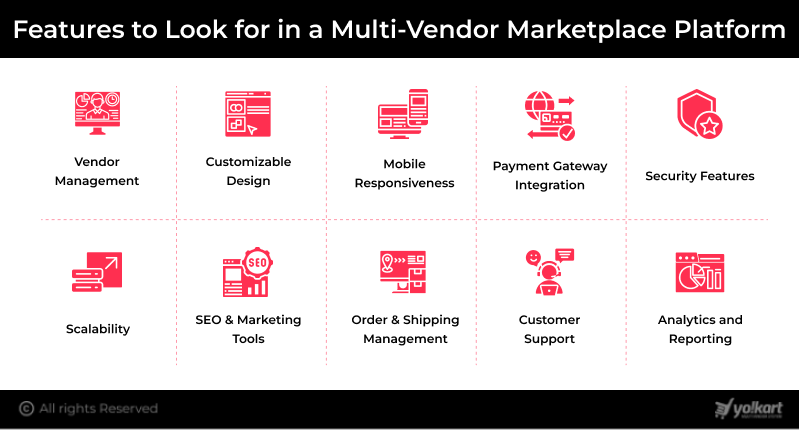
When selecting a multi-vendor marketplace platform for your startup in the UAE, certain features are non-negotiable. Moreover, the feature set directly impacts how efficiently our marketplace operates and grows. Here are some of the essential aspects to keep in mind while making the decision:
1. Vendor Management
The platform should offer robust vendor management features such as vendor registration, profile creation, and product listing management. Admin/s should be able to monitor and approve new vendors, manage vendor accounts, and track sales performance.
2. Customizable Design
Your marketplace should reflect your brand identity. Look for platforms that allow easy customization of the website’s theme, layout, and user interface (UI), so you can create a distinctive and engaging shopping experience.
3. Mobile Responsiveness
Since a significant portion of eCommerce traffic comes from mobile devices, ensure the platform is optimized for both desktop and mobile devices. It ensures a seamless experience across devices, including fast loading times and intuitive navigation.
4. Payment Gateway Integration
Your platform should integrate seamlessly with payment gateways to allow smooth transactions for both customers and vendors. Select a platform that supports multiple payment options such as credit cards, debit cards, PayPal, and regional payment systems popular in the UAE.
5. Security Features
Robust security protects your business and users. Essential measures include security features like SSL encryption, data protection, secure payment processing, and compliance with global security standards.
Looking for a Platform that Keeps Vendors and Customers Protected
6. Scalability
With the growth of the marketplace, the platform should be able to handle increased traffic, products, and vendors. Thus, choose a platform that offers scalability without compromising speed or performance.
7. SEO and Marketing Tools
To stand out in a competitive market like the UAE, your marketplace should have built-in SEO tools, content management, and marketing features like discounts, promotions, and social media integrations.
8. Order and Shipping Management
A robust order management system (OMS) streamlines operations. Integrated with shipping and tracking tools helps vendors manage their orders, while customers can easily track their shipments.
9. Customer Support
Customer support for both vendors and buyers is crucial for resolving issues quickly. A good platform that offers real-time support channels like live chat, email, and help desks helps maintain satisfaction and trust among users.
10. Analytics and Reporting
Data-driven insights enable smarter decisions. The platform should provide detailed analytics and reporting for both the business owner and vendors. This includes sales reports, traffic data, customer behavior, and financial reports.
Top 10 Multi-Vendor Marketplace Platforms for Startups in the UAE
The UAE’s digital economy is expanding rapidly, making multi-vendor marketplaces an attractive model for startups aiming to scale quickly. However, the success of your marketplace largely depends on choosing the right platform.
Below is a curated list of leading multi-vendor marketplace platforms that offer the functionality, flexibility, and scalability needed to launch and grow in the UAE market:
1. Yo!Kart
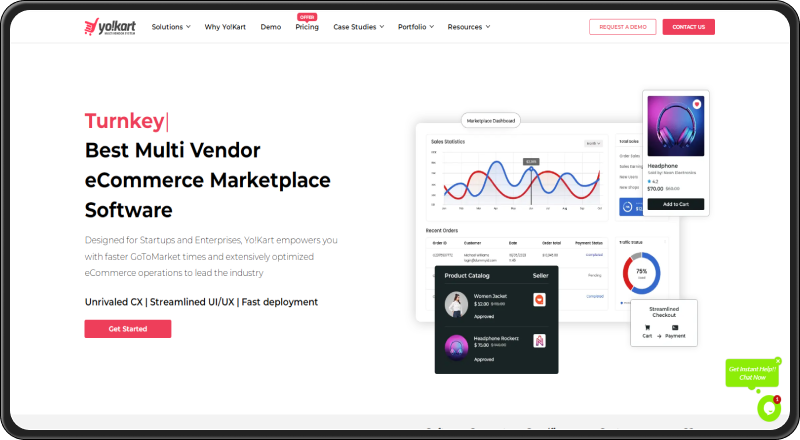
Yo!Kart is an industry-leading multi-vendor marketplace platform designed specifically for startups and small businesses. It provides a comprehensive set of features that help create a scalable marketplace. Additionally, the platform allows for complete customization, enabling you to tailor your marketplace to your unique brand identity.
With robust vendor management tools, integrated payment gateways, and real-time analytics, Yo!Kart stands out as an affordable yet highly functional solution for businesses looking to grow quickly. Thus, it is a perfect solution for startups in the UAE that want flexibility without sacrificing powerful features.
Key Features:
- Multi-vendor management
- Customizable storefronts for vendors
- Integrated payment gateways
- Advanced product and inventory management
- Mobile-optimized design
- Analytics and reporting
- Vendor and customer messaging system
Software Rating: 4.7/5
Best For: Startups looking for a flexible, cost-effective, and scalable multi-vendor marketplace platform with a wide range of features.
Explore Yo!Kart Capabilities with a Live Demo
2. Sharetribe
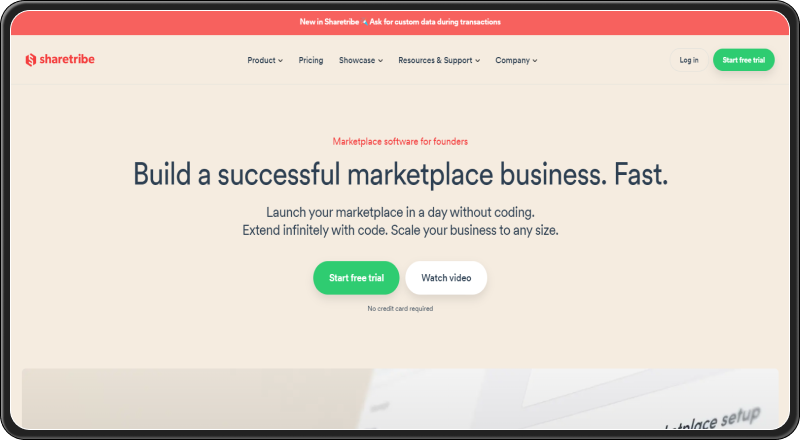
Sharetribe is a user-friendly, cloud-based multi-vendor marketplace platform that supports the creation of digital and physical product marketplaces. It is known for its simplicity and quick deployment, making it ideal for startups. Sharetribe enables easy setup and customization of your marketplace with built-in features like payment gateways and a messaging system.
It also offers multi-language and multi-currency support, making it an ideal choice for businesses in the UAE targeting international customers. Other than that, Sharetribe allows for a subscription-based payment model, opening up opportunities for recurring revenue.
Key Features:
- Customizable storefront
- Integrated payment gateways
- Subscription-based payment model
- Mobile-responsive design
- Multi-language and multi-currency support
- Built-in messaging system
Points to Consider:
- Limited deep customization compared to open-source platforms
- Recurring subscription costs
- Advanced features may require API-based development
Software Rating: 4.5/5
Best For: Startups looking to create a marketplace with both digital and physical goods.
3. Magento with Multi-Vendor Marketplace Extension
Magento, combined with multi-vendor marketplace extensions, is a powerhouse in the eCommerce world. Magento provides robust tools for inventory management, product listings, and vendor commission settings. With extensive customization options, including the ability to design a unique storefront, Magento is ideal for those willing to invest in a solution that offers a high level of flexibility.
Key Features:
- Customizable storefronts
- Inventory management
- Vendor-specific commission settings
- Integrated shipping and payment options
- Multi-store and multi-currency functionality
- SEO-friendly design
Points to Consider:
- Requires strong technical expertise
- Higher development and maintenance costs
- Longer setup time compared to SaaS solutions
Software Rating: 4.6/5
Best For: Businesses that need a customizable and feature-rich platform and are willing to invest in a more complex solution.
4. CS-Cart Multi-Vendor
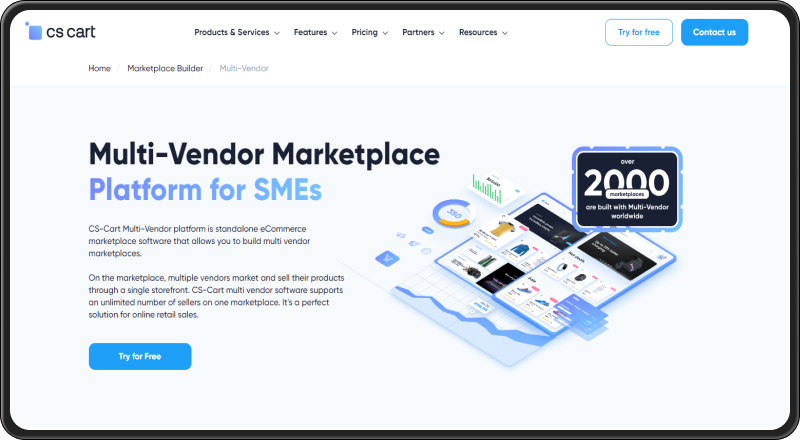
CS-Cart Multi-Vendor is a feature-packed platform with a user-friendly interface that allows startups to create and manage their own multi-vendor marketplace. Designed to help both small and large businesses, it streamliness the operations of their marketplace with a comprehensive set of features for vendor management, product catalogs, and order processing.
The platform’s features, such as real-time order tracking and product filtering options make it easy for both vendors and customers to interact seamlessly..
Key Features:
- Vendor management tools
- Customizable design
- Multiple payment integrations
- Real-time order tracking
- Advanced product filters
- Built-in SEO and marketing tools
Points to Consider:
- License cost may be high for early-stage startups
- Customization beyond basic needs may need developers
- Hosting and performance optimization required
Software Rating: 4.4/5
Best For: Startups looking for a well-established platform that offers scalability and built-in features for multi-vendor management.
5. Arcadier
Arcadier is a cloud-based platform ideal for entrepreneurs who want to create a marketplace with minimal hassle. Its intuitive interface makes it easy to set up, and it offers flexibility to support various business models, including product sales, services, and rentals.
It provides tools for vendor ratings and feedback, SEO optimization, and mobile compatibility, which makes it suitable for startups in the UAE that want to offer a variety of products and services in a simple, efficient way.
Key Features:
- Easy marketplace creation
- Vendor rating and feedback system
- Integration with various payment providers
- Mobile app available
- SEO optimization tools
- Customizable designs
Points to Consider:
- Limited control compared to self-hosted platforms
- Customization constraints on lower-tier plans
- Transaction fees may apply
Software Rating: 4.3/5
Best For: Entrepreneurs looking for an easy-to-implement platform with flexibility across multiple business models.
Suggested Read: Best Multi-Vendor Marketplace Platforms for Enterprises
6. Shopify Plus with Multi-Vendor Apps
Shopify Plus is a premium version of Shopify designed for high-growth businesses, offering an enterprise-level eCommerce solution. When paired with third-party apps like Multi-Vendor Marketplace and Bold Marketplace, Shopify Plus can seamlessly transform into a multi-vendor platform. It offers advanced features like multi-channel selling, integrated payment gateways, and a customizable storefront.
The platform’s scalability, combined with Shopify’s vast ecosystem of apps, makes it ideal for startups that anticipate rapid growth and want to leverage Shopify’s reliability and infrastructure.
Key Features:
- Customizable storefronts
- Integrated payment gateways
- Inventory management
- Customer and vendor management tools
- Reporting and analytics
- Mobile-responsive design
Points to Consider:
- Requires paid apps for marketplace functionality
- Ongoing subscription costs
- Limited backend customization compared to open-source platforms
Software Rating: 4.7/5
Best For: Startups looking for an easy-to-manage marketplace with the support of a leading eCommerce platform.
7. PrestaShop with Marketplace Addons
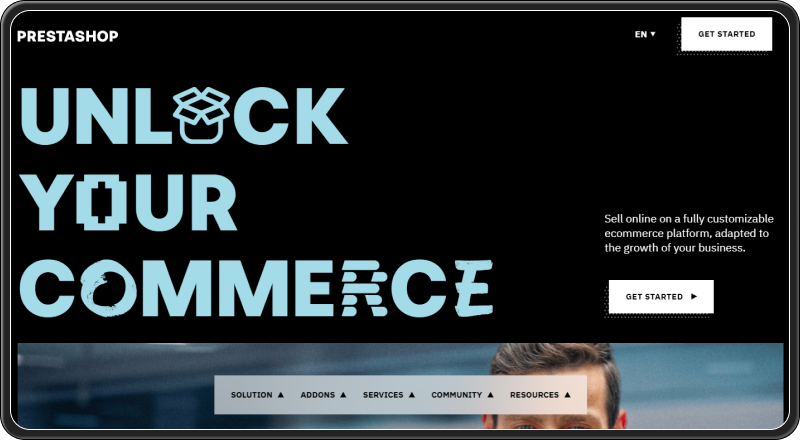
PrestaShop is an open-source eCommerce platform that can be extended into a multi-vendor marketplace using third-party add-ons. The platform allows customization of both the front-end and back-end, offering startups complete control over their marketplace. PrestaShop’s marketplace add-ons offers features like vendor dashboards, product management, and secure payment integrations.
Since it’s an open-source platform, there are no monthly subscription fees, making it a budget-friendly option for startups.
Key Features:
- Customizable product pages
- Multi-vendor management tools
- Payment gateway integrations
- Shipping and tax management
- Real-time reporting
- Mobile-friendly design
Points to Consider:
- Requires technical expertise for setup
- Add-ons may increase overall costs
- Ongoing maintenance responsibility
Software Rating: 4.2/5
Best For: Startups that need an open-source platform with scalability and flexibility to control their eCommerce environment.
8. Marketplacer
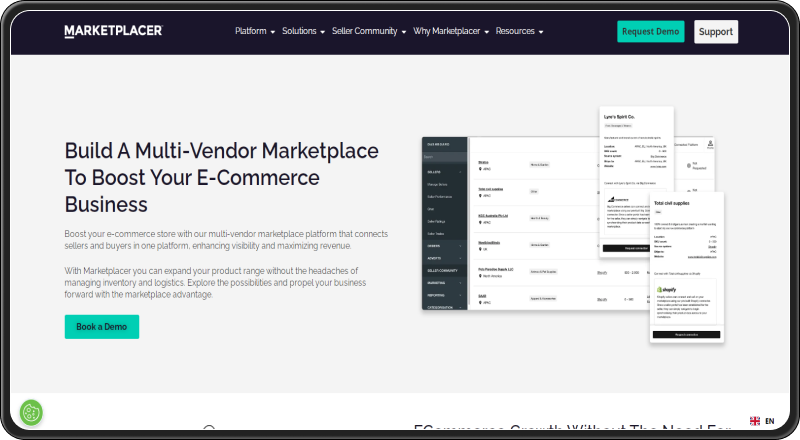
Marketplacer is a user-friendly and scalable multi-vendor marketplace platform that allows startups to launch an online marketplace quickly. With built-in tools for vendor management, payment processing, and order tracking, Marketplacer is designed to help businesses grow with ease.
Its customizable branding features and integrated marketing tools ensure that startups can attract new vendors and customers effectively. Moreover, the platform supports a variety of business models, including product sales, services, and rentals, making it ideal for entrepreneurs in the UAE.
Key Features:
- Vendor onboarding tools
- Integration with major payment providers
- Advanced order management
- Customizable features for branding
- Marketing tools to attract new vendors
Points to Consider:
- Enterprise-focused pricing
- May include transaction fees
- Customization may require technical support
Software Rating: 4.5/5
Best For: Startups looking for a simple solution to launch a multi-vendor marketplace with easy customization options.
9. BigCommerce Multi-Vendor Marketplace
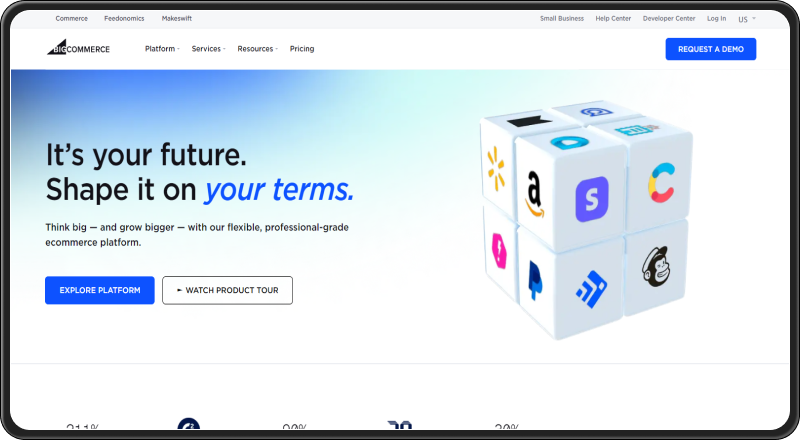
BigCommerce is a high-performance eCommerce platform designed to support enterprise-level businesses. By using third-party apps, startups can easily convert BigCommerce into a full-fledged multi-vendor marketplace. It offers features like vendor management, SEO optimization, and customer support tools, making it a suitable choice for startups that anticipate rapid growth.
Moreover, it also integrates seamlessly with major payment gateways and shipping providers, making it easy for businesses to manage transactions.
Key Features:
- Vendor management tools
- Customizable product pages
- Built-in payment gateway integrations
- SEO and marketing tools
- 24/7 customer support
Points to Consider:
- Marketplace functionality depends on external apps
- Subscription and app costs can add up
- Limited deep customization
Software Rating: 4.8/5
Best For: Startups that anticipate rapid growth and require a platform capable of supporting high traffic and complex operations.
10. MultiMerch
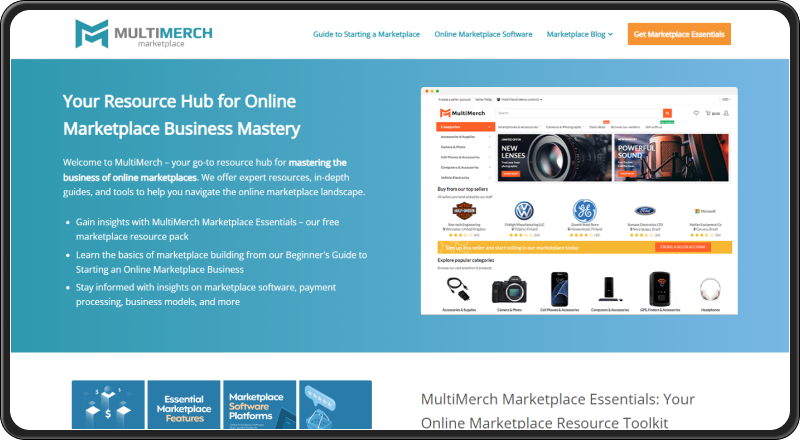
MultiMerch is a powerful multi-vendor solution built on OpenCart, an open-source eCommerce platform. It is a highly cost-effective solution that provides startups with a powerful set of features for managing their marketplace. MultiMerch offers a vendor dashboard, flexible commission structures, integrated shipping and payment gateways, and a mobile-friendly design.
Its simple setup process makes it easy for entrepreneurs to get started, while customization options allow businesses to adapt the platform to their needs.
Key Features:
- Vendor dashboard and management tools
- Flexible commission settings
- Integrated shipping and payment gateways
- Order and inventory management
- Mobile-optimized design
Points to Consider:
- Dependent on the OpenCart ecosystem
- Customization may require developers
- Fewer advanced features compared to enterprise platforms
Software Rating: 4.3/5
Best For: Entrepreneurs looking for a budget-friendly multi-vendor marketplace solution.
Want the Right Technology to Build Your Multi-Vendor Marketplace?
Things to Consider Before Selecting a Multi-Vendor Marketplace Platform for Your Startup
When selecting a multi-vendor marketplace platform for your startup in the UAE, it’s important to carefully evaluate various factors to ensure that the platform meets your current needs and can grow with your business.
Here are the key factors to assess before making your decision:
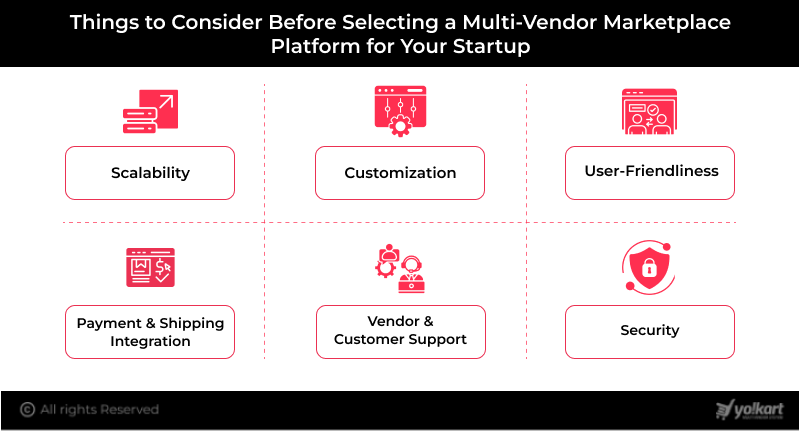
1. Scalability
Your marketplace should be able to scale alongside your business. Ensure the platform you selected can handle increasing numbers of vendors, products, and transactions smoothly. A scalable solution can accommodate higher traffic, more product listings, and additional payment integrations, allowing you to expand without switching to a new system.
2. Customization
Every marketplace has unique requirements. Look for a platform that allows you to customize storefront designs, features like product categories, payment gateways, and shipping options. Strong customization capabilities help you tailor the platform to match your brand and business needs is essential for standing out in a competitive market.
3. User-Friendliness
Ease of use is critical for both vendors and customers. A user-friendly interface ensures a smooth experience for vendors to upload products and manage sales, while customers can easily navigate the marketplace, browse products, and make purchases. Moreover, a simple and intuitive platform reduces the risk of confusion and increases customer satisfaction.
4. Payment and Shipping Integration
In the UAE, having local payment gateway integrations like PayPal, Stripe, or regional payment providers and shipping options such as Aramex or Fetchr is crucial for smooth operations. These integrations enable secure payments and efficient order fulfillment.
5. Vendor and Customer Support
Excellent customer support is a must. Look for platforms that provide responsive and accessible support for both vendors and customers, whether through live chat, email, or phone assistance. Seamless customer support ensures any issues, whether related to order fulfillment or payments, are resolved quickly, keeping both vendors and customers happy.
6. Security
Security should be a top priority when handling sensitive customer data and financial transactions. Ensure that the platform you selected adheres to robust security standards such as SSL encryption, PCI DSS compliance, and two-factor authentication. These security measures protect your users’ personal and payment details, helping build trust in your marketplace.
By evaluating these factors, you can choose a multi-vendor marketplace platform that not only meets your startup’s immediate needs but also supports long-term growth and ensures a seamless experience for both vendors and customers.
Start Building a Marketplace Suitable for UAE Customers
Conclusion
Selecting the right multi-vendor marketplace platform for your startup in the UAE is a strategic decision that will shape your business operations, scalability, and customer experience. Platforms like Yo!Kart, Sharetribe, Magento, and others offer robust capabilities tailored to various business models and budget requirements. By carefully evaluating factors such as scalability, ease of use, and key features, you can choose a solution that positions your marketplace for long-term success in the competitive UAE eCommerce landscape.
FAQs
Q 1. What is the best multi-vendor marketplace platform for startups in the UAE?
Ans. The best multi-vendor marketplace platform for startups depends on your budget, technical capabilities, and growth plans. Solution like Yo!Kart is popular among startups due to its flexibility, scalability, and features tallowlows entrepreneurs to launch and grow their online marketplaces with ease.
Q 2. Can I customize my multi-vendor marketplace platform?
Ans. Yes, you can customize your multi-vendor marketplace platform. Many platforms like Yo!Kart, Magento, and PrestaShop allow you to tailor the design, features, and workflows to match your brand and business needs.
Q 3. Is it easy to scale my marketplace as my business grows?
Ans. Yes, you can scale your marketplace as your business grows. Many platforms like Yo!Kart is designed to scale as your business grows, allowing you to add more vendors, expand product offerings, and increase traffic seamlessly.
Q 4. Is it necessary to have technical expertise to set up and manage a multi-vendor marketplace?
Ans. No, it is not necessary to have technical expertise to set up and manage a multi-vendor marketplace. Platforms like Yo!Kart is designed with user-friendliness in mind, allowing non-technical users to set up and manage their marketplace with minimal effort. However, for highly customizable platforms like Magento, some technical expertise may be required to tailor the marketplace to your specific needs.
Q 5. Can I manage multiple vendors and products on these platforms easily?
Ans. Yes, multi-vendor platforms come with powerful vendor management tools that allow you to efficiently manage multiple vendors, products, orders, and transactions from a central admin panel. These platforms include vendor dashboards, real-time order tracking, and tools for monitoring performance, making marketplace management easy and efficient.
Q 6. Do multi-vendor marketplace platforms support mobile functionality?
Ans. Yes, most marketplace platforms offer mobile-optimized designs and apps, allowing both vendors and customers to access and manage their accounts from smartphones or tablets. This ensures a seamless experience for users on all devices, which is crucial in today’s mobile-first world.
Q 7. Are there any recurring costs associated with running a multi-vendor marketplace?
Ans. Yes, there are often ongoing costs associated with maintaining and scaling a marketplace. These include platform subscription fees (for platforms like Sharetribe and BigCommerce), payment processing fees, hosting costs, and additional fees for using premium features or apps. Therefore, it is essential to factor in these costs when choosing the right platform for your startup.
Planning to Start Your Multi-Vendor Marketplace in the UAE?
Get In TouchPopular Posts