
Published date 15 Dec, 2025
The digital revolution has transformed nearly every retail sector, and the world of music is no exception. For musicians, educators, and collectors, the search for the perfect instrument, whether a vintage acoustic guitar, a modern synthesizer, or a professional-grade drum kit, has increasingly moved online. This shift presents a golden opportunity for entrepreneurs to build an online musical instrument marketplace that brings together a global community of buyers and sellers.
A thriving eCommerce marketplace for musical instruments is far more than an online store; it acts as a central hub, offering unparalleled variety, specialized knowledge, and a sense of community. This comprehensive blog is crafted to provide aspiring entrepreneurs with a full-fledged roadmap, covering everything from understanding the market to choosing the right multivendor eCommerce marketplace software to ensure your platform strikes a resounding chord with its target audience.
Table of Contents
- What is a Musical Instrument Marketplace?
- Why Build a Musical Instrument Marketplace Website in 2026?
- Top Online Musical Instrument Marketplaces
- Must-Have Features in a Successful Musical Instrument Marketplace
- How to Build Your Online Musical Instrument Marketplace
- Why Ready-Made Solutions are Best for a Niche Marketplace
- Strategic Growth and Key Considerations for a Musical Instrument Marketplace
- Conclusion
- FAQs
What is a Musical Instrument Marketplace?
A musical instrument marketplace is a specialized eCommerce marketplace that facilitates the buying and selling of musical instruments and related gear between buyers and sellers. Unlike a traditional single-vendor online store that stocks its own inventory, a marketplace operates on a multi-vendor model, functioning as the intermediary between independent sellers, such as music shops, instrument builders, collectors, and individual musicians, and end buyers.
Furthermore, the platform provides the necessary tools and infrastructure, including product listing capabilities, secure payment processing, and user review systems, for vendors to list their products and for buyers to discover them. The marketplace owner, or admin/s, earns revenue typically through a commission on sales, listing fees, subscription plans, or a combination of these models.
Why Build a Musical Instrument Marketplace Website in 2026?
The timing has never been better to create a musical instrument marketplace. Strong market growth, rapid digital adoption, and shifting buyer behavior all make 2026 an ideal year to enter this space. Let’s have a look at some of the reasons to build a musical instrument marketplace website:
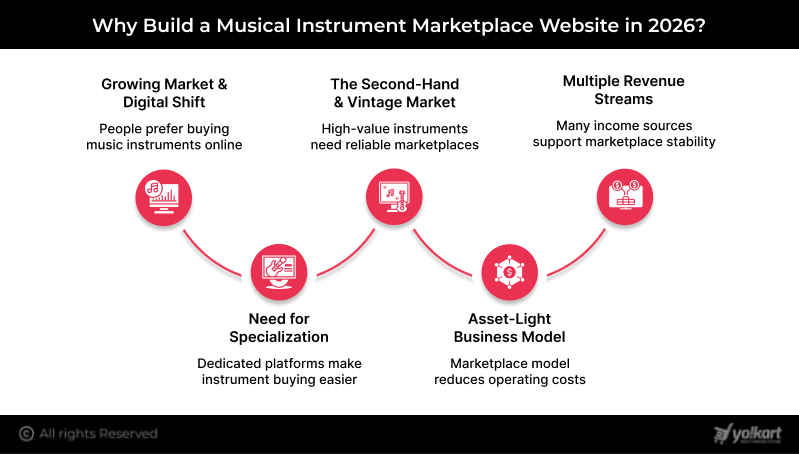
- Growing Market & Digital Shift: The global musical instruments market is experiencing significant growth, driven by a renewed interest in music education, the rising popularity of live performances, and the overall convenience of online shopping. Furthermore, the technological shift has accelerated the digital adoption curve, making musicians comfortable purchasing high-value, specialized items online.
- Need for Specialization: While general marketplaces serve broad audiences, they often lack the specialized features and community focus that musicians crave. Whereas a dedicated platform can offer instrument-specific filtering, such as scale length, tonewoods, and pickup configuration, detailed condition reports, and the ability to compare high-end or vintage gear effectively.
- The Second-Hand and Vintage Market: A significant portion of the music world revolves around used, vintage, and rare instruments. These items often carry emotional and financial value, making trust essential. A dedicated marketplace provides a trusted, centralized platform for these high-value transactions, solving the trust and verification issues inherent in peer-to-peer sales.
- Asset-Light Business Model: By adopting the marketplace model, you eliminate the massive overhead costs associated with inventory, warehousing, and shipping logistics. Hence, your focus remains on the platform’s technology, marketing, and community building, making it a highly scalable and attractive venture.
- Multiple Revenue Streams: A multi-vendor marketplace offers diverse opportunities for monetization, including commissions on sales, premium listings for greater visibility, seller subscription packages, and on-site advertising. This diversity provides stability and long-term earning potential as the platform expands.
Top Online Musical Instrument Marketplaces
Understanding the competitive landscape is crucial for carving out your niche. While a few major players dominate the space, there is still significant opportunity for platforms that offer a stronger user experience, better trust-building features, or a focus on specific categories such as vintage synthesizers, orchestral instruments. Here are the key online players in the musical instrument and gear space:
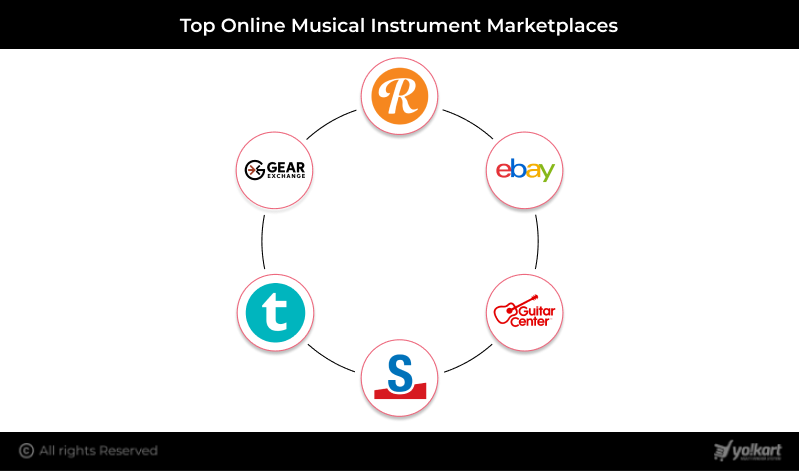
- Reverb: The market leader and dedicated multi-vendor marketplace for new, used, and vintage gear. Reverb is known for its strong community focus, music-centric tools, and an extensive global inventory.
- Sweetwater Gear Exchange: A dedicated peer-to-peer resale platform backed by the respected Sweetwater brand, it offers a trusted alternative with features like store credit incentives to attract sellers.
- eBay: A general global marketplace offering the largest audience and supporting auction formats. However, it is less specialized, lacking music-specific tools and community focus.
- Sweetwater/Guitar Center/Thomann: These are some major B2C retailers (primarily for new gear) that set the standard for customer service, warranties, and stock volume. Their customer service, warranties, and extensive catalogs set high expectations for buyers.
This landscape shows that while competition is strong, there is still room for platforms that deliver deeper specialization, transparency, and community engagement.
Must-Have Features in a Successful Musical Instrument Marketplace
The unique nature of musical instruments demands a feature set that goes beyond standard eCommerce functionality. To build trust and facilitate specialized transactions, you need to incorporate the following key features:

1. Advanced Search and Filtering
Musicians require highly specific criteria to find the right gear. Hence, this feature allows filtering by technical specs like tonewood, scale length, pickup type, detailed condition ratings, and more, which is paramount for specialized searches.
2. Trust and Verification Mechanisms
Since instruments are often high-value, subjective purchases, mandatory seller ratings and the option for an “Authenticity Verification” service are essential. It helps build buyer confidence by providing expert assurance on vintage or high-end items.
3. High-Resolution Media with Demos
To accurately assess an instrument’s sound and condition remotely, sellers must be able to upload multiple high-definition photos, as well as crucial video and audio demos of the gear in use. This feature makes it easy for the buyer to assess the condition and tone of the instruments.
4. Intuitive Vendor Dashboard
Empowering vendors is the key to a successful marketplace. A unified control panel provides sellers with easy access to manage inventory, track sales reports, process orders, handle payouts, and manage their storefront settings efficiently.
5. Secure Multi-Payment Options & Split Payments
As a multi-vendor marketplace, your platform must be integrated with payment gateways like Stripe Connect to handle secure transactions and automatically split payments between the seller and the marketplace commission (escrow/split payments).
6. Real-Time Communication (On-Platform Messaging)
Buyers frequently have detailed, technical questions about an instrument’s history or specific condition. Hence, a direct, on-platform messaging system to facilitate quick, secure communication between buyers and sellers is essential.
7. Multi-Cart Checkout Capability
This core feature allows buyers the convenience of purchasing items from multiple sellers in a single transaction. This feature streamlines the checkout process and improves the overall user experience.
8. Bulk Product Upload & Management
Essential for attracting larger vendors like music shops or major resellers, this tool allows them to efficiently upload, categorize, and manage large inventory simultaneously.
9. Wishlist and Targeted Alerts
Musicians often search for rare or specific gear. Wishlist allows buyers to save items for later and set up alerts for when hard-to-find instruments matching their exact criteria as listed, encouraging repeat visits.
10. Shipping & Tax Configuration Tools
Instruments require specialized shipping. Sellers need granular tools to easily set up regional shipping rates, calculate varying tax rates based on location, and provide tracking integration to ensure reliable delivery and transparent order management.
Create a Feature-Packed Online Instrumental Musical Marketplace
How to Build Your Online Musical Instrument Marketplace
Building an online marketplace generally follows one of two primary development paths: building from scratch (custom development) or utilizing ready-made eCommerce marketplace software solutions. Each approach has its own benefits, challenges, and cost considerations.
1. Building from Scratch (Custom Development)
This approach involves hiring a dedicated team of software developers, designers, and project managers to build the platform entirely to your custom specifications.
Building from scratch offers total control over every line of code, the system architecture, and all features. It allows for the creation of a truly unique platform tailored perfectly to your business model.
- Pros:
- Complete customization
- Full IP ownership
- Ultimate scalability for future features.
- Cons:
- Extremely high initial cost
- Significantly longer time-to-market (often 9-18 months for a feature-rich MVP)
- Total reliance on your internal or outsourced development team for all maintenance, updates, and bug fixes.
Cost to Build from Scratch
The cost of custom development is substantial due to the required person-hours for design, front-end and back-end development, testing, and project management.
- Full-Fledged, Feature-Rich Platform: Building a fully functional, feature-rich online marketplace with robust buyer and seller workflows, advanced search, seller dashboards, media-rich listings, and secure multi-vendor payment systems typically requires an investment ranging from $80,000 to $300,000 or more, depending on feature complexity, development approach, and the expertise and location of the development team.
2. Ready-Made eCommerce Marketplace Software Solutions
This approach involves licensing or purchasing a pre-built, proven software platform specifically designed for the multi-vendor eCommerce model.
Ready-made solutions provide a robust, feature-rich foundation with all the essential multi-vendor functionalities for admin, buyer, and seller. Leveraging a robust, readymade solution drastically reduces development time and cost. However, the key is finding a solution that offers the flexibility and scalability to add your music-specific features.
- Pros:
- Significantly lower upfront cost
- Much faster time-to-market (weeks or a few months, not years)
- Proven stability
- Reduced risk as the core framework is already functional.
- Cons:
- The extensive feature set may present an initial learning curve for non-technical entrepreneurs. However, solutions like Yo!Kart provides technical assistance to simplify onboarding and ongoing use.
Introducing Yo!Kart: A multi-vendor eCommerce Software to Launch Online Music Marketplace
A powerful software like Yo!Kart is an excellent example of a dedicated, self-hosted, ready-made solution that can serve as the backbone for your musical instrument marketplace. It is specifically built for the multi-vendor model and comes equipped with features vital for a complex marketplace, such as:
- Separate User Panels: Dedicated, intuitive dashboards for the Admin, Sellers, and Buyers.
- Multi-Cart & Split Payments: Critical features to handle transactions involving multiple vendors seamlessly.
- Customization: It’s a flexible framework that allows for the integration of music-specific features like advanced filtering, video uploads, and specialized condition fields.
- Scalability: Designed to handle high transaction volumes and a large number of vendors, supporting your long-term growth.
Explore How Yo!Kart Enhances Marketplace Performance and Scalability
Cost to Build with Ready-Made Software Solutions
The financial entry point is dramatically lower than building from scratch.
- Off-the-Shelf Licensing: A one-time license for a top-tier solution like Yo!Kart starts from $999.
- Total Launch Cost: For a fully customized, music-centric marketplace (including the software license, custom design, and unique feature integrations), the cost is typically in the range of $999 to $10,000+. This represents massive savings and a faster ROI compared to custom development.
Why Ready-Made Solutions are Best for a Niche Marketplace
For businesses entering this industry, choosing a ready-made solution, especially a robust one like Yo!Kart offers a clear competitive advantage. A strong, pre-built system gives you the foundation you need to launch quickly, scale confidently, and focus on what truly sets your marketplace apart.
1. Speed and First-Mover Advantage
In the competitive eCommerce world, speed to market is everything. A ready-made solution allows you to launch your Minimum Viable Product (MVP) in a fraction of the time. This enables you to validate your business idea, start earning revenue, and gain customer feedback before a custom-built platform could even complete its design phase.
2. Focus on Your Core Business
For music-focused businesses, the real value lies in industry knowledge, supplier relationships, and customer experience, not in developing marketplace infrastructure. A ready-made solution enables faster launch while handling core eCommerce operations, allowing you to invest in features that truly set your platform apart.
3. Lower Risk and Proven Stability
The core code of established marketplace software has been tested, debugged, and refined by thousands of users across various industries. Hence, by leveraging a readymade software, you avoid the risk of major bugs, security flaws, and the constant need for expensive, post-launch firefighting.
4. Predictable Costs and Scalability
The initial investment is significantly lower. Furthermore, ready-made solutions are built to scale. As your marketplace grows from a few dozen sellers to thousands, the infrastructure is already designed to handle the increased traffic and transaction volume without needing a costly, ground-up rebuild.
In short, for anyone looking to build an online marketplace website for musical instruments, leveraging proven, flexible eCommerce marketplace software is the most intelligent and capital-efficient path to success.
Strategic Growth and Key Considerations for a Musical Instrument Marketplace
Launching the platform is only the beginning. To ensure sustained growth, your strategy must be deeply rooted in the needs and culture of the music community.
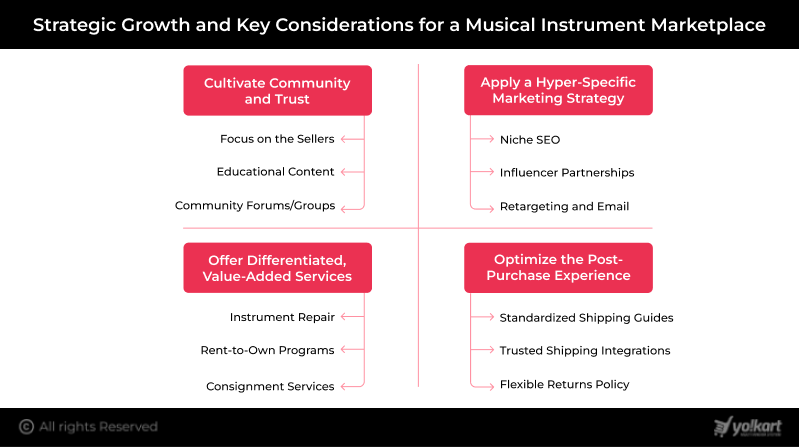
1. Cultivate Community and Trust
Music is an emotional and personal pursuit, and your marketplace must reflect this.
- Focus on the Sellers: Initially, focus on attracting high-quality, reputable sellers (local music shops, known builders, verified collectors). Their presence adds immediate credibility and attracts buyers.
- Educational Content: Become a resource, not just a retailer. Publish high-quality content, reviews, a history of vintage models, instrument maintenance guides, and artist interviews. Use video marketing to showcase instruments and build authority.
- Community Forums/Groups: Integrate or foster a community space where musicians can discuss gear, share tips, and ask questions.
2. Implement a Hyper-Specific Marketing Strategy
Avoid broad eCommerce marketing; target specific musical niches.
- Niche SEO: Optimize product pages and content for long-tail, high-intent keywords.
Influencer Partnerships: Partner with respected musicians, music teachers, and gear reviewers on YouTube, Instagram, and TikTok who can showcase products and drive qualified traffic. - Retargeting and Email: Use abandoned cart features and targeted email campaigns to promote specific gear categories to segmented lists of musicians.
3. Offer Differentiated, Value-Added Services
What can you offer that large, general sites cannot?
- Instrument Repair and Lessons Integration: Partner with local repair shops or music lesson providers. Offer a feature where buyers can easily find a recommended local technician for instrument setups or repairs after purchase, or link them to verified online lesson providers.
- Rent-to-Own Programs: Introduce an instrument rental or rent-to-own feature for student-level instruments, a massive growth area that drives recurring revenue and future sales.
- Consignment Services: Offer a premium, end-to-end consignment service for high-end or complex vintage instruments, handling the listing, communication, and shipping for a higher commission.
4. Optimize the Post-Purchase Experience
Shipping valuable, often fragile instruments is complex.
- Standardized Shipping Guides: Provide sellers with detailed, best-practice packing and shipping guides for various instrument types, including guitars, drums, and keyboards, to minimize damage and reduce insurance claims.
- Trusted Shipping Integrations: Integrate with reputable carriers and provide mandatory tracking.
- Flexible Returns Policy: A clear, musician-friendly returns and refund policy is vital to build buyer confidence for expensive purchases.
Build a High-Growth Marketplace for Musical Instruments
Conclusion
The opportunity to build an online musical instrument marketplace is a harmony of technology and passion. By understanding the specialized needs of musicians and leveraging the power of a purpose-built platform, you can create a successful, scalable, and highly profitable venture.
While both custom development and ready-made solutions offer value, ready-made multivendor ecommerce software provides the fastest, most strategic path to launch. This approach allows you to dedicate your valuable resources to community building, curating exceptional inventory, and delivering the specialized service the music community deserves, ensuring your platform is the perfect stage for instruments from around the world.
FAQs
Q 1. Can I sell used musical instruments on the marketplace?
Ans. Yes, many musical instrument marketplaces allow the selling of both new and secondhand items. Therefore, it is important that your platform has an easy way for sellers to list used instruments with clear condition indicators, such as “like new,” “gently used,” or “vintage.”
Q 2. What are the common challenges in building a musical instrument marketplace?
Ans. Some of the common challenges in building a musical instrument marketplace include:
- Managing inventory across different sellers
- Ensuring accurate descriptions
- Handling customer disputes.
The platform needs robust payment gateways and customer service tools. It’s also crucial to foster a community of musicians and sellers to create a dynamic ecosystem.
Q 3. What should I consider when choosing between building a marketplace from scratch or using a ready-made solution?
Ans. If you need a unique platform with custom features and have the budget, building from scratch might be the way to go. However, ready-made solutions like Yo!Kart provides you with pre-built tools, saving time and money. Hence, consider your timeline, budget, and specific needs before making a decision.
Q 4. Can I scale my musical instrument marketplace easily in the future?
Ans. Yes, you can scale your musical instrument marketplace easily in the future, especially if you choose the right platform. With scalable infrastructure and self-hosted solutions (like Yo!Kart), your marketplace can grow seamlessly. Whether you’re building from scratch or using a ready-made solution like Yo!Kart, be sure to choose a flexible platform that can adapt as your business grows.
Q 5. How do I attract sellers to list their musical instruments on my marketplace?
Ans. To attract sellers to your online instrument music marketplace, offer them a user-friendly interface, competitive commission rates, and tools that help them manage their listings effectively. Moreover, promote the marketplace to a community of musicians through targeted ads, social media, and partnerships with music stores and influencers.
Q 6. Will I need to manage shipping for the instruments sold?
Ans. While some platforms manage shipping logistics for sellers, many leave it up to the sellers themselves to handle fulfillment. Hence, you can offer integrated shipping solutions or let sellers handle it independently, depending on your model.
Q 7. How can I ensure the quality of the musical instruments sold on my marketplace?
Ans. To ensure the quality of the musical instruments sold on your marketplace, set clear guidelines for sellers regarding the quality standards. You may also want to have a return policy for defective or misrepresented items. Additionally, using reviews and ratings from buyers can also help ensure quality control.
Launch Your Online Marketplace and Accelerate Your Entrepreneurial Journey
Get In TouchPopular Posts