
In today’s era, where home studios have become the global standard and high-fidelity audio is no longer a luxury reserved for the elite, the demand for specialized audio gear has reached an all-time high. From podcasters searching for the perfect condenser microphone to audiophiles hunting for vintage tube amplifiers, the audio equipment market is thriving.
Yet, despite this growing demand, many enthusiasts still struggle with a fragmented market, switching between generic eCommerce giants and high-risk social media classifieds. This gap presents a massive opportunity for entrepreneurs to build a dedicated audio equipment marketplace.
In this comprehensive blog, you will explore what it takes to create a successful niche marketplace, the technology required to power it, and the most cost-effective way to launch your venture.
Table of Contents
- What is an Audio Equipment Marketplace?
- Types of Audio Equipment Marketplaces
- Why Build an Audio Equipment Marketplace Now?
- 5 Steps to Build Your Audio Equipment Marketplace
- Cost to Build an Audio Equipment Marketplace
- Yo!Kart: Best eCommerce Marketplace Software Solution to Launch an Audio Equipment Marketplace
- Conclusion
What is an Audio Equipment Marketplace?
An audio equipment marketplace is a specialized multi-vendor eCommerce platform where multiple third-party sellers, including major brands, local retailers, and individual musicians, list and sell hardware and software to a targeted audience.
Unlike a traditional online store, a marketplace acts as a digital bridge. It provides the infrastructure for secure transactions, payments, and shipping logistics without the platform owner necessarily owning the inventory. This approach works especially well in the audio industry, which spans several distinct sub-niches, including:
- Professional Studio Gear: Mixers, audio interfaces, studio monitors, and signal processors.
- Consumer Electronics: High-end headphones, Hi-Fi speakers, and home theater systems.
- Musical Instruments: Electric guitars, synthesizers, drum machines, and amplifiers.
- Live Sound & DJ Gear: PA systems, lighting rigs, and MIDI controllers.
By centralizing these categories on one dedicated marketplace, an audio equipment marketplace delivers a true “one-stop shop” experience that generic eCommerce marketplaces struggle to match. Most importantly, it caters to the technical sensibilities of audio professionals and enthusiasts who value precision, performance, and product expertise.
Types of Audio Equipment Marketplaces
Before diving into development, it is essential to understand the types of audio equipment marketplace models. The audio industry supports several distinct marketplace types, each serving a different audience and business goal. Here are the three primary types with real-life examples:
A. The Professional & New Gear Hub (B2C)
This model connects authorized dealers and manufacturers directly with professional buyers, musicians, sound engineers, podcasters, broadcasters, and others who require high-quality, reliable gear for their work.
These marketplaces focus on new, authentic products with factory warranties, technical support, and after-sales service. Customers usually seek products from trusted brands and value the ability to get expert advice and guidance on their purchases. As a result, platforms following this model offer a curated selection of equipment, ensuring that all items meet certain industry standards.
- Real-Life Example
Sweetwater has built a multi-billion-dollar empire by treating customers as “pro partners,” offering expert advice from sales engineers alongside a massive inventory of professional audio gear.
B. The Peer-to-Peer Used Gear Exchange (C2C)
The C2C (Consumer-to-Consumer) model focuses on the secondary market, facilitating direct trades or sales between individual buyers and sellers. This model plays into the circular economy, where musicians and audio professionals often sell or trade their old gear to fund new purchases or upgrade their setups.
The peer-to-peer model provides a platform for used audio equipment, often at discounted prices compared to new items. It emphasizes trust, transparency, and sometimes community-building, offering features that help buyers and sellers interact safely.
- Real-Life Example
Reverb is widely regarded as the benchmark for the used gear marketplace. It has built a strong community around vintage and pre-owned gear, providing price guides that use real-time data to help musicians buy and sell at fair prices.
C. The High-End Audiophile Boutique
This marketplace model caters to the specialized world of audiophiles, individuals who have a passion for Hi-Fi (high-fidelity) sound and are willing to pay a premium for top-tier equipment.
These platforms specialize in luxury audio equipment, such as turntables, tube amplifiers, high-end headphones, DACs (digital-to-analog converters), and speakers, which may have extremely high price tags due to their quality, craftsmanship, and rarity. Audiophiles often seek gear that provides superior sound quality and is aesthetically pleasing, which means these marketplaces must emphasize technical specifications, brand reputation, and exclusivity.
- Real-Life Example
Audiogon specializes in the high-end Hi-Fi niche. It focuses on technical specifications and little known equipments that would be lost on a broader platform like eBay or Amazon.
Which one should you choose?
- Choose B2C if you have existing relationships with audio brands or distributors.
- Choose C2C if you want to build a large, active community of musicians and gear enthusiasts.
- Choose the Boutique if you have deep technical knowledge of Hi-Fi and want to cater to a luxury-focused audience.
Turn your Sound Gear Expertise into an Audio Equipment Marketplace
Why Build an Audio Equipment Marketplace Now?
The audio industry is going through a major shift, creating a strong opportunity for new marketplace businesses. Several trends are aligning to make this the right time to launch a dedicated audio equipment marketplace. Mentioned below are some of the reasons why the timing is perfect:
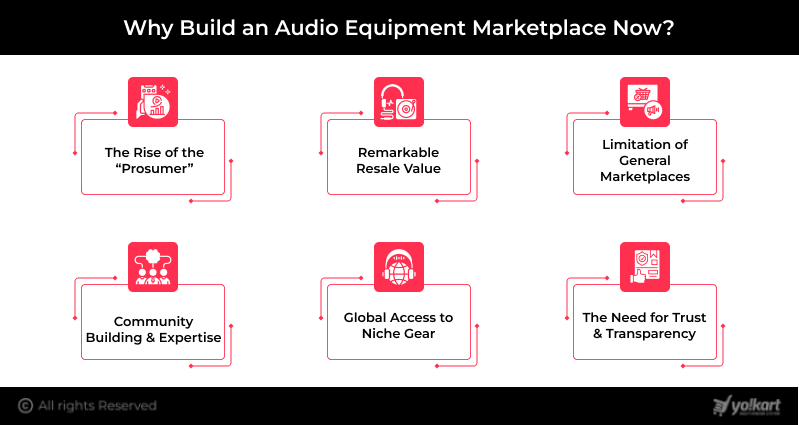
1. The Rise of the “Prosumer”
The rapid growth of platforms, such as TikTok, YouTube, and Podcasting has led to a surge in prosumer (Professional + Consumer) demand for professional-grade audio equipment. Millions of content producers now invest in higher-quality tools, driving the global audio equipment market toward an estimated value of $50 billion by 2035.

Source: Market Research Future
2. Remarkable Resale Value
High-quality audio gear, such as vintage microphones and classic instruments, holds its value and can even appreciate over time. This makes a used gear marketplace sustainable and profitable.
3. Limitations of General Marketplaces
Platforms like Amazon don’t cater to the specific needs of audio professionals. They lack features like specialized search filters and community trust that a niche audio marketplace can provide.
4. Community Building and Expertise
A dedicated audio marketplace can offer specialized knowledge, reviews, expert advice, and peer insights. This creates a community where professionals share tips and experiences, increasing long-term loyalty and trust among users.
5. Global Access to Niche Gear
Audio professionals often look for rare or specific equipment that’s not available locally. A global marketplace breaks down geographical barriers and allows for easier access to find niche gear from trusted sellers worldwide.
6. The Need for Trust and Transparency
Purchasing high-value audio equipment requires confidence. A specialized marketplace can offer warranties, certified listings, and buyer protection, giving customers confidence in their purchases.
5 Steps to Build Your Audio Equipment Marketplace
Building a successful audio equipment marketplace is a structured journey that requires strategic planning, technical clarity, and focused execution. Below are the five essential steps to guide you from idea to launch:
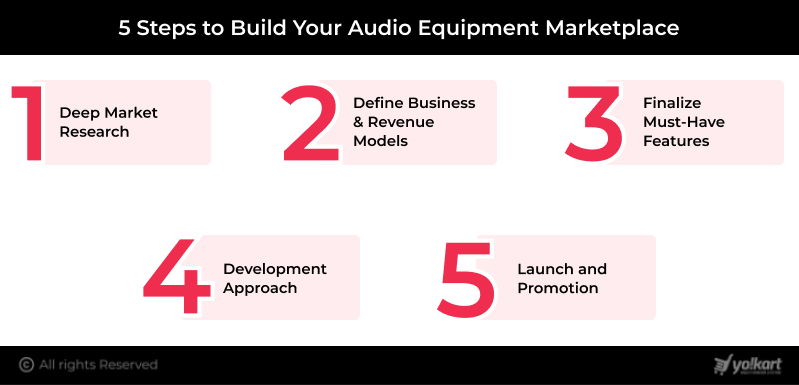
Step 1: Deep Market Research
Start by defining your long-term vision. You should first clarify if you are going to be the “eBay for Guitar Pedals” or the “Luxury Destination for Hi-Fi”. Other than that, you must:
- Identify Pain Points: Talk to local studio owners. Their biggest complaints are usually high selling fees on eBay or the lack of specialized shipping protection for fragile electronics.
- Analyze Trends: It is also critical to track emerging trends. Wireless audio and AI-integrated hardware are the fastest-growing segments.
Step 2: Define Business and Revenue Models
A sustainable marketplace relies on multiple revenue streams rather than a single source of income. Common and effective models include:
- Commission (Primary): Take a percentage (3%-10%) of every successful transaction.
- Subscription Fees: Offer premium seller tiers with benefits such as lower commissions or advanced analytics
- Featured Listings: Allow sellers to pay for their products to appear at the top of search results.
- Integrated Shipping: Partner with logistics providers to sell discounted shipping labels, keeping a small margin for the convenience.
Step 3: Finalize Must-Have Features
To compete with generic platforms, your marketplace must be built specifically for audio professionals and enthusiasts. Essential features include:
- Advanced Technical Filtering: Buyers should be able to filter products by detailed specifications such as tube versus solid-state, bit depth, sample rate, impedance (ohms), frequency response, and connectivity type.
- Detailed Condition Grading for Used Gear: Sellers should be required to classify products using standardized condition labels such as new, mint, excellent, good, or fair, along with mandatory photo uploads.
- Bidding & Offer System: Price negotiation is standard in the audio gear market. A built-in offer and counteroffer system is essential, particularly for used, vintage, and rare equipment.
- Seller Dashboards: Vendors need dedicated dashboards to manage listings, track inventory, monitor payouts, respond to buyer inquiries, and handle returns or disputes efficiently.
- Parameter-Based Reviews: Instead of generic star ratings, buyers should be able to review products based on audio-specific criteria such as sound quality, build quality, accuracy, and overall value.
- Specialized Shipping and Insurance Options: Audio equipment often requires fragile handling. Integration with shipping providers that support insurance, signature confirmation, and shock protection adds significant value.
- Expert Content and Buying Guides: Built-in support for guides, comparison charts, and expert recommendations enhances trust and positions your marketplace as an authority rather than just a transaction platform.
- Compatibility and Use-Case Tags: Allow sellers to tag products by use case, such as home studio, live performance, podcasting, DJ setups, or audiophile listening, helping buyers make faster decisions.
Launch Your Own Feature-Rich Audio Equipment Marketplace
Step 4: Development Approach (Custom vs. Readymade)
This is the most critical crossroads for an entrepreneur. The selected approach determines the crucial factors, such as time to market, cost, scalability, and more. However, two popular approaches are:
- Custom Development: It involves building the marketplace from scratch using React, Node.js, or Python. While it offers control, it is costly, time-intensive, and requires long-term technical maintenance.
- Readymade Solutions: Readymade multi-vendor marketplace solutions are the preferred choice for startups. They allow you to launch in weeks rather than months while reducing development risk and upfront investment.
Step 5: Launch and Promotion
Once your platform is ready, a strong go-to-market strategy is essential. Therefore, focus on:
- SEO: Focus on “long-tail” keywords like “Best used ribbon mics for vocals” to attract high-intent buyers.
- Influencer Partnerships: Collaborate with “Gear-Tubers” to showcase your platform’s safety and ease of use.
- Community Grassroots: Be active on Gearspace or Reddit’s r/audiophile to build trust before you ask for a sale.
Cost to Build an Audio Equipment Marketplace
The cost of building an audio equipment marketplace depends largely on the development approach you choose. Below is a practical breakdown of the two most common options and the investment required for each:
Approach A: Custom Development
Building a marketplace from the ground up is a complex and resource-intensive process. It requires assembling a full development team, typically including a UI and UX designer, frontend developer, backend developer, and quality assurance tester.
- Initial Investment: $50,000 – $150,000+
- Time to Market: 6 – 12 Months
- Ongoing Maintenance: High, as you are responsible for every bug fix, performance optimization, and security update.
- Risk: High, since project delays or team changes can significantly impact timelines and costs
Approach B: Readymade Solutions (e.g., Yo!Kart)
Using a specialized marketplace software allows you to build on a proven and stable architecture rather than starting from scratch. This approach is popular among startups and growing businesses because it reduces both cost and complexity.
- Initial Investment: $1,000 – $5,000
- Time to Market: 1 – 4 Weeks
- Ongoing Maintenance: Low, with core updates and security patches handled by the software provider.
- Risk: Low, as the platform has already been market-tested for real-world use.
For most entrepreneurs, a readymade solution provides the fastest and most cost-effective path to launching a fully functional audio equipment marketplace.
Yo!Kart: Best eCommerce Marketplace Software Solution to Launch an Audio Equipment Marketplace
Yo!Kart is a feature-rich and highly customizable eCommerce marketplace software designed to help entrepreneurs launch and scale their online marketplaces quickly and efficiently. It is a powerful, readymade solution for anyone looking to build a multi-vendor platform across industries, whether you’re launching an audio equipment marketplace, a fashion store, or any other product-based marketplace.
For niche industries like audio equipment, where both buyers and sellers expect specialized features and a smooth user experience, Yo!Kart offers a strong foundation. Moreover, it offers customizability, allowing you to tailor the marketplace according to your business model.
Key Advantages of Yo!Kart for Audio Equipment Marketplaces
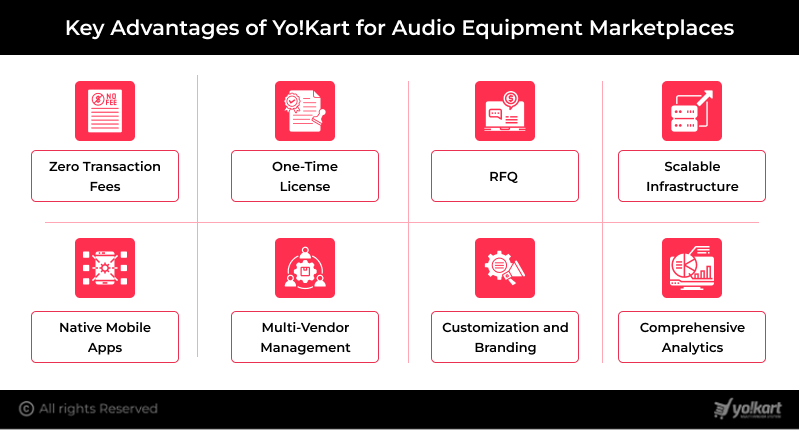
- Zero Transaction Fees: Yo!Kart doesn’t take a commission from your sales, unlike other SaaS models (e.g., Shopify). You keep all the commissions you earn, making it a more profitable solution for marketplace owners.
- One-Time License: Yo!Kart offers a one-time license fee, meaning no recurring monthly charges or subscription fees. You fully own the software and all the data, giving you full control of your marketplace.
- RFQ: Yo!Kart includes a built-in RFQ and offer management system that allows buyers to request quotes and sellers to respond with offers and counteroffers. This feature enables transparent, structured negotiations and makes it easier for both parties to mutually decide pricing, which is especially important for pre-owned and vintage audio gear.
- Scalable Infrastructure: Whether you’re just starting or anticipating a large influx of traffic, Yo!Kart is designed for scalability. The solution can handle millions of products and high traffic spikes, ensuring your marketplace remains stable during peak times, like Black Friday or other seasonal sales events.
- Native Mobile Apps: Yo!Kart provides native mobile apps for both Android and iOS. These apps are designed to deliver a smooth, high-performance experience for buyers and sellers, which is crucial for modern users who prefer shopping from their mobile devices.
- Multi-Vendor Management: It allows you to manage multiple vendors seamlessly. Vendors can easily manage their products, track sales, set up promotions, and communicate with customers via a dedicated dashboard, making Yo!Kart an ideal solution for running a multi-seller audio equipment marketplace.
- Customization and Branding: Yo!Kart offers complete customization options. You can tailor the marketplace design and functionality to match your brand identity, offering a unique and professional look that appeals to your target audience.
- Comprehensive Analytics: Yo!Kart offers powerful analytics tools to track sales performance, traffic, and other key metrics. These insights enable data-driven decisions that support growth and long-term marketplace optimization.
Schedule One-on-One Personalized Demo for Yo!Kart
Conclusion
Building an audio equipment marketplace is one of the most promising niche opportunities in the current creator economy. The demand for high-quality audio gear is on the rise, and the existing generic marketplaces are failing to meet the technical needs of musicians, producers, creators, and audio engineers.
Hence, by focusing on this specific niche, implementing the right marketplace features, and choosing a cost-effective development path like Yo!Kart, you can launch a world-class marketplace that connects the next generation of creators with the tools they need to bring their sound to life.