Back To Home

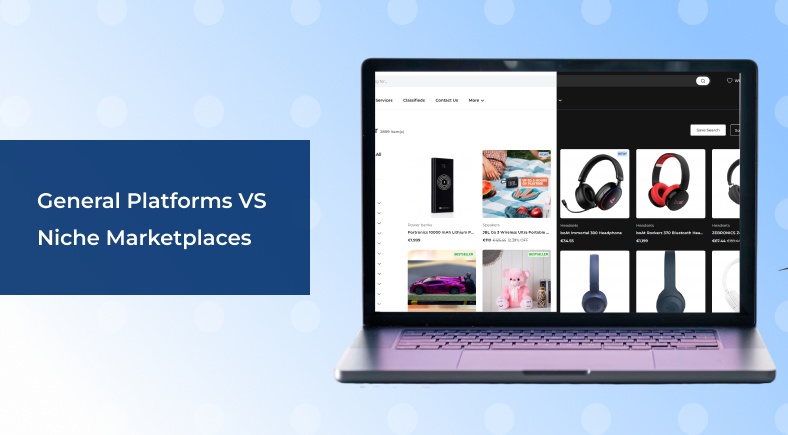
General Platforms VS Niche Marketplaces: Which Business Model Works Best in 2026?
1147
Views
Published Date 11 Dec, 2025
The global marketplace industry continues to expand aggressively, but the way companies rule the market has changed. Back in the early 2010s, success depended largely on building massive product catalogs, onboarding sellers in bulk, and capturing attention with heavy discounts. But the landscape has shifted in 2026; consumers are smarter, competition is ruthless, and startups cannot burn capital endlessly to gain market share.
As a result, one major debate has emerged among marketplace entrepreneurs: “Should you build a general marketplace like Amazon that sells ‘everything,’ or a niche marketplace that targets a specific category or audience?”
This question has become fundamental for founders, investors, analysts, and platform architects. While both models still work in 2026, they need different market dynamics and resources. Choosing the wrong model can lead to slow traction, high CAC (Customer Acquisition Cost), weak retention, and ultimately, failure.
This blog provides a complete breakdown of both marketplace models, supported by industry data and examples. By the end, you’ll clearly understand which type of marketplace gives you the highest probability of success and growth.
Table of Contents
- Understanding the Core Difference Between General Platforms VS Niche Marketplaces
- Marketplace Economics in 2026: Why Strategies Changed
- Side-by-Side Comparison: General vs Niche Marketplaces in 2026
- Which Marketplace Model Works Best for Each Industry in 2026?
- How to Build a Marketplace in 2026: A Practical Blueprint for Founders
- How Yo!Kart Helps You Build a Marketplace with Lower Cost & Faster Time to Market
- Conclusion
- FAQs
Understanding the Core Difference Between General Platforms VS Niche Marketplaces
Before comparing both models, it is important to understand the fundamental distinction between a general marketplace and a niche marketplace. It shapes how you acquire customers, position your brand, build trust, and how efficiently you can scale. Moreover, clarifying this difference upfront helps founders choose the model that aligns with their vision, resources, and long-term growth strategy.
What is a General Marketplace?
A general marketplace offers an extensive range of products or services across multiple categories and industries. Its prime value proposition is volume, variety, and convenience under one roof. This wide scope allows the platform to attract diverse audiences, support numerous buying journeys, and become a daily utility for users seeking speed and simplicity in their purchasing experience.
Some of the Popular Examples Include:
- Amazon
- Flipkart
- Mercado Libre
- Noon
- Lazada
- AliExpress
Advantages of General Marketplaces
| Benefit | Explanation |
| Large catalog drives mass traffic | More products = wider audience |
| High scalability | Multi-category model enables exponential expansion |
| High lifetime value for essentials | Repeat purchases for commodities |
| Huge revenue ceiling | Wide TAM (Total Addressable Market) |
| Multiple cross-selling opportunities | Customers buy across categories |
When properly funded and executed, general platforms can dominate entire regions.
Challenges of General Marketplaces
- Extremely high competition
- Low differentiation in early years
- High CAC and thin product margins
- Dependence on discounting and logistics optimization
- Complex technology infrastructure
What is a Niche Marketplace?
A niche marketplace focuses on a specific segment, product category, audience demographic, or passion-driven community. Its value proposition is depth, personalization, and expertise, not variety. This specialization enables the marketplace to build trust quickly, attract highly motivated buyers, foster strong community interactions, and create a brand identity that resonates deeply with its users.
Some of the Popular Examples Include:
- Depop (streetwear & vintage fashion)
- StockX (sneakers and collectibles)
- ChefsFeed (chefs and culinary services)
- Reverb (musical instruments)
- BookSirens (authors & reviewers)
- Chewy (pets)
Advantages of Niche Marketplaces
| Benefit | Explanation |
| Strong brand positioning | Clear identity resonates with the target audience |
| Lower marketing costs | Audience targeting is easier and more efficient |
| Higher conversion rate | Specialized buyers trust expert platforms |
| Faster community building & loyalty | Shared passion = repeat purchases |
| Easier seller onboarding | Sellers clearly understand the value proposition |
| Higher average review quality | Customer expectations align with curated listings |
Consumers trust niche marketplaces because they expect expertise, reliability, and authenticity.
Challenges of Niche Marketplaces
- Growth may slow down if the category/talent pool is too small
- Requires community engagement and content-led marketing
- Market saturation can occur if the niche is extremely narrow
However, niche marketplaces typically achieve PMF (Product Market Fit) and profitability much faster than general platforms.
Marketplace Economics in 2026: Why Strategies Changed
Choosing the right marketplace model in 2026 requires a clear understanding of how the industry has evolved. The strategies that once guaranteed growth no longer deliver the same results, largely because consumer behavior, competitive dynamics, and digital advertising economics have shifted dramatically.
Key market forces reshaping the marketplace industry
- Rising Ad Costs: It has made broad, mass market targeting extremely expensive, forcing platforms to be more precise and efficient with their marketing budgets.
- Demand for Expertise: Customers increasingly look for authenticity, depth, and expertise rather than endless product shelves.
- Personalization Over Price: Personalization now plays a bigger role in buying decisions than heavy discounts, which means relevance matters more than volume.
- Trust and Community: Online shoppers place higher value on trusted communities, credible reviews, and well-curated selections that help them make confident choices.
- Shrinking Product Margins: Growing competition has compressed margins on generic products, making it harder for general marketplaces to differentiate based on price alone.
There is a clear industry shift:
In the early 2010s → consumers preferred platforms with more options.
In 2026 → consumers prefer platforms with the right options.
This is where niche marketplace experiences begin to outperform general platforms.
Have a Unique Business Niche in Mind?
Side-by-Side Comparison: General vs Niche Marketplaces in 2026
Choosing between a general marketplace and a niche marketplace is one of the most critical yet strategic decisions for entrepreneurs planning to launch an online platform in 2026. While general platforms like Amazon, Flipkart, or eBay attract broad traffic and offer mass product categories, niche marketplaces focus deeply on a single segment, such as health foods, sustainable fashion, fitness experts, pet services, or construction materials.
As consumer expectations evolve, CAC Customer Acquisition Cost) rises, and the global players tighten their grip on the eCommerce space. Thus, the comparison below helps founders determine which marketplace model aligns with long-term success, revenue stability, and scalability.
Key Insight Before We Compare
General marketplaces scale fast but require heavy investments in marketing and operations. On the other hand, niche marketplaces scale more slowly initially, but retain customers better, create strong brand authority, and generate higher profit per sale. In 2026, the winning strategy will depend on whether your marketplace prioritizes broad visibility or deep specialization and community-driven growth.
Comparison Table
| Criteria | General Marketplaces (Amazon-style) | Niche Marketplaces (Category-focused) |
| Target Audience | Extremely broad | Highly specific |
| Competition | Very high | Controlled and limited |
| Customer Acquisition Cost (CAC) | Higher due to competition | Lower due to targeted reach |
| Conversion Rate | Moderate | High: customers come with a defined intent |
| Brand Loyalty | Low: users shop based on price | High: users value expertise and specialization |
| Marketing ROI | Often diluted | Higher: efforts are razor-focused |
| Monetization | Mostly transaction-based | Transaction + Premium services / Value adds |
| Time to Build Trust | Long | Short: Authority builds faster |
| Initial Growth | Fast but expensive | Gradual but sustainable |
| Margin Potential | Lower due to pricing pressure | Higher – customers pay for value and expertise |
| Scaling Strategy | Category expansion | Deepening expertise within one vertical |
| Suitable For | Large capital-backed ventures | Startups, SMEs, and bootstrapped founders |
Which Marketplace Model Works Best for Each Industry in 2026?
While both marketplace models, general and niche, have proven track records, their effectiveness varies significantly across industries. The right choice depends on consumer behavior, competition intensity, purchasing frequency, trust requirements, and the level of specialization buyers expect. Below is a breakdown of which model aligns best with specific industries in 2026 and why:
| Industry | Best-Fit Model | Why It Works |
| Fashion & Apparel | General Marketplaces + Micro-Niche | High product diversity drives volume, while dedicated niche segments like sustainable fashion or kids’ couture earn loyalty. |
| Grocery & Essentials | Niche Marketplaces | Hyperlocal delivery, perishability sensitivity, and repeat purchase patterns demand specialization. |
| B2B Raw Materials/Manufacturing | Niche Marketplaces | Buyers seek compliance, bulk pricing, certified vendors, and technical transparency; specialist platforms win trust faster. |
| Electronics | General Marketplaces | Product comparison, brand availability, and competitive pricing matter more than specialization. |
| Fitness, Wellness & Personal Coaching | Niche Marketplaces | Personalized services and community-centric growth enhance retention and subscription adoption. |
| Home Services / Repair & Maintenance | Niche Marketplaces | Trust, locality, verified professionals, and skill-specific searchability are crucial. |
| Books & Stationery | General Marketplaces | High SKUs, commodity-driven pricing, and impulse buying suit broad marketplaces. |
| Beauty & Personal Care | Niche Marketplaces | Brand loyalty, curated recommendations, and influencer communities fuel dedicated vertical platforms. |
| Pets & Pet Care | Niche Marketplaces | Owners prefer platforms tailored to pet needs, advisory content, and premium personalization. |
| Rentals (Vehicles/Properties/Equipment) | Niche Marketplaces | Decision-making relies on authenticity, insurance, reviews, and pricing transparency. |
| Education & eLearning | Niche Marketplaces | Expertise, reputation, ratings, and direct relationships with tutors/coaches drive success. |
| Auto Parts & Accessories | Niche Marketplaces | Technical compatibility, installation guides, and part specifications require specialization. |
Suggested Read: Top Niches in eCommerce to Start Online Business
What This Means for Entrepreneurs in 2026
The above market data reveals a clear shift toward specialization rather than scale. Industries with high trust expectations, frequent repeat interaction, expert-led advisory, or specialized requirements now thrive more in niche marketplace architectures. Comparatively, industries where pricing and product abundance rule buying decisions continue to favor general marketplace models.
Strategic Tip for New Founders
If you’re entering a competitive industry with limited capital, a niche marketplace is the smarter play. It enables:
- Faster brand authority
- Lower customer acquisition cost (CAC)
- Higher conversion rates
- Loyal repeat buyers
- Multiple monetization channels, such as premium listings, subscriptions, commissions, and ads
Once the niche grows strong, you can expand into micro-segments and evolve toward a broader marketplace, a proven approach used by category leaders like Etsy, Chewy, and Ulta.
How to Build a Marketplace in 2026: A Practical Blueprint for Founders
Whether you’re planning to build a general marketplace like Amazon or a niche marketplace focused on a specific vertical, success depends on strategic planning, not just development. A marketplace becomes truly scalable only when buyers, sellers, and technology work together seamlessly. The blueprint below outlines the essential steps, entrepreneurs can follow to build a marketplace that is high-performing, and positioned for long-term growth:
Step 1: Market Understanding and Model Selection
Before building anything, founders need to clearly understand the problem their marketplace will solve, the audience they are targeting, and the competitive landscape they are entering. This clarity helps validate whether there is strong demand, a lucrative opportunity, and a logical fit between the idea and the type of marketplace they choose to build.
What You Need to Address:
- Primary pain point for buyers and sellers
- Determine whether the value lies in price, availability, trust, expertise, convenience, or community
- Analyze audience size, intent, and buying behavior
- Study competitors and uncover gaps in their offerings
- Validate your unique selling proposition with real users
- Decide whether a general or niche is the right fit for your category
Step 2: Select a Scalable Marketplace Platform
Your selected technology infrastructure must support features like multi-vendor operations, secure payments, logistics integrations, and an SEO optimized architecture. Beyond that, ensure the platform is mobile-first, fast, and equipped with analytics for both sellers and administrators to manage performance effectively.
Step 3: Build High-Quality Supply (Seller Onboarding)
The quality of your supply directly shapes the customer experience. Focus on onboarding high-potential vendors, maintaining strong catalog and listing standards, and providing seller dashboards, analytics, and performance tools that help partners grow on your platform.
Step 4: Deploy Marketing & Retention Engines
Growth in 2026 requires consistent, high-quality acquisition and retention efforts. Therefore, you should invest in SEO, content marketing, referral programs, loyalty incentives, influencer partnerships, and community building. Other than that, focus on enhancing user engagement with personalization tools and AI-driven recommendations, as it also increases conversions and long-term retention.
This streamlined blueprint helps founders build a marketplace strategically, ensuring each decision supports sustainable growth in a highly competitive digital environment.
How Yo!Kart Helps You Build a Marketplace with Lower Cost & Faster Time to Market
Yo!Kart is purpose-built multi-vendor marketplace software built specifically for entrepreneurs and enterprises that want to launch a powerful online marketplace without the long development cycles or high engineering costs. Rather than assembling large development teams and extensive infrastructure, businesses can begin with a pre-built multi-vendor system engineered for scalability, fast conversions, and seamless user experiences.
Moreover, developing a marketplace from scratch can cost $80,000–$400,000+. However, Yo!Kart eliminates this burden and offers packages starting at just $499.
Additionally, Yo!Kart empowers entrepreneurs to launch a marketplace that is:
- Fully customizable
- Scalable across industries and business sizes
- Optimized for buyer and seller conversions
- Licensed with lifetime ownership for a one-time payment
Key Advantages of Choosing Yo!Kart
| Yo!Kart Capabilities | How It Helps Your Business Grow |
| Multi-vendor architecture | Supports thousands of sellers without performance issues |
| Diverse revenue model options | Monetize commissions, subscriptions, ads, PPC & more |
| Analytics for sellers and admin/s | Drives data-based performance decisions |
| Mobile apps for buyers & sellers | Boosts accessibility & conversions |
| 100% source code ownership | Enables customization and complete branding control |
| Robust security & compliance features | Build trust among buyers and sellers |
Who is Yo!Kart Best Suited For?
- Entrepreneurs launching a new marketplace..
- Businesses are converting a retail store into an online multi-vendor model
- Enterprises expanding into B2B, B2C, or hyperlocal commerce
- Niche category platforms like organic products, fashion, electronics, pet supplies, fitness, automotive parts, and more
Experience the Full Capabilities of Yo!Kart With a Personalized Demo
Conclusion
The digital commerce landscape in 2026 is more competitive than ever, and launching a successful marketplace goes far beyond listing products or onboarding vendors. Moreover, the real success lies in aligning your marketplace model with market demand and customer expectations.
General marketplaces excel when the focus is on scale, convenience, and aggressive price competition, while niche marketplaces dominate when trust, expertise, specialization, and community-driven identity drive buying decisions. Whether you choose a general or niche approach, the foundation of success remains the same:
- Deliver real value to buyers and sellers
- Provide a frictionless user experience powered by scalable technology
- Invest in long-term brand building rather than short-term traffic surges
Furthermore, software like Yo!Kart empowers entrepreneurs to focus on growth instead of infrastructure, making it easier to launch faster, scale confidently, and compete with industry leaders.
FAQs
Q 1. Which marketplace model is more profitable in 2026: general or niche?
Ans. Niche marketplaces generally provide higher profit margins, stronger loyalty, and lower customer acquisition costs. On the other hand, general marketplaces can also be profitable; however, they usually demand heavy capital, larger teams, and aggressive scaling efforts to stay competitive.
Q 2. Which model is easier and more cost-effective for a startup?
Ans. A niche marketplace is more cost-effective because it requires smaller category coverage, targeted marketing, and easier seller onboarding. This reduces marketing spend and operational complexity, allowing startups to gain traction faster with limited resources.
Q 3. Can a niche marketplace eventually become a general marketplace?
Ans. Yes, a niche marketplace can eventually become a general marketplace. Many successful platforms launch in one vertical, build authority and customer loyalty, and then expand into new categories. This approach allows founders to scale organically without losing brand identity or burning excessive capital.
Q 4. Will general marketplaces always face competition with Amazon or Flipkart?
Ans. Yes, but differentiation strategies, such as regional commerce, community-led commerce, unique logistics models, or exclusive product/vendor partnerships, that create a unique value proposition, can help new general platforms succeed.
Q 5. Which marketplace model brings faster user adoption?
Ans. General marketplaces may gain user registrations faster due to a wide product variety. However, niche marketplaces tend to achieve stronger retention and repeat purchasing since users value specialized products and a more curated buying experience.
Q 6. Do sellers prefer general or niche platforms?
Ans. Sellers generally appreciate general marketplaces for reach and volume, but they often prefer niche marketplaces for qualified buyers, lower competition, and better profit margins.
Q 7. What tech stack or software is recommended for building a marketplace?
Ans. A software solution designed specifically for multi-vendor commerce is ideal. One such solution is Yo!Kart that enables businesses to launch either a general or niche marketplace with full customization, built-in monetization features, and lifetime ownership.
Q 8. Which model is more sustainable in the long term?
Ans. Niche marketplaces typically demonstrate more sustainable unit economics, stronger retention, and better community-driven growth. Whereas general marketplaces can scale massively but require continuous capital infusion and operational investments to maintain performance.
Want to Build a High-Growth Marketplace in 2026?
Reach OutPopular Posts