

Published Date 01st Jul, 2026
Established businesses that built marketplaces using readymade software often face challenges that differ significantly from those of startups. As order volumes increase, vendor networks expand, and customer expectations evolve, the marketplace software that once met initial requirements may no longer support long-term growth.
Whether you’re replacing legacy technology, expanding into new markets, or introducing additional revenue streams, choosing the right multi-vendor marketplace software is a strategic business decision, especially when you are an established business.
A reliable multi-vendor marketplace software should offer scalability, customization, enterprise-grade security, seamless integrations, and robust vendor management capabilities while minimizing operational complexity.
In this guide, you will explore the key considerations for selecting marketplace software for enterprise-level businesses. Let’s explore some of the leading solutions available in the market and discover the best multi-vendor marketplace software for your business.
Table of Contents
- Why Established Businesses Need Advanced Marketplace Software
- Key Factors to Consider in Multi-Vendor Marketplace Software
- Top Questions to Ask Before Choosing Marketplace Software
- Best Multi-Vendor Marketplace Software for Established Businesses
- Comparison of the Best Multi-Vendor Marketplace Software
- Why Yo!Kart is a Strong Choice for Established Businesses
- Conclusion
- Frequently Asked Questions (FAQs)
Why Established Businesses Need Advanced Marketplace Software
Unlike startups, the functional needs of established businesses are significantly more complex. Growth brings larger vendor ecosystems, higher transaction volumes, multiple sales channels, international customers, and increasingly sophisticated operational requirements.
Some common growth challenges include:
- Managing thousands of vendors
- Handling high daily transaction volumes
- Expanding into multiple countries
- Supporting multiple currencies and languages
- Streamlining vendor onboarding
- Automating commissions and payouts
- Integrating with ERP, CRM, and payment systems
- Maintaining platform security and compliance
Choosing software that addresses these challenges helps businesses scale efficiently while delivering a better experience for both vendors and customers. At the same time, the right marketplace software also enables the admin to manage the marketplace efficiently.
Key Factors to Consider in Multi-Vendor Marketplace Software
Choosing multi-vendor marketplace software is one of the most important decisions for an established business.
However, the right marketplace solution should provide a strong technical foundation while offering all the features required to ensure seamless marketplace operation. Below are the essential factors every established business should evaluate before investing in marketplace software.
1. Scalable Architecture
As your marketplace grows, so do the demands on your platform. What works efficiently for a few hundred daily visitors may struggle when your marketplace serves thousands of customers, vendors, and transactions simultaneously.
A scalable architecture ensures that your platform can handle increasing workloads without affecting performance, uptime, or user experience. It also reduces the need for expensive platform migrations as your business expands.
When evaluating marketplace software, look for capabilities such as:
- Cloud-ready deployment
- Optimized database architecture
- High-performance caching
- Load balancing support
- API-first architecture
- Modular system design
- Fast page loading speeds
2. Comprehensive Vendor Management
As your seller network expands, managing vendor onboarding, approvals, commissions, product listings, and payouts manually becomes increasingly challenging.
An effective marketplace solution should automate vendor management while providing sellers with the tools they need to manage their businesses independently.
Key vendor management capabilities include:
- Vendor registration and onboarding
- Identity verification workflows
- Dedicated vendor dashboards
- Product approval management
- Order and inventory management
- Commission configuration
- Automated payout management
- Vendor performance analytics
- Ratings and reviews
3. Flexible Revenue Models
Every marketplace operates differently, which means your software should support multiple monetization strategies instead of limiting you to a single business model.
Whether you’re building a B2B, B2C, C2C, or niche marketplace, the platform should allow you to experiment with different revenue streams as your business evolves.
The flexibility to combine multiple revenue models enables businesses to diversify their income while adapting to changing market conditions
Common monetization options include:
- Sales commissions
- Subscription plans
- Membership packages
- Listing fees
- Featured product promotions
- Sponsored vendor listings
- Transaction fees
- Advertising opportunities
4. Advanced Product & Catalog Management
Managing a growing product catalog requires much more than simply uploading product information. Established marketplaces often deal with thousands or even millions of SKUs, making efficient catalog management essential for delivering a seamless shopping experience.
An organized product catalog improves searchability, enhances customer experience, and simplifies day-to-day marketplace management. Therefore, the software should simplify catalog management while ensuring consistency across products from multiple vendors.
Important capabilities include:
- Bulk product import and export
- Inventory synchronization
- Product moderation workflows
- Category and attribute management
- Product variants and options
- SEO-friendly product URLs
- Product approval controls
- Digital product support
- Bulk editing tools
5. Multi-Language & Multi-Currency Support
For businesses planning to expand internationally, localization is no longer optional, but it’s essential. Customers are more likely to engage with marketplaces that offer content, pricing, and payment options tailored to their region.
While selecting a marketplace software, you can evaluate whether the solution supports features that ease global trade. These features enable businesses to enter new markets more efficiently while delivering a localized shopping experience that builds customer trust.
A globally ready marketplace solution should support:
- Multiple languages
- Multiple currencies
- Automatic currency conversion
- Region-specific tax configurations
- Local payment gateways
- Country-specific shipping rules
6. Mobile-Optimized User Experience
Mobile commerce accounts for a significant share of online shopping. Your marketplace must deliver a seamless mobile experience. A mobile-first approach not only improves user engagement but also contributes to higher conversion rates and customer retention.
Marketplace software should include responsive design principles and support for mobile applications to ensure consistent usability regardless of screen size and device.
Buyers and sellers are increasingly relying on smartphones to browse products, manage orders, and communicate in real time.
Features to look for include:
- Fully responsive interface
- Progressive Web App (PWA) compatibility
- Mobile app integration
- Touch-friendly navigation
- Fast mobile page loading
- Optimized checkout experience
7. Built-In Marketing & SEO Capabilities
Driving traffic and acquiring customers are ongoing priorities for every marketplace. Software with built-in marketing and SEO tools reduces dependence on third-party applications and enables businesses to execute campaigns more efficiently. Marketing features also help improve organic visibility, increase customer acquisition, and support long-term marketing efforts.
Look for marketplace software that includes:
- SEO-friendly URLs
- Custom meta titles and descriptions
- XML sitemap generation
- Canonical URL support
- Coupon and discount management
- Referral programs
- Email marketing integrations
- Blog management
- Analytics dashboards
- Social media sharing capabilities
Let’s Transform Your eCommerce Marketplace Idea into Reality!
8. Enterprise-Grade Security & Compliance
Trust is one of the most valuable assets for any online marketplace. Since marketplace platforms handle customer data, payment information, and business transactions, robust security measures are essential to protect both users and the business.
Investing in secure marketplace software helps protect sensitive information, maintain regulatory compliance, and build long-term customer confidence. Moreover, a secure marketplace solution should provide multiple layers of protection while complying with industry regulations and data privacy standards.
Key security features include:
- SSL encryption
- Secure payment processing
- GDPR compliance
- Role-based access controls
- Two-factor authentication
- Fraud detection mechanisms
- Data backup and recovery
- Audit logs
- Regular software updates
- Security monitoring
9. Seamless Third-Party Integrations
As businesses grow, they often rely on multiple software solutions to manage different aspects of their operations. Marketplace software should integrate easily with existing business tools to create a connected digital ecosystem. It helps streamline workflows and enables businesses to automate repetitive tasks more effectively.
Essential integrations may include:
- Payment gateways
- Shipping providers
- ERP systems
- CRM platforms
- Accounting software
- Marketing automation tools
- Analytics platforms
- Customer support software
10. Reporting & Business Analytics
Valuable data and insights empower business owners to make informed strategic decisions, identify operational bottlenecks, and continuously improve marketplace performance. In short, data-driven decisions are crucial for scaling a successful marketplace.
Without access to this valuable data and insights, it becomes difficult to identify growth opportunities, optimize operations, or improve vendor performance.
The marketplace software should provide visibility into key business metrics, including:
- Sales and revenue trends
- Vendor performance
- Customer acquisition
- Order completion rates
- Inventory performance
- Top-selling products
- Customer retention
- Marketplace growth
Key Highlight
For established businesses, marketplace software should be viewed as a long-term technology investment rather than a short-term operational tool. Beyond supporting day-to-day marketplace activities, the right solution should enable businesses to scale efficiently, adapt to evolving market demands, and deliver exceptional experiences for both vendors and customers.
By prioritizing scalability, vendor management, localization, security, marketing capabilities, integrations, and analytics, businesses can select a marketplace platform that not only meets their current requirements but also supports sustainable growth for years to come.
For established businesses, marketplace software should be viewed as a long-term technology investment rather than a short-term operational tool. Beyond supporting day-to-day marketplace activities, the right solution should enable businesses to scale efficiently, adapt to evolving market demands, and deliver exceptional experiences for both vendors and customers.
By prioritizing scalability, vendor management, localization, security, marketing capabilities, integrations, and analytics, businesses can select a marketplace platform that not only meets their current requirements but also supports sustainable growth for years to come.
Top Questions to Ask Before Choosing Marketplace Software
Before making a final decision, evaluate each solution against your business objectives by asking the questions highlighted below. It will help you ensure that the selected solution aligns with your long-term business strategy.
Top Questions to Ask:
- Can the platform support my expected growth?
- Does it accommodate my marketplace business model?
- How easily can it be customized?
- What integrations are available?
- What are the long-term ownership costs?
- Is the software optimized for SEO?
- Does it support multiple vendors, currencies, and languages?
- What level of technical support is provided?
- How frequently is the software updated?
Best Multi-Vendor Marketplace Software for Established Businesses
Choosing the right marketplace software is a strategic decision that directly influences your marketplace’s scalability, operational efficiency, and long-term growth. Established businesses require more than basic marketplace functionality. They need software capable of supporting large vendor networks, complex workflows, international expansion, and seamless third-party integrations.
Below are ten of the leading multi-vendor marketplace software solutions that businesses should consider in 2026.
1. Yo!Kart
Best for: Established businesses, enterprises, B2B, B2C, wholesale, and niche marketplace businesses looking for a scalable, self-hosted solution.
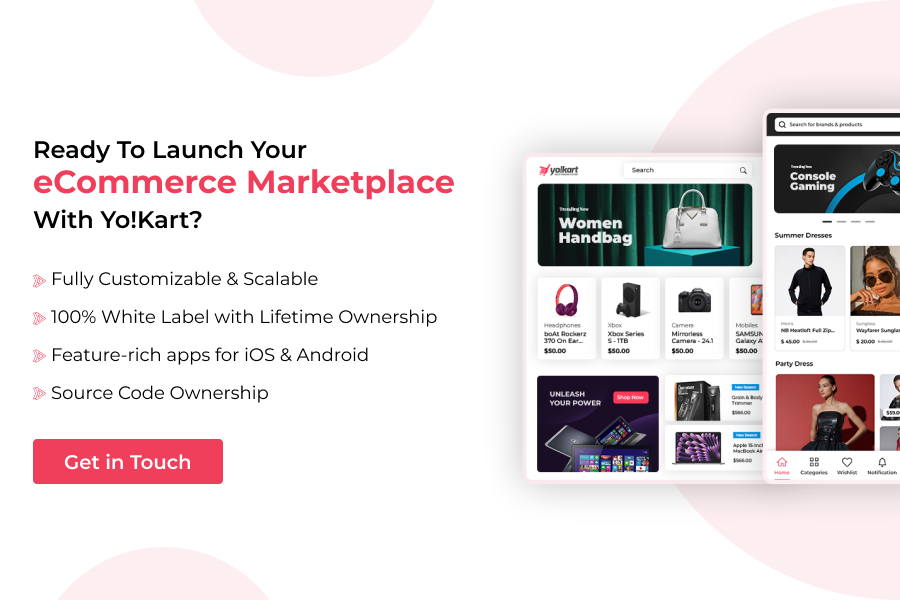
For businesses seeking complete ownership, flexibility, and long-term scalability, Yo!Kart stands out as one of the most comprehensive marketplace software solutions available. Designed specifically for multi-vendor marketplaces, it offers an extensive range of built-in features that help businesses launch and scale without developing the platform from scratch.
Unlike many SaaS-based platforms that require recurring subscription fees, Yo!Kart follows a lifetime licensing model available at a one-time payment. It provides businesses greater control over their marketplace and minimizes long-term operational costs that are often associated with SaaS-based solutions.
Moreover, the platform is highly customizable; you can tailor workflows, user interfaces, and more according to their specific marketplace requirements. It supports various marketplace niches, including automotive, fashion, electronics, healthcare, furniture, digital products, and more.
Key Highlights
- Self-hosted marketplace software
- Lifetime license
- One-time payment, no hidden charges
- Source code access(eligible packages)
- Multi-vendor architecture
- Multi-language & multi-currency
- Built-in CMS
- Advanced commission management
- Multiple payment gateways
- Scalable architecture
- REST APIs
- GDPR Compliance
- Mobile app availability
- Separate dashboards for buyers, sellers, and administrators
Pros
- Faster deployment than custom development
- Highly customizable
- Enterprise-ready architecture
- Global marketplace support
- Lower long-term ownership cost
Looking for a Reliable Enterprise-Level Marketplace Software?
2. Mirakl
Best for: Large enterprises, global retailers, and businesses planning to build enterprise-grade marketplaces.
Mirakl is widely recognized as one of the leading enterprise marketplace platforms used by global brands and retailers. The software is designed to support complex marketplace ecosystems, enabling organizations to onboard thousands of vendors while managing extensive product catalogs and high transaction volumes.
One of Mirakl’s biggest strengths lies in its enterprise automation capabilities. It offers advanced seller onboarding, catalog management, pricing automation, and operational workflows that simplify marketplace management at scale. The platform also integrates with leading ERP, CRM, and eCommerce solutions, making it suitable for businesses with mature digital ecosystems.
However, being a SaaS-based solution, Mirakl may limit it in many ways. At the same cost consideration, monthly recurring charges, and scalability cost are a few critical considerations one should consider before getting started.
Key Highlights
- Enterprise marketplace management
- Advanced automation
- API-first architecture
- Large integration ecosystem
- Vendor onboarding tools
- Global commerce support
Pros
- Highly scalable
- Enterprise-grade infrastructure
- Extensive integration capabilities
- Strong automation features
3. Sharetribe
Best for: Service marketplaces, peer-to-peer marketplaces, and businesses seeking rapid deployment.
Sharetribe is a cloud-based marketplace platform that enables businesses to launch online marketplaces quickly with minimal technical expertise. It is particularly popular among entrepreneurs building service marketplaces, rental platforms, and community-driven marketplaces.
The platform offers an intuitive interface, hosted infrastructure, and API support, making it relatively easy to customize for specific business needs. Unlike platforms that charge a flat fee or a percentage of sales, Sharetribe’s tiers limit the maximum number of registered users (buyers and sellers) on your platform. If your transaction volume is high but your margins are thin, the subscription costs and platform fees can quickly erode profitability.
Key Highlights
- Cloud-hosted platform
- No-code marketplace builder
- API support
- Service marketplace functionality
- Responsive design
Pros
- Fast deployment
- Easy administration
- Suitable for MVP development
- Active developer community
4. CS-Cart Multi-Vendor
Best for: SMEs and growing businesses looking for self-hosted marketplace software.
CS-Cart Multi-Vendor is a well-established marketplace platform offering a comprehensive feature set for businesses across various industries. It provides vendors with dedicated dashboards while giving administrators complete control over products, commissions, payments, and marketplace operations.
The platform has an extensive ecosystem of themes, add-ons, and integrations, allowing businesses to extend functionality according to their operational requirements. However, compared to a self-hosted solution like Yo!Kart, the cost of CS-Cart is higher than that of a few considerations that entrepreneurs and startups should consider.
Key Highlights
- Self-hosted deployment
- Multiple vendor management
- Product catalog management
- Marketing tools
- Mobile responsiveness
- Add-on marketplace
Pros
- Mature platform
- Extensive extension ecosystem
- Flexible configuration
- Strong marketplace features
5. Arcadier
Best for: Businesses seeking SaaS-based marketplace software with flexible marketplace models.
Arcadier supports multiple marketplace types, including product, service, booking, and rental marketplaces. The cloud-based platform allows businesses to launch quickly while benefiting from modular extensions that add new functionality over time.
Its user-friendly interface makes it attractive for organizations without dedicated development teams. While templates make it easy to launch, performing advanced or complex changes often requires hiring developers or purchasing paid plugins. Arcadier has also shifted its primary focus toward enterprise-level businesses, making it a tough call for startups and small-scale businesses.
Key Highlights
- SaaS deployment
- Multiple marketplace models
- Modular extensions
- Built-in payment integrations
- Responsive interface
Pros
- Easy setup
- Minimal infrastructure management
- Flexible marketplace options
6. Magento (Adobe Commerce) with Marketplace Extension
Best for: Businesses already using Adobe Commerce or requiring extensive customization.
Adobe Commerce can be transformed into a multi-vendor marketplace using third-party marketplace extensions. This approach offers businesses complete flexibility while leveraging Adobe Commerce’s enterprise eCommerce capabilities.
However, Magento is not natively built as a multi-vendor marketplace; installing third-party add-ons often results in plugin conflicts, bugs, and breaking changes during updates. At the same time, operating a multi-vendor marketplace with Magento necessitates technical expertise. You will need a specialized developer or an agency partner.
Key Highlights
- Enterprise eCommerce capabilities
- Extensive customization
- Large extension ecosystem
- Strong SEO functionality
- Global commerce support
Pros
- Highly flexible
- Enterprise-ready
- Large developer ecosystem
7. OroMarketplace
Best for: B2B marketplaces and wholesale commerce.
OroMarketplace is designed specifically for B2B organizations managing distributors, wholesalers, manufacturers, and procurement marketplaces. It includes business-specific capabilities such as company accounts, negotiated pricing, RFQs, and approval workflows.
However, a challenge businesses may encounter when launching their marketplace with OroMarketplace is the need for an experienced engineering team to manage and maintain the platform. Even basic configurations often require significant developer involvement, which also affects the overall investment.
Key Highlights
- B2B commerce
- Company accounts
- Quote management
- Workflow automation
- ERP integrations
Pros
- Excellent for wholesale marketplaces
- Strong B2B functionality
- Enterprise integrations
8. Marketplacer
Best for: Large retailers expanding into marketplace commerce.
Marketplacer is a SaaS-based eCommerce solution. It enables retailers and brands to transform their online stores into multi-vendor marketplaces by connecting third-party sellers and expanding product catalogs without holding inventory.
Marketplacer provides a drop shipping solution for enterprise-level businesses. However, when it comes to gaining control and access to the platform, the solution restricts in many ways. Its SaaS nature is one of the significant reasons. At the same time, it charges a monthly recurring cost, making it an expensive choice in the long run.
Key Highlights
- Retail marketplace platform
- API integrations
- Seller management
- Dropshipping support
- Inventory synchronization
Pros
- Strong retail capabilities
- Enterprise scalability
- Flexible integrations
Looking for a Fully Customizable and Scalable Multi-Vendor eCommerce Software?
9. Dokan (WordPress)
Best for: Businesses already using WordPress and WooCommerce.
Dokan is one of the most popular marketplace plugins for WooCommerce. It enables businesses to create vendor marketplaces while leveraging WordPress’s familiar content management capabilities.
However, it’s not a standalone multi-vendor marketplace software like Yo!kart. Therefore, integrating multi-vendor features leads to high cumulative costs, making it an expensive option in the long run.
Key Highlights
- WooCommerce integration
- Vendor dashboards
- Commission management
- Product management
- Large plugin ecosystem
Pros
- Easy to use
- Affordable
- Flexible plugin ecosystem
10. Shopify with Multi-Vendor Marketplace Apps
Best for: Existing Shopify merchants expanding into marketplace commerce.
Although Shopify is primarily designed for single-vendor eCommerce, businesses can extend it into a marketplace using third-party applications (e.g., Webkul or MultiVendor Pro). This approach offers ease of use while benefiting from Shopify’s hosted infrastructure.
At the same time, Shopify charges a recurring monthly subscription. While starting plans range from $29 to $299/month. In addition, third-party marketplace apps add extra monthly fees, which can increase total ownership costs over time.
Key Highlights
- Hosted platform
- Large app ecosystem
- Secure infrastructure
- Mobile optimization
- Built-in payment support
Pros
- Easy administration
- Fast setup
- Reliable hosting
Comparison of the Best Multi-Vendor Marketplace Software
The table below provides a quick overview of the top enterprise-level multi-vendor marketplace in a tabular form.
| Software | Deployment | Best For | Customization | Source Code Access | Multi-Vendor Support | Multi-Language & Currency | Mobile App Support | Pricing Model |
| Yo!Kart | Self-Hosted | SMEs, Enterprises, B2B, B2C & Niche Marketplaces | High | Available with eligible licenses | ✔ | ✔ | ✔ | One-Time License Fees |
| Mirakl | SaaS / Enterprise Cloud | Large Enterprises & Retailers | High | No | ✔ | ✔ | Enterprise Integrations | Custom Enterprise Pricing |
| Sharetribe | SaaS | Service & P2P Marketplaces | Moderate | API Access Only | ✔ | Limited | Optional | Recurring Subscription Charges |
| CS-Cart Multi-Vendor | Self-Hosted | SMEs & Growing Businesses | High | ✔ | ✔ | ✔ | Optional | One-Time License Fees |
| Arcadier | SaaS | SMEs & Service Marketplaces | Moderate | No | ✔ | ✔ | Optional | Recurring Subscription Charges |
| Adobe Commerce (Magento) + Marketplace Extension | Self-Hosted / Cloud | Large Enterprises | Very High | ✔ | ✔ (via Extension) | ✔ | Optional | License + Extension Costs |
| OroMarketplace | Self-Hosted / Cloud | B2B & Wholesale Marketplaces | High | Enterprise Licensing | ✔ | ✔ | Optional | Custom Enterprise Pricing |
| Marketplacer | Cloud | Retail & Enterprise Marketplaces | High | No | ✔ | ✔ | Enterprise Support | Custom Pricing |
| Dokan (WooCommerce) | Self-Hosted | Small to Mid-Sized Businesses | Moderate to High | ✔ | ✔ | Depends on WooCommerce Setup | Optional | Subscription + Plugin Costs |
| Shopify + Marketplace Apps | SaaS | Existing Shopify Merchants | Moderate | No | ✔ (via Apps) | ✔ | ✔ | Subscription + App Costs |
Why Yo!Kart is a Strong Choice for Established Businesses
As marketplaces grow, operational efficiency becomes increasingly important. Businesses need software that not only manages day-to-day operations but also supports future expansion without requiring a complete technology overhaul.
Yo!Kart addresses these needs through a combination of scalability, customization, and business-focused features. It’s a marketplace-first solution that comes fully equipped with dedicated vendor dashboards, multi-level commission management, a product catalog, and order processing workflows right out of the box.
Moreover, once purchased, you own the software, making it highly cost-effective in the long term. Yo!Kart charges no hidden or recurring monthly subscription fees.
Some advantages include:
- Accelerate time to launch
- Ownership-based licensing model
- Flexible customization
- Built-in marketplace functionality
- Global commerce support
- Robust vendor management
- Pre-integrated APIs and Tools
- SEO-friendly architecture
- Dedicated technical support
Build a Powerful Multi-Vendor Marketplace with Yo!Kart
Conclusion
Selecting the right multi-vendor marketplace software is about more than launching an online platform. It’s more about investing in technology that can support your business as it grows. Established businesses require solutions that deliver scalability, flexibility, operational efficiency, and the ability to adapt to changing market demands.
While several marketplace platforms offer valuable capabilities, the ideal choice depends on your specific business model, customization requirements, and long-term growth plans.
For businesses seeking a self-hosted, scalable, customizable, and feature-rich solution, Yo!Kart offers a compelling combination of scalability, ownership, and marketplace-specific functionality. Its comprehensive feature set, flexible architecture, and ability to support a wide range of marketplace models make it a strong choice for businesses looking to expand their digital commerce operations with confidence.
Frequently Asked Questions (FAQs)
1. What is multi-vendor marketplace software?
Multi-vendor eCommerce marketplace software is a solution that enables businesses to create and manage an online marketplace where multiple independent sellers can register, list products or services, manage orders, and sell through a single platform. The marketplace owner oversees vendor operations, commissions, payments, and customer interactions while generating revenue through various monetization models.
2. Which is the best multi-vendor marketplace software for established businesses?
The best marketplace software depends on your business requirements, industry, budget, and growth plans. Solutions such as Yo!Kart, Mirakl, CS-Cart Multi-Vendor, Sharetribe, and Marketplacer are among the popular options. Businesses looking for a self-hosted, customizable, and scalable solution often consider Yo!Kart as one of the best multi-vendor marketplace software for established businesses due to its comprehensive feature set, scalable architecture and one-time licensing model.
3. What features should established businesses look for in marketplace software?
Established businesses should prioritize software that supports long-term growth and operational efficiency. They need to look for marketplace features that help users operate and complete transactions seamlessly. Some of the essential features include:
- Multi-vendor management
- Advanced product catalog management
- Flexible commission and revenue models
- Multi-language and multi-currency support
- Secure payment gateway integrations
- SEO-friendly architecture
- Mobile responsiveness
- Third-party integrations
- Analytics and reporting
- Enterprise-grade security
4. Should I choose custom marketplace development or readymade marketplace software?
The selection between custom development and readymade depends on your business objectives.
Custom development offers complete flexibility but typically requires a higher investment, longer development timelines, and ongoing maintenance. Readymade marketplace software provides pre-built functionality, faster deployment, and lower development costs, making it an ideal choice for businesses looking to launch quickly while retaining customization capabilities.
5. Is self-hosted marketplace software better than SaaS marketplace software?
Both deployment models have their advantages. Self-hosted marketplace software provides greater control over customization, data ownership, security configurations, and long-term scalability. SaaS platforms, on the other hand, reduce infrastructure management and allow quicker deployment but often involve recurring subscription costs and limited customization.
Businesses should choose the option that best aligns with their technical capabilities, operational requirements, and long-term growth strategy.
6. Can marketplace software support international expansion?
Yes. Most enterprise-grade marketplace software supports global business operations through features such as multiple languages, multiple currencies, regional tax settings, localized payment gateways, and international shipping integrations.
These capabilities enable businesses to expand into new markets while providing a localized shopping experience for customers across different regions.
7. How much does multi-vendor marketplace software cost?
The cost varies depending on the deployment model, feature set, customization requirements, and licensing structure.
- SaaS marketplace platforms generally cost less initially but charge recurring monthly or annual subscription fees and several hidden charges, making them expensive in the long run.
- Self-hosted marketplace software typically involves a one-time licensing fee. Multi-vendor marketplace like Yo!Kart doesn’t charge any hidden or recurring costs that make the solution cost-efficient in the long term.
- Custom marketplace development is usually the most expensive option due to the time and resources required to build the platform from scratch.
Businesses should evaluate the total cost of ownership rather than focusing solely on the initial investment.
8. How long does it take to launch a multi-vendor marketplace?
Custom marketplace development can take anywhere from 6 to 12 months or longer, depending on project complexity. In contrast, readymade marketplace software can significantly reduce time-to-market, allowing businesses to launch within a few days or several weeks. However, the timeline varies significantly depending on the level of customization and deployment requirements.
9. Can I customize marketplace software as my business grows?
Yes. Many self-hosted marketplace solutions offer extensive customization capabilities, allowing businesses to modify workflows, user interfaces, integrations, and business logic as requirements evolve.
Choosing customizable software like Yo!Kart ensures that your marketplace can adapt to changing customer expectations and future business expansion without requiring a complete platform rebuild.
10. Why is Yo!Kart a good choice for established businesses?
Yo!Kart is designed to support businesses that require a scalable and customizable multi-vendor marketplace solution. It offers built-in marketplace functionality, dedicated dashboards for buyers, sellers, and administrators, multi-language and multi-currency support, SEO-friendly architecture, and flexible customization options.
Its self-hosted deployment model and one-time licensing approach also make it an attractive option for businesses seeking greater control over their marketplace, long-term cost efficiency, and the flexibility to scale as their operations grow.
Launch Your Marketplace Using a Readymade Software
Get StartedPopular Posts