
Published Date 28th July, 2026
TL;DR
Artificial Intelligence (AI) is transforming the way online marketplaces operate. From personalized product recommendations and intelligent search to automated pricing, fraud detection, and predictive analytics, AI enables marketplace owners to deliver better user experiences while improving operational efficiency.
This guide explains how you can build an AI-powered multi-vendor marketplace in 2026, the AI capabilities you should prioritize, real-world marketplace examples to learn from, development approaches, estimated costs, and how a solution like Yo!Kart can help businesses launch an AI-ready marketplace faster without building everything from scratch.
Introduction
The online marketplace industry has evolved far beyond simply connecting buyers and sellers. In 2026, customers expect marketplaces to understand their preferences, recommend relevant products, provide instant support, detect fraudulent activities, and deliver highly personalized shopping experiences. To meet these expectations, businesses are leveraging Artificial Intelligence (AI).
Whether you’re launching a B2B marketplace, a multi-vendor retail platform, a rental marketplace, or a service marketplace, AI can help automate repetitive tasks, improve operational efficiency, and create engaging customer experiences. From intelligent product discovery to predictive analytics, AI is enabling businesses to make smarter decisions and scale faster.
However, building an AI-powered marketplace platform is about much more than integrating a chatbot or using AI to generate product descriptions. It requires selecting the right marketplace architecture, identifying AI features that align with your business goals, and implementing technologies that can scale alongside your marketplace as customer expectations and AI innovation continue to evolve.
This guide walks you through everything you need to know about building an AI-powered multi-vendor marketplace in 2026. You will learn how AI is transforming online marketplaces, explore real-world examples, discover essential AI features, compare development approaches, estimate development costs, and understand how to build a scalable, future-ready marketplace that is prepared for long-term growth.
Table of Contents
- The Rise of AI in Multi-Vendor Marketplaces
- What is an AI-Powered Multi-Vendor Marketplace?
- Traditional Marketplace vs AI-Powered Marketplace
- How AI is Transforming Multi-Vendor Marketplace Platforms
- AI-Powered Marketplace Examples: What Today’s Market Leaders Teach Us
- Step-by-Step Guide to Building an AI-Powered Multi-Vendor Marketplace
- 10 Must-Have AI Features Every Multi-Vendor Marketplace Should Have in 2026
- Best AI Tools for Marketplace Businesses
- AI Marketplace Architecture: A High-Level Overview
- How Much Does It Cost to Build an AI-Powered Marketplace?
- Common Challenges When Building an AI-Powered Marketplace
- Why Choose Yo!Kart for Building an AI-Powered Multi-Vendor Marketplace?
- Conclusion
- Frequently Asked Questions (FAQs)
The Rise of AI in Multi-Vendor Marketplaces
Artificial Intelligence is becoming an integral part of modern eCommerce and reshaping the future of online marketplaces. As marketplaces expand their product catalogs and vendor networks, manually managing operations becomes increasingly inefficient. AI helps marketplace businesses automate complex processes, streamline operations, and deliver more personalized experiences while improving both customer satisfaction and business performance.
Several market trends are accelerating AI adoption across multi-vendor marketplaces:
- Growing customer demand for personalized shopping experiences.
- Increasing competition among marketplace businesses.
- Rising expectations for faster search and checkout experiences.
- The need to reduce operational costs through automation.
- Advancements in generative AI, machine learning, and predictive analytics.
Rather than replacing marketplace owners or vendors, AI acts as an intelligent assistant that enhances decision-making across the platform. It helps buyers discover relevant products more quickly, enables vendors to optimize their listings, and provides administrators with actionable business insights through predictive analytics and intelligent decision-making.
As AI technologies continue to evolve, marketplaces that leverage intelligent automation are likely to deliver better user experiences, strengthen customer loyalty, and respond more quickly to changing market demands. In an increasingly competitive landscape, AI is becoming a key differentiator for building scalable, future-ready marketplace businesses.
What is an AI-Powered Multi-Vendor Marketplace?
A multi-vendor marketplace is an online platform where multiple independent sellers can register, list products or services, manage inventory, process orders, and interact with customers through a single marketplace. An AI-powered marketplace platform builds upon this model by incorporating Artificial Intelligence to automate processes, personalize customer interactions, and optimize marketplace operations. Instead of relying solely on manual rules and static workflows, AI continuously analyzes user behavior, product data, transaction history, and marketplace activity to make intelligent recommendations and improve operational efficiency.
Key Benefits of an AI-Powered Marketplace Include:
- Personalized Shopping Experience: Delivers tailored product recommendations and relevant search results based on customer preferences and browsing behaviour.
- Smart Vendor Operations: Helps sellers optimize pricing, forecast demand, generate product content, and gain actionable performance insights.
- Intelligent Marketplace Management: Automates routine tasks, detects fraudulent activities, and provides predictive analytics to support better business decisions.
- Improved Operational Efficiency: Streamlines marketplace workflows, reduces manual effort, and enables businesses to scale more effectively.
Ultimately, AI transforms a marketplace from being a transactional platform into an intelligent ecosystem that continuously learns, adapts, and improves experiences for buyers, sellers, and marketplace admin/s.
Integrate AI Into Your Marketplace Strategy
Traditional Marketplace vs AI-Powered Marketplace
As customer expectations evolve, traditional marketplace capabilities are no longer enough to deliver engaging and personalized shopping experiences. Buyers now expect marketplaces to understand their intent, provide relevant recommendations, and offer seamless support throughout their purchasing journey.
This shift has encouraged marketplace businesses to adopt AI-powered capabilities that improve operational efficiency while creating more intelligent and customer-centric experiences.
The comparison below highlights how AI is transforming modern marketplace operations:
| Traditional Marketplace | AI-Powered Marketplace Platform |
| Basic keyword search | Semantic and intent-based AI search |
| Generic product recommendations | Personalized recommendations based on user behavior |
| Manual pricing decisions | AI-assisted dynamic pricing suggestions |
| Human-only customer support | AI chatbots with human escalation |
| Manual product categorization | AI-assisted product tagging and categorization |
| Limited analytics | Predictive analytics and actionable business insights |
| Manual fraud monitoring | AI-powered fraud detection and risk analysis |
| Static homepage | Personalized homepage for every visitor |
The goal of AI is not to replace marketplace management but to enhance it with intelligent automation that improves efficiency, accuracy, and user satisfaction.
How AI is Transforming Multi-Vendor Marketplace Platforms?
AI is influencing almost every aspect of modern marketplace operations. By automating repetitive tasks and delivering actionable insights, AI enables marketplace businesses to enhance customer experiences, improve operational efficiency, and make smarter business decisions. Below are some of the most impactful ways AI is transforming modern multi-vendor marketplaces:
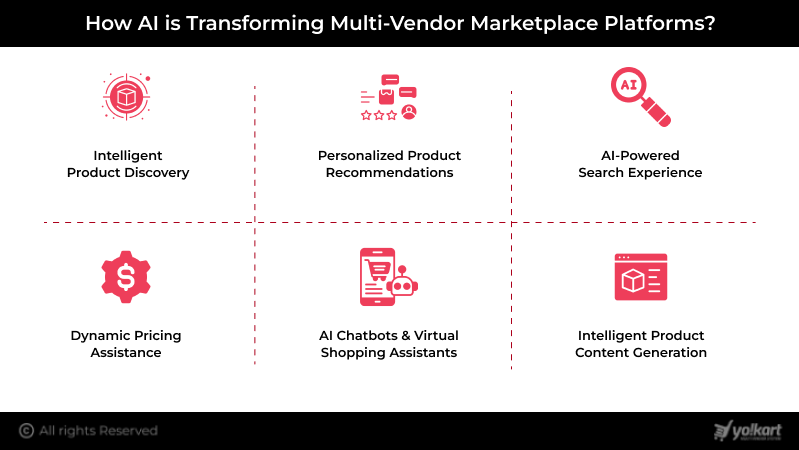
1. Intelligent Product Discovery
Traditional keyword searches often fail when users don’t know the exact product name or use different terminology. AI-powered semantic search understands context and user intent, delivering more relevant search results.
For example, if a shopper searches for “comfortable office chair for back pain,” AI can surface ergonomic chairs even if those exact words are not present in the product title.
Key Benefits:
- Faster product discovery
- Improved search relevance
- Higher conversion rates
- Better customer satisfaction
2. Personalized Product Recommendations
Recommendation engines have become one of the defining features of successful marketplaces. Instead of displaying the same products to every visitor, AI analyzes browsing history, purchase behavior, wish lists, location, and preferences to recommend products that are more likely to interest each shopper.
These tailored recommendations create a more engaging shopping experience while increasing revenue opportunities for marketplace businesses.
Key Benefits:
- Increased average order value
- Higher repeat purchases
- Better customer engagement
- Improved cross-selling and upselling opportunities
This level of personalization is now expected by customers across both B2C and B2B marketplaces.
3. AI-Powered Search Experience
Modern shoppers increasingly search using natural language rather than isolated keywords. AI-powered search understands conversational queries, user intent, and multiple search parameters to deliver highly relevant results.
For example, a customer searching for “Eco-friendly yoga mats under $50” receives products that match both sustainability preferences and budget, even when those exact phrases aren’t used in product listings.
By understanding intent instead of simply matching exact keywords, AI creates a faster, more intuitive shopping experience.
4. Dynamic Pricing Assistance
Setting competitive prices can be challenging, particularly in marketplaces where demand, competition, and inventory levels change frequently. AI analyzes large volumes of marketplace data and recommends pricing strategies that help vendors remain competitive while protecting their profit margins.
AI can analyze factors such as:
- Competitor pricing
- Seasonal demand
- Customer purchasing behavior
- Inventory availability
- Historical sales data
Based on these insights, vendors receive pricing recommendations that help them remain competitive while protecting profit margins. Marketplace owners can also use AI insights to monitor pricing trends across different seller categories.
5. AI Chatbots and Virtual Shopping Assistants
Customer support remains one of the most resource-intensive aspects of running a marketplace. AI-powered chatbots can assist buyers by answering common questions, helping them navigate product catalogs, tracking orders, recommending products, and resolving basic issues before escalating complex cases to human agents.
Benefits Include:
- 24/7 customer support
- Faster response times
- Reduced support costs
- Improved customer satisfaction
- Higher lead conversion rates
For marketplace administrators, AI assistants can also automate vendor onboarding, answer policy-related questions, and simplify documentation.
6. Intelligent Product Content Generation
Managing thousands of product listings can quickly become a time-consuming task, particularly for marketplaces with a large and growing vendor base. AI-powered content generation helps vendors create well-structured, informative, and SEO-friendly product descriptions more efficiently. Marketplace owners can also implement moderation workflows to ensure that AI-generated content aligns with quality standards and brand guidelines.
For businesses using Yo!Kart, AI capabilities can be integrated to assist vendors with product content creation while allowing administrators to review and manage listings before publication. This approach accelerates catalog management without compromising content quality or brand consistency.
Create Personalized Shopping Experiences Powered by Intelligent Automation
AI-Powered Marketplace Examples: What Today’s Market Leaders Teach Us
One of the best ways to understand the potential of AI in online marketplaces is by examining how leading platforms use it to enhance customer experiences and streamline operations. While startups and growing businesses don’t need enterprise-scale AI capabilities from day one, they can adopt proven strategies that deliver measurable value.
Rather than replicating these marketplaces’ features, focus on identifying the AI capabilities that align with your business goals and customer expectations. As your marketplace grows, you can gradually expand your AI ecosystem to support evolving operational and user needs.
1. Amazon: Setting the Benchmark for AI-Driven Commerce
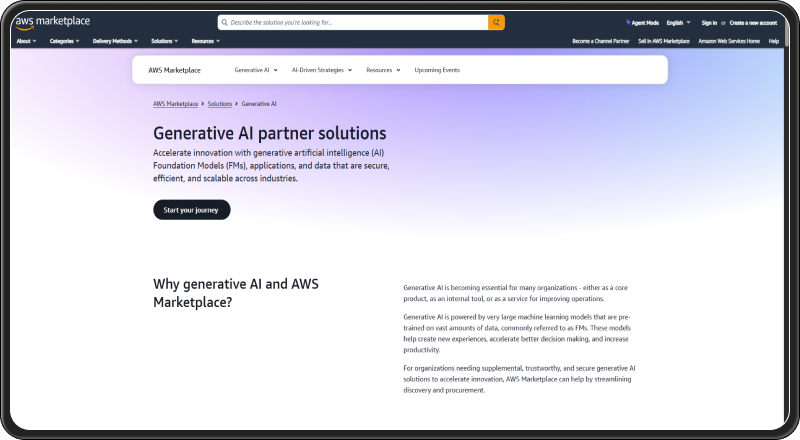
Amazon has established itself as a leader in AI-driven commerce by embedding Artificial Intelligence into nearly every stage of the customer journey and marketplace operations.
How Amazon Uses AI?
- Personalized product recommendations
- AI-powered search ranking
- Dynamic pricing assistance
- Demand forecasting
- Warehouse automation
- Fraud detection
- Customer service chatbots
- Voice commerce through Alexa
One of Amazon’s most influential AI capabilities is its recommendation engine, which analyzes browsing history, purchase behavior, product interactions, and customer preferences to deliver highly relevant suggestions.
Key Takeaway
You don’t need Amazon’s scale to benefit from AI. Features like personalized recommendations, intelligent search, and automated customer support can significantly improve user engagement and conversions.
2. Etsy: Personalization for Niche Marketplaces

Etsy connects millions of buyers with independent artisans and small businesses. Since its catalog contains unique and handcrafted products, product discovery is one of its biggest challenges.
AI Features Used by Etsy
- Personalized homepage recommendations
- AI-powered search
- Product relevance optimization
- Seller performance insights
- Customer behavior analysis
Instead of showing identical results to every visitor, Etsy continuously learns from user interactions to improve search accuracy and recommend products aligned with individual interests.
Key Takeaway
If your marketplace specializes in niche products, AI-powered personalization can significantly improve product discovery and help customers find products they might otherwise overlook.
Suggested Read: How to Build an eCommerce Website like Etsy: A Complete Guide
3. eBay: Making Search Smarter
Managing millions of listings requires more than traditional search capabilities. eBay leverages AI to simplify product discovery and enhance the buying experience.
AI Applications
- Visual search
- Image recognition
- Listing optimization
- Fraud prevention
- Seller performance analytics
Visual search enables customers to upload an image and find similar products without typing detailed descriptions.
Key Takeaway
Visual commerce is becoming increasingly important. AI-powered image recognition and visual search can improve product discovery, particularly for fashion, home decor, collectibles, and electronics marketplaces.
4. Alibaba: AI at Global Marketplace Scale
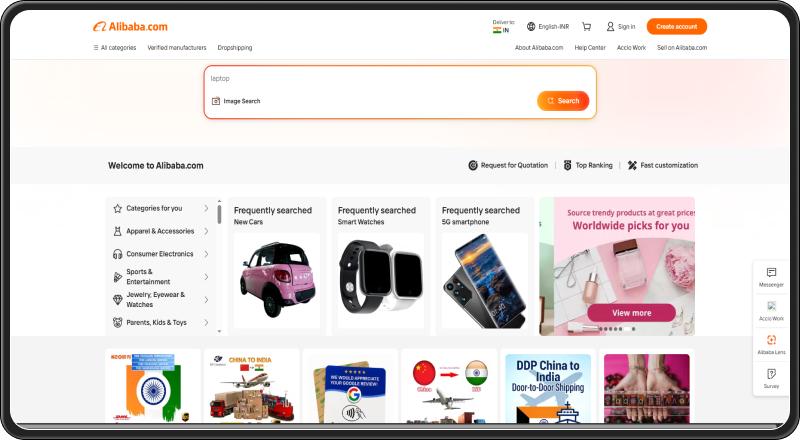
Operating across international markets, Alibaba uses AI to simplify cross-border trade and improve sourcing efficiency for buyers and suppliers worldwide.
AI Capabilities
- Smart supplier matching
- AI translation
- Intelligent sourcing
- Product recommendations
- Logistics optimization
- Risk analysis
AI helps connect buyers with relevant suppliers while reducing communication barriers through automated language translation.
Key Takeaway
Businesses planning to expand internationally should prioritize multilingual support, intelligent supplier matching, and localized search experiences to improve global customer engagement.
5. Walmart Marketplace: Improving Operational Efficiency
Walmart leverages AI to optimize inventory management, merchandising, and demand forecasting while delivering better shopping experiences.
AI Features
- Inventory forecasting
- Personalized recommendations
- Demand prediction
- Smart merchandising
- Automated replenishment
By predicting purchasing trends, Walmart can optimize inventory availability and reduce stock shortages.
Key Takeaway
Predictive analytics isn’t just valuable for large retailers. Growing marketplaces can also use AI to identify high-demand products and improve inventory planning.
6. Mercado Libre: Building Trust with AI
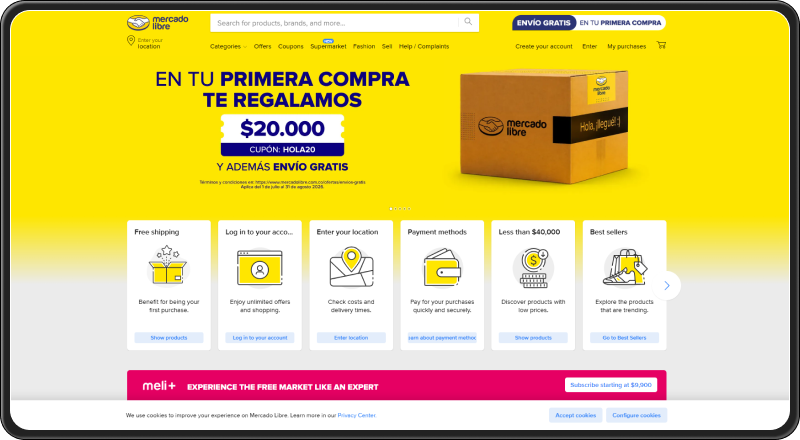
Trust is fundamental to every successful marketplace. Mercado Libre leverages AI to identify risks and create a safer marketplace environment.
AI Applications
- Fraud detection
- Credit scoring
- Logistics optimization
- Personalized recommendations
- Risk analysis
Machine learning models help identify suspicious transactions before they impact buyers or sellers.
Key Takeaway
AI-powered fraud detection can help reduce chargebacks, fake accounts, and fraudulent transactions while improving user confidence.
7. Instacart: Personalizing Everyday Shopping
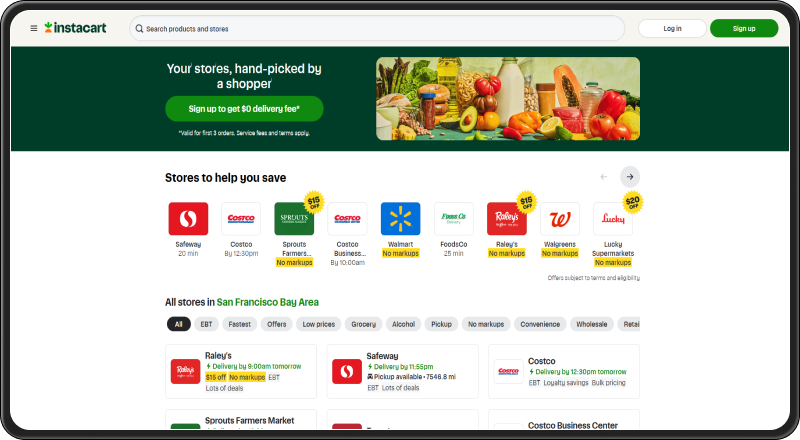
Instacart uses AI to make grocery shopping faster, simpler, and more personalized by learning from customer preferences and purchasing habits.
AI Features
- Smart shopping assistant
- Personalized grocery recommendations
- Predictive shopping lists
- Natural language search
- Order optimization
By understanding customer preferences and previous purchases, Instacart reduces the time required to complete recurring grocery orders.
Key Takeaway
AI-powered personalization increases customer convenience, encouraging repeat purchases and improving long-term customer retention.
8. Temu: AI for Product Discovery and Merchandising
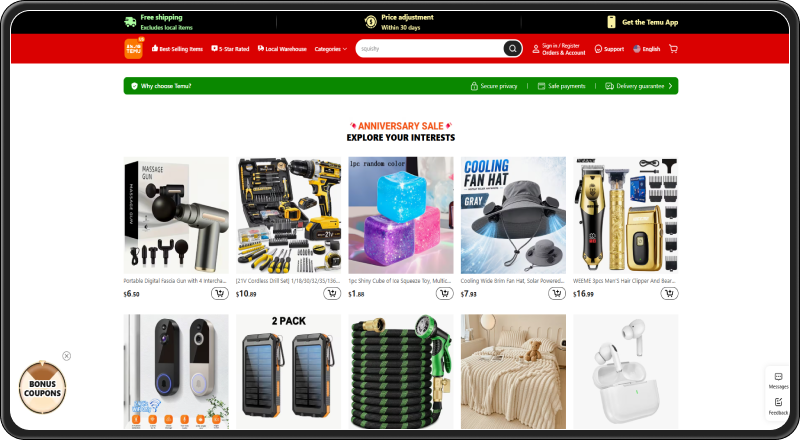
Temu has gained significant traction by using data-driven merchandising and AI-powered recommendations to keep users engaged.
AI Applications
- Personalized product feeds
- Smart merchandising
- Behavioral recommendations
- Dynamic promotions
- Customer segmentation
Its recommendation system continuously adapts based on browsing and purchasing behavior, helping shoppers discover relevant products quickly.
Key Takeaway
For new marketplaces, AI-driven merchandising can improve product visibility, increase average order value, and encourage users to explore more products throughout their buying journey.
What Entrepreneurs Can Learn from These AI Marketplace Leaders?
Although companies like Amazon, Alibaba, and Walmart operate at a global scale, the principles behind their AI strategies apply to businesses of all sizes. Instead of implementing every AI capability at once, focus on solutions that address your users’ most pressing needs and generate measurable business value.
Here are the biggest takeaways:
- Prioritize customer experience over complexity. Focus on AI features that solve real user problems rather than implementing AI for its own sake.
- Start with high-impact AI capabilities. Intelligent search, personalized recommendations, and AI-assisted customer support often deliver the fastest return on investment.
- Use AI to support decision-making. Predictive analytics, pricing suggestions, and seller insights help marketplace operators make data-driven decisions.
- Build incrementally. Introduce AI features in phases based on user feedback and business priorities instead of attempting to launch every capability at once.
- Keep human oversight. AI should augment, not replace, human judgment, particularly for content moderation, customer support escalation, and policy enforcement.
Turn Proven AI Practices Into a Competitive Advantage For Your Own Marketplace
Best AI Tools for Marketplace Businesses
The right AI tools depend on your marketplace’s objectives, technical requirements, and growth stage. Rather than relying on a single solution, many marketplace businesses combine multiple AI technologies to support product discovery, customer engagement, content creation, automation, and business intelligence.
| AI Tool | Common Marketplace Use Cases |
| OpenAI | Product content generation, customer support assistants, conversational search |
| Google Gemini | AI-powered search, content assistance, productivity workflows |
| Anthropic Claude | Customer support, document analysis, knowledge assistants |
| Google Vertex AI | Custom machine learning models and predictive analytics |
| AWS Bedrock | Access to foundation models for enterprise AI applications |
| Microsoft Azure AI | Enterprise AI services, computer vision, translation, speech recognition |
| Pinecone | Vector database for semantic search and recommendation engines |
| ElevenLabs | AI-generated voice assistants and multilingual voice experiences |
The best AI stack is one that aligns with your business goals, available data, integration requirements, and long-term scalability. Start with AI tools that address your marketplace’s immediate needs and expand your AI ecosystem as your platform grows.
Step-by-Step Guide to Building an AI-Powered Multi-Vendor Marketplace
Building an AI-powered marketplace requires more than simply integrating AI tools. It involves validating your business idea, selecting the right technology foundation, and implementing AI capabilities that align with your long-term goals. The following roadmap outlines the key stages involved.
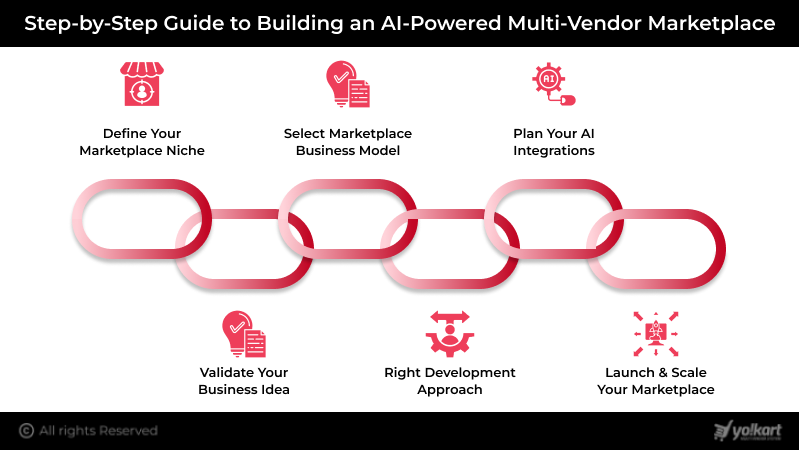
Step 1: Define Your Marketplace Niche
Start by identifying a niche with strong market demand and a clearly defined target audience. A focused marketplace makes it easier to attract buyers and sellers, build category expertise, and train AI models using more relevant data.
Popular marketplace niches include:
- B2B marketplaces
- Fashion marketplaces
- Electronics marketplaces
- Grocery marketplaces
- Healthcare marketplaces
- Rental marketplaces
- Service marketplaces
- Automotive marketplaces
- Wholesale marketplaces
- Digital product marketplaces
Choosing the right niche lays the foundation for sustainable growth and helps differentiate your marketplace from competitors.
Step 2: Validate Your Business Idea
Before investing in development, validate your marketplace concept to ensure there is genuine demand for your platform. Early validation reduces business risks and helps prioritize AI investments that deliver measurable value.
Evaluate Factors Such As:
- Competitor platforms
- Customer pain points
- Vendor expectations
- Revenue opportunities
- Market demand
- Pricing strategies
Early validation helps reduce risk and ensures your AI investments align with genuine business needs.
Step 3: Choose Your Marketplace Business Model
Select a monetization strategy that aligns with your business objectives and supports long-term growth. Your revenue model should also influence the AI capabilities you prioritize, helping maximize both customer value and profitability.
Common revenue models include:
- Commission on each transaction
- Subscription plans for vendors
- Featured product listings
- Sponsored advertisements
- Membership programs
- Hybrid revenue models combining multiple approaches
Your monetization strategy should also influence which AI capabilities you prioritize, such as recommendation engines for advertising revenue or analytics tools for premium vendor subscriptions.
Step 4: Select the Right Development Approach
The development approach you choose will determine your project’s cost, timeline, flexibility, and scalability. Evaluate each option carefully based on your budget, technical resources, and long-term business goals.
Businesses generally have three primary options:
1. Custom Marketplace Development
Offers maximum flexibility but typically requires higher investment, longer development timelines, and ongoing maintenance.
2. SaaS Marketplace Builders
Suitable for simple marketplaces but may limit customization, scalability, and ownership of your platform.
3. Self-Hosted Marketplace Software
Solutions like Yo!Kart provide a ready-made multi-vendor marketplace foundation while allowing businesses to customize features and integrate AI services based on their evolving requirements. This approach can significantly reduce development time compared to building a marketplace entirely from scratch.
Step 5: Plan Your AI Integrations
Rather than adding AI randomly, identify the areas where it can create the most value.
Some of the most impactful AI integrations include:
- Semantic search
- Product recommendations
- AI-generated product content
- Customer support automation
- Fraud detection
- Review moderation
- Inventory forecasting
- Predictive analytics
- Personalized marketing
- Dynamic pricing assistance
Choose AI capabilities that align with your business goals, customer expectations, and available data.
Step 6: Launch and Scale Your Marketplace
Once your marketplace is live, continuously monitor its performance and refine your strategy based on user behavior and business insights. Treat your launch as the beginning of an ongoing optimization process rather than the final milestone.
Focus on key growth activities such as:
- Tracking user engagement and conversion metrics
- Collecting customer and vendor feedback
- Optimizing AI models with new marketplace data
- Introducing additional AI features based on user demand
- Expanding into new categories, regions, or customer segments
- Continuously improving platform performance and security
A data-driven approach to optimization helps your marketplace remain competitive, improve customer experiences, and scale efficiently as your business grows.
10 Must-Have AI Features Every Multi-Vendor Marketplace Should Have in 2026
Artificial Intelligence can add value across every stage of the marketplace journey—from helping buyers discover products to enabling sellers to optimize their catalogs and empowering administrators with data-driven insights. While AI adoption should align with your business goals, the following features are becoming increasingly important for competitive marketplace platforms.
| AI Feature | How It Benefits Your Marketplace |
| AI-Powered Product Recommendations | Recommends relevant products based on customer behavior, increasing engagement, conversions, and repeat purchases. |
| Semantic Search | Understands user intent to deliver faster and more accurate search results. |
| AI-Assisted Product Content Generation | Generates product titles, descriptions, and metadata, reducing onboarding time and improving consistency. |
| Intelligent Customer Support | Automates customer queries, order assistance, and product recommendations while reducing support workload. |
| Review Moderation | Detects fake, spam, or inappropriate reviews to maintain content quality and customer trust. |
| Fraud Detection | Identifies suspicious transactions and fake accounts to improve marketplace security. |
| Pricing Intelligence | Recommends competitive pricing using market trends, demand, and sales data. |
| Inventory Forecasting | Predicts demand to optimize inventory levels and reduce stock shortages. |
| Multilingual Translation | Translates listings and customer interactions to support global marketplace expansion. |
| Predictive Analytics Dashboard | Provides actionable insights into customers, sales, vendors, and marketplace performance. |
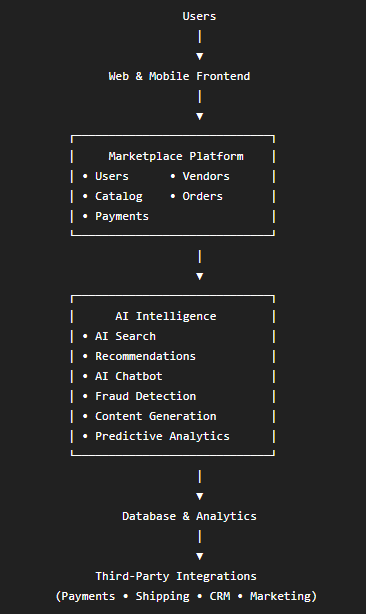
AI Marketplace Architecture: A High-Level Overview
While the technical implementation may vary, most AI-powered marketplace platforms follow a layered architecture. This modular approach allows businesses to introduce AI capabilities incrementally while maintaining a scalable, secure, and flexible marketplace infrastructure.
How Much Does It Cost to Build an AI-Powered Marketplace?
The cost of developing an AI-powered marketplace depends on several factors, including platform complexity, AI capabilities, customization requirements, integrations, and the chosen development approach. Selecting the right development model has a significant impact on your investment, time-to-market, and long-term scalability.
| Development Approach | Estimated Timeline | Relative Investment |
| Custom Development | 9-18+ months | High |
| SaaS Marketplace Builder | Few days to weeks | Low to Moderate |
| Self-Hosted Marketplace Software (e.g., Yo!Kart) | Few weeks | Moderate |
In addition to the core marketplace, businesses should account for costs related to:
- UI/UX design
- AI integrations
- Third-party APIs
- Testing and quality assurance
- Cloud infrastructure
- Security
- Ongoing maintenance and updates
For many startups and SMBs, launching with a proven marketplace platform and adding AI capabilities over time offers a practical balance between speed, flexibility, and long-term scalability. This approach enables businesses to enter the market quickly while expanding their AI ecosystem as customer needs and business requirements evolve.
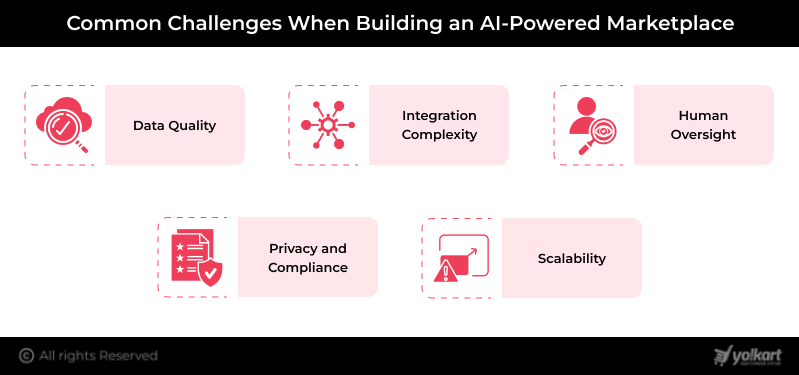
Common Challenges When Building an AI-Powered Marketplace
While AI offers significant opportunities, implementation comes with its own set of challenges. Addressing the following challenges early can help businesses build a secure, scalable, and future-ready AI-powered marketplace.
1. Data Quality
AI models rely on accurate, structured, and relevant data. Poor-quality data can lead to inaccurate recommendations and reduced user trust.
Solution: Establish strong data management practices by regularly cleaning, validating, and updating marketplace data to improve AI performance.
2. Privacy and Compliance
Marketplace owners must ensure compliance with data protection regulations and establish transparent policies regarding how customer data is collected and used.
Solution: Implement robust data security measures, follow applicable regulations such as GDPR and CCPA, and maintain transparent policies for data collection, storage, and usage.
3. Integration Complexity
Connecting AI services with payment gateways, inventory systems, CRM platforms, and marketplace workflows requires careful planning and testing.
Solution: Choose a marketplace platform with flexible APIs and integration capabilities to simplify AI implementation and future technology upgrades.
4. Scalability
AI workloads may increase infrastructure demands as the marketplace grows. Choosing scalable architecture from the beginning can reduce future migration challenges.
Solution: Build on a scalable architecture that can support growing users, transactions, and AI workloads without compromising platform performance.
5. Human Oversight
AI-generated content, automated decisions, and chatbot interactions should always include mechanisms for human review where appropriate.
Solution: Combine AI automation with human oversight, particularly for content reviews, customer support escalations, and business-critical decisions.
By selecting a scalable marketplace solution with strong customization and integration capabilities, businesses can overcome these challenges more efficiently. Instead of building every AI capability from scratch, they can introduce intelligent features gradually, reducing implementation complexity while ensuring the marketplace remains adaptable to future business and technology needs.
Why Choose Yo!Kart for Building an AI-Powered Multi-Vendor Marketplace?
Building an AI-powered marketplace from scratch often involves lengthy development cycles, significant investment, and ongoing technical challenges. For businesses that want to accelerate their go-to-market strategy, Yo!Kart provides a robust foundation while supporting future AI enhancements.
Why Businesses Choose Yo!Kart?
- Purpose-built multi-vendor marketplace architecture
- Self-hosted solution with full ownership and customization flexibility
- Support for multiple business models, including B2B, B2C, wholesale, and niche marketplaces
- Built-in features for vendor management, product catalogs, order processing, and commissions
- Integration-friendly architecture for adding AI services such as semantic search, AI-assisted content generation, personalized recommendations, and conversational support
- Scalable infrastructure designed to support marketplace growth
- Mobile apps and multiple payment gateway integrations
- Faster deployment compared to fully custom marketplace development
Instead of investing months in developing core marketplace functionality, businesses can launch on a proven marketplace platform and focus on delivering differentiated customer experiences. As their marketplace grows, they can progressively integrate AI capabilities that enhance automation, personalization, and operational efficiency while supporting long-term business growth.
Experience Yo!Kart Firsthand
Conclusion
Artificial Intelligence has become a key driver of better customer experiences, operational efficiency, and long-term competitiveness. From intelligent product discovery and personalized recommendations to predictive analytics and automated support, AI enables marketplace businesses to serve buyers and sellers more effectively.
However, the most effective approach to building a successful marketplace is not about adopting every AI feature at once. Instead, prioritize AI capabilities that solve real business and customer challenges, and expand your AI ecosystem as your platform grows.
For entrepreneurs looking to launch an AI-powered multi-vendor marketplace, choosing a scalable and customizable platform can significantly reduce development time, costs, and technical complexity. Yo!Kart provides a robust marketplace foundation with the flexibility to integrate AI-powered features as your business evolves. By combining proven marketplace software with a well-planned AI strategy, businesses can launch faster, scale confidently, and build a future-ready marketplace that remains competitive in an increasingly AI-driven digital economy.
Frequently Asked Questions (FAQs)
1. What is an AI-powered multi-vendor marketplace?
Ans. An AI-powered multi-vendor marketplace is an online platform where multiple sellers offer products or services while AI enhances search, recommendations, customer support, fraud detection, analytics, and other operational processes. These capabilities improve user experience, automate operations, and help marketplace owners make smarter business decisions.
Q 2. Can AI improve marketplace conversions?
Ans. Yes, AI helps with shopper-powered personalization, intelligent search, and product recommendations, which can improve product discovery, enhance user engagement, and increase conversion opportunities.
Q 3. Which industries benefit from AI-powered marketplaces?
Ans. AI-powered marketplaces benefit industries including:
- Retail
- B2B commerce
- Healthcare
- Automotive
- Rental
- Food delivery
- Education
- Professional services
Q 4. Do startups need AI from day one?
Ans. Not necessarily; many successful marketplaces launch with core marketplace functionality and introduce AI features gradually as user data grows and business needs evolve. However, starting with high-impact capabilities such as intelligent search or chatbots often delivers the best return on investment.
Q 5. Is custom development the only option for building an AI marketplace?
Ans. No, businesses can use self-hosted marketplace software such as Yo!Kart and integrate AI services. This approach significantly reduces development effort, lowers costs, and provides the flexibility to scale AI capabilities as the marketplace evolves.
Q 6. What is the biggest advantage of using AI in a marketplace?
Ans. AI improves marketplace performance by automating repetitive tasks, delivering personalized shopping experiences, strengthening fraud prevention, and providing data-driven insights. These capabilities help marketplace owners increase operational efficiency while creating better experiences for buyers and sellers.
Build a Scalable Multi-Vendor Marketplace With AI-Ready Capabilities
Get StartedPopular Posts