

Published Date 08th July 2026
Quick Answer
The best enterprise marketplace software in 2026 depends on your business model, scalability needs, deployment preferences, and customization requirements. While SaaS platforms offer faster implementation, self-hosted solutions provide greater flexibility, source code ownership, and predictable long-term costs.
In this guide, we have evaluated the 10 enterprise marketplace software solutions in 2026, including SaaS and self-hosted solutions. The list includes some of the leading solutions, including Arcadier, Marketplacer, Sharetribe, and Mirakl. Among them, Yo!Kart ranks first because of its enterprise-grade capabilities.
Introduction
Every year, more B2B distributors, retail chains, and manufacturers realize that for sustainable growth, they have to look beyond traditional eCommerce. Instead of managing inventory alone, entrepreneurs can build scalable multi-vendor marketplaces where third-party sellers expand product selection while centralizing catalog management, payments, commissions, and order fulfillment on a single platform.
Today’s enterprise marketplace software has evolved far beyond basic plugins or custom-built solutions. This enables businesses to choose from purpose-built marketplace software that supports self-hosted, SaaS, headless, or fully customizable deployments across diverse industries. However, for enterprise organizations, choosing the right enterprise marketplace software is critical. Unlike single-vendor eCommerce platforms, enterprise marketplaces must manage large-scale vendor onboarding, automated commission management, multi-party payouts, centralized catalog governance, tax compliance across multiple regions, and high-availability infrastructure capable of handling peak traffic without compromising performance.
This guide explains what enterprise marketplace software is, highlights the essential features enterprises should prioritize, and provides a side-by-side comparison of the top enterprise marketplace software platforms to consider in 2026.
Table of Contents
What is Enterprise Marketplace Software?
Enterprise marketplace software is a purpose-built solution that enables businesses to create and manage a multi-vendor marketplace, where multiple independent sellers offer products or services through a single online storefront. Rather than maintaining all inventory themselves, marketplace operators facilitate transactions, manage the ecosystem, control the customer experience, and generate revenue through commissions, subscriptions, listing fees, or other marketplace monetization models.
Unlike traditional eCommerce platforms, enterprise marketplace software is designed to support large-scale operations with advanced vendor management, automated workflows, and enterprise-level scalability to accommodate growing numbers of sellers, products, and transactions.
How Does Enterprise Marketplace Software Work?
Enterprise marketplace software connects three key stakeholders: buyers, vendors, and the marketplace operator, through a unified platform. Vendors register, create their storefronts, upload products, and manage inventory through dedicated dashboards, while the platform consolidates all listings into a centralized product catalog for a seamless shopping experience.
When a customer places an order, the software automatically routes it to the appropriate vendors, calculates commissions, manages taxes, and processes split payments. Depending on the payment infrastructure, vendor payouts can be sent instantly through integrated payment gateways or released according to scheduled settlement cycles, ensuring seamless financial management while ensuring accuracy and transparency for all participants.
Understanding Multi-Vendor Marketplace Architecture
Unlike a conventional online store operated by a single seller, an enterprise marketplace platform allows hundreds or even thousands of independent vendors to operate under a single brand. Each seller maintains its own storefront, inventory, order management, and payout records, while customers enjoy a unified shopping experience under a single brand.
This multi-vendor architecture separates vendor operations from the customer-facing interface, enabling marketplace operators to maintain centralized control over branding, product quality, pricing policies, and compliance without limiting vendor independence. As a result, businesses can efficiently scale their marketplace while maintaining operational consistency, governance, and a high-quality customer experience.
Enterprise-Grade Capabilities of Marketplace Software
Enterprise marketplace software offers advanced capabilities designed to support complex, large-scale marketplace operations. These capabilities include advanced capabilities that go beyond the needs of small marketplaces, helping organizations manage complex operations at scale.
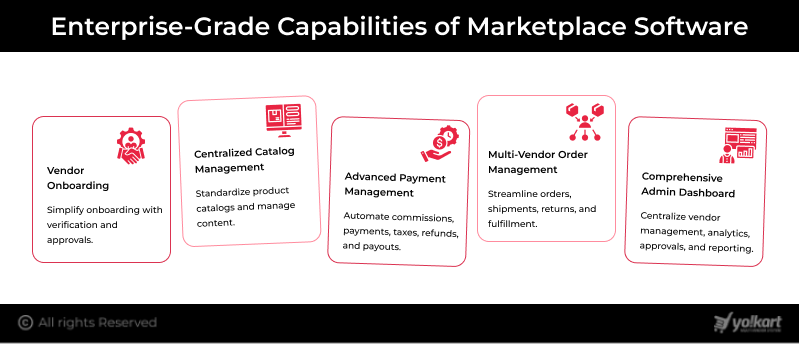
- Vendor Onboarding: Simplify self-service or guided onboarding workflows with identity verification, document management, approval processes, and role-based permissions for different seller categories.
- Centralized Catalog Management: Maintain a consistent marketplace catalog through unified product information management (PIM), SKU standardization, duplicate detection, category management, and content moderation to maintain a consistent marketplace catalog.
- Advanced Payment Management: Automated commission calculations, split payments, escrow services, tax handling, refunds, and scheduled payouts for multiple vendors through integrated payment gateways.
- Multi-Vendor Order Management: Intelligent order routing, split shipments, return management, inventory synchronization, and fulfillment tracking across multiple sellers from a single customer checkout.
- Comprehensive Admin Dashboard: A centralized control panel for monitoring marketplace operations such as managing vendors, approval workflows, commission structures, disputes, analytics, marketplace performance, customer support, and operational reporting.
These enterprise-grade features enable businesses to build scalable, secure, and efficient multi-vendor marketplaces while maintaining full control over marketplace operations and delivering a seamless customer experience.
Looking for a Marketplace Software with Enterprise-Grade Capabilities?
Key Features to Look for in Enterprise Marketplace Software
Choosing the right enterprise marketplace software requires more than comparing pricing or feature lists. The ideal platform should support long-term growth, simplify marketplace operations, and provide the flexibility to adapt to changing business requirements.
Here are the essential features enterprises should evaluate before making a decision:
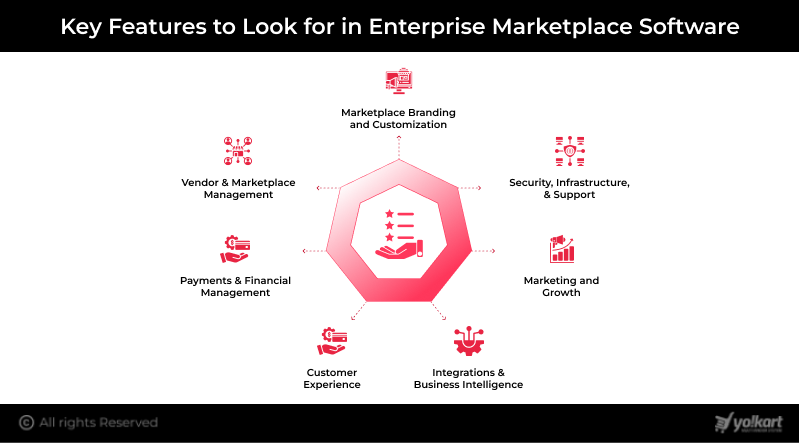
Marketplace Branding and Customization
1. White-Label Capabilities
A fully white-label software allows businesses to customize the storefront, vendor portal, and admin dashboard with their own branding. This creates a consistent customer experience while strengthening brand identity.
2. Customization
Every enterprise marketplace has unique business requirements. A customizable platform enables businesses to tailor workflows, user interfaces, business rules, and integrations without extensive redevelopment.
3. API-First Architecture
An API-first platform makes it easier to integrate third-party applications, build custom functionality, support headless commerce, and connect with external services without platform limitations.
4. Source Code Ownership
For enterprises seeking maximum flexibility, source code ownership provides complete control over customization, future development, proprietary integrations, and eliminates vendor lock-in.
Vendor and Marketplace Management
1. Multi-Vendor Management
Look for comprehensive vendor management capabilities, including seller onboarding, approval workflows, role-based permissions, vendor segmentation, communication tools, and performance tracking.
2. Product Catalog Management
Centralized catalog management ensures product consistency through bulk product imports, duplicate detection, category mapping, product moderation, and standardized product information.
3. Inventory Management
Real-time inventory synchronization across all vendors helps prevent overselling, improves stock accuracy, and ensures customers only purchase products that are currently available.
4. Order and Fulfillment Management
The platform should intelligently route multi-vendor orders, manage split shipments and returns, synchronize fulfillment, and provide customers with a seamless order experience.
5. Commission Management
Flexible commission management enables marketplace operators to create customized commission structures based on vendors, product categories, order values, promotional campaigns, or subscription plans.
Payments and Financial Management
1. Multiple Payment Gateways
A robust marketplace platform should support multiple payment gateways and regional payment methods while handling split payments, automated vendor payouts, refunds, and secure financial transactions across multiple currencies and countries.
2. Tax Management
Automated tax calculation and compliance tools simplify the management of regional and international tax regulations. Integration with leading tax services helps reduce manual effort while improving financial accuracy.
Customer Experience
1. Mobile Responsiveness and Native Mobile Apps
A responsive marketplace ensures a seamless shopping experience across desktops, tablets, and smartphones. Many enterprise platforms also provide native mobile applications for buyers and vendors, enabling convenient marketplace management and shopping on the go.
2. AI-Powered Recommendations
Artificial intelligence enhances product discovery through personalized recommendations, intelligent search, automated product categorization, and improved merchandising.
3. Multi-Language and Multi-Currency Support
Native support for multiple languages, currencies, and localized shopping experiences enables businesses to expand into international markets with ease.
Integrations and Business Intelligence
1. Analytics and Reporting
Comprehensive analytics help marketplace operators monitor sales performance, vendor activity, customer behavior, revenue trends, traffic sources, and marketplace growth. Detailed reporting enables data-driven decision-making and continuous optimization.
2. CRM and ERP Integration
Enterprise marketplace software should integrate seamlessly with existing CRM, ERP, accounting, inventory, and logistics systems. These integrations eliminate data silos, automate workflows, and improve operational efficiency across departments.
Marketing and Growth
1. Marketing Tools and SEO Features
Built-in marketing tools such as coupons, promotional campaigns, abandoned cart recovery, email integrations, SEO-friendly URLs, and customizable metadata help drive traffic and improve conversions.
2. Scalability
Enterprise marketplace software should be capable of handling increasing numbers of vendors, products, transactions, and website traffic without compromising speed, reliability, or performance as the business grows.
Security, Infrastructure, and Support
1. Self-Hosted or Cloud Deployment
Choose a deployment model that aligns with your business objectives. Cloud deployment offers faster implementation and reduced maintenance, while self-hosted solutions provide greater control, ownership, and customization.
2. Security and Compliance
Enterprise marketplaces process large volumes of sensitive customer and financial data. The platform should support strong security measures, including encrypted data transmission, secure payment processing, user authentication, and regular security updates.
3. Role-Based Access Control
Role-based permissions allow administrators to define different access levels for internal teams and vendor staff. This improves security, simplifies operations, and ensures users only access the information relevant to their responsibilities.
4. Technical Support
Reliable technical support, onboarding, implementation assistance, training resources, maintenance services, and responsive technical support are essential for successful marketplace deployment and long-term growth.
Top Enterprise Marketplace Software in 2026
Choosing the right enterprise marketplace software depends on your business model, scalability requirements, customization needs, and long-term growth strategy. Given below are the leading enterprise marketplace software solutions in 2026, comparing their key features, strengths, and ideal use cases to help you make an informed decision:
1. Yo!Kart
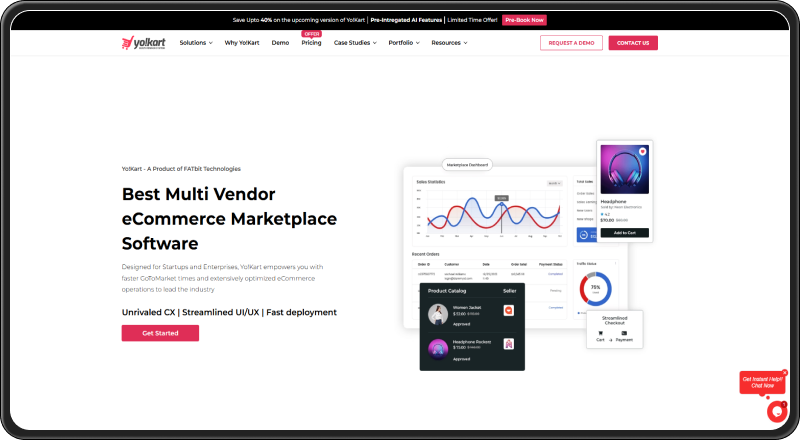
Yo!Kart is a leading self-hosted enterprise marketplace software developed by FATbit Technologies for businesses looking to build fully branded multi-vendor marketplaces with complete ownership, scalability, and customization. It supports a wide range of business models, including B2B, B2C, B2B2C, P2P, and service marketplaces. Unlike subscription-based SaaS platforms, Yo!Kart offers a one-time lifetime license with customizable source code, making it a cost-effective solution for enterprises planning long-term marketplace growth.
With advanced vendor management, flexible commission models, multi-language and multi-currency support, integrated payment gateways, native mobile apps, and enterprise-grade security, Yo!Kart enables organizations to launch, manage, and scale complex marketplace operations efficiently. Its extensive customization capabilities, dedicated technical support, and predictable long-term cost make it a compelling choice for enterprises seeking complete control over their marketplace ecosystem.
Key Features
- One-time lifetime license with complete source code ownership
- Fully white-label and self-hosted marketplace solution
- Supports B2B, B2C, P2P, wholesale, rental, and service marketplaces
- Advanced vendor onboarding and multi-vendor management
- Flexible commission management with multiple commission models
- Integrated order, inventory, and catalog management
- 20+ pre-integrated payment gateways, including Stripe Connect
- Multi-language, multi-currency, and multi-country support
- Native Android and iOS apps for buyers and sellers
- SEO-friendly architecture with responsive design
- Enterprise-grade security, role-based access control, and analytics dashboard
Pros
- A lifetime license with no recurring subscription or transaction fees lowers the total cost of ownership.
- Customizable source code eliminates vendor lock-in.
- Comprehensive enterprise features support large-scale B2B and B2C marketplace operations.
- White-label architecture allows businesses to build a fully branded marketplace experience.
- Dedicated implementation, migration, and post-launch technical support help accelerate deployment.
Cons
- Self-hosted deployment requires businesses to manage hosting infrastructure or use a managed hosting provider.
- Extensive functionality may require a short learning curve for first-time marketplace administrators.
Experience Yo!Kart Firsthand –
2. Mirakl
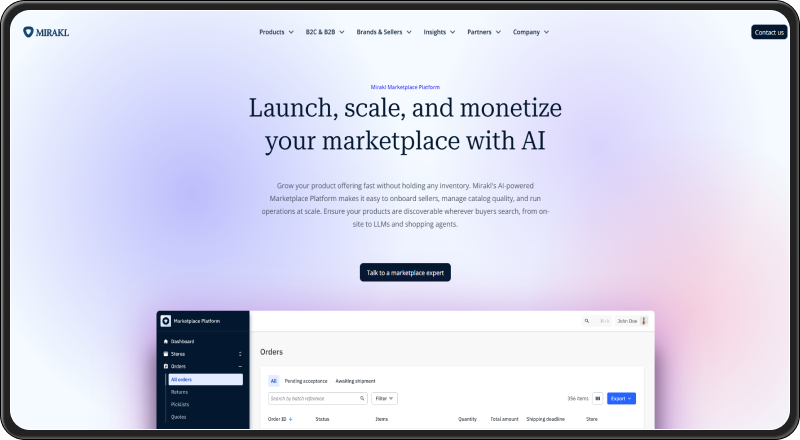
Mirakl is an enterprise marketplace software built for large retailers, manufacturers, distributors, and B2B enterprises looking to add marketplace and dropshipping capabilities to their existing commerce ecosystem. Rather than replacing an organization’s current eCommerce platform, Mirakl integrates with solutions like Salesforce, Adobe Commerce, and SAP to help enterprises launch and scale high-volume multi-vendor marketplaces with advanced automation and enterprise-grade infrastructure for high-volume operations.
Key Features
- Enterprise marketplace and dropshipping platform
- AI-powered product catalog mapping and supplier data management
- Advanced vendor onboarding and seller lifecycle management
- Deep integrations with Salesforce, Adobe Commerce, SAP, and other enterprise systems
- Flexible commission, invoicing, and multi-party payment management
- “One Creditor” invoicing model for complex B2B transactions
- Mirakl Ads for retail media and marketplace monetization
- High-performance infrastructure supporting millions of products and transactions
- API-first architecture for enterprise integrations
- Comprehensive analytics, reporting, and marketplace performance dashboards
Pros
- Purpose-built for large-scale enterprise marketplace operations with proven global scalability.
- Excellent vendor onboarding, seller management, and marketplace automation capabilities.
- Strong integration ecosystem for ERP, CRM, commerce, and payment platforms.
- Advanced support for complex B2B commerce, dropshipping, and multi-party financial workflows.
Cons
- Requires an existing eCommerce platform, increasing overall implementation cost and complexity.
- Enterprise pricing is customized and can be significantly higher than that of many alternative marketplace platforms.
- Initial implementation and configuration often require dedicated technical resources and longer deployment timelines.
3. VTEX
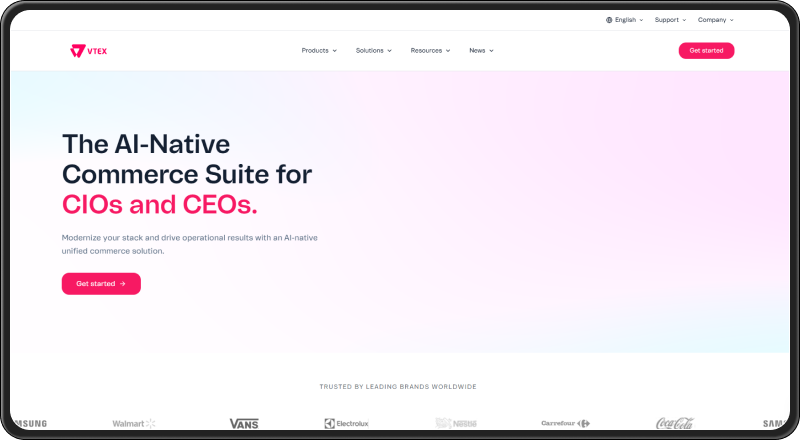
VTEX is a cloud-based enterprise marketplace software and composable commerce platform that combines eCommerce, order management, and marketplace capabilities into a single SaaS solution. Designed for enterprise retailers, manufacturers, and B2B organizations, VTEX supports omnichannel commerce, composable architecture, and global expansion. Its marketplace capabilities, AI-powered tools, and enterprise integrations make it a strong option for businesses managing large-scale digital commerce operations.
Key Features
- Unified eCommerce, marketplace, and Order Management System (OMS)
- Native support for B2B, B2C, B2E, and multi-vendor marketplace models
- GenAI-powered Agent Builder for customer engagement and automation
- SmartCheckout with PCI DSS-compliant payment processing
- Built-in marketplace seller onboarding and vendor management
- Composable, API-first architecture for enterprise integrations
- Auto-scaling cloud infrastructure for high-traffic marketplaces
- Multi-language and multi-currency support
- Advanced analytics, reporting, and business intelligence
- Integrations with ERP, CRM, payment gateways, and third-party services
Pros
- Combines eCommerce, marketplace, and order management within a single enterprise platform.
- Composable architecture provides flexibility for custom integrations and business-specific workflows.
- Cloud-native infrastructure delivers high availability, security, and automatic scalability.
- Proven enterprise solution trusted by global brands operating across multiple countries.
Cons
- Enterprise pricing can be difficult to estimate and may not suit smaller businesses.
- Advanced customization often requires experienced developers or implementation partners.
- GMV-based pricing means platform costs increase as marketplace sales grow.
4. Arcadier
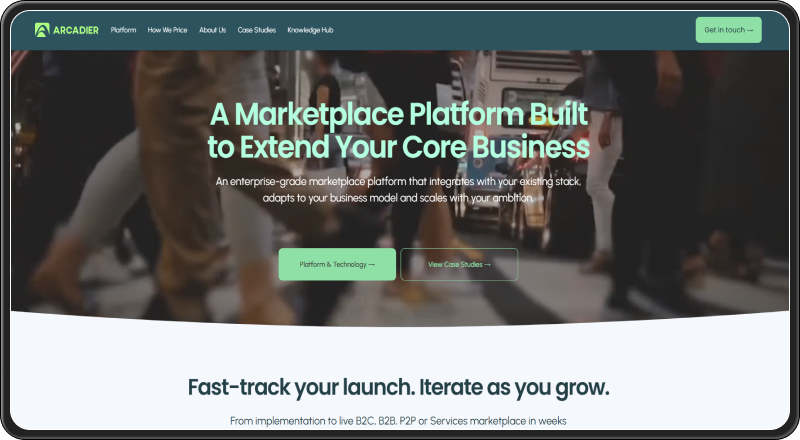
Arcadier is an API-first, headless enterprise marketplace software designed for mid-market businesses and enterprises seeking flexibility, rapid deployment, and seamless integrations. Its modular architecture allows organizations to create B2B, B2C, P2P, and service marketplaces while integrating seamlessly with existing ERP, CRM, logistics, and payment systems. With extensive APIs and white-label capabilities, Arcadier is well-suited for enterprises requiring tailored marketplace experiences.
Key Features
- API-first, headless marketplace architecture
- Modular platform with separate Admin, Merchant, and Consumer portals
- Supports B2B, B2C, P2P, and service marketplace business models
- Extensive APIs, webhooks, and event-driven integrations
- Seamless integration with ERP, CRM, logistics, and payment platforms
- Advanced vendor onboarding and multi-vendor management
- Flexible product catalog, inventory, and order management
- White-label marketplace with customizable frontend experiences
- Zero platform transaction fees on Enterprise plans
- Scalable cloud infrastructure with enterprise-grade security
Pros
- API-first architecture offers exceptional flexibility for custom marketplace development.
- Modular design allows businesses to implement only the features they require.
- Strong integration capabilities make it ideal for enterprises with existing business systems.
- Transparent pricing model with no GMV-based transaction fees on Enterprise plans.
- Well-suited for industry-specific marketplaces, including automotive, real estate, healthcare, and professional services.
Cons
- Advanced customization requires experienced development resources.
- Lower-tier plans include transaction volume limits that may require upgrades as the marketplace grows.
- Enterprise implementation and customization costs are separate from the platform subscription.
Suggested Read: How to Build an Enterprise B2B Marketplace
5. Marketplacer
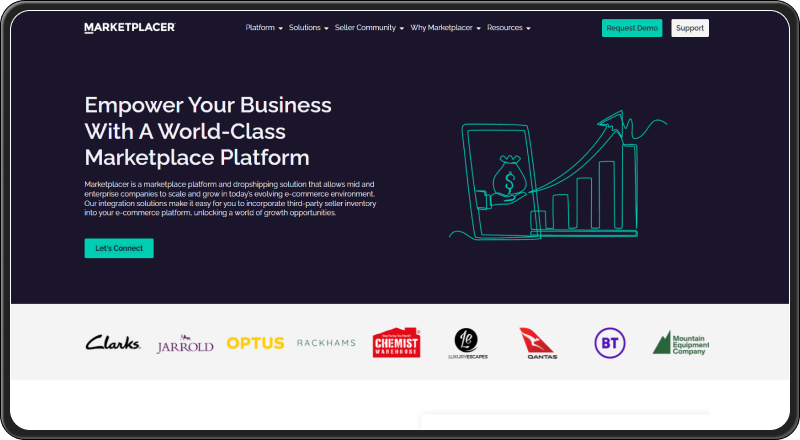
Marketplacer is a SaaS-based enterprise marketplace software solution that enables established retailers and brands to transform their existing eCommerce stores into scalable multi-vendor marketplaces. By integrating with leading commerce platforms, it helps businesses expand product assortments through third-party sellers while maintaining centralized control over branding, catalog quality, and customer experience, making it ideal for enterprise retail expansion.
Key Features
- SaaS-based enterprise marketplace and dropshipping platform
- Pre-built integrations with Adobe Commerce, Shopify Plus, Salesforce Commerce Cloud, BigCommerce, and commercetools
- Advanced vendor onboarding, seller verification, and approval workflows
- Centralized product catalog management with duplicate listing detection
- Automated commission calculation and financial reporting
- Built-in order, inventory, and fulfillment management
- Access to a curated network of third-party marketplace sellers
- White-label marketplace experience with centralized marketplace administration
- Analytics and reporting for marketplace performance and vendor insights
- Scalable cloud infrastructure with enterprise-grade security
Pros
- Easily extends an existing eCommerce website into a multi-vendor marketplace without requiring a complete platform migration.
- Strong governance tools help maintain brand consistency, product quality, pricing, and promotional standards.
- Seamless integrations with leading enterprise commerce platforms simplify implementation.
- Responsive customer success and account management support enterprise deployments.
Cons
- Enterprise-focused pricing may be less suitable for startups or small businesses.
- Custom pricing requires consultation with the sales team, making upfront cost comparisons difficult.
- Delivers the greatest value for businesses with established customer traffic seeking to expand product assortment rather than build a marketplace from scratch.
6. Sharetribe
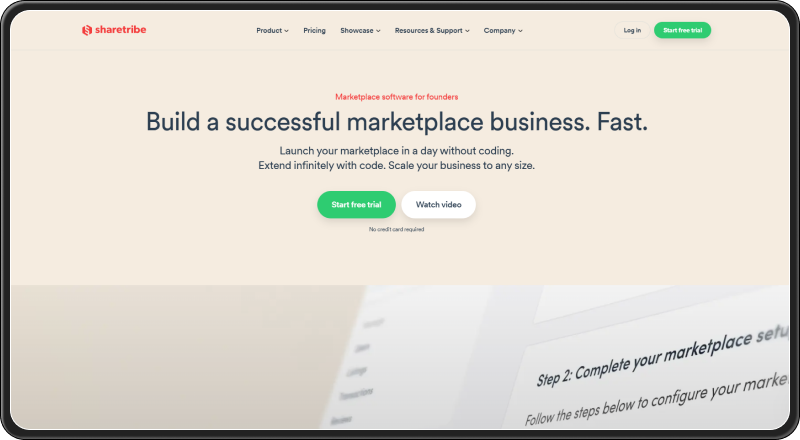
Sharetribe is a no-code, API-first enterprise marketplace software that enables businesses to launch and scale multi-vendor marketplaces with minimal development effort. Supporting service, rental, product, and peer-to-peer marketplace models, it combines rapid deployment with extensibility through APIs and custom code. It is particularly well suited for businesses prioritizing speed to market and operational simplicity.
Key Features
- No-code marketplace builder with customizable storefront
- API-first architecture with event-driven integrations
- Supports service, rental, product, C2C, and hybrid marketplace models
- Built-in vendor onboarding and user profile management
- Integrated payment processing and transaction management
- Flexible booking, scheduling, and price negotiation capabilities
- Extensible with custom code and third-party integrations
- Responsive marketplace design with cloud-hosted infrastructure
- Marketplace management dashboard with analytics and reporting
- Automatic hosting, maintenance, and platform updates
Pros
- Enables businesses to launch a fully functional marketplace quickly without extensive development.
- Combines no-code simplicity with the flexibility to add custom features as the marketplace grows.
- Excellent choice for service, rental, and peer-to-peer marketplace business models.
- Cloud-hosted infrastructure eliminates server management and maintenance responsibilities.
Cons
- Less suitable for large-scale product marketplaces with highly complex enterprise requirements.
- Transaction fees apply alongside subscription pricing on higher-tier plans.
- Advanced B2B workflows and enterprise customizations may require additional development.
7. Nautical Commerce
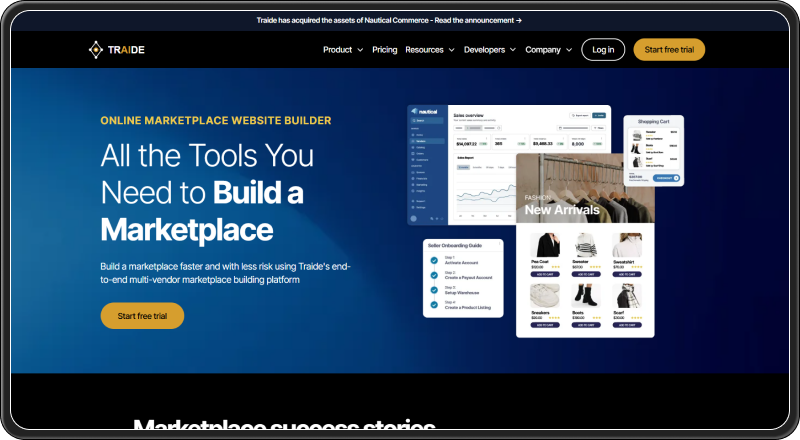
Nautical Commerce is a no-code, headless enterprise marketplace software designed for businesses looking to launch and manage scalable multi-vendor marketplaces without relying on a separate eCommerce platform. It combines seller onboarding, inventory management, payment orchestration, and marketplace administration within a unified platform while offering headless capabilities and open APIs for future customization and business growth.
Key Features
- No-code marketplace builder with optional headless architecture
- Drag-and-drop storefront editor for faster marketplace deployment
- Automated vendor onboarding and seller management
- Centralized inventory and product catalog management
- Multi-vendor checkout with unified shopping cart
- Built-in commission management and automated vendor payouts
- Double-entry bookkeeping with integrated tax and financial management
- Open APIs and Zapier integrations for third-party connectivity
- Scalable cloud infrastructure with enterprise-grade security
- Analytics and reporting for marketplace performance
Pros
- An all-in-one marketplace platform eliminates the need for a separate eCommerce solution.
- Strong capabilities for B2B, wholesale, and product-based marketplace business models.
- A no-code platform enables faster deployment while supporting future front-end customization.
- Integrated financial management simplifies payouts, accounting, and tax operations.
Cons
- Does not natively support service-based or rental marketplace business models.
- Native mobile applications are not included.
- Costs can increase as businesses require advanced integrations and enterprise features.
8. Bagisto
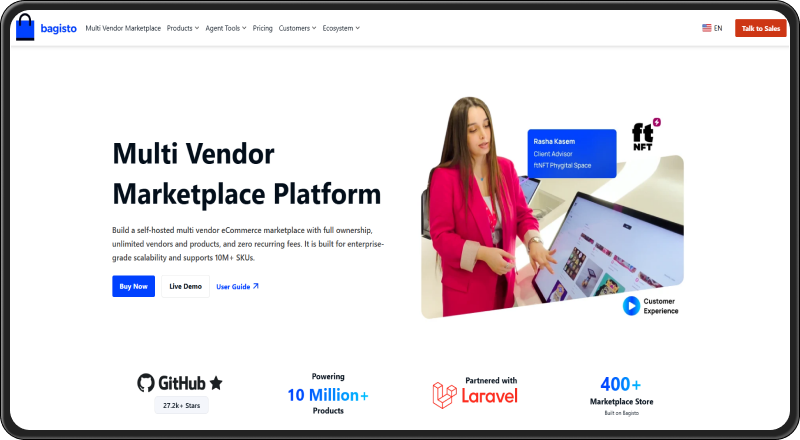
Bagisto is an open-source Laravel-based eCommerce platform that can be extended into a multi-vendor marketplace through its official Marketplace extension. Its self-hosted architecture, developer-friendly framework, and extensive customization capabilities make it a suitable choice for businesses seeking complete platform control. With support for unlimited vendors, headless commerce, and API integrations, Bagisto offers flexibility for building scalable marketplace solutions.
Key Features
- Open-source, self-hosted marketplace platform built on Laravel
- Official Multi-Vendor Marketplace extension
- Unlimited vendors and products
- Seller onboarding and dedicated vendor dashboards
- Flexible commission management
- Product, inventory, and order management
- Headless commerce capabilities with API support
- Multi-language and multi-currency support
- Mobile app support through marketplace extensions
- Extensive customization using Laravel and Vue.js architecture
Pros
- Open-source architecture offers extensive customization and flexibility.
- Laravel-based framework is ideal for businesses with experienced development teams.
- Supports unlimited vendors and marketplace expansion.
- Strong extension ecosystem for adding marketplace functionality and integrations.
Cons
- Multi-vendor functionality requires the official Marketplace extension rather than being built into the core platform.
- Enterprise implementations often require experienced Laravel developers and additional customization.
- Total implementation costs can increase when multiple commercial extensions and custom development are required.
9. Adobe Commerce (Magento)
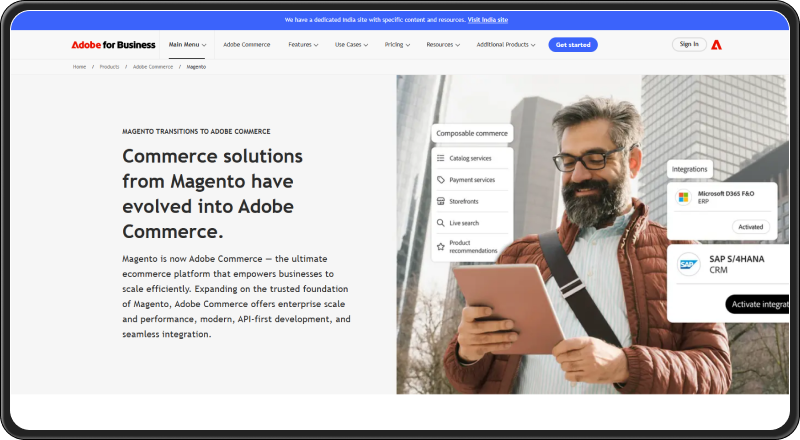
Adobe Commerce is an enterprise eCommerce platform that supports marketplace functionality through third-party marketplace extensions. Known for its highly customizable architecture, robust B2B capabilities, and headless commerce support, it enables enterprises to build tailored marketplace experiences while integrating seamlessly with existing business systems. It is best suited for organizations with experienced development teams and complex commerce requirements.
Key Features
- Highly customizable open-source and enterprise cloud platform
- Multi-vendor marketplace support through third-party extensions
- Advanced B2B capabilities, including company accounts and custom pricing
- Headless commerce architecture with API-first development
- Flexible commission management and vendor administration
- Enterprise-grade product catalog and inventory management
- Multi-store, multi-language, and multi-currency support
- Extensive extension marketplace with thousands of integrations
- Advanced SEO, marketing, and personalization tools
- Scalable infrastructure for high-volume enterprise commerce
Pros
- Exceptional flexibility for enterprises requiring extensive customization and complex business workflows.
- Strong support for large product catalogs, multi-store operations, and enterprise B2B commerce.
- An extensive ecosystem of extensions enables businesses to add marketplace features, payment gateways, ERP integrations, and advanced functionality.
- Headless architecture allows organizations to create highly customized customer experiences across multiple channels.
Cons
- Marketplace functionality depends on third-party extensions rather than being built into the core platform.
- Implementation, customization, and ongoing maintenance require experienced developers or certified implementation partners.
- Total cost of ownership can be significantly higher due to licensing, hosting, extension purchases, development, and long-term maintenance.
10. Shopify Plus with Marketplace Apps
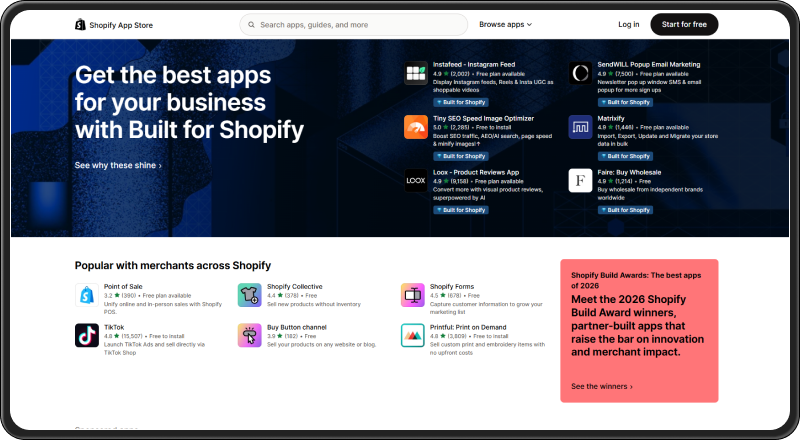
Shopify Plus can be extended into an enterprise marketplace software solution using third-party marketplace apps such as Webkul Marketplace and Shipturtle. Although Shopify Plus does not offer native multi-vendor marketplace functionality, its hosted infrastructure, extensive app ecosystem, and enterprise-grade commerce capabilities allow businesses to add marketplace features without migrating to a new platform. This makes it a practical option for brands looking for ease of management and scalability.
Key Features
- Cloud-hosted enterprise eCommerce platform with automatic maintenance
- Multi-vendor functionality through marketplace applications
- Vendor onboarding, seller dashboards, and commission management
- Multi-vendor order routing and inventory synchronization
- Integration with Shopify Payments and multiple third-party payment gateways
- Extensive app ecosystem for ERP, CRM, shipping, marketing, and automation
- Mobile-responsive storefront with optimized checkout experience
- API support for custom integrations and workflow automation
- Built-in SEO, marketing, analytics, and customer management tools
- Scalable cloud infrastructure with enterprise-level security
Pros
- Enables existing Shopify Plus merchants to launch a marketplace without changing their core eCommerce platform.
- Fully managed cloud infrastructure eliminates server management and maintenance.
- A large app ecosystem provides flexibility to extend marketplace functionality and integrate third-party business systems.
- Fast implementation with a familiar shopping experience and high-performing checkout.
Cons
- Multi-vendor capabilities rely entirely on third-party marketplace apps rather than native platform functionality.
- Total costs can increase due to Shopify Plus licensing, marketplace app subscriptions, and payment processing fees.
- Offers less customization and architectural flexibility than self-hosted or API-first enterprise marketplace platforms.
Build Your Marketplace Using Proven Enterprise Technology
Best Enterprise Marketplace Software Compared (2026)
| Software | Best For | Deployment | White Label | Source Code |
| Yo!Kart | Self-hosted marketplaces wanting one-time ownership | Self-hosted | Yes | Customizable |
| Mirakl | Large enterprise retailers are layering a marketplace onto an existing platform | SaaS (needs underlying commerce platform) | Limited | No |
| VTEX | Global omnichannel retailers wanting commerce + marketplace + OMS in one | Cloud/SaaS | Yes | No |
| Arcadier | Mid-market and enterprise teams wanting API-first flexibility | SaaS/hosted | Yes | No |
| Marketplacer | Retailers bolting a marketplace onto an existing storefront | SaaS | Yes | No |
| Sharetribe | Founders launching fast, especially service or rental marketplaces | SaaS (no-code + code) | Yes | No |
| Nautical Commerce | B2B-leaning no-code marketplace launches | SaaS/headless | Yes | No |
| CS-Cart Multi-Vendor | Budget-conscious self-hosted marketplaces | Self-hosted | Yes | Add-on |
| Magento (Adobe Commerce) | Large enterprises with in-house dev teams needing deep customization | Self-hosted/cloud | Yes | Yes (Open Source) |
| Shopify Plus + marketplace apps | Brands already on Shopify wanting to add multi-vendor selling | SaaS | Limited | No |
SaaS vs Self-Hosted Enterprise Marketplace Software
Choosing between SaaS and self-hosted enterprise marketplace software is a strategic decision that impacts your marketplace’s flexibility, scalability, customization, and long-term costs. While both deployment models can support enterprise marketplaces, the right choice depends on your business goals, technical requirements, and growth strategy. Businesses planning for long-term growth often prefer self-hosted solutions because they provide greater control and ownership.
| Feature | SaaS Enterprise Marketplace Software | Self-Hosted Enterprise Marketplace Software |
| Deployment | Hosted and managed by the software provider | Deployed on your preferred server or cloud infrastructure |
| Time to Launch | Faster implementation | Requires initial setup and deployment |
| Infrastructure Control | Limited | Complete control over servers, hosting, and configurations |
| Customization | Limited to available APIs and platform restrictions | Unlimited customization with direct access to the source code |
| Source Code Ownership | Not available | Available with platforms offering lifetime licenses |
| Scalability | Managed by the provider | Scales according to your infrastructure and business needs |
| Recurring Costs | Monthly or annual subscription with possible GMV/transaction fees | Typically, one-time licensing with predictable long-term costs |
| Vendor Lock-in | Higher | Minimal, especially with source code ownership |
| Data Ownership | Hosted by the software provider | Complete ownership and control over business data |
| Best For | Businesses prioritizing quick deployment | Enterprises focused on ownership, customization, and long-term scalability |
SaaS Enterprise Marketplace Software
SaaS marketplace platforms are ideal for businesses that want to launch quickly without managing hosting, infrastructure, or software updates. The provider handles maintenance, security, and platform upgrades, allowing internal teams to focus on business operations. However, this convenience often comes with recurring subscription fees, transaction-based pricing, and limited customization. Since the software provider retains control over the platform, businesses must rely on its roadmap for new features, integrations, and enhancements.
Self-Hosted Enterprise Marketplace Software
Self-hosted enterprise marketplace software is an ideal choice for enterprises building a marketplace as a long-term business. It gives organizations complete control over hosting, infrastructure, security policies, integrations, and platform customization. Solutions that include source code ownership allow organizations to modify every aspect of the marketplace, integrate proprietary systems, and continue platform development without relying on a vendor’s roadmap.
Additionally, self-hosted platforms are well-suited for enterprises with strict compliance requirements, unique workflows, or industry-specific business models. Unlike many SaaS platforms that charge recurring subscription and GMV-based fees, self-hosted solutions typically involve a one-time licensing cost, making them more cost-effective as marketplace transaction volumes grow. This predictable cost structure can substantially reduce the total cost of ownership over the long term.
Which Option is Better for Enterprises?
Both SaaS and self-hosted deployment models have distinct advantages, and the right choice depends on your business priorities. SaaS platforms are a strong fit for organizations that value speed to market, managed infrastructure, and minimal technical overhead.
However, for enterprises building a scalable, highly customizable marketplace, self-hosted software is often the stronger long-term investment. It offers complete platform ownership, greater customization flexibility, enhanced data control, and freedom from recurring platform subscription or transaction fees. As marketplace operations grow and business requirements become more complex, these advantages become increasingly valuable, making self-hosted enterprise marketplace software a preferred choice for sustainable long-term growth.
Launch an Enterprise Marketplace Built for Sustainable Growth
Conclusion
Enterprise marketplace software has become a strategic investment for businesses aiming to expand beyond traditional eCommerce and build scalable multi-vendor ecosystems. The right platform simplifies vendor management, automates marketplace operations, improves customer experiences, and unlocks new revenue streams without requiring significant inventory investments.
While numerous enterprise marketplace solutions will be available in 2026, selecting the right one ultimately depends on your business model, deployment preferences, customization requirements, and long-term growth strategy. Organizations that prioritize rapid deployment may find SaaS platforms suitable, whereas businesses seeking complete ownership, greater flexibility, and predictable long-term costs often benefit more from self-hosted solutions.
Among the solutions compared, Yo!Kart stands out as a strong choice for enterprises that want a fully white-label marketplace with source code ownership, extensive customization capabilities, enterprise-grade features, and a one-time licensing model. Its comprehensive functionality, scalability, and long-term cost advantages make it a compelling solution for businesses planning to build and grow a successful multi-vendor marketplace.
FAQs
1. What is enterprise marketplace software?
Enterprise marketplace software is a solution that enables businesses to create and manage a multi-vendor marketplace where multiple sellers can offer products or services through a single storefront. It streamlines vendor onboarding, commission management, order processing, inventory management, and payment distribution while supporting large-scale marketplace operations.
2. Which is the best enterprise marketplace software in 2026?
The best enterprise marketplace software depends on your business requirements. For organizations looking for a self-hosted, fully customizable, white-label solution with scalability, Yo!Kart is one of the strongest options. However, some of the other popular enterprise platforms include Mirakl, VTEX, Arcadier, and Marketplacer.
3. What features should enterprise marketplace software include?
A robust enterprise marketplace platform should provide:
- White-label customization
- Multi-vendor management
- Product and inventory management
- Commission and payout automation
- Multi-payment gateway support
- API-first architecture
- ERP and CRM integrations
- Analytics and reporting
- Multi-language and multi-currency support
- Enterprise-grade security and scalability
4. Is self-hosted marketplace software better than SaaS?
Both deployment models have advantages.
SaaS solutions offer faster deployment and managed infrastructure, while self-hosted software provides greater customization, source code ownership, stronger data control, and lower long-term costs.
Businesses planning to build a long-term enterprise marketplace often prefer self-hosted solutions such as Yo!Kart because of the flexibility and ownership they provide.
5. Why is Yo!Kart a preferred choice for enterprise marketplaces?
Yo!Kart offers a fully white-label, self-hosted marketplace solution with customizable source code, advanced multi-vendor management, flexible commission models, native mobile apps, multi-language and multi-currency support, and enterprise-grade scalability. Additionally, its one-time licensing model also helps reduce the total cost of ownership compared to recurring SaaS subscriptions.
6. Can enterprise marketplace software support B2B and B2C marketplaces?
Yes, modern enterprise marketplace software such as Yo!Kart supports multiple business models, including B2B, B2C, B2B2C, P2P, wholesale, rental, and service marketplaces. This flexibility allows businesses to adapt the platform to different industries and evolving market requirements.
7. How much does enterprise marketplace software cost?
Pricing varies depending on the deployment model and vendor. SaaS platforms typically charge monthly or annual subscription fees and may include transaction- or GMV-based fees. Whereas self-hosted solutions like Yo!Kart generally offers a one-time licensing model, providing predictable long-term costs and eliminating recurring platform subscription fees.
8. How do I choose the right enterprise marketplace software?
When evaluating enterprise marketplace software, consider factors such as deployment model, scalability, customization options, source code ownership, white-label capabilities, integration support, security, technical support, total cost of ownership, and long-term business goals. If you require maximum flexibility and complete platform control, Yo!Kart is a strong option for building and scaling an enterprise marketplace.
Launch Your Enterprise Marketplace with a Fully White-Label Solution
Get In TouchPopular Posts