

The digital economy has fundamentally reshaped how businesses connect with customers, suppliers, and partners. At the center of this transformation is the eCommerce Marketplace Platform, a model that brings multiple sellers and buyers together within a single, unified digital ecosystem. From global giants like Amazon and eBay to niche marketplaces serving industries such as healthcare, fashion, and B2B wholesale, marketplace-driven commerce has proven that it is not just a passing trend but the future of online retail.
For startups, entrepreneurs, and established enterprises alike, choosing the right eCommerce marketplace solution is no longer a simple technical decision. It is a strategic investment that impacts scalability, customer trust, vendor retention, operational efficiency, and long-term profitability. The wrong platform can restrict growth, increase costs, and lead to performance issues, while the right solution can accelerate market entry and provide a competitive edge.
With numerous options available, ranging from SaaS-based tools to fully customizable solutions developed by an eCommerce marketplace development company, selecting the right software solution can feel complex. Moreover, the real challenge lies in finding a solution that aligns with your business goals, budget, and long-term vision. This blog breaks down what an eCommerce marketplace solution is, why choosing the right one matters, the key factors to consider, common mistakes to avoid, and why Yo!Kart is widely recognized as one of the best solutions for eCommerce marketplace development.
Table of Contents
- What is an eCommerce Marketplace Platform?
- Key Features of Marketplace Platforms
- Why Choosing the Right eCommerce Marketplace Platform Matters
- Factors to Be Considered When Choosing an eCommerce Marketplace Platform
- Mistakes to Avoid When Choosing an eCommerce Marketplace Platform
- Yo!Kart: The Best eCommerce Marketplace Platform to Start Your Business
- Conclusion
What is an eCommerce Marketplace Platform?
An eCommerce marketplace platform is a digital infrastructure that enables multiple independent vendors to list, sell, and manage their products or services through a single online storefront. Unlike a conventional single-vendor eCommerce website, a marketplace brings buyers and sellers together while the platform owner manages the technology, policies, and transaction processes.
In this model, vendors benefit from shared traffic, built-in infrastructure, and access to a wider customer base. Customers, in turn, enjoy greater product variety, competitive pricing, and the conveinece of shopping from multiple sellers in one place. The marketplace owner, on the other hand, earns revenue through commissions, subscription plans, listing fees, or value-added services.
A professionally built marketplace platform serves as a centralized system that handles vendor onboarding, product management, payments, commissions, customer interactions, and analytics. This is where an experienced eCommerce marketplace development company plays a critical role by building a platform that balances usability, scalability, and performance.
Key Features of Marketplace Platforms
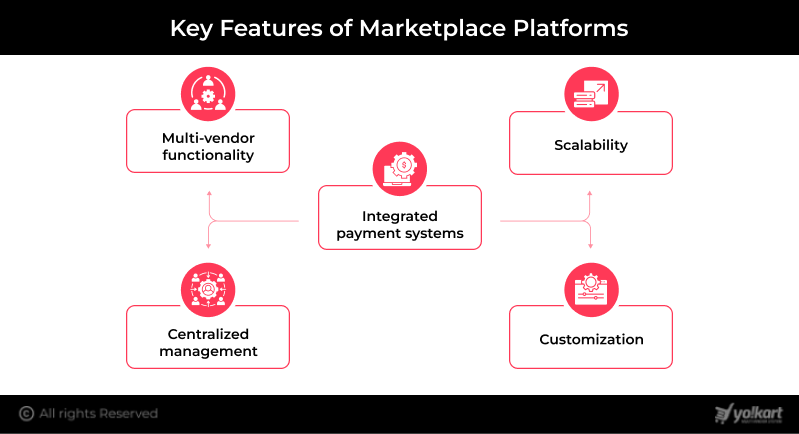
A successful marketplace platform is built on a set of core features that create value for sellers, buyers, and give administrators full operational control. These features work together to ensure smooth transactions, scalability, and long-term sustainability. The feature set includes:
1. Multi-vendor functionality
This feature allows multiple sellers to register, create individual profiles, upload products or services, and manage orders independently. Each vendor operates their own storefront within the marketplace while following platform policies, enabling diversity without sacrificing control.
2. Centralized management
The platform owner retains complete control over marketplace operations. This includes vendor approvals, commission settings, order tracking, and compliance management. Centralized oversight helps maintain consistency, quality, and trust across the marketplace.
3. Integrated payment systems
Secure and reliable payment gateways facilitate smooth transactions between buyers and sellers. Advanced platforms support split payments, automatic commission deductions, tax calculations, and multi-currency support, simplifying financial operations for all parties.
4. Scalability
A robust eCommerce marketplace platform solution is built to handle growing businesses. It can support thousands of vendors, millions of products, and high traffic volumes without compromising speed, security, and user experience.
5. Customization
Every marketplace has its own unique requirements. Customization enables businesses to tailor features, layouts, and workflows for specific sectors such as electronics, fashion, groceries, digital services, or B2B trade. This flexibility helps create differentiated user experiences and industry-specific functionality.
In essence, eCommerce marketplace development is about building a digital “mall” where buyers and sellers interact seamlessly, supported by robust technology and scalable architecture.
Create a Feature-Rich eCommerce Marketplace
Why Choosing the Right eCommerce Marketplace Platform Matters
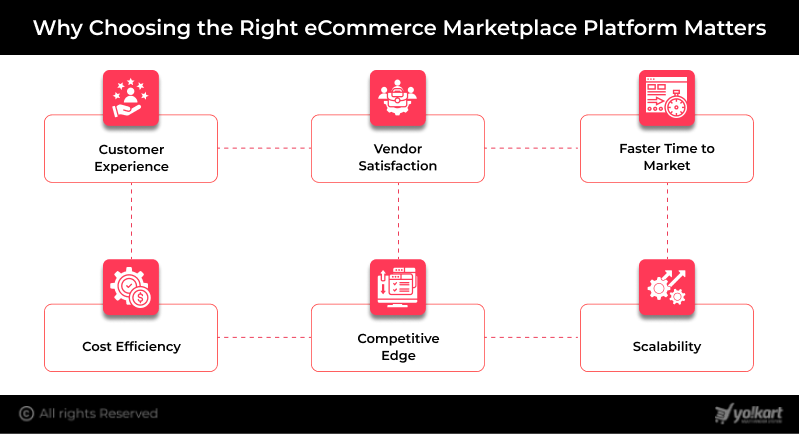
Choosing the right multi-vendor eCommerce marketplace platform goes beyond selecting software. It directly impacts how efficiently your marketplace operates, scales, and competes. The platform you choose becomes the foundation of your business, shaping user experience, vendor retention, cost structure, and speed of growth.
1. Customer Experience
A well-built marketplace platform delivers a smooth and intuitive shopping experience for buyers. Fast-loading pages, easy navigation, secure checkout, and trust-building features like reviews and ratings improve customer satisfaction. When users find it easy and safe to shop, they are more likely to return and make repeat purchases.
2. Vendor Satisfaction
Vendors play a central role in the success of a marketplace. Platforms that simplify vendor onboarding, provide clear dashboards, support inventory and order management, and maintain transparent commission structures help vendors operate efficiently. Hence, satisfied vendors are more likely to stay, expand their offerings, and attract more customers.
3. Scalability
The right eCommerce marketplace platform solution supports business growth without technical limitations. It enables businesses to add new vendors, categories, and enter new markets while maintaining performance and stability. Scalable platforms eliminate the need for costly rebuilds andsupports long-term sustainability.
4. Cost Efficiency
Choosing the right platform helps control operational costs. A stable, well-structured solution reduces reliance on third-party plugins, frequent upgrades, and platform migrations. Over time, this results in better return on investment and predictable expenses.
5. Competitive Edge
In a competitive market landscape, differentiation matters. A flexible platform allows businesses to introduce unique features, optimize performance, and tailor user experiences. This adaptability helps the marketplace stand out and remain competitive as market demand evolves.
6. Faster Time to Market
A ready-to-deploy or well-architected marketplace platform significantly reduces development time. With built-in marketplace features and scalable architecture, businesses can launch faster, validate ideas sooner, and start generating revenue without long development cycles.
Suggested Read: Top 20 Multi-vendor eCommerce Marketplace Platforms
Factors to Be Considered When Choosing an eCommerce Marketplace Platform
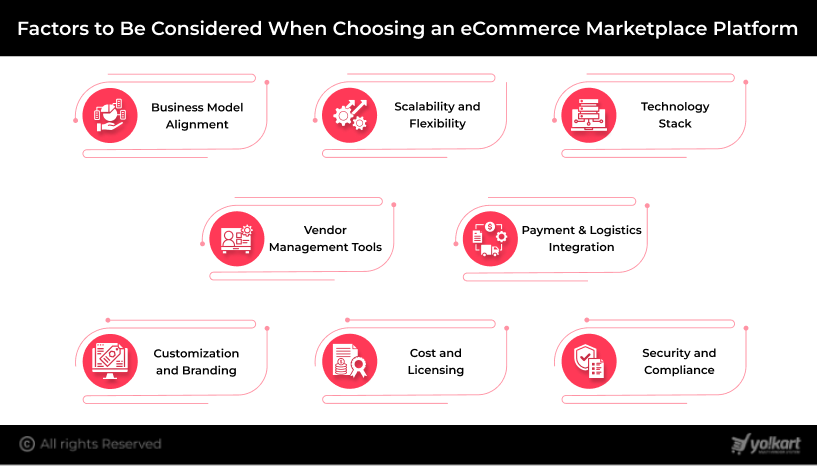
Selecting the right eCommerce marketplace platform requires a thoughtful evaluation of several critical factors. Each element contributes to building a scalable, efficient, and user-friendly marketplace that supports both vendors and buyers. A well-chosen platform supports long-term growth, reduces operational friction, and aligns with your overall business strategy. Here are the critical factors to consider:
1. Business Model Alignment
Your marketplace platform should fully support the business model you intend to operate. Different marketplace types require different structures, features, and workflows, so choosing a platform designed for your model prevents complications and allows you to do customization later.
Key points:
- B2C (Business-to-Consumer): Platforms must focus on customer-facing features, easy navigation, personalized recommendations, and smooth checkout processes.
- B2B (Business-to-Business): Requires advanced pricing management, bulk ordering options, quotation requests, and support for long-term contracts.
- C2C (Consumer-to-Consumer): Needs secure transaction management between users, seller verification, and dispute resolution tools.
A platform aligned with your business model ensures that workflows, user experiences, and backend processes fit your marketplace operations from day one.
2. Scalability and Flexibility
Your marketplace should be built to handle growth seamlessly, from adding new vendors to expanding product categories or entering new markets. A flexible and scalable platform ensures your business can evolve without major technical barriers and disrupting performance.
Key points:
- Supports a growing number of vendors and product listings.
- Enables multi-currency and multi-language capabilities for international expansion.
- Allows easy integration of third-party tools or new features, such as AI-powered recommendations, advanced analytics, or promotional marketing modules.
- Handles peak traffic during sales, events, or seasonal demand spikes.
A platform that adapts to business growth reduces the need for frequent upgrades or complete system overhauls.
3. Technology Stack
The underlying technology of your marketplace determines speed, reliability, and potential of your marketplace over time. A modern and robust technology stack ensures the platform performs smoothly and remains secure over time.
Key points:
- Uses up-to-date frameworks and programming languages for optimal performance.
- Ensures mobile responsiveness and compatibility across devices.
- Provides strong security protocols to protect sensitive user data.
- Offers flexibility for adding custom features without major redevelopment.
- Supports integrations with other systems, including CRM, ERP, and marketing automation tools.
A strong technology foundation is critical for long-term success, keeping your marketplace reliable, fast, and future-proof.
4. Vendor Management Tools
Vendors are the backbone of any marketplace. A platform with efficient vendor management features makes it easy to attract, onboard, and retain sellers while streamlining their daily operations.
Key points:
- Provides intuitive dashboards for inventory management, order tracking, and sales performance analysis.
- Automates commission calculations and financial reporting.
- Includes built-in tools for dispute resolution and seller support.
- Allows vendors to manage promotions, discounts, and product listings independently.
- Offers analytics to help vendors optimize sales strategies and product offerings.
Strong vendor management tools increase seller satisfaction and encourage active participation on the platform.
5. Payment and Logistics Integration
Seamless transactions and efficient shipping are essential for a successful marketplace. Thus, the platform should integrate multiple payment gateways and logistics providers to create a smooth experience for buyers and sellers alike.
Key points:
- Supports a variety of global and local payment methods to cater to diverse audiences.
- Automates tax calculations, commission distribution, and billing.
- Integrates with logistics providers for real-time shipment tracking, inventory updates, and delivery notifications.
- Offers options for multiple shipping methods, returns, and refunds.
Proper integration reduces operational bottlenecks, ensures timely deliveries, and improves trust between buyers and sellers.
6. Customization and Branding
Your marketplace should reflect your brand identity and offer unique experiences to both buyers and sellers. A highly customizable platform allows businesses to differentiate themselves from competitors.
Key points:
- Custom layouts, color schemes, and design elements to maintain brand consistency.
- Ability to implement specialized workflows for specific industries or business models.
- Supports personalized user experiences, including recommendations, search filters, and loyalty programs.
- Allows adding proprietary features or tools to enhance marketplace functionality.
Customization ensures your marketplace is not a generic template but a fully branded and distinctive digital ecosystem.
Create Your Own Fully Branded Multi-Vendor Marketplace
7. Cost and Licensing
Understanding platform pricing and licensing is essential for budgeting and long-term planning. The goal is to avoid hidden costs and ensure sustainable growth.
Key points:
- Compare one-time license fees with subscription-based models.
- Check for additional costs, such as transaction fees, feature add-ons, or third-party integrations.
- Assess ongoing cost for maintenance, upgrade, and technical support costs.
- Focus on the total cost of ownership and long-term ROI rather than just initial expenditure.
Choosing the right pricing model ensures sustainable operations and avoids unexpected financial burdens.
8. Security and Compliance
A marketplace handles sensitive data, from customer payment information to vendor details, making security and compliance non-negotiable. A secure platform protects your business and helps maintain trust.
Key points:
- GDPR compliance for data protection, especially if operating in or serving customers in Europe.
- PCI DSS compliance for secure payment processing.
- Adherence to local eCommerce regulations, including taxation, refunds, and consumer rights.
- Advanced security measures such as encryption, secure APIs, and multi-factor authentication.
A secure and compliant platform safeguards both business operations and user trust, preventing legal issues and reputational damage.
Mistakes to Avoid When Choosing an eCommerce Marketplace Platform
Choosing the wrong eCommerce platform can create long-term challenges for your business, vendors, and customers. From scalability limitations to poor user experiences, these mistakes often lead to higher costs, slower growth, and avoidable rebuilds. Here’s a detailed look at common mistakes to avoid:
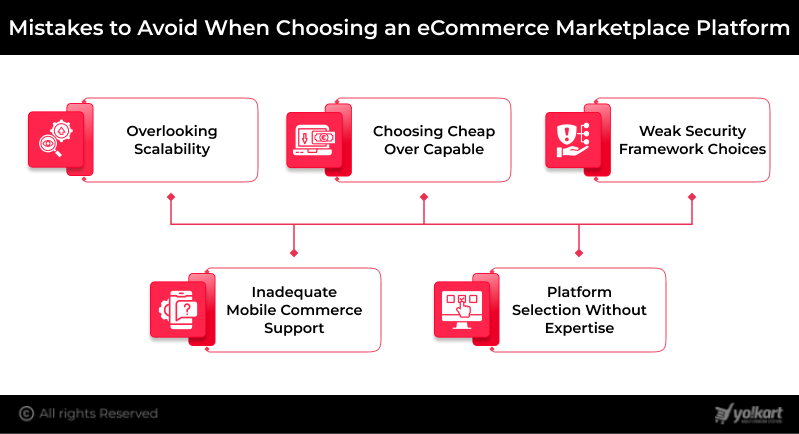
1. Overlooking Scalability
Choosing a platform that cannot grow with your business can result in performance issues, downtime, and limited product or vendor capacity. A scalable solution ensures your marketplace can handle increasing traffic, product listings, and vendors without requiring a complete rebuild. Planning for scale from the beginning saves both time and cost in the long run.
2. Choosing Cheap Over Capable
Selecting a platform based solely on low price can backfire. Cheap platforms often lack essential features, have limited customization, scalability, or security. Investing in a more robust platform delivers better ROI, reduces future migration costs, and avoids operational complexity.
3. Inadequate Mobile Commerce Support
With mobile commerce dominating online shopping, platforms that aren’t mobile-optimized risk losing a significant portion of customers. Poor mobile experiences, slow load time, unresponsive layouts, or difficult checkout drive users away. In contrast, platforms with responsive design and native mobile apps ensure a smooth shopping experience across devices.
4. Weak Security Framework Choices
Weak security exposes your marketplace to hacks, data breaches, and payment fraud, damaging both vendor and customer trust. Ensuring PCI-compliance, secure data storage, encrypted transactions, and anti-fraud systems protects your business and builds credibility in a competitive market.
5. Platform Selection Without Expertise
Building or selecting a marketplace without expert guidance can result in technical mistakes, missed features, and delayed launches. Partnering with an experienced eCommerce marketplace development company helps identify the right technology, implement best practices, and avoid costly trial-and-error mistakes.
Choosing the right infrastructure for an online business is no longer just a technical checkbox. It is a definitive strategic turning point. As the digital commerce landscape shifts toward composable architectures and AI-driven hyper-personalization, the foundation you build upon determines whether your business will sprint or stumble.
Yo!Kart: The Best eCommerce Marketplace Platform to Start Your Business
If you are looking for a solution that balances power, ownership, and cost-efficiency, Yo!Kart stands out as a proven market leader. Unlike many platforms that operate on a recurring monthly fee (SaaS), Yo!Kart is a self-hosted, license-based eCommerce marketplace platform that gives you full control.
Built specifically for a multi-vendor eCommerce marketplace, Yo!Kart empowers businesses to launch, manage, customize, and scale without long-term platform dependencies or rising subscription costs.
Why Yo!Kart is the Professional Choice:
- Pay Once, Own Forever: One of the biggest advantages of Yo!Kart is its one-time license fee. There are no recurring monthly subscriptions or transaction fees, which significantly improves your profit margins as you scale.
- Built-in Marketplace Features: Yo!Kart is not a modified eCommerce store.It is built from the ground up as a multi-vendor solution, which includes advanced features like automated tax management, split payments (Stripe Connect), and sophisticated vendor dashboards.
- 100% White-Label and Customizable: You get the customizable source code, allowing you to customize the platform to fit your exact business logic. It is a white-label solution, meaning your brand remains front and center.
- Tested Scalability: Yo!Kart has been used to power marketplaces with millions of products and thousands of vendors, making it a reliable choice for enterprise-level eCommerce marketplace development.
- Robust Support: It offers up to 12 months of free technical support, ensuring that your launch is smooth and any initial hurdles are handled by experts.
Explore Multi-Vendor Capabilities of Yo!Kart
Conclusion
Choosing the right eCommerce marketplace solution is a defining step in building a successful online marketplace. From scalability and vendor management to security and customization, every decision you make impacts long-term growth and profitability. Thus, by avoiding common mistakes and selecting a platform that aligns with your business model, you create a strong foundation for sustainable success.
Among the many solutions available, Yo!Kart stands out as a scalable, cost-effective, and feature-rich eCommerce marketplace solution. Whether you are launching a startup or expanding an enterprise-level marketplace, partnering with the right solution and the right eCommerce marketplace development company can unlock powerful opportunities and position your business for long-term success in the evolving digital economy.
Want to Launch a Scalable Multi-Vendor eCommerce Marketplace?
Get In TouchPopular Posts