

Published Date 30th Dec 2025
The agriculture industry is experiencing a major digital shift. Once dependent on local dealers, physical showrooms, and word-of-mouth networks, Farmers and agri-businesses today are rapidly adopting digital platforms to discover, compare, and purchase farm machinery and equipment. This evolution has opened massive opportunities for entrepreneurs and enterprises to build a marketplace for farm equipment that connects manufacturers, dealers, and farmers on a single digital platform.
From tractors and harvesters to irrigation systems and precision farming tools, demand for a centralized farm equipment marketplace continues to grow across regions. Additionally, with the right business model, technology stack, and eCommerce marketplace software, such platforms can scale efficiently and generate long-term profitability.
In this in-depth guide, you will walk you through everything you need to know, from understanding what a farm equipment marketplace is, to revenue models, features, development steps, cost factors, and how platforms like Yo!Kart can help you launch faster and smarter.
Table of Contents
- What is a Marketplace for Farm Equipment?
- Business Model of a Farm Equipment Marketplace
- Revenue Models for Farm Equipment Marketplaces
- Benefits of Building a Farm Equipment Marketplace
- Must-Have Features in a Farm Equipment Marketplace
- Steps to Build a Marketplace for Farm Equipments
- Factors Affecting Cost to Develop a Farm Equipment Marketplace
- How Yo!Kart Can Help You Build a Farm Equipment Marketplace
- Conclusion
What is a Marketplace for Farm Equipment?
A marketplace for farm equipment is a multi-vendor digital platform where multiple sellers, including manufacturers, distributors, dealers, and rental providers, list agricultural machinery and tools for sale or rent. Buyers, typically farmers, agri-enterprises, cooperatives, and contractors, can browse listings, compare prices, evaluate specifications, and place orders online.
Unlike a traditional single-seller eCommerce website, a farm equipment marketplace operates as a complete ecosystem. It enables multiple stakeholders involved in the supply chain to transact seamlessly under one unified platform.
Types of Farm Equipment Sold on Marketplaces
A modern farm equipment marketplace typically offers a wide range of products. It includes:
- Tractors and power tillers
- Harvesters and threshers
- Ploughs, seeders, and cultivators
- Irrigation systems, including drip, sprinkler, and pumps
- Precision farming tools, such as GPS and IoT devices
- Sprayers and fertilization equipment
- Livestock machinery
- Spare parts and accessories
Many platforms also expand their offering to include used equipment, equipment rentals, and service providers. This broader approach makes the marketplace more practical, accessible, and valuable for farmers with diverse needs and budgets.
Suggested Read: Build a Farm Marketplace For Local Poultry And Livestock Sales
Business Model of a Farm Equipment Marketplace
Before you build a marketplace for farm equipment, it is essential to clearly define the business model. A well-structured model determines how the platform operates on a daily basis and how it generates revenue in a sustainable way. Further, it also helps you balance the needs of multiple stakeholders, including manufacturers, dealers, rental providers, and farmers, while ensuring smooth transactions and long-term scalability.
A successful farm equipment marketplace is not just a listing platform. It acts as a digital bridge that simplifies equipment discovery, purchasing, rentals, logistics, and post-sale support. When designed correctly, the model enables trust, transparency, and efficiency across the entire agricultural supply chain.
Furthermore, let’s have a look at how a farm equipment marketplace works.
How a Farm Equipment Marketplace Works
- Vendor Onboarding & Product Listing: Sellers begin by registering on the platform and submitting their business details for verification. Once approved, they upload product catalogs, set pricing, define service areas, and manage their inventory on the marketplace.
- Buyer Discovery: Farmers/buyers can browse, search, filter, and compare equipment based on categories, such as price, brand, capacity, or location.
- Order Placement & Payment: Once a suitable product or rental is selected, buyers place orders or submit rental requests directly through the platform. Secure, integrated payment gateways ensure smooth and transparent transactions.
- Fulfillment & Delivery: Equipment delivery is fulfilled either by vendors or via third-party logistics partners. The platform keeps buyers informed with order tracking and status updates throughout the delivery process.
- After-Sales Support: Post-purchase support plays a critical role in customer satisfaction. This includes installation, servicing, warranty management, and customer communication.
Turn Your Marketplace Model Into a Working Platform
Revenue Models for Farm Equipment Marketplaces
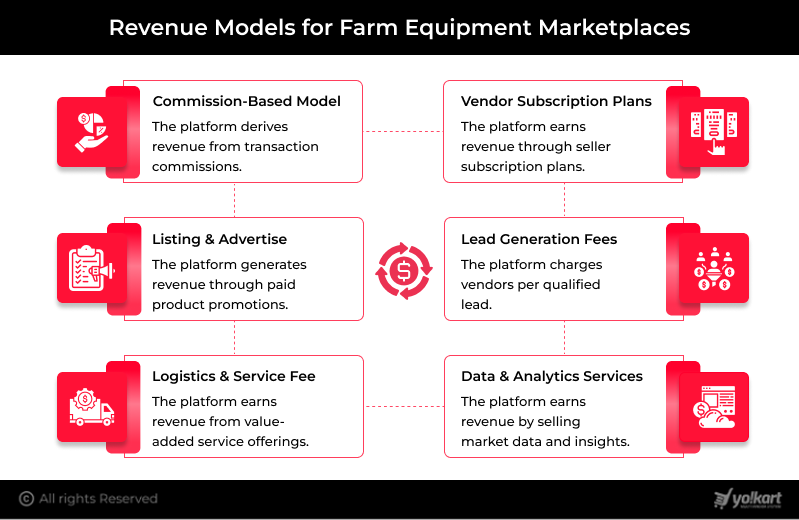
A farm equipment marketplace can generate revenue through multiple monetization channels, allowing platform owners to diversify income. Most successful marketplaces adopt a hybrid approach to maximize profitability and reduce dependency on a single revenue stream. Let’s have a look at some of the popular revenue streams:
1. Commission-Based Model
The platform earns a percentage commission on every successful sale or rental transaction. Rates can vary by equipment type or transaction value, making this model flexible, performance-driven, and directly aligned with marketplace growth and transaction volume.
2. Vendor Subscription Plans
Sellers pay monthly or annual fees to list products, access premium features, or gain visibility. Subscription tiers may include higher listing limits, analytics access, or priority visibility, providing predictable recurring revenue for the platform.
3. Featured Listings & Advertising
Vendors pay to promote products via homepage banners, sponsored listings, or search placements. This model increases seller visibility while allowing the platform to monetize traffic without depending solely on completed transactions.
4. Lead Generation Fees
For high-value machinery, platforms can charge vendors per qualified lead, making this model effective for B2B sales and large equipment transactions.
5. Logistics & Service Fee
Platforms can earn additional revenue by offering delivery coordination, installation support, insurance options, maintenance packages, or financing assistance. These value-added services improve buyer convenience while generating incremental income.
6. Data & Analytics Services
As the marketplace scales, it generates valuable demand and pricing data. Platforms can monetize this by offering paid insights, performance reports, and trend analysis to manufacturers and dealers.
By combining transactional, subscription-based, and value-added revenue models, platform owners can create a balanced ecosystem that benefits sellers, buyers, and the business itself. The key is to align monetization with user value, ensuring growth without compromising trust or usability.
Benefits of Building a Farm Equipment Marketplace
Launching a digital farm equipment marketplace offers advantages not only for platform owners but also for buyers and sellers across the agricultural ecosystem. By digitizing how agricultural machinery is discovered and purchased, these platforms bring efficiency, transparency, and scale to a traditionally fragmented ecosystem. Given below are the benefits of building a farm equipment marketplace:
1. Expands Market Reach
A farm equipment marketplace removes geographical limitations by allowing manufacturers and dealers to showcase their products to farmers across multiple regions. Sellers are no longer restricted to local markets and can attract buyers from rural and remote areas without investing in physical showrooms or distribution centers.
2. Improves Price Transparency
By listing multiple vendors on a single platform, farmers can easily compare prices, equipment specifications, and seller ratings. This transparency helps buyers make informed decisions, reduces price manipulation, and encourages healthy competition among sellers.
3. Reduces Operational Costs
Operating through a digital marketplace significantly lowers expenses related to physical infrastructure, sales staff, and offline promotions. Vendors can manage listings, inventory, and orders online, while platform owners streamline operations through automation and centralized management.
4. Encourages Equipment Accessibility
High-value farm machinery often remains out of reach for small and marginal farmers. Marketplace models that support equipment rentals and used machinery make advanced tools more accessible and affordable, enabling farmers to improve productivity without heavy upfront investments.
5. Scalable Business Model
A farm equipment marketplace is highly scalable, allowing platform owners to expand into new regions, add more product categories, or introduce additional services without major infrastructure changes. This scalability supports long-term growth with controlled operational costs.
6. Data-Driven Insights
Digital marketplaces generate valuable data on buyer behavior, demand patterns, pricing trends, and seasonal requirements. These insights help platform owners and sellers optimize inventory, plan promotions, improve product offerings, and make smarter business decisions.
Must-Have Features in a Farm Equipment Marketplace
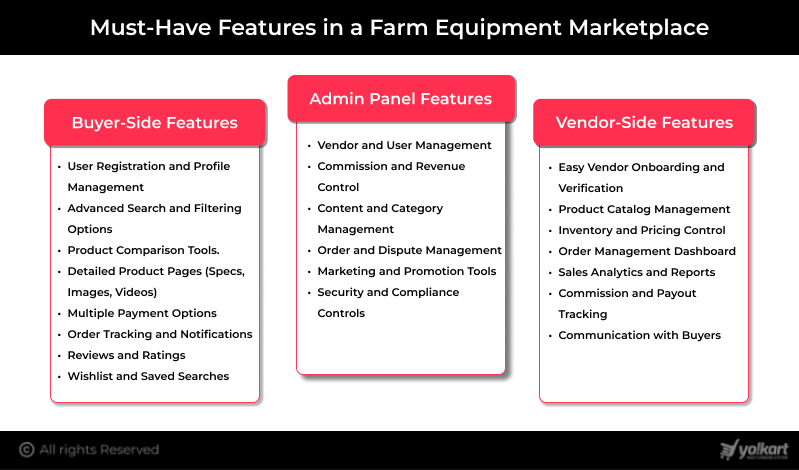
To successfully build a marketplace for farm equipment, your platform must offer robust, user-friendly, and scalable features. The right feature set ensures smooth interactions between buyers and sellers while giving administrators full control over marketplace operations.
Buyer-Side Features
- User Registration and Profile Management
This feature allows buyers to create and manage personal accounts where they can store contact details, delivery addresses, and payment preferences. It also enables faster checkout, order history access, and personalized shopping experiences.
- Advanced Search and Filtering Options
Advanced search helps buyers quickly find relevant farm equipment based on category, brand, price, location, or specifications. Filters reduce browsing time and improve overall user experience.
- Product Comparison Tools
Product comparison tools allow buyers to evaluate multiple equipment options side by side. Farmers can compare specifications, pricing, and features to make well-informed purchasing decisions.
- Detailed Product Pages (Specs, Images, Videos)
Each product page provides comprehensive information, including technical specifications, high-quality images, and videos. This helps buyers understand equipment functionality, usage, and value before making a purchase.
- Multiple Payment Options
The platform supports various payment methods such as credit/debit cards, net banking, wallets, and bank transfers. Moreover, flexible payment options improve convenience, increase purchase completion rates, and reduce cart abandonment.
- Order Tracking and Notifications
Buyers can track the real-time status of their orders from purchase to delivery. Automated notifications keep users informed about order confirmations, shipping updates, and delivery status.
- Reviews and Ratings
Reviews and ratings allow buyers to share feedback about products and vendors. This builds trust, improves transparency, and helps new buyers make confident decisions.
- Wishlist and Saved Searches
Wishlist functionality enables buyers to save preferred products for future purchase. Saved searches help users quickly revisit equipment that matches their specific requirements.
Vendor-Side Features
- Easy Vendor Onboarding and Verification
Vendors can register quickly by submitting business details and required documents. A verification process ensures authenticity and builds trust within the marketplace.
- Product Catalog Management
This feature allows vendors to add, edit, and manage product listings with ease. Sellers can update specifications, pricing, images, and availability from a centralized dashboard.
- Inventory and Pricing Control
Vendors can monitor stock levels and adjust prices in real time. This ensures accurate product availability, helps sellers manage demand efficiently, and responds quickly to market changes.
- Order Management Dashboard
The order dashboard enables vendors to view, process, and track incoming orders. It simplifies order fulfillment, shipping coordination, and status updates.
- Sales Analytics and Reports
Vendors gain access to detailed sales reports and performance analytics. These insights help sellers understand demand trends, popular products, and revenue growth.
- Commission and Payout Tracking
This feature provides clear visibility into platform commissions, earnings, and payouts. Vendors can track completed transactions and payment settlements easily. This builds long-term trust between vendors and the platform.
- Communication with Buyers
Built-in messaging tools allow vendors to communicate directly with buyers. This helps address queries, share delivery updates, and improve customer satisfaction.
Admin Panel Features
- Vendor and User Management
The admin panel enables complete control over vendor and buyer accounts. Admins can approve registrations, manage profiles, and monitor platform activity.
- Commission and Revenue Control
Admins can define commission rates, manage subscription plans, and track overall marketplace revenue. This ensures transparent and flexible monetization.
- Content and Category Management
This feature allows admins to organize product categories, manage pages, and update marketplace content. Proper categorization improves navigation and SEO performance.
- Order and Dispute Management
Admins can oversee all orders and handle disputes between buyers and vendors. This ensures smooth operations and maintains trust across the platform.
- Marketing and Promotion Tools
Admins can run promotional campaigns, offer discounts, and highlight featured products. These tools help drive traffic, increase conversions, and boost sales.
- Security and Compliance Controls
Security features protect user data, transactions, and platform integrity. Compliance controls ensure adherence to legal standards and industry regulations.
Build a Feature-Rich Farm Equipment Marketplace
Steps to Build a Marketplace for Farm Equipments
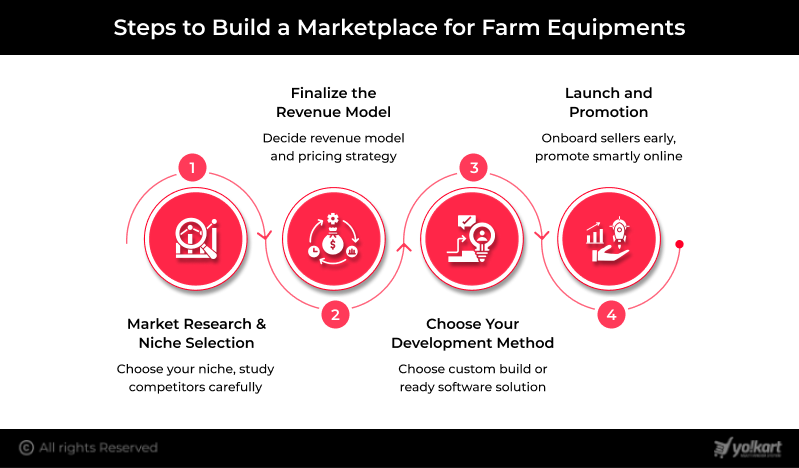
Building a farm equipment marketplace requires strategic planning, the right technology approach, and a strong go-to-market strategy. Each step plays a critical role in ensuring the platform is practical, scalable, and aligned with real agricultural needs.
Step 1: Market Research & Niche Selection
Before development begins, identify your specific entry point. The agricultural market is vast, so decide whether your marketplace will cater to large-scale commercial dealers, small-hold farmers looking for used machinery, or a rental-only niche.
Additionally, researching competitors helps you identify service gaps, such as a lack of verified inspection reports or poor logistics support in certain regions.
Step 2: Finalize the Revenue Model
Next, decide how your platform will generate revenue. Many successful marketplaces utilize a hybrid model, combining a base commission on every sale (e.g., 5%) with paid options such as featured listing for sellers who want more visibility. If you are targeting B2B manufacturers, a subscription-based plan for pro dealers and manufacturers is often the most lucrative approach, as it provides a stable and recurring income.
Step 3: Choose Your Development Method
At this stage, you must decide how the platform will be built. You have two primary paths:
- Custom Development: It includes building the marketplace from the ground up. This offers maximum flexibility but requires a massive budget and months of development.
- Readymade Marketplace Software: This method includes utilizing a specialized solution like Yo!Kart. This is the preferred route for most entrepreneurs because it provides a proven, secure infrastructure, including multi-vendor management and tax tools at a fraction of the cost and time.
Step 4: Launch and Promotion
Launching a marketplace requires solving the classic chicken-and-egg problem; you need sellers to attract buyers and vice versa. Hence, start by onboarding a few reputable local dealers to ensure you have inventory on day one. Promote the platform using targeted SEO, focusing on keywords like “used tractors for sale,“ and partner with agricultural influencers or local farming expos to build brand authority quickly.
Factors Affecting Cost to Develop a Farm Equipment Marketplace
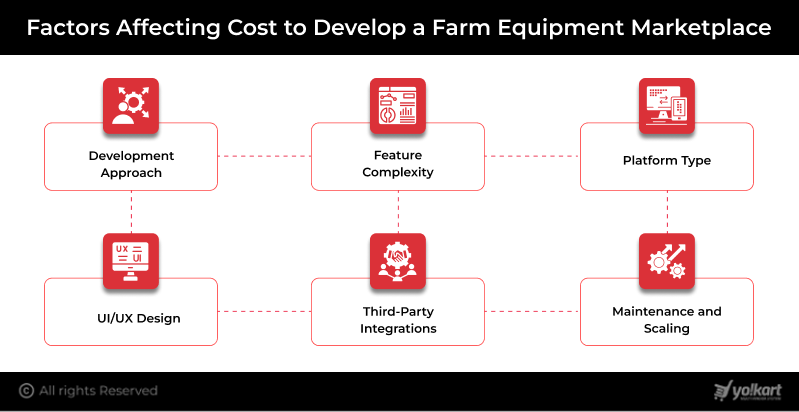
The cost to build a marketplace for farm equipment depends on several technical, functional, and operational factors. Understanding these cost drivers early helps you plan budgets realistically and choose a development approach that aligns with your long-term goals.
1. Development Approach
The choice between custom development and ready-made marketplace software significantly impacts costs. Custom-built platforms provide complete flexibility but require higher investment and longer development time. On the other hand, ready-made solutions like Yo!Kart reduces upfront costs and allows faster deployment, making it more budget-friendly for most businesses.
| Development Approach | Custom Development | Readymade Solution |
| Estimated Cost | $60,000 to $150,000+ | Packages starting from $999 |
| Timeline | 8 to 12+ months | 3 to 4 weeks (depending on customization) |
2. Feature Complexity
The more advanced the features, the higher the development cost. Features such as equipment rentals, financing options, analytics dashboards, multi-language support, and mobile apps add layers of complexity. Each additional feature requires design, development, and testing, which increases overall expenses.
3. Platform Type
Deciding whether to launch a web-only platform or a combination of web and mobile apps affects costs. Web-only platforms are cheaper and faster to build, while adding native mobile apps for Android and iOS increases both development and maintenance expenses.
4. UI/UX Design
A well-designed, user-friendly interface improves customer experience but can also add to development costs. Custom UI/UX designs, especially those optimized for rural users, low-bandwidth connections, and multi-language support, require more effort in design, testing, and iteration.
5. Third-Party Integrations
Integrating payment gateways, logistics APIs, ERP systems, or CRM platforms adds functionality but also increases costs. Each integration requires development, testing, and maintenance, which must be considered in the project budget.
6. Maintenance and Scaling
The cost does not end with development. Hosting, regular updates, security patches, and technical support are ongoing expenses. However, scalable platforms like Yo!Kart can reduce long-term costs by offering built-in scalability and regular updates, minimizing maintenance challenges.
How Yo!Kart Can Help You Build a Farm Equipment Marketplace
Yo!Kart is a powerful, ready-to-launch eCommerce marketplace software designed specifically for multi-vendor marketplaces. It is designed to help entrepreneurs and enterprises build scalable, feature-rich marketplaces without the complexity, risk, and cost of starting from scratch.
The platform is built with a marketplace-first architecture, not adapted from a single-vendor store. This makes it especially well-suited for complex ecosystems like farm equipment marketplaces, where multiple sellers, large-ticket products, rentals, and regional variations must co-exist smoothly.
By using Yo!Kart, businesses can significantly reduce time-to-market while retaining full ownership and control over their platform.
Why Choose Yo!Kart?
- 100% customizable source code: Yo!Kart comes with customizable source code, allowing you to tailor workflows, features, and integrations based on your specific agricultural business requirements.
- Multi-vendor-ready architecture: The solution is built to handle multiple vendors, categories, commissions, and order flows from day one, eliminating the need for heavy structural customization.
- Scalable and secure framework: Yo!Kart is designed to scale as your marketplace grows, supporting increasing traffic, vendors, and transactions while maintaining performance and security.
- Faster deployment compared to custom builds: Compared to custom development timelines of several months, Yo!Kart enables you to launch a production-ready marketplace in weeks.
- Dedicated support and upgrades: Backed by an experienced product team, Yo!Kart receives regular updates, security patches, and technical support, reducing long-term maintenance challenges.
Key Features of Yo!Kart for Farm Equipment Marketplaces
- Multi-vendor product management
- Commission and subscription models
- Advanced search and filtering
- Rental and used product support
- Secure payment integrations
- Mobile-friendly and responsive design
- Vendor dashboards and analytics
- SEO-optimized architecture
- Multi-language and multi-currency support
With Yo!Kart, entrepreneurs can focus on business growth while the technology backbone is already proven and optimized.
Explore How Yo!Kart Powers Multi-Vendor Marketplaces
Conclusion
The digital transformation of agriculture is no longer a future trend. It is reshaping how farmers access machinery, how vendors expand their reach, and how agri-businesses scale efficiently. Thus, building a farm equipment marketplace in today’s time presents a lucrative opportunity.
By choosing the right business model, incorporating essential features, and leveraging reliable eCommerce marketplace software like Yo!Kart, you can significantly reduce development risks and accelerate your go-to-market strategy.