
Published Date 29th Dec 2025
Germany is one of the most powerful and mature eCommerce markets in Europe, driven by high internet penetration, strong consumer trust in digital payments, and a rapidly growing preference for marketplace-based shopping. As per a report by Grand View Research, Germany’s eCommerce market is projected to cross €2,352.6 million by 2030, with multi-vendor eCommerce marketplaces contributing more than half of online retail transactions. German consumers increasingly prefer platforms that offer variety, price transparency, and trusted sellers, all hallmarks of marketplace business models.
From global giants like Amazon to niche platforms catering to fashion, automotive parts, electronics, and B2B procurement, marketplaces dominate Germany’s digital commerce ecosystem. This shift presents a massive opportunity for entrepreneurs, startups, and established enterprises to launch their own eCommerce marketplace software-powered platforms and capture market share in high-demand verticals.
However, the success of any marketplace hinges on one critical decision: choosing the right multi-vendor marketplace software. The right solution can accelerate time-to-market, simplify vendor onboarding, ensure regulatory compliance, and support long-term scalability.
This blog explores what multi-vendor marketplace software is, its key benefits, and the top 10 multi-vendor marketplace software solutions in Germany for 2026, with an in-depth look at their features, strengths, and ideal use cases to help you make an informed, future-ready decision.
Table of Contents
What is a Multi-Vendor Marketplace Software?
A multi-vendor marketplace software is a purpose-built solution that enables multiple independent sellers to register, manage, and sell their products or services through a single, unified online marketplace. Unlike traditional single-seller eCommerce stores, multi-vendor marketplaces act as digital intermediaries, connecting buyers and sellers while handling transactions, commissions, and overall platform governance.
At its core, a multi-vendor eCommerce marketplace typically includes:
- A centralized admin panel to manage vendors, commissions, content, and marketplace rules.
- Dedicated vendor dashboards for sellers to manage products, inventory, pricing, orders, and payouts.
- Customer-facing storefronts with advanced search, filters, reviews, and secure checkout experiences.
- Integrated payment and commission systems that automatically split earnings between vendors and marketplace owner/s.
Modern marketplace software goes far beyond basic selling functionality. It incorporates analytics, automation, multilingual support, mobile responsiveness, and integrations with third-party logistics, payment gateways, and marketing tools. These capabilities are crucial for operating in Germany’s highly regulated and competitive digital market.
Benefits of Multi-Vendor Marketplace Software
Launching a marketplace using readymade multi-vendor marketplace software offers several strategic and operational advantages, particularly for entrepreneurs, startups, and growing businesses looking to enter the market efficiently:
1. Faster Marketplace Launch
Pre-built marketplace solutions significantly reduce development time. Instead of spending months building vendor management, order flows, and payment logic from scratch, businesses can launch within weeks using proven, market-tested systems.
2. Lower Initial Investment
Building a custom marketplace from the ground up can cost tens or hundreds of thousands of euros. In contrast, multi-vendor marketplace software stands out as a cost-effective alternative, offering enterprise-level functionality at a fraction of the cost.
3. Simplified Vendor Onboarding
Modern solutions are designed to make vendor onboarding seamless. Automated vendor registration, approval workflows, and self-service dashboards allow sellers to get started quickly, enabling marketplace owners to scale their vendor base without increasing operational complexity.
4. Scalable Business Model
As your marketplace grows, the software scales alongside it. Whether you are adding more vendors, products, traffic, and transactions, the solution supports growth without the need for a complete rebuild or major system changes.
5. Focus on Growth, Not Operations
With vendors managing inventory, fulfillment, and product listings, marketplace owners can shift their focus to higher-impact activities, such as marketing, user experience, partnerships, and revenue optimization.
Top 10 Multi-Vendor Marketplace Software in Germany
Choosing the right multi-vendor marketplace software is a critical step for any business looking to succeed in Germany’s competitive eCommerce landscape. With strict regulatory requirements, high customer expectations, and strong competition across both B2C and B2B segments, the solution you choose must deliver reliability, scalability, and long-term control. Below are the top multi-vendor marketplace software solutions in Germany for 2026:
1. Yo!Kart
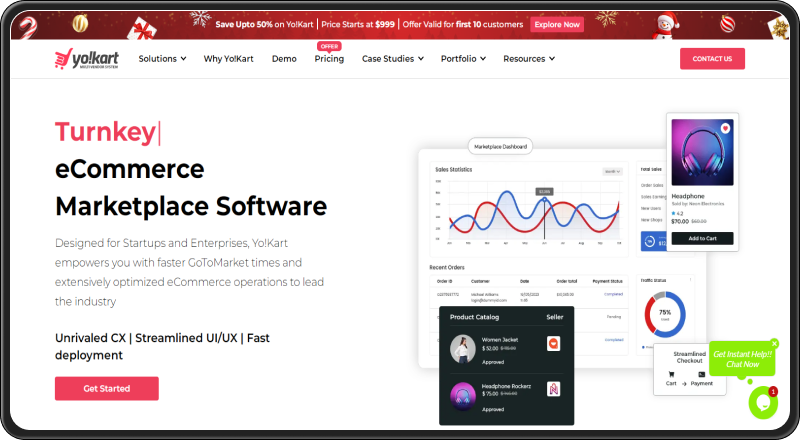
Yo!Kart ranks at the top due to its purpose-built multi-vendor marketplace architecture, extensive feature set, and flexibility for both startups and large enterprises. Unlike plugin-based solutions, Yo!Kart is a fully dedicated multi-vendor eCommerce marketplace software. This means all core marketplace features are available, without heavy reliance on third-party extensions.
Yo!Kart offers complete ownership through a self-hosted, lifetime license model, giving businesses full ownership of their marketplace and complete control over data. This approach makes it appealing for German businesses that prioritize data privacy, regulatory compliance, and long-term cost efficiency.
Key Features:
- Advanced vendor management with individual seller dashboards
- Flexible commission management at global, category, or vendor levels
- Built-in multilingual and multicurrency support
- GDPR-friendly architecture suitable for EU regulations
- Native mobile apps for buyers and sellers
- Integrated marketing tools, including abandoned cart recovery and coupons
- Scalable architecture supporting B2C, B2B, and niche marketplaces models
Ideal For:
Startups, SMEs, and enterprises seeking a fully customizable, scalable, and cost-effective multi-vendor eCommerce marketplace with long-term ownership and control.
Explore Cutting Edge Capabilities of Yo!Kart
2. CS-Cart Multi-Vendor
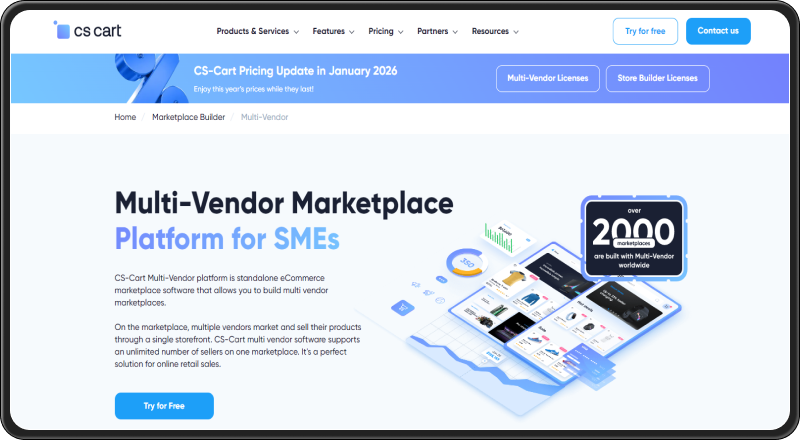
CS-Cart Multi-Vendor is a well-established marketplace solution known for its flexibility, extensibility, and modular design. It provides a solid foundation for marketplaces that require advanced customization, complex vendor rules, and operational control.
Its plugin-based architecture allows marketplace owners to add features as the business grows, making it suitable for evolving marketplace models.
Key Features:
- Powerful admin control panel
- Vendor storefront customization
- Multi-language and multi-currency support
- Extensive add-on marketplace
- Built-in SEO and marketing tools
Limitations:
- Advanced customizations often require developer involvement
- Feature expansion through add-ons can increase overall costs over time
3. Sharetribe
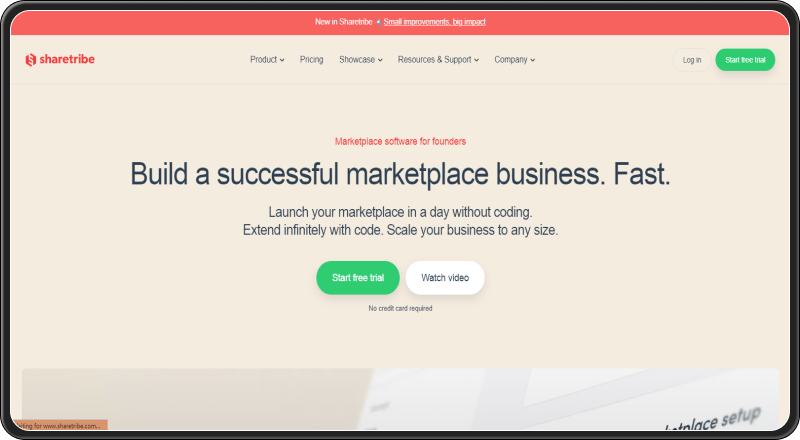
Sharetribe is a SaaS-based marketplace solution designed for speed and simplicity. It enables entrepreneurs to launch a functional marketplace with minimal technical involvement, making it ideal for testing ideas and validating business concepts.
While it offers limited customizability compared to self-hosted platforms, Sharetribe stands out for its ease of use and fast deployment.
Key Features:
- No-code marketplace builder
- Integrated payment and escrow systems
- Supports product, service, and rental marketplaces
- Clean, responsive user interface
Limitations to Consider:
- Limited flexibility for complex or highly customized marketplace workflows
- Ongoing subscription costs may impact long-term scalability
4. Arcadier
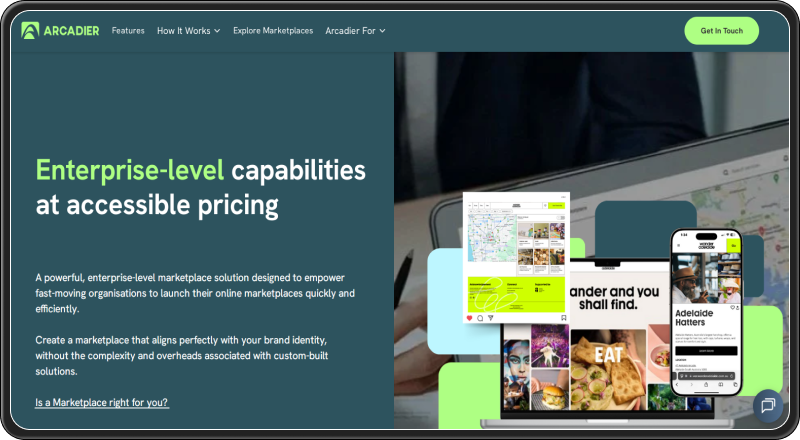
Arcadier is a cloud-based multi-vendor marketplace software that enables businesses to launch product, service, or booking marketplaces without heavy technical involvement. Its SaaS model ensures quick deployment, automatic updates, and secure hosting.
With API access and plugin support, Arcadier allows moderate customization while maintaining ease of use. It also includes built-in tools for vendor subscriptions, analytics, and global payments.
Key Features:
- Multiple marketplace types supported
- Vendor subscription plans
- Automated tax and shipping tools
- Built-in analytics
Limitations:
- Customization depth may be insufficient for highly specialized marketplace requirements
- SaaS-based pricing can scale upward as transaction volume grows
5. WooCommerce + Dokan
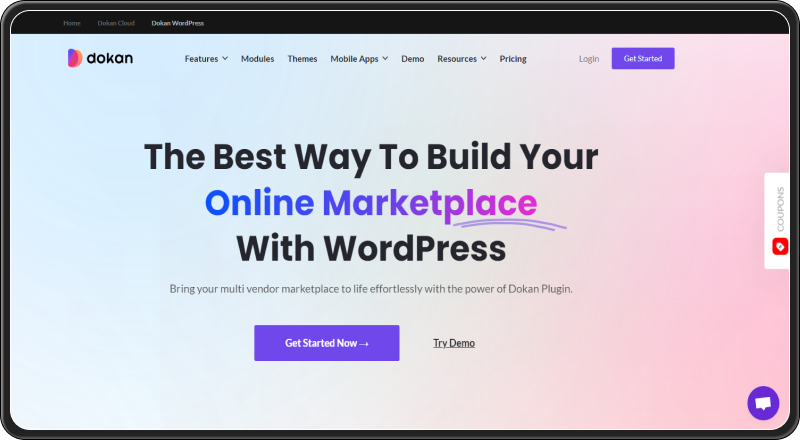
Dokan extends WooCommerce to create a functional multi-vendor eCommerce marketplace within the WordPress ecosystem. It allows vendors to manage their own storefronts, products, and orders from a front-end dashboard.
While highly customizable through plugins and themes, performance and scalability depend on hosting quality and optimization. However, it’s a popular choice due to its affordability and familiarity.
Key Features:
- Vendor storefronts and dashboards
- Commission and withdrawal management
- Extensive WordPress plugin ecosystem
Limitations to Consider:
- Performance may degrade at scale without advanced hosting and optimization
- Managing multiple plugins can increase maintenance complexity
6. Shopify + Marketplace Apps
Shopify enables multi-vendor functionality through third-party marketplace apps that handle vendor onboarding, commissions, and payouts. It offers reliable hosting, security, and an intuitive interface, making it easy to manage daily operations.
However, advanced marketplace features rely on apps, which may increase recurring costs. Customization is more limited compared to self-hosted solutions.
Key Features:
- Reliable hosting and security
- App-based vendor management
- Easy store setup and maintenance
Limitations to Consider:
- Reliance on third-party apps can increase recurring costs
- Marketplace flexibility is constrained by Shopify’s core platform limitations
7. Webkul Multi-Vendor Solutions
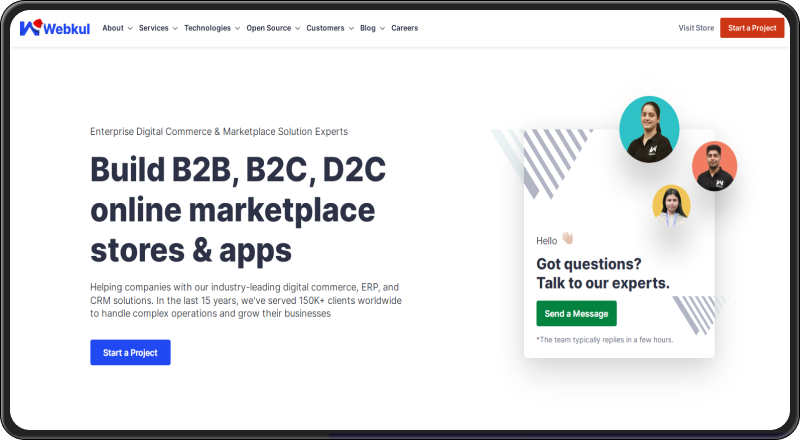
Webkul provides multi-vendor extensions for popular platforms such as Magento, WooCommerce, and Shopify. These solutions allow businesses to add marketplace functionality without requiring a complete platform rebuild.
Webkul’s modules support vendor management, commissions, and custom workflows. The flexibility depends on the base platform and selected extensions.
Key Features:
- Modular multi-vendor extensions
- Supports multiple eCommerce platforms
- Custom vendor workflows
Limitations to Consider:
- Marketplace performance and scalability vary by base platform
- Managing multiple extensions can add technical overhead
8. Marketplacer
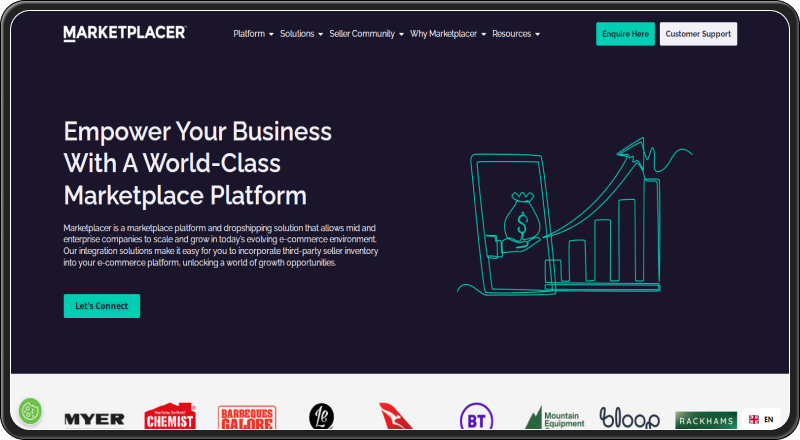
Marketplacer is a SaaS marketplace solution designed for large retailers and brands. It supports complex product catalogs, large vendor networks, and multi-region operations.
The solution integrates seamlessly with ERP, payment, and logistics systems. Marketplacer focuses on performance, scalability, and operational efficiency.
Key Features:
- Enterprise-level scalability
- Advanced vendor onboarding workflows
- Integration with ERP and logistics systems
Limitations to Consider:
- Higher cost structure compared to SMB-focused solutions
- Longer onboarding and implementation timelines
9. Mirakl
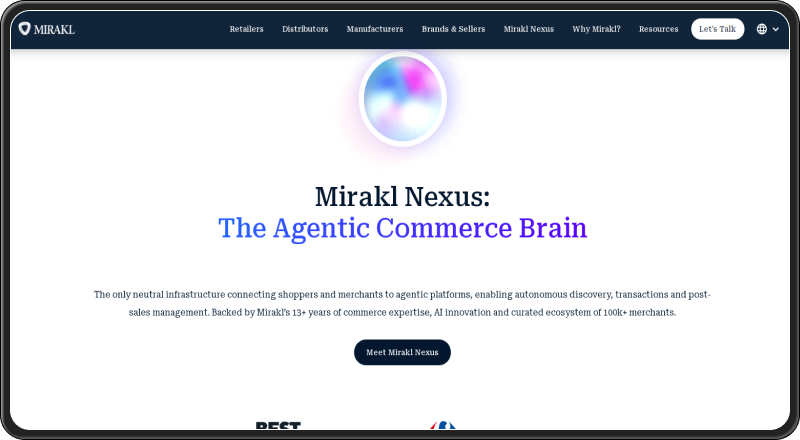
Mirakl is a leading enterprise marketplace solution trusted by global brands and retailers. It offers advanced tools for vendor onboarding, catalog management, and order orchestration. With strong APIs and compliance capabilities, Mirakl supports complex B2C and B2B marketplace models.
Additionally, it is built to handle large-scale operations with high transaction volumes.
Key Features:
- B2B and B2C marketplace support
- Advanced APIs and integrations
- Strong compliance and security
Limitations to Consider:
- High implementation and licensing costs
- Requires significant operational and technical resources
Want to Build a High-Performance Enterprise Marketplace?
10. Spree Commerce
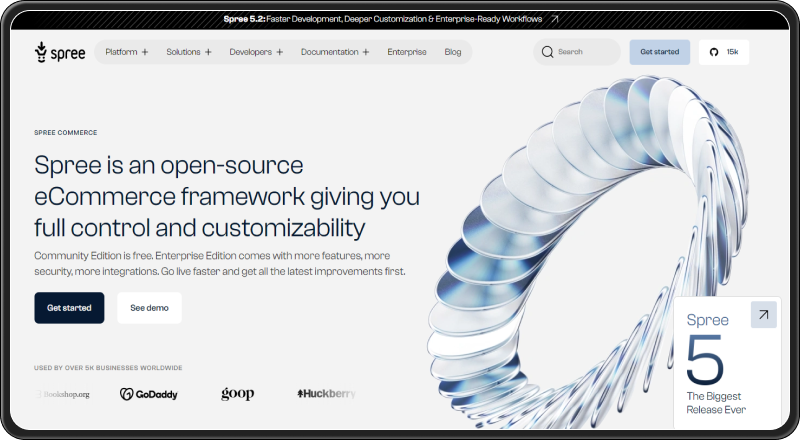
Spree Commerce is an open-source, API-first eCommerce solution that can be customized into a multi-vendor marketplace with development effort. Its headless architecture allows businesses to build highly flexible and modern marketplace experiences.
While not marketplace-ready, it provides full control over functionality and integrations. Spree is ideal for custom, long-term marketplace projects.
Key Features:
- Headless commerce architecture
- Open-source customization
- Strong developer community
Limitations to Consider:
- Not marketplace-ready
- Requires experienced development teams for implementation and maintenance
Suggested Read: Top 20 Multi-vendor eCommerce Marketplace Platforms
Conclusion
The German marketplace landscape in 2026 is dynamic, highly competitive, and rewarding for those who invest in the right technology. While giants like Adobe Commerce and Mirakl serve the high-end enterprise segment, solutions like Yo!Kart has emerged as a practical middle ground for modern entrepreneurs. By offering a one-time cost, full ownership, and GDPR-compliant features, it provides the stability and scalability required to succeed in the strict but lucrative German market.
However, success in this space is not defined by the number of products listed but by the quality of the experience delivered. German consumers and businesses expect secure transactions, fast performance, and localized experiences they can trust. Whether you are building a niche B2B platform for industrial parts or a hyperlocal B2C marketplace for artisanal German goods, your software choice will shape your growth, resilience, and long-term success.
FAQs
Q 1. What is the difference between a multi-vendor marketplace and a regular eCommerce store?
Ans. A regular eCommerce store sells products from a single seller, while a multi-vendor marketplace allows multiple independent sellers to list and sell their products on one platform. The marketplace owner earns revenue through commissions, subscriptions, or listing fees rather than managing inventory directly.
Q 2. Is multi-vendor marketplace software suitable for startups in Germany?
Ans. Yes, many multi-vendor marketplace software solutions are designed specifically for startups. Solutions like Yo!Kart, Sharetribe, and Arcadier allow entrepreneurs to launch quickly, reduce development costs, and scale gradually while remaining compliant with EU regulations such as GDPR.
Q 3. How do marketplace owners make money using multi-vendor eCommerce marketplaces?
Ans. Marketplace owners generate revenue through various channels, it includes:
- Vendor commissions
- Subscription plans
- Featured listings
- Advertising and transaction fees.
Some platforms also support hybrid monetization models for greater flexibility.
Q 4. What features should I prioritize when choosing multi-vendor marketplace software?
Ans. While selecting a marketplace software, you should look for features, such as:
- Vendor management
- Commission handling
- Secure payment gateways
- Scalability
- Multilingual support
- GDPR compliance
- Analytics.
For long-term growth, customization options and integration capabilities are equally important.
Q 5. Can I build a B2B marketplace using multi-vendor marketplace software?
Ans. Yes, you can build a multi-vendor eCommerce marketplace using readymade software solutions. They support both B2C and B2B models and come integrated with features such as bulk pricing, vendor-specific catalogs, quote requests, and restricted access make them suitable for B2B marketplaces.
Q 6. Which multi-vendor marketplace software is best for scalability?
Ans. Self-hosted and enterprise-focused solutions like Yo!Kart, CS-Cart, Mirakl, and Marketplacer are well-suited for scalability. They provide greater control over infrastructure, performance optimization, and customization as vendor count, traffic, and transaction volume increase.
Q 7. Can I migrate my existing eCommerce store into a multi-vendor marketplace?
Ans. Yes, many solutions support migration or extension-based conversion. Solutions like Webkul, Dokan, and Shopify marketplace apps allow businesses to add multi-vendor functionality to existing stores without starting from scratch.
Q 8. How long does it take to launch a multi-vendor marketplace?
Ans. Launch timelines vary depending on the solution you select. SaaS-based solutions can go live in a few days or weeks, but offer limited flexibility. Self-hosted solutions also take a few weeks and offer customization, integrations, and optimization, resulting in a more robust, scalable, and future-ready marketplace.
Want to Build Your Own Multi-Vendor Marketplace?
Get StartedPopular Posts