

Published date 19th Dec 2025
The United Kingdom stands as one of the world’s most mature and competitive eCommerce markets. As we move into 2026, the digital retail landscape continues to scale, driven by the rapid adoption of technology and consumer demand for choice. With online sales projected to capture over 30% of all UK retail spending, the number of retail users of eCommerce in the United Kingdom is forecast to increase to 62.6 million by 2030 (Statista).
However, the success in modern digital commerce depends on more than just market demand. Choosing the right marketplace platform that offers the necessary blend of scalability, feature depth, and, critically, business ownership is a critical decision. Thus, the following analysis details the top 10 platforms, from fully owned solutions to major third-party channels, that define success in the UK’s multi-vendor ecosystem.
Table of Contents
What is an eCommerce Marketplace Platform?
An eCommerce marketplace platform is a digital infrastructure where a central operator (admin/s, marketplace owner) hosts and facilitates sales transactions between multiple independent third-party sellers (vendors) and customers.
The marketplace operator typically earns revenue through commissions, subscription fees, or advertising. This model allows the marketplace to scale product inventory and diversity without the associated risks and costs of inventory management. In this setup, the marketplace itself serves as the trusted brand and technological backbone that coordinates sellers, transactions, and order fulfillment.
Top 10 eCommerce Marketplace Platforms in the UK (2026)
As the UK’s digital commerce ecosystem continues to evolve in 2026, businesses have access to a wide range of marketplace platforms designed to support different ownership models, technical capabilities, and growth strategies. The following list highlights the top 10 eCommerce marketplace platforms in the UK, to help entrepreneurs and businesses identify the right foundation for launching or expanding a multi-vendor marketplace. Let’s begin:
1. Yo!Kart
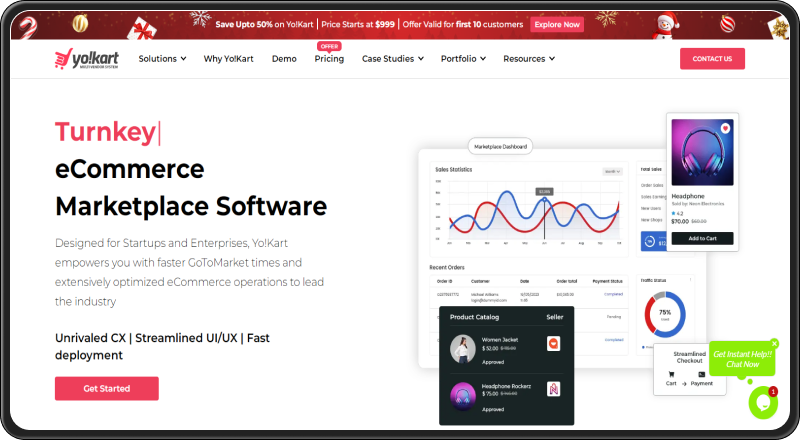
Yo!Kart is a purpose-built, independent multi-vendor marketplace solution that stands out for its unique one-time license model. It offers the marketplace operator customizable source code, proprietary control over hosting, full code customization, and scalability. It is a highly secure, ready-made solution engineered to handle complex multi-vendor operations, including automated commission splitting, separate seller storefronts, and integrated payment processing via trusted gateways like Stripe Connect. Other than that, Yo!Kart also offers Progressive Web App (PWA) compliance and separate, ready-to-launch customer and seller native mobile apps, positioning it as a strategic, scalable asset for entrepreneurs seeking maximum long-term profitability.
Pros
- Offers full ownership with no recurring transaction fees, allowing marketplace owners to retain complete control over revenue and data
- Purpose-built for multi-vendor marketplaces, handling commissions, vendor management, and payouts without heavy third-party dependencies
- Includes PWA support and dedicated mobile apps for buyers and sellers, enabling a strong mobile-first experience
- Highly customizable architecture that supports niche, B2B, and vertical marketplace requirements
- Implements robust security measures to protect transactions, user data, and platform integrity
- Provides dedicated post-launch support and technical assistance to ensure smooth operations and ongoing platform stability
Cons
- Requires technical hosting knowledge or a managed hosting partner for server setup and maintenance
Get a One-on-One Demo of Yo!Kart
2. CS-Cart Multi-Vendor
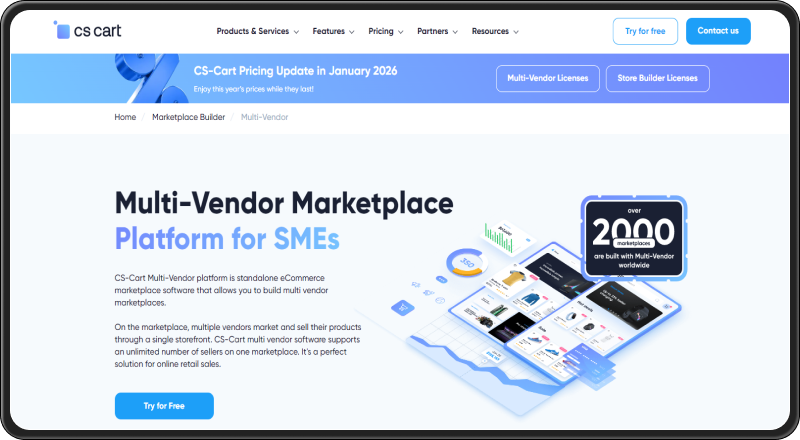
CS-Cart is a mature, self-hosted, licensed marketplace software known for its robust feature set and deep customization capabilities. Operating on a one-time purchase model for its core license, it provides multi-level admin control and personalized storefronts for each seller. Moreover, it has built-in features like a flexible promotion system and advanced seller payout distribution using Stripe Connect. Its foundation is a feature-rich shopping cart platform, making it a powerful solution for mid-size businesses.
Pros
- Self-hosted platform with access to customizable source code for customization
- Built-in marketplace features reduce initial setup work
- Supports vendor storefronts and commission management
Cons
- Ongoing payments required for updates and security maintenance
- Interface complexity can slow down onboarding for non-technical teams
- Customization often requires experienced developers
3. Adobe Commerce (Magento) + Extensions
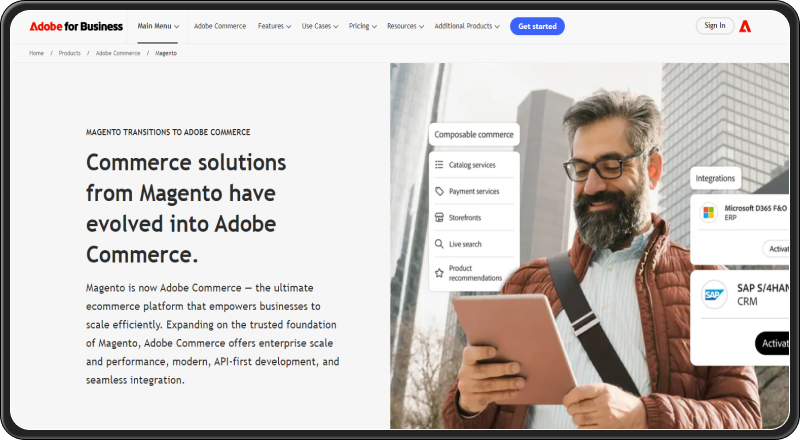
Adobe Commerce (formerly Magento) is a highly powerful, open-source PHP platform renowned for its ultimate flexibility, designed for enterprise-grade operations. It does not natively support multi-vendor functionality but requires robust third-party extensions, such as from Webkul or CedCommerce, to transform it into a marketplace. The platform’s modular architecture allows for virtual development and integration with existing enterprise systems.
Pros
- Extremely flexible and capable of handling complex enterprise commerce logic
- Suitable for large catalogs and advanced B2B pricing structures
- Integrates well with enterprise-grade systems
Cons
- Marketplace functionality depends heavily on third-party extensions
- High development, hosting, and maintenance costs
- Longer time-to-market due to complexity
4. Dokan (for WooCommerce)

Dokan is the most popular plugin that converts any self-hosted WordPress/WooCommerce site into a fully functional multi-vendor marketplace. It leverages the massive, flexible, and cost-effective open-source ecosystem of WordPress, making it highly accessible for startups with existing WP knowledge. Dokan provides a user-friendly frontend dashboard for sellers to manage products and orders easily.
Pros
- Quick way to convert a WooCommerce store into a marketplace
- Benefits from the large WordPress plugin ecosystem
- Easy for vendors to use through frontend dashboards
Cons
- Performance and stability depend on plugin compatibility
- Not ideal for complex or high-volume marketplaces
- Ongoing plugin updates increase operational overhead
5. Bagisto (Laravel)
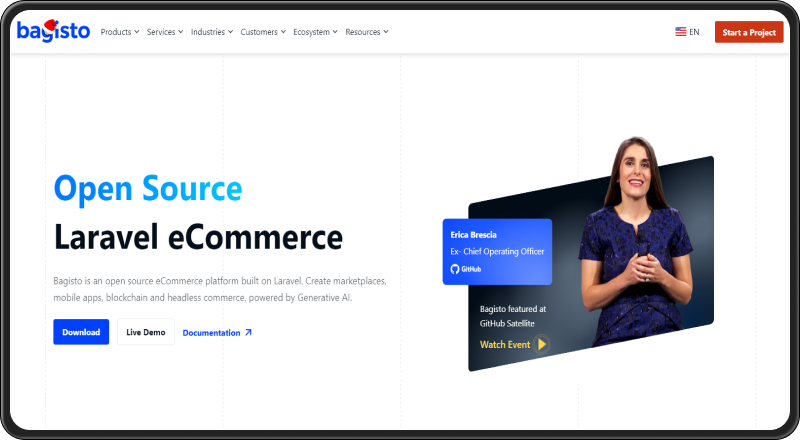
Bagisto is a modern, open-source eCommerce framework built on the highly regarded PHP Laravel stack, offering a complete multi-vendor solution with full code access. Developed by Webkul, it’s praised for its clean, developer-friendly architecture, native headless commerce capabilities, and its ability to easily manage multi-channel inventories and complex products. Bagisto provides a strong foundation for businesses that require a fully code-driven solution for seamless replication across various channels.
Pros
- Built on a modern framework with a clean, developer-friendly structure
- Supports headless and multi-channel commerce use cases
Cons
- Requires specialized Laravel development expertise
- Smaller ecosystem and fewer ready-made integrations
6. Mirakl

Mirakl is the global leader in enterprise-grade SaaS marketplace technology, specifically aimed at large retailers and corporate entities looking to launch a highly sophisticated marketplace as a new channel. It is an API-first solution built for true enterprise scalability, effortlessly handling millions of products and integrating seamlessly with major corporate systems, such as ERP, CRM.
Pros
- Enterprise-grade SaaS platform trusted by major global retailers
- Strong vendor onboarding, compliance, and product data management tools
Cons
- High setup and ongoing subscription costs
- Limited flexibility due to proprietary SaaS structure
- Long-term dependency on vendor roadmap and pricing
7. Sharetribe
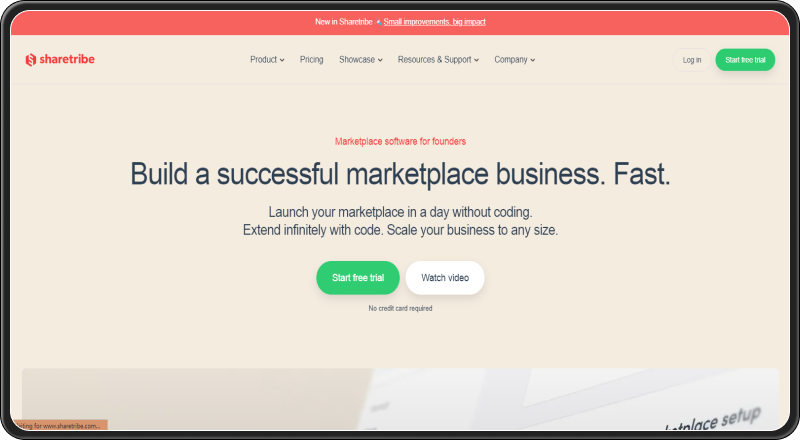
Sharetribe Flex is an API-first (headless) SaaS platform specialized in launching service, rental, or booking marketplaces. Its core logic is optimized for non-standard, time-based transactions, which is crucial for peer-to-peer rentals and local booking concepts. The platform provides a powerful backend API and managed infrastructure, reducing technical overhead while offering flexibility for developers to build a unique user experience.
Pros
- An API-first, headless approach enables customized user experiences
- Managed infrastructure reduces backend complexity
Cons
- Monthly subscription fees increase long-term operating costs
- Requires development resources to build and maintain the frontend
- Not suited for traditional product-based marketplaces
8. Shopify with Multivendor Apps
Shopify is a leading SaaS platform for single-vendor stores that can be adapted into a multi-vendor marketplace using popular third-party apps, such as Webkul and Marketcube. It provides unmatched ease of use, rock-solid hosting, and a high-performance, trusted checkout experience. This approach allows for a quick pilot launch and leverages Shopify’s vast app ecosystem, making it an appealing option for non-technical users looking for minimal initial coding.
Pros
- Reliable hosting and optimized checkout experience
- Large app ecosystem for marketing, logistics, and payments
Cons
- Marketplace features rely heavily on third-party apps
- Multiple subscriptions and transaction fees can add up
- Limited flexibility for deep marketplace customization
9. VTEX Commerce Platform
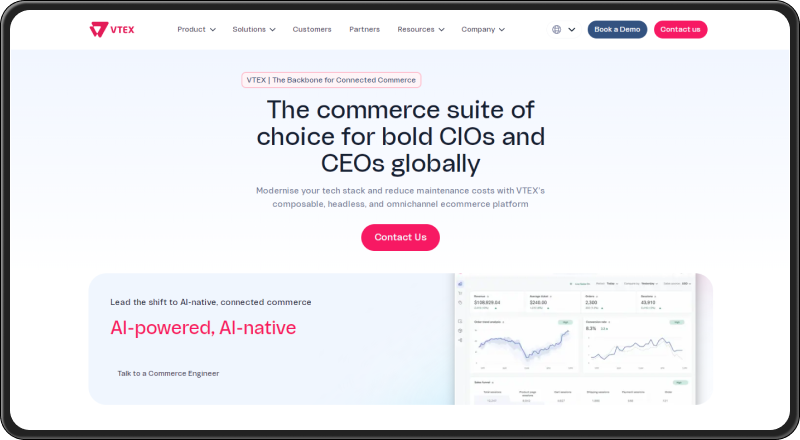
VTEX is an enterprise-grade, API-first, and composable SaaS marketplace provider focused on supporting global B2C and B2B sales with advanced, cloud-native solutions for large retailers. Its architecture is multi-tenant and built for elasticity, offering native marketplace functionalities, strong Distributed Order Management (DOM), and the ability to integrate external and VTEX-hosted sellers via its Seller Portal.
Pros
- Native marketplace and order management capabilities
- Supports global B2C and B2B operations across regions
Cons
- High cost structure tailored for large enterprises
- Requires specialized development and implementation teams
- Not suitable for small or early-stage businesses
10. Spryker Cloud Commerce OS

Spryker is an API-driven, modular, and headless platform positioned as a Commerce-as-a-Service (PaaS+) solution, designed for enterprise flexibility and development of B2C, B2B, or multi-vendor use cases. It empowers operators to combine best-of-breed systems (composability) through a sophisticated App Composition Platform.
Pros
- Modular, headless architecture provides maximum flexibility
- Supports complex B2B and B2C marketplace use cases
Cons
- Not a ready-to-use marketplace solution
- Requires strong technical maturity and in-house development teams
- High implementation and ongoing costs
Looking for a eCommerce Marketplace Platform That Scales with Your Business?
How to Choose the Right eCommerce Marketplace Platform
The selection of a eCommerce marketplace platform is a foundational business decision, not merely a technical one. The platform you select will directly influence your operating costs, revenue potential, and how easily your marketplace can evolve as your business grows. Making the right choice early can save time, money, and costly platform changes later.
1. Ownership and Control
Ownership plays a critical role in long-term profitability. Platforms that restrict access to customizable source code or impose transaction fees can limit flexibility and reduce margins over time. Choosing a solution that allows full control over branding, data, and platform customization ensures your marketplace evolves according to your business goals.
2. Long-Term Platform Costs
The true cost of a marketplace platform goes beyond initial pricing. Subscription-based platforms may appear affordable at launch, but often introduce recurring charges, transaction fees, and feature-based upgrades.
3. Assess Feature-Set
A eCommerce marketplace platform should include essential features such as vendor dashboards, commission management, order splitting, secure payments, and dispute handling from the start.
4. Customization and Scalability
Every marketplace has unique needs shaped by its niche, region, and monetization approach. Platforms with open, modular architectures support easy customization, while built-in scalability ensures the system can handle growing vendors, products, and transactions without major rework or performance issues.
5. Time-to-Market
A ready-made marketplace solution allows faster launch and quicker validation, while custom development may delay entry and increase risk. Balancing speed with flexibility is key to building momentum without sacrificing future control.
6. Support and Technical Dependence
Post-launch support and technical assistance are crucial for smooth operations. Platforms that provide dedicated post-launch support reduce operational friction, especially for businesses without large in-house technical teams.
By aligning your business objectives with ownership, cost structure, feature depth, and operational readiness, you can confidently choose an eCommerce marketplace platform that supports sustainable growth and positions your business for long-term success.
Why Yo!Kart is the Best Choice?
For entrepreneurs and enterprises planning to launch a serious marketplace in the UK, Yo!Kart stands out as a business-first solution rather than just a technology stack. It is designed to help marketplace owners build a controlled, monetizable, and future-ready platform without being constrained by third-party dependencies or rigid SaaS limitations. Mentioned below are some of the additional advantages offered by Yo!Kart:
- Financial Advantage & Ownership: The key differentiator of Yo!Kart is its one-time, non-recurring license fee with customizable source code ownership. This model instantly removes the burden of recurring transaction fees (which can be 5-15% of revenue on other platforms), ensuring profit margins increase.
- Speed to Market: The ready-made nature of the solution allows the operator to launch a fully-featured, branded marketplace quickly. This enables immediate market validation and revenue generation.
- Built for Multi-Revenue Monetization: Beyond standard commissions, Yo!Kart supports diverse monetization strategies such as vendor subscriptions, featured listings, advertising placements, and promotional packages. This flexibility allows marketplace owners to diversify revenue streams and avoid over-reliance on a single income model.
- Comprehensive Toolset: It integrates all the necessary operational features natively, including geo-location-based search (essential for local fulfillment in the UK), an integrated payout system for automated vendor payments, and flexible advertising modules to establish multiple monetization streams beyond commissions. These features are built in, avoiding the compatibility issues of relying on numerous third-party plugins.
- Optimized for Local and Regional Marketplaces: Yo!Kart is well-suited for UK-focused marketplaces that require location-aware discovery, region-specific seller onboarding, and localized fulfillment workflows. This makes it effective for niche, vertical, and regional marketplace concepts targeting UK buyers and sellers.
- Dedicated Mobile Apps for Buyers and Sellers: Yo!Kart includes separate native mobile applications for customers and sellers, enabling marketplace owners to deliver a seamless mobile-first experience. These apps improve engagement, simplify vendor management on the go, and help capture the growing share of mobile commerce in the UK.
By choosing a dedicated, licensed platform like Yo!Kart, UK entrepreneurs are not just simply launching a marketplace, but they are acquiring a proprietary, scalable business asset with full control over revenue, branding, and strategic direction.
Ready to Launch Your Marketplace in the UK?
Conclusion
The UK’s eCommerce landscape in 2026 offers significant opportunities and unparalleled rewards for those who choose their technological foundation wisely. While building the marketplace from the ground up provides control, the future of profitable, sustainable eCommerce belongs to platforms that grant flexibility and ownership.
Selecting a powerful, dedicated eCommerce marketplace platform that offers customizable source code and eliminates transaction fees, such as Yo!Kart is the highest long-term ROI decision. It ensures that as your marketplace scales and matures, your profits remain your own, securing your brand’s position as a sustainable, valuable digital asset in the fiercely competitive UK market.
Ready to Create a Future-Proof eCommerce Marketplace?
Get In TouchPopular Posts