

Published Date 06th Jun, 2026
The global eCommerce industry continues to experience significant growth, creating lucrative opportunities for entrepreneurs and small businesses to establish profitable online ventures. Instead of building a traditional online store that sells products from a single seller, many entrepreneurs are now launching multi-vendor marketplaces where multiple vendors can sell through a single platform.
Popular marketplaces such as Amazon, Etsy, and eBay have demonstrated the potential of the marketplace business model. However, building a marketplace from scratch often requires substantial investment, lengthy development timelines, and ongoing technical resources, making it challenging for small businesses and startups.
This is where multi-vendor eCommerce software comes into play. These solutions provide ready-made tools and features needed to launch and manage an online marketplace efficiently.
But with a wide range of marketplace platforms available today, selecting the right solution can be difficult. This guide explores the key factors small businesses should consider when evaluating multi-vendor eCommerce software and compares some of the leading marketplace solutions available in the market.
Table of Contents
- What is Multi-Vendor eCommerce Software?
- Why Small Businesses Need Multi-Vendor Marketplace Software
- Key Features Small Businesses Should Look For In Marketplace Software
- Best Multi-Vendor eCommerce Software for Small Businesses
- How to Choose the Right Multi-Vendor Software
- Why Yo!Kart Stands Out for Small Businesses
- Conclusion
- Frequently Asked Questions (FAQs)
What is Multi-Vendor eCommerce Software?
Multi-vendor eCommerce software is a platform that enables multiple sellers to register, list products, manage inventory, and process orders through a centralized online marketplace. It provides the infrastructure needed for vendors to register, list products, manage inventory, process orders, and interact with customers, while allowing marketplace owners to oversee operations from a centralized dashboard.
Unlike traditional eCommerce platforms that serve a single store owner, multi-vendor software is designed to facilitate transactions between multiple buyers and sellers while streamlining marketplace management.
Key Features of Multi-Vendor eCommerce Software include:
- Vendor registration and management
- Product catalog management
- Commission management
- Order tracking
- Payment processing
- Vendor payouts
- Customer reviews and ratings
- Marketplace analytics
These features help marketplace operators manage vendors while providing a seamless shopping experience for customers.
Why Small Businesses Need Multi-Vendor Marketplace Software?
Building a successful online marketplace involves much more than creating a website. Marketplace owners must manage vendor onboarding, product listings, payments, commissions, customer interactions, and ongoing platform maintenance. For small businesses and startups, developing all these capabilities from scratch can be expensive and time-consuming.
Multi-vendor marketplace software provides a ready-made foundation that allows entrepreneurs to focus on growing their business rather than dealing with complex technical challenges.
Here are some of the key benefits:
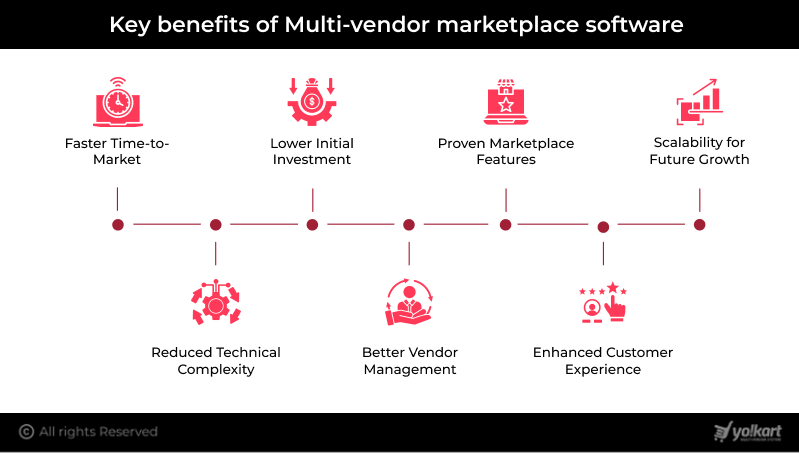
- Faster Time-to-Market
Developing a marketplace from scratch can take several months or even years, depending on the project’s complexity. In contrast, ready-made marketplace software significantly reduces development time, enabling businesses to launch within weeks and start attracting vendors and customers sooner.
- Lower Initial Investment
Custom marketplace development often requires substantial spending on developers, designers, testing, and infrastructure. By leveraging a pre-built solution, small businesses can minimize upfront costs and allocate more resources toward growth-focused activities such as marketing and vendor acquisition.
- Proven Marketplace Features
Established marketplace software comes equipped with essential features that have already been tested and refined across multiple businesses. This reduces the risk of technical issues and ensures a smoother experience for both vendors and customers.
- Scalability for Future Growth
As your marketplace grows, you may need to accommodate more vendors, products, transactions, and customers. A scalable multi-vendor platform allows businesses to expand without having to rebuild their entire system, saving both time and money in the long run.
- Reduced Technical Complexity
Managing software development, updates, bug fixes, and security can divert attention from core business activities. With a dedicated marketplace solution, entrepreneurs can focus on vendor acquisition, customer engagement, and revenue generation instead of technical maintenance.
- Better Vendor Management
Effective vendor management is essential to marketplace success. A good multi-vendor platform provides tools for onboarding, monitoring, and supporting vendors. Features such as vendor dashboards, performance tracking, and communication tools help marketplace owners maintain quality standards while simplifying operations.
- Enhanced Customer Experience
Modern marketplace software includes features designed to improve the shopping experience, such as advanced search filters, product reviews, secure checkout processes, and order tracking. These capabilities help build trust and encourage repeat purchases.
By choosing the right multi-vendor marketplace software, small businesses can accelerate their launch, reduce operational challenges, and establish a strong foundation for long-term marketplace growth.
Leverage Ready-Made Marketplace Software Designed for Your Businesses
Key Features Small Businesses Should Look For In Marketplace Software
Not all multi-vendor marketplace solutions offer the same level of functionality. While many platforms claim to offer marketplace functionality, not all provide the features required to support efficient operations, vendor satisfaction, and long-term growth. Before making a decision, small businesses should evaluate whether the software includes the essential capabilities needed to launch, manage, and scale a successful marketplace.
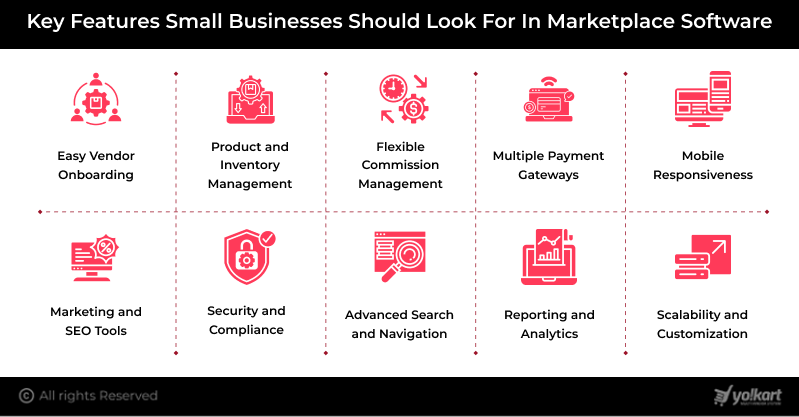
1. Easy Vendor Onboarding
Vendor acquisition is critical to marketplace success. The platform should provide a streamlined registration process, vendor approval workflows, profile management tools, and clear onboarding procedures that enable sellers to start listing and selling products with minimal friction.
2. Product and Inventory Management
Vendors should be able to independently manage product listings, inventory levels, pricing, product variants, and stock updates. Efficient inventory management helps prevent overselling and improves the overall customer experience.
3. Flexible Commission Management
Marketplace owners need the ability to define and adjust commission structures based on categories, vendors, products, or promotional campaigns. Flexible commission settings allow businesses to optimize revenue while maintaining vendor satisfaction.
4. Multiple Payment Gateways
Supporting a variety of payment methods enhances convenience for customers and vendors alike. Look for software that integrates with trusted payment gateways and supports secure transactions, refunds, and vendor payouts.
5. Mobile Responsiveness
With a significant portion of online shopping occurring on mobile devices, a responsive marketplace is essential. The platform should deliver a seamless experience across smartphones, tablets, and desktops to maximize customer engagement.
6. Marketing and SEO Tools
Built-in marketing capabilities can help attract traffic and increase conversions. Features such as SEO optimization, discount coupons, promotional campaigns, email marketing integrations, and abandoned cart recovery can contribute significantly to marketplace growth.
7. Security and Compliance
Security should be a top priority when handling customer and vendor data. The platform should offer secure payment processing, data encryption, user authentication, and compliance with relevant privacy and security standards.
8. Advanced Search and Navigation
Customers should be able to quickly find products through intuitive navigation, category management, filters, and search functionality. A well-organized marketplace improves user experience and increases the likelihood of conversions.
9. Reporting and Analytics
Access to detailed reports and analytics helps marketplace owners make informed business decisions. Insights into sales performance, vendor activity, customer behavior, and revenue trends can support strategic growth initiatives.
10. Scalability and Customization
As business requirements evolve, the platform should be capable of supporting increased traffic, larger product catalogs, and additional vendors. Customization options are equally important, allowing businesses to tailor the marketplace to their unique brand and operational needs.
Best Multi-Vendor eCommerce Software for Small Businesses
Choosing the right multi-vendor marketplace software is one of the most important decisions for any entrepreneur planning to launch an online marketplace. The ideal solution should offer robust vendor management capabilities, scalability, customization options, and a pricing structure that aligns with your business goals. Below are ten popular multi-vendor eCommerce platforms that cater to different business requirements and budgets.
1. Yo!Kart
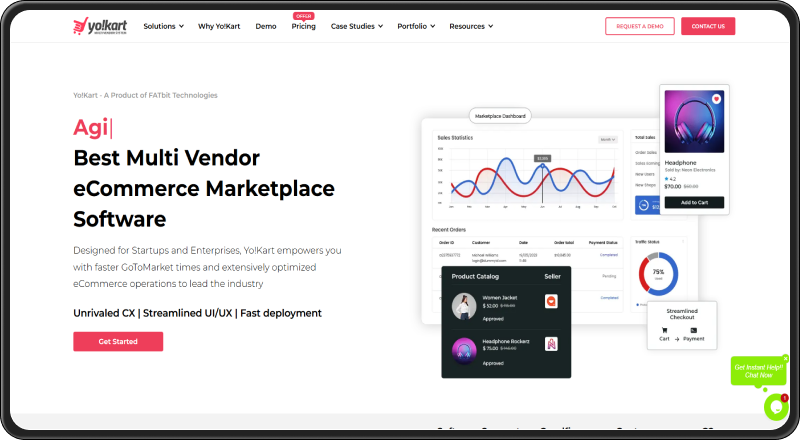
Yo!Kart is a purpose-built multi-vendor marketplace software designed specifically for entrepreneurs, startups, SMBs, and enterprises looking to launch scalable online marketplaces.
Unlike many solutions that require multiple third-party plugins to function as a marketplace, Yo!Kart comes with built-in multi-vendor functionality from the start. This reduces implementation complexity and allows businesses to launch faster with essential marketplace features already integrated.
Key Features
- Independent vendor dashboards
- Commission management system
- Multi-language support
- Multi-currency functionality
- Abandoned cart recovery
- Advanced product catalog management
- Tax and shipping management
- Mobile-ready design
- Built-in analytics and reporting
- Role-based administration controls
- SEO-friendly architecture
- Multiple payment gateway integrations
Pros
- One-time licensing option
- No recurring platform fees
- Fully customizable source code
- Purpose-built for marketplace businesses
- Suitable for B2B, B2C, and niche marketplaces
- Scalable architecture for business growth
- Strong vendor management capabilities
Cons
- Higher upfront investment compared to some SaaS solutions
- Advanced customizations may require technical expertise
Best For
Small businesses and entrepreneurs seeking a scalable marketplace platform with lower long-term ownership costs and extensive built-in marketplace functionality.
Discover Why Businesses Choose Yo!Kart
2. Sharetribe
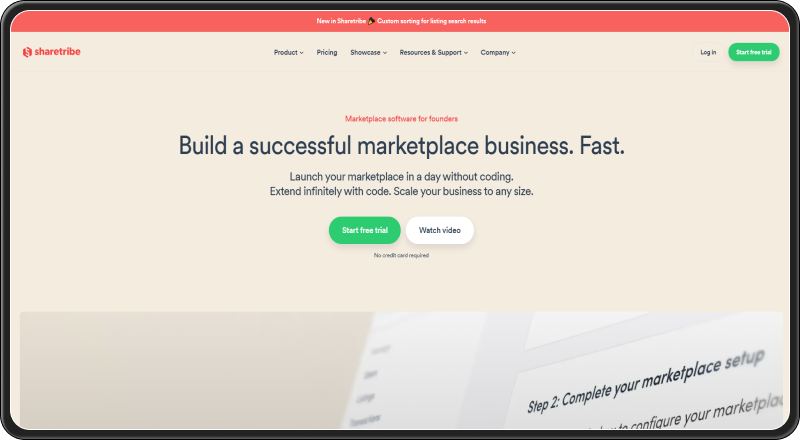
Sharetribe is a marketplace software solution that enables entrepreneurs to launch service or product marketplaces quickly. Its user-friendly interface, cloud-based infrastructure, and streamlined setup process make it a popular choice for startups looking to validate marketplace ideas with minimal technical complexity. By providing essential marketplace functionality, Sharetribe enables businesses to focus on growth, customer acquisition, and marketplace operations rather than software development.
Pros
- Easy setup process
- Suitable for MVP launches
- User-friendly interface
- Cloud-hosted infrastructure
- Quick deployment
Cons
- Limited customization on lower plans
- Monthly subscription costs can increase over time
- Advanced features may require higher-tier plans
Best For
Early-stage startups validating marketplace ideas and businesses seeking a fast launch.
3. CS-Cart Multi-Vendor
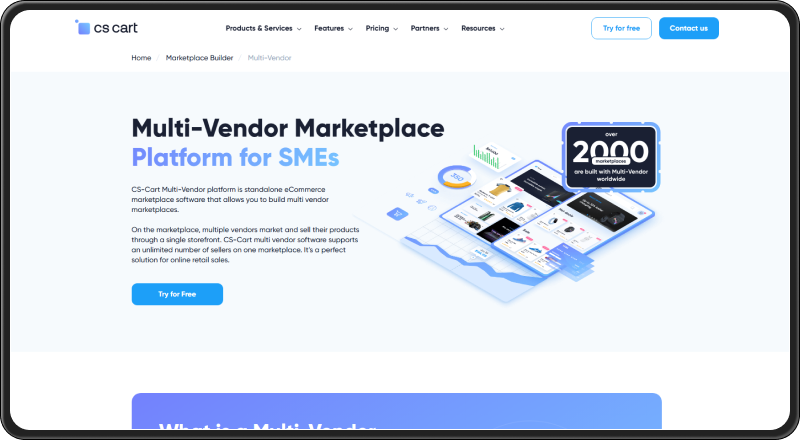
CS-Cart Multi-Vendor is a well-established marketplace platform offering extensive marketplace functionality and a mature ecosystem. It offers advanced vendor management, commission controls, product catalog management, and administrative tools, making it suitable for businesses that require greater operational flexibility. With its mature ecosystem and scalable architecture, it can support both growing marketplaces and established businesses seeking more control over their marketplace operations.
Pros
- Rich feature set
- Multiple vendor management tools
- Large add-on ecosystem
- Strong administrative controls
- Flexible commission structures
Cons
- Higher learning curve
- Additional costs for extensions
- Some advanced features require paid add-ons
Best For
Growing businesses require advanced marketplace capabilities and customization flexibility.
4. Magento with Marketplace Extension

Magento can be transformed into a marketplace using third-party extensions. It is known for its flexibility and enterprise-grade capabilities. Known for its flexibility and scalability, Magento is well-suited for marketplaces with complex requirements, large product catalogs, and high transaction volumes. However, its implementation often requires dedicated development resources, making it a more suitable option for businesses with larger budgets and technical expertise.
Pros
- Highly flexible
- Enterprise-grade capabilities
- Extensive customization options
- Strong performance for large catalogs
Cons
- Expensive development costs
- Requires technical expertise
- Longer implementation timelines
Best For
Businesses with larger budgets and dedicated development resources.
5. Shopify with Marketplace Apps
Shopify can support multi-vendor functionality through marketplace apps and integrations. Its intuitive interface, reliable hosting, and extensive app ecosystem make it an attractive option for entrepreneurs seeking ease of use and quick deployment. While marketplace features typically depend on external applications, Shopify remains a practical choice for businesses already familiar with its ecosystem.
Pros
- Easy to use
- Extensive app ecosystem
- Reliable hosting
- Strong customer support
Cons
- Requires multiple paid apps
- Ongoing subscription expenses
- Marketplace functionality depends on third-party solutions
Best For
Small businesses already using Shopify and looking to expand into marketplace operations.
6. Dokan (WooCommerce)
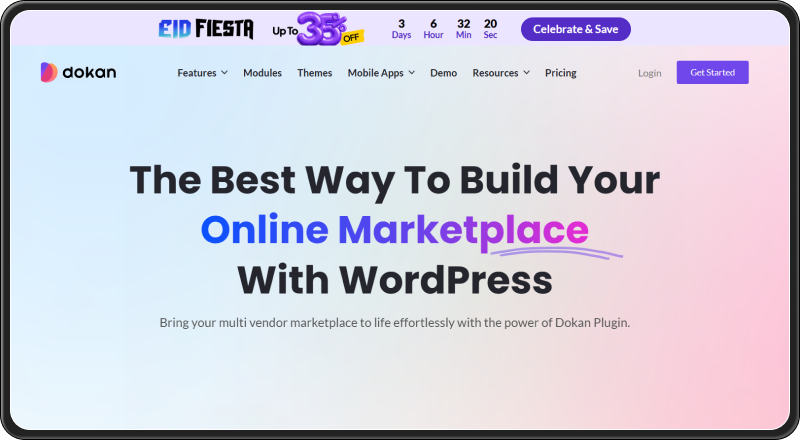
Dokan adds marketplace functionality to WooCommerce stores and is one of the most popular marketplace plugins for WordPress users. It combines the flexibility of WordPress with vendor management capabilities, making it a popular option for startups and small businesses. With access to a large plugin ecosystem and extensive customization possibilities, Dokan offers a cost-effective way to launch and manage a marketplace.
Pros
- Affordable entry point
- Familiar WordPress environment
- Large plugin ecosystem
- Easy content management
Cons
- Plugin dependency
- Performance challenges as the marketplace grows
- Requires ongoing plugin maintenance
Best For
Small marketplace startups using WordPress and WooCommerce.
7. Arcadier

Arcadier is a SaaS-based marketplace builder that supports product, service, rental, and procurement marketplaces. Its cloud-hosted infrastructure and ready-made templates simplify the launch process, allowing businesses to establish an online marketplace without significant technical involvement. The platform is particularly suitable for entrepreneurs looking for a hosted solution that balances ease of use with marketplace flexibility.
Pros
- Multiple marketplace models supported
- Cloud-based deployment
- User-friendly interface
- Flexible marketplace templates
Cons
- Subscription-based pricing
- Limited customization compared to self-hosted solutions
Best For
Businesses seeking a hosted marketplace solution with minimal technical involvement.
8. Mirakl

Mirakl is an enterprise marketplace platform used by large retailers and organizations to launch and manage marketplaces. It offers advanced automation, vendor onboarding, catalog management, and operational tools that support complex marketplace operations. Known for its scalability and enterprise-grade capabilities, Mirakl is best suited for businesses with substantial marketplace ambitions and the resources to support enterprise-level implementations.
Pros
- Enterprise-grade functionality
- Advanced automation tools
- Strong vendor onboarding capabilities
- Proven scalability
Cons
- Premium pricing
- May be excessive for small businesses
Best For
Large organizations and enterprises are planning extensive marketplace operations.
9. Marketplacer

Marketplacer is a marketplace platform designed to help businesses connect buyers and sellers through a centralized ecosystem. It offers strong vendor onboarding capabilities, marketplace management tools, and omnichannel commerce support, making it suitable for businesses looking to expand beyond traditional eCommerce models. Its scalable infrastructure enables brands and retailers to grow their marketplace operations while maintaining operational efficiency.
Pros
- Strong marketplace management tools
- Vendor onboarding features
- Omnichannel capabilities
- Scalable infrastructure
Cons
- Higher pricing compared to startup-focused solutions
- Custom implementation may be required
Best For
Established businesses looking to expand into marketplace commerce.
Looking for a Marketplace Platform Built for Long-Term Success?
10. BigCommerce with Multi-Vendor Extensions
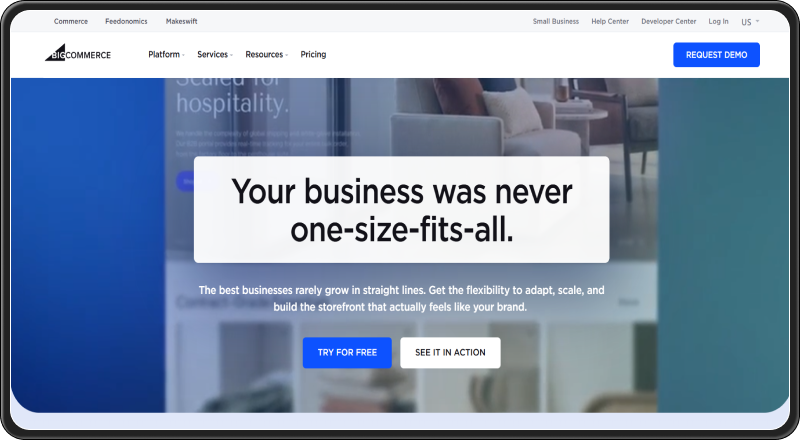
BigCommerce can be adapted into a marketplace using third-party multi-vendor applications and integrations. Known for its robust eCommerce capabilities, strong SEO tools, and reliable cloud hosting, the platform provides a solid foundation for online commerce. While marketplace functionality is not native to the platform, businesses can leverage its flexibility and extensive integration options to create a marketplace that supports both current needs and future growth.
Pros
- Robust eCommerce functionality
- Reliable cloud hosting
- Strong SEO capabilities
- Easy store management
Cons
- Marketplace functionality requires external apps
- Additional recurring costs
- Limited native marketplace features
Best For
Businesses already operating on BigCommerce and exploring marketplace expansion.
Comparison Table
| Software | Pricing Model | Marketplace Ready | Customization | Scalability | Best For |
| Yo!Kart | One-Time License | Yes | High | High | SMBs, startups, B2B & B2C marketplaces |
| Sharetribe | Subscription | Yes | Moderate | Moderate | MVPs and startup validation |
| CS-Cart Multi-Vendor | License + Upgrades | Yes | High | High | Growing marketplace businesses |
| Magento + Extension | Development-Based | Partial | High | High | Enterprises with development teams |
| Shopify + Apps | Subscription | Partial | Moderate | Moderate | Existing Shopify merchants |
| Dokan (WooCommerce) | Plugin/Subscription | Partial | Moderate | Moderate | WordPress-based marketplaces |
| Arcadier | Subscription | Yes | Moderate | Moderate | Service and rental marketplaces |
| Mirakl | Enterprise Pricing | Yes | High | High | Large enterprises |
| Marketplacer | Custom Pricing | Yes | High | High | Established brands and retailers |
| BigCommerce + Extensions | Subscription | Partial | Moderate | Moderate | Existing BigCommerce users |
How to Choose the Right Multi-Vendor Software?
Selecting the right multi-vendor eCommerce software is one of the most important decisions you’ll make when launching an online marketplace. The platform you choose will influence everything from vendor management and customer experience to scalability and long-term operational costs.
Since every marketplace has unique requirements, there is no one-size-fits-all solution. The ideal platform should align with your business goals, budget, target audience, and future growth plans.
Thus, before making a decision, consider the following questions:
- What is my initial budget for launching the marketplace?
- How quickly do I want to go live?
- Will I need custom features or integrations in the future?
- How many vendors do I expect to onboard during the first year?
- What type of products or services will be sold on the platform?
- Do I prefer a subscription-based solution or a one-time ownership model?
- How important are scalability and customization for long-term growth?
- What level of technical expertise do I have access to?
Additionally, it’s also important to evaluate the total cost of ownership rather than focusing solely on the upfront price. Some platforms may appear affordable initially, but require additional spending on plugins, extensions, maintenance, hosting, or transaction fees as the marketplace grows.
Small businesses often benefit from solutions that provide marketplace functionality while minimizing ongoing expenses. A platform with built-in vendor management, commission controls, payment integrations, and marketing tools can significantly reduce setup time and operational complexity.
Furthermore, choosing software that can scale alongside your business helps avoid costly migrations in the future. As your marketplace attracts more vendors, products, and customers, the platform should continue to deliver reliable performance and flexibility.
Why Yo!Kart Stands Out for Small Businesses?
Among the various marketplace solutions available today, Yo!Kart has gained recognition as a platform specifically designed for building and managing multi-vendor marketplaces. Rather than adapting a traditional eCommerce platform through multiple third-party extensions, Yo!Kart offers marketplace-focused functionality from the outset.
This marketplace-first approach makes it particularly appealing for small businesses and entrepreneurs looking to launch quickly, reduce technical complexity, and avoid the high costs associated with custom development.
Yo!Kart offers a balanced combination of functionality, flexibility, and scalability through features such as:
- Built-in multi-vendor marketplace functionality
- Ownership through a one-time license model
- Customization flexibility with access to source code
- Scalability for long-term marketplace growth
- Support for multiple marketplace business models
- Multi-language and multi-currency capabilities
- Vendor-specific dashboards and management tools
- Integrated commission and payout management
- Mobile-responsive storefronts
- SEO-friendly architecture and marketing features
One of the key advantages for small businesses is the ability to avoid recurring platform fees that can accumulate over time. Unlike subscription-based platforms that require recurring monthly or annual fees, Yo!Kart enables marketplace owners to maintain greater control over long-term operational costs while retaining full ownership of their platform.
Another notable strength is Yo!Kart’s versatility. Whether you’re planning to launch a niche marketplace, a B2B platform, a local marketplace, or a large-scale multi-category marketplace, the software provides the flexibility needed to support different business models.
Furthermore, as the marketplace expands, businesses can customize and enhance the platform according to evolving requirements. This ensures that entrepreneurs can continue scaling their marketplaces without facing the limitations often associated with less flexible solutions.
For small businesses looking to launch a professional marketplace without the complexities and expenses associated with custom development, Yo!Kart presents a compelling combination of functionality, scalability, and cost efficiency.
Build Smarter With Purpose-Built Marketplace Software
Conclusion
Choosing the best multi-vendor eCommerce software for a small business requires careful evaluation of several factors, including budget, scalability requirements, customization needs, ease of use, and long-term business objectives. While platforms such as Sharetribe, Shopify, Magento, CS-Cart, and Dokan each offer their own strengths, the right choice ultimately depends on the specific needs of your marketplace.
For entrepreneurs seeking a marketplace solution that combines comprehensive built-in functionality with long-term cost effectiveness, purpose-built marketplace software often delivers the greatest value. These platforms eliminate many of the challenges associated with piecing together multiple plugins or investing heavily in custom development.
Among the available options, Yo!Kart stands out as a robust multi-vendor marketplace software that offers a strong balance of features, flexibility, and scalability. Its marketplace-centric architecture, one-time licensing model, and support for diverse business models make it particularly appealing for small businesses aiming to establish and grow a successful online marketplace.
Ultimately, the best software is the one that aligns with your vision, supports your growth strategy, and enables you to deliver a seamless experience for both vendors and customers.
Frequently Asked Questions (FAQs)
1. What is the best multi-vendor eCommerce software for small businesses?
The best multi-vendor eCommerce software depends on your budget, business model, and growth plans. Small businesses often look for solutions that offer built-in marketplace functionality, scalability, and cost-effective pricing. Platforms such as Yo!Kart, Sharetribe, CS-Cart Multi-Vendor, and Shopify with marketplace apps are among the popular options available.
2. How much does it cost to build a multi-vendor marketplace?
The cost can vary significantly depending on the approach you choose. Custom marketplace development can range from several thousand to hundreds of thousands of dollars. In contrast, ready-made marketplace software offers a more affordable alternative, with pricing models that include one-time licenses, monthly subscriptions, or custom enterprise pricing.
3. Can I create a marketplace without coding skills?
Yes, many modern multi-vendor marketplace platforms are designed for non-technical users and provide user-friendly interfaces, pre-built features, and setup assistance. SaaS solutions and turnkey marketplace software can help entrepreneurs launch marketplaces without extensive coding knowledge.
4. What features are essential in a multi-vendor marketplace platform?
Some of the most important features include:
- Vendor management
- Product catalog management
- Commission controls
- Payment gateway integrations
- Order management
- Mobile responsiveness
- SEO tools
- Reporting and analytics
- Secure payment processing
5. Is a one-time license better than a subscription-based marketplace platform?
Both models have advantages. Subscription-based platforms typically require lower upfront investment and offer managed hosting, while one-time license solutions can provide greater ownership and lower long-term costs. The right choice depends on your budget, customization needs, and growth strategy.
6. Can multi-vendor software support B2B marketplaces?
Ye, many marketplace platforms support both B2C and B2B business models. Features such as bulk ordering, custom pricing, RFQ (Request for Quote) functionality, and vendor-specific catalogs are commonly used in B2B marketplaces.
7. How long does it take to launch a multi-vendor marketplace?
The timeline depends on the platform and level of customization required. Using ready-made marketplace software, businesses can often launch within a few weeks. Custom-built marketplaces generally take several months to develop and test.
8. Why do many small businesses choose Yo!Kart for marketplace development?
Many small businesses consider Yo!Kart because it is specifically built for multi-vendor marketplaces and includes essential marketplace features. Its one-time licensing model, customization flexibility, multi-language support, and scalability make it a practical option for entrepreneurs looking to build and grow an online marketplace without relying heavily on third-party plugins.
Searching for a Cost-Effective Multi-Vendor eCommerce Software?
Contact UsPopular Posts