

Published Date 28th April, 2026
The global eCommerce marketplace is no longer a niche channel — it is the backbone of modern retail. Global eCommerce sales are projected to reach $6.88 trillion in 2026, representing 21.1% of all retail commerce worldwide (Shopify/eMarketer, 2026). Within this massive ecosystem, multi-vendor marketplaces — platforms where multiple sellers list and sell under one roof — are capturing a disproportionately large share.
ASOS is one of the most studied examples in fashion eCommerce. Founded in the UK in 2000 as ‘As Seen on Screen,’ it grew into a global fashion powerhouse serving over 200 markets, offering 85,000+ products, and generating billions in annual revenue. Its marketplace model — combining direct retail with third-party vendor storefronts — has become a blueprint for entrepreneurs looking to create a multi-vendor marketplace of their own.
If you are an entrepreneur, fashion brand, or startup founder planning to build a marketplace app like ASOS, this guide breaks down everything: the business model, the key features, the tech stack considerations, the costs, and — most importantly — how readymade multi-vendor marketplace software like Yo!Kart can dramatically accelerate your launch timeline.
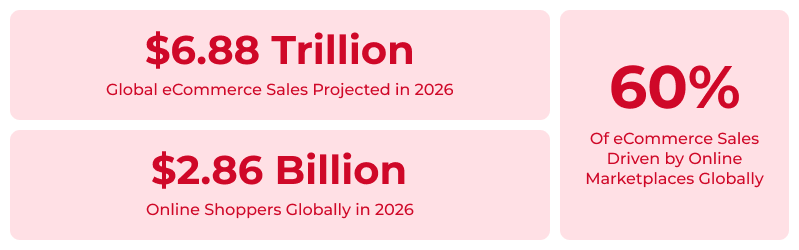
Table of Contents
- Why ASOS is the Benchmark for Multi-Vendor Marketplace Development
- The ASOS Business Model: Revenue Streams to Replicate
- Key Features Required to Build a Multi-Vendor Marketplace Like ASOS
- How to Build a Marketplace App Like ASOS
- Why Yo!Kart is the Ideal Software to Build a Marketplace Like ASOS
- Step-by-Step Guide: How to Build a Multi-Vendor Marketplace Like ASOS
- Cost to Build a Marketplace Like ASOS in 2026
- 2026 Trends Shaping Multi-Vendor Marketplace Development
- Conclusion
- FAQs
Why ASOS is the Benchmark for Multi-Vendor Marketplace Development
Before you build a marketplace like ASOS, it helps to understand what makes ASOS’s model worth emulating — and what pitfalls to avoid.
ASOS by the Numbers (2025–2026)
ASOS has undergone a strategic transformation in 2025, focusing on margin improvement and profitability over pure volume growth:
- Revenue: £2.47 billion (~$3.1B) for fiscal year 2025, down from £2.9B in FY2024 due to intensified competition from Shein and Temu
- Active customers: Approximately 17 million globally across 200+ markets as of 2025
- Product catalog: 85,000+ products from own-label and third-party brands
- Market cap: ~$388M as of late 2025 (PitchBook), rebounding to ~$424M in early 2026
- Fashion category: Represents 90% of total ASOS sales
- Mobile: Majority of ASOS orders placed via the ASOS mobile app
What ASOS Does Differently
ASOS is not a pure marketplace like Amazon — it is a hybrid model that blends:
- Direct retail (1P): Own-label brands like ASOS Design account for ~96% of GMV
- Third-party marketplace (3P): The ASOS Marketplace platform allows independent boutiques and vintage sellers to list products, contributing the remaining ~4% of GMV
- Subscriptions: ASOS Premier offers unlimited express delivery for an annual fee
- Advertising: Brands pay for sponsored product placement and visibility on the platform
- Data monetization: AI-driven trend forecasting and customer insights
Key insight: ASOS’s model proves that a fashion marketplace does not need to choose between own-label and third-party selling — the most powerful platforms do both. This layered revenue model is what you should aim to replicate when you create a multi-vendor marketplace.
The ASOS Business Model: Revenue Streams to Replicate
To build a marketplace like ASOS, you need to understand how it generates revenue — and design your own platform around a similarly diversified monetization architecture.
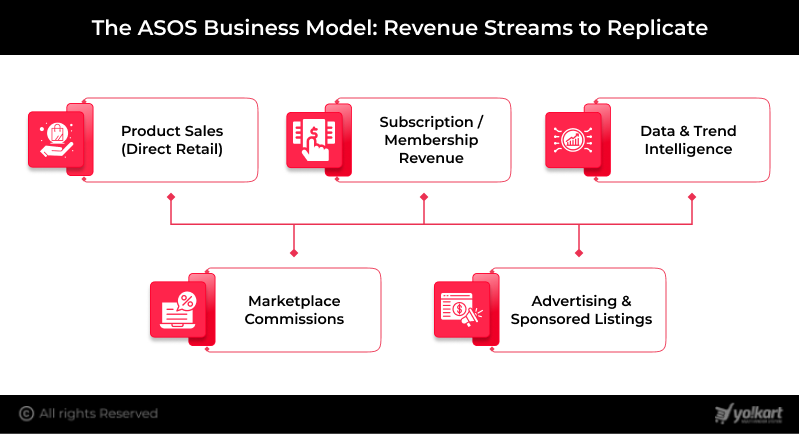
1. Product Sales (Direct Retail)
ASOS sources, designs, and sells its own-label products directly. For marketplace entrepreneurs, this translates to carrying select inventory yourself — especially in high-demand categories — while allowing third-party sellers to fill the rest of the catalog.
2. Marketplace Commissions
Independent boutiques on ASOS Marketplace pay commissions per transaction (typically 15–20%). This commission model is a cornerstone of multi-vendor marketplace development and should be configurable in your platform from day one.
3. Subscription / Membership Revenue
ASOS Premier (unlimited free express delivery for a fixed annual fee) drives loyalty and predictable recurring revenue. When you build a marketplace app, a subscription tier for buyers (free delivery, early access) and for sellers (premium storefronts, lower commissions) adds compounding value.
4. Advertising & Sponsored Listings
Brands and third-party sellers pay for visibility — banner placements, sponsored product listings, and featured positions in category pages. This is a high-margin revenue stream once your marketplace has meaningful traffic.
5. Data & Trend Intelligence
ASOS uses real-time demand signals, AI-driven merchandising, and rapid design-to-shelf workflows. While this is a more advanced capability, embedding analytics from the start ensures you can offer data-driven seller insights as a premium feature.
Ready to Build Your Own Fashion Marketplace?
Key Features Required to Build a Multi-Vendor Marketplace Like ASOS
Multi-vendor marketplace development is significantly more complex than building a single-vendor store. Here is a breakdown of the features you must plan for:
For Buyers / Shoppers
- Intuitive product discovery: Category filters, price filters, size/color attributes, and advanced search
- Rich product pages: High-quality images, size guides, fit ratings, and social proof via reviews
- Seamless checkout: Guest checkout, saved addresses, one-click reorder, and multiple payment options
- Mobile-first experience: Native iOS and Android apps with voice search and push notifications
- Wishlist and save for later: Reduce cart abandonment and support repeat visits
- Loyalty / subscription program: ASOS Premier equivalent — free delivery tiers and early access
- Order tracking: Real-time shipment tracking across multiple vendor orders
For Vendors / Sellers
- Self-service onboarding: Easy vendor registration, document verification, and storefront setup
- Individual vendor storefronts: Branded shop pages with banner, logo, ratings, and product catalog
- Product and inventory management: Bulk product upload via CSV, inventory alerts, variant management
- Order management dashboard: Real-time order notifications, processing workflows, and return handling
- Commission and earnings visibility: Transparent payout schedules, earnings history, and withdrawal requests
- Promotional tools: Discount coupons, flash sales, and featured listing options
For Marketplace Admin
- Centralized admin panel: Full control over buyers, sellers, products, and transactions
- Flexible commission engine: Percentage-based, flat-fee, category-specific commission configurations
- Content management: Blog, banners, homepage customization, and SEO tools
- Reporting and analytics: GMV, conversion rates, top-selling products, vendor performance, and revenue dashboards
- Multi-language and multi-currency: Essential for global marketplaces across 200+ markets
- Security and compliance: PCI-DSS, GDPR, SSL, and two-factor authentication
Technical Infrastructure
- Scalable hosting: Architecture that handles traffic spikes (sale seasons, launch days)
- Payment gateway integrations: Stripe Connect, PayPal, and local payment methods for split payouts
- Shipping and logistics APIs: ShipStation, EasyPost, and local courier integrations
- Marketing automation: Email (Mailchimp/Klaviyo), SMS, and push notification tools
- AI/ML recommendations: Personalized product suggestions and dynamic pricing
How to Build a Marketplace App Like ASOS
When planning multi-vendor marketplace development, entrepreneurs have three primary approaches. Each comes with different cost, time, and risk profiles.
Option 1: Build from Scratch (Custom Development)
A fully custom-built platform gives you complete control over every feature and design element. However, it comes with significant drawbacks:
- Timeline: 12–18+ months for a production-ready MVP
- Cost: $100,000 to $500,000+ depending on team, features, and geography
- Risk: High — technical debt, feature gaps, and post-launch maintenance burden
- Best for: Well-funded ventures with very unique, proprietary marketplace requirements
Option 2: Open-Source Platforms (e.g., Magento, WooCommerce + Plugins)
Open-source platforms offer flexibility but require significant technical expertise and ongoing maintenance:
- Timeline: 4–8 months for a functional marketplace
- Cost: $20,000–$80,000+ including development, hosting, and plugin costs
- Risk: Medium — plugin compatibility issues, security vulnerabilities, and scaling limitations
- Best for: Tech-savvy teams with in-house development capabilities
Option 3: Readymade Multi-Vendor Marketplace Software (Recommended)
Readymade solutions like Yo!Kart offer a pre-built, feature-complete marketplace platform that can be launched in days rather than months. This is the fastest, most cost-effective way to build a marketplace like ASOS.
- Timeline: Launch-ready within a few days to weeks
- Cost: Starting at $1,249 (one-time license, no recurring fees)
- Risk: Low — battle-tested codebase, dedicated support, and regular updates
- Best for: Entrepreneurs, startups, and SMEs looking to validate their marketplace model quickly
Why Yo!Kart is the Ideal Software to Build a Marketplace Like ASOS
Yo!Kart is a readymade multi-vendor marketplace software developed by FATbit Technologies — a company with over two decades of eCommerce expertise and 5,500+ delivered projects worldwide. It is purpose-built for entrepreneurs who want to create a multi-vendor marketplace without the cost and complexity of custom development.
Here is why Yo!Kart stands out as the go-to solution for ASOS-style marketplace development:
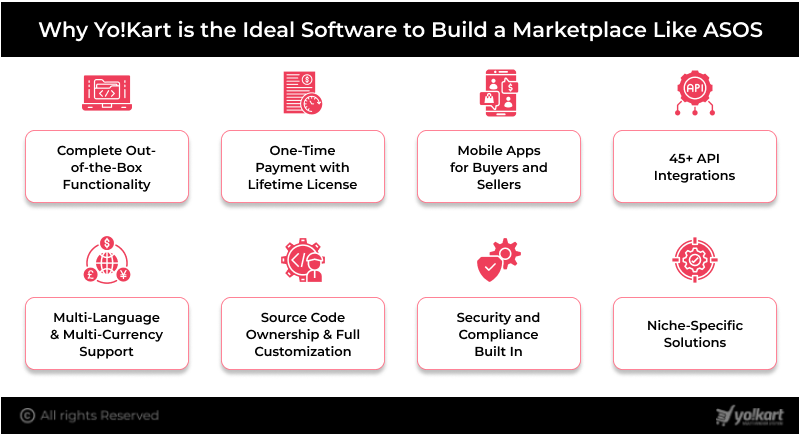
1. Complete Out-of-the-Box Functionality
Unlike open-source platforms that rely on plugins and custom code, Yo!Kart ships with hundreds of built-in features — covering buyer experience, vendor management, admin control, marketing tools, and analytics — all in a single, cohesive platform.
2. One-Time Payment with Lifetime License
Yo!Kart operates on a one-time payment model with no recurring SaaS fees. Packages include:
- GoQuick: $1,249 — full-featured with buyer apps
- GoQuick Boost: $2,499 — enhanced features
- GoCustom: $6,249 — custom development included
- GoQuick Ultra: $6,449 – full-featured with mobile apps customizable source code ownership.
- GoCustom Prime: Enterprise-level — fully bespoke solution
3. Mobile Apps for Buyers and Sellers
Yo!Kart comes with pre-built native iOS and Android buyer apps, including voice search, push notifications, and personalized recommendations — all critical for replicating the mobile-first ASOS experience.
4. 45+ API Integrations
Yo!Kart integrates with 45+ APIs out of the box, including:
- Payment gateways: Stripe Connect, PayPal Payouts (split payouts to vendors in 35+ countries)
- Shipping: ShipStation, EasyPost, DHL, and region-specific carriers
- Marketing: Mailchimp, AWeber, FCM push notifications, and Zendesk live chat
- Tax: TaxJar for automated tax compliance
- Translation: Microsoft Translator API for 90+ languages
5. Multi-Language and Multi-Currency Support
With support for 70+ languages (including RTL languages for Middle Eastern markets) and real-time currency conversion, Yo!Kart enables you to build a global marketplace from day one — exactly as ASOS operates across 200+ markets.
6. Customizable Source Code Ownership and Full Customization
Yo!Kart provides complete customizable source code ownership, giving you the flexibility to customise every aspect of the platform — from CMS-level branding changes to deep code-level modifications. This is critical for building a marketplace with your own distinct identity, not just another generic template.
7. Security and Compliance Built In
Yo!Kart is PCI-DSS compliant, GDPR-ready, and secured with SSL, 2FA, and encrypted coding that prevents SQL injection and unauthorized access — non-negotiable for any marketplace handling customer payment data.
8. Niche-Specific Solutions
Yo!Kart supports marketplace development across multiple niches that mirror or complement the ASOS model: fashion, beauty, electronics, sports, digital products, grocery, and more — making it equally powerful for niche marketplace startups.
See Yo!Kart in Action
Step-by-Step Guide: How to Build a Multi-Vendor Marketplace Like ASOS
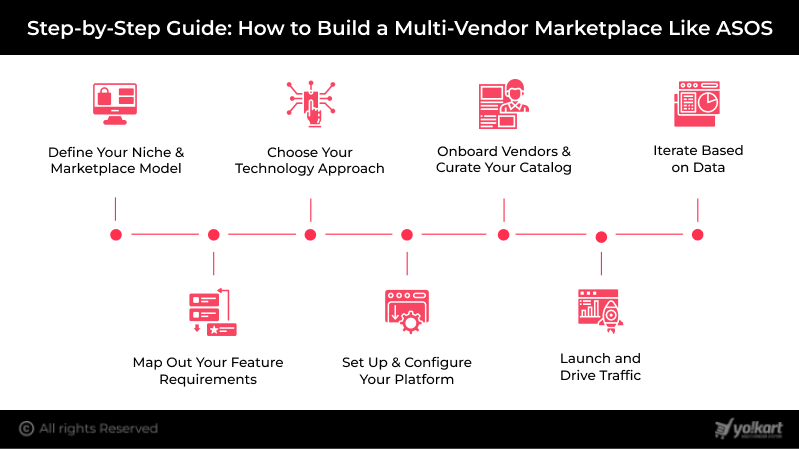
Step 1: Define Your Niche and Marketplace Model
ASOS succeeded by being specific — a fashion-first, youth-focused platform. Define your niche clearly before development begins. Key decisions:
- Product category: Fashion, beauty, sportswear, vintage, or multi-category?
- Seller type: Independent boutiques, established brands, or both?
- Revenue model: Commission, subscription, advertising, or a hybrid?
- Target geography: Local, regional, or global?
Step 2: Map Out Your Feature Requirements
Based on your niche and model, create a feature prioritisation list. Use the ASOS model as a benchmark — buyer experience, vendor tools, and admin capabilities are the three pillars every marketplace must address.
Step 3: Choose Your Technology Approach
For most entrepreneurs looking to build a marketplace app quickly and cost-effectively, a readymade solution like Yo!Kart is the right starting point. It eliminates months of development and provides a battle-tested foundation — and you can customise from there.
Step 4: Set Up and Configure Your Platform
With Yo!Kart, the process is streamlined into three steps:
- Purchase your preferred Yo!Kart package and receive the platform
- Free setup and installation on your server of choice
- Configure your marketplace: categories, commission structures, payment gateways, and branding
Step 5: Onboard Vendors and Curate Your Catalog
Quality over quantity is critical in early-stage marketplace growth. Onboard a curated selection of vendors whose products align with your brand positioning. Use Yo!Kart’s vendor verification tools, storefront setup guides, and product upload workflows to bring sellers live efficiently.
Step 6: Launch and Drive Traffic
Your marketplace launch strategy should cover:
- SEO: Optimise category pages, product listings, and blog content for long-tail keywords
- Social media: Instagram, TikTok, and Pinterest are critical for fashion marketplaces
- Influencer partnerships: Micro-influencers in your niche drive high-conversion discovery
- Email marketing: Use Yo!Kart’s Mailchimp integration for onboarding sequences and promotional campaigns
- Paid advertising: Google Shopping and Meta Ads for direct-response performance marketing
Step 7: Iterate Based on Data
Post-launch, use Yo!Kart’s built-in analytics dashboard to monitor GMV, conversion rates, top-performing vendors, and buyer behavior. Use these insights to refine your commission structures, product curation, and marketing spend.
Cost to Build a Marketplace Like ASOS in 2026
The cost range is wide — but the approach you choose is the single biggest cost driver. Here is a realistic comparison:
| Approach | Timeline | Cost Range | Best For |
| Custom Development | 12–18+ months | $100K–$500K+ | Funded ventures |
| Open Source + Plugins | 4–8 months | $20K–$80K | Tech-savvy teams |
| Yo!Kart (Readymade) | Days to weeks | $1,249–$6,249+ | Startups & SMEs |
Note: Yo!Kart’s one-time pricing model means no monthly SaaS fees — which translates to significantly lower total cost of ownership over 3–5 years compared to subscription-based alternatives.
2026 Trends Shaping Multi-Vendor Marketplace Development
Building a marketplace like ASOS today means designing for the eCommerce landscape of tomorrow. These are the trends that must inform your platform architecture:
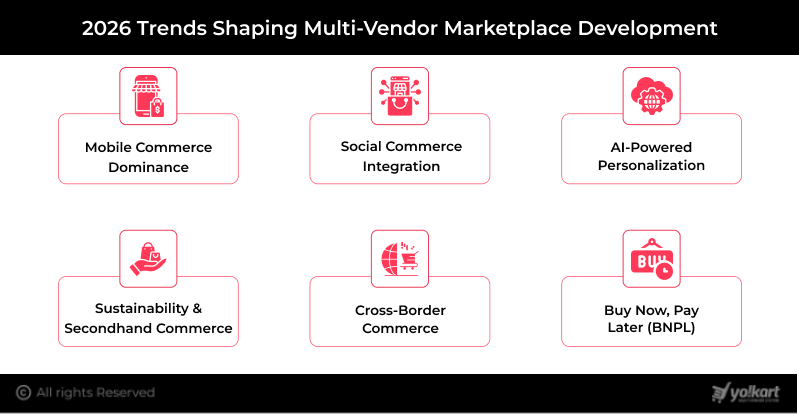
1. Mobile Commerce Dominance
Mobile commerce accounts for nearly 60% of total global online retail sales in 2026, with approximately 1.65 billion people shopping via smartphone (Flowlu, 2026). A mobile-first marketplace — with native apps, accelerated checkout, and push notifications — is non-negotiable.
2. Social Commerce Integration
Social commerce sales have exceeded $1.17 trillion globally in 2026 (Flowlu). Platforms that enable direct purchasing through TikTok, Instagram, and Pinterest — or that make it easy for sellers to share product links to social channels — will capture a growing share of discovery-driven buyers.
3. AI-Powered Personalization
Businesses using dynamic personalization see average order values increase by 20–25% (tekrevol.com, 2026). Embedding product recommendation engines, dynamic pricing, and AI-driven search into your marketplace is a competitive differentiator.
4. Sustainability and Secondhand Commerce
The U.S. secondhand market reached $56 billion in 2025. ASOS itself curates vintage and pre-owned fashion through its Marketplace arm. Building sustainability features — certified seller badges, pre-owned categories, carbon offset options — aligns with Gen Z and Millennial buyer values.
5. Cross-Border Commerce
The global cross-border eCommerce market is projected to reach $636 billion in 2026, growing at a CAGR of 15.44% (Precedence Research). With multi-language and multi-currency built into Yo!Kart from day one, you can pursue international expansion from launch.
6. Buy Now, Pay Later (BNPL)
BNPL adoption continues to accelerate, particularly among Gen Z shoppers who make up ASOS’s core demographic. Integrating BNPL options at checkout reduces cart abandonment and increases average order value.
Launch Your ASOS-like Marketplace Faster with Yo!Kart
Conclusion: Build Your Marketplace Smarter, Not Harder
ASOS’s journey from a niche UK fashion site to a multi-billion-dollar global marketplace is one of eCommerce’s most compelling growth stories. But the core principle behind its success — connecting buyers with curated seller inventory on a seamless, mobile-first platform — is now replicable faster and more affordably than ever.
The global eCommerce marketplace opportunity is enormous: $6.88 trillion in sales projected for 2026, 2.86 billion global shoppers, and marketplaces capturing a growing share of every product category. Whether you are building a fashion platform, a niche product hub, or a full multi-category marketplace, the blueprint is clear.
For entrepreneurs serious about multi-vendor marketplace development, Yo!Kart provides the most pragmatic path to market: a feature-complete, customizable, mobile-ready platform with a one-time investment — no SaaS lock-in, customizable source code ownership, and a support team that has helped 5,500+ businesses go live.
You do not need to spend $500,000 or wait 18 months to build a marketplace app. You need the right platform, the right business model, and the right launch strategy.
Frequently Asked Questions (FAQs)
Q 1. How much does it cost to build a marketplace like ASOS?
Ans. The cost ranges widely depending on your approach. Custom development can cost $100,000 to $500,000 or more and take 12–18 months. Open-source platforms with plugins range from $20,000–$80,000. The most cost-effective approach is a readymade solution like Yo!Kart, which starts at $1,249 with a one-time payment — no monthly fees — and can be launched within days. The total cost of ownership over 3–5 years is significantly lower with a readymade solution.
Q 2. What is a multi-vendor marketplace and how is it different from a regular online store?
Ans. A multi-vendor marketplace is an eCommerce platform where multiple independent sellers list and sell their products under one roof — similar to ASOS Marketplace or Amazon. The platform operator manages the infrastructure, payments, and branding while sellers manage their own storefronts, inventory, and orders. A regular online store has one seller (the store owner). A multi-vendor marketplace has many sellers, each with their own dashboard, and the operator earns revenue through commissions, subscriptions, and advertising.
Q 3. Can Yo!Kart help me build a fashion marketplace like ASOS?
Ans. Yes. Yo!Kart is purpose-built for multi-vendor marketplace development across multiple niches, including fashion, beauty, sportswear, and accessories. It comes with vendor storefronts, commission management, buyer and seller mobile apps (iOS and Android), advanced search and filters, and 45+ pre-integrated APIs — everything needed to replicate the ASOS marketplace experience. It also supports multi-language and multi-currency for global expansion.
Q 4. How long does it take to launch a multi-vendor marketplace with Yo!Kart?
Ans. With Yo!Kart, the platform can be set up and installed on your server within days. The time to full launch depends on your customization requirements, branding, vendor onboarding, and content setup. Most businesses using Yo!Kart’s GoQuick package can go live within a few weeks, compared to 12–18 months for a custom-built solution.
Q 5. Does Yo!Kart support mobile apps for buyers and sellers?
Ans. Yes. Yo!Kart comes with pre-built native iOS and Android buyer apps that include voice search, push notifications, wish lists, and personalized product recommendations. Seller apps are also available. This ensures your marketplace delivers a mobile-first experience that meets the expectations of today’s shoppers — critical given that mobile commerce accounts for nearly 60% of total online retail sales in 2026.
Q 6. What revenue models can I use on a marketplace like ASOS?
Ans. The most effective multi-vendor marketplace revenue model is a hybrid approach — just like ASOS uses. This includes: (1) Transaction commissions from vendors (typically 10–20% per sale), (2) Subscription/membership plans for buyers (e.g., free delivery tiers) and sellers (premium storefronts), (3) Advertising and sponsored listings, (4) Featured product placements, and (5) Value-added services (e.g., logistics, photography, fulfillment). Yo!Kart supports all of these revenue streams out of the box.
Q 7. Is it possible to migrate from an existing eCommerce platform to Yo!Kart?
Ans. Yes. Yo!Kart supports seamless migration from existing eCommerce platforms. It allows bulk data upload via CSV files for products, vendors, and customer data, and the Yo!Kart support team provides dedicated assistance to minimize downtime during the migration process.
Q 8. What makes Yo!Kart different from other multi-vendor marketplace software?
Ans. Key differentiators of Yo!Kart include: a one-time payment model (no recurring SaaS fees), customizable source code ownership (unlike hosted/SaaS platforms), 70+ language support and real-time currency conversion for global reach, 45+ pre-integrated APIs, built-in buyer and seller mobile apps, PCI-DSS and GDPR compliance, and dedicated support from a team with 20+ years of eCommerce expertise. It is one of the few platforms that offers this combination at this price point.