

Published Date: 15th October, 2026
Introduction
Multi-vendor marketplaces bring independent sellers and customers together through a shared digital platform. Instead of selling every product or service directly, the marketplace owner provides the technology and operational framework that allows sellers to list offerings, receive orders, and connect with buyers.
This model creates several opportunities to generate revenue. A marketplace can charge commissions on transactions, collect seller subscriptions, promote paid listings, sell advertising, or charge for qualified leads. Some platforms combine these methods to diversify income as their audience and seller network grow.
However, not every revenue model suits every marketplace. For example, revenue streams that helped an eCommerce marketplace make a turnover of $150k with a net profit margin of 10% to 20% in the first year might not work similarly for a service booking marketplace.
If you want to know how multi-vendor marketplaces make money, this blog is for you. Below, we have discussed everything about the monetization strategies a multi-vendor marketplace implements to generate revenue and how you can use them as a reference to create your customized revenue streams.
Table Of Content
How Does a Multi-Vendor Marketplace Make Money?
At its core, every multi-vendor marketplace aims to connect multiple sellers with buyers while generating profit. But the question is: ‘how do these platforms actually make money?’
To answer this, given below are some of the most common revenue strategies that are used or incorporated by multi-vendor marketplaces to generate income:
1. Commission Fees
Several multi-vendor marketplaces charge commission fees on sellers, buyers, or both after a transaction is completed. These charges are usually a percentage of the order value or a fixed amount per transaction decided by the marketplace owner.
For example, if a marketplace takes a 10% seller commission on a $100 order, it earns $10, and the other amount, which is $90, is paid to the seller as per the platform’s settlement rules.
How Commission Models Work
Commission structures can differ by marketplace type, its niche, and business model:
- Percentage-based commission: The platform takes a set percentage of each completed transaction.
- Fixed transaction fee: The platform charges a fixed amount for each sale or booking.
- Tiered commission: The rate changes according to seller performance, sales volume, or subscription level.
- Category-based commission: Different product or service categories carry different rates.
- Buyer and seller fees: Both sides pay fees, where the model and market conditions support this approach.
Advantages of Commission Fees
If a Marketplace implements a suitable percentage of commission (around 5% to 25%) during transaction activity, sellers are more likely to retain and sell their products more. That’s because such a percentage lowers the barrier to joining the marketplace, compared with large upfront charges. In fact, this is one of the most adaptable revenue strategies because when sales occur, costs generally rise, benefiting both sellers and the marketplace.
Challenges in Commission Fees
A high commission (more than 25%) can impact the sellers’ engagement level on the marketplace, which often results in rapid audience loss. Along with commission, a marketplace must provide enough value to sellers, such as customer discovery, secure payments, booking tools, or dispute support, to justify the fee.
Best suited for: Product marketplaces, service marketplaces, rental platforms, booking platforms, and other relevant businesses.
2. Seller Subscription Fees
Several marketplaces include a seller subscription model, where merchants pay recurring charges on a fixed schedule (monthly, quarterly, or annually) to access ongoing app features, like listing, marketing, and overall management of the product without paying per sale.
If you are an entrepreneur aiming to launch a profitable niche-based marketplace, then incorporating a seller subscription model can maximize the possibility of higher retention rates.
Types of Subscription Plans To Include as a Revenue Model:
- Flat-Rate/Fixed-Rate:
Allows access to the marketplace’s features on fixed charges for a defined time period, whether monthly or annual.
- Tiered Pricing:
This subscription model structures more than 2-4 packages at different prices and accessibility, targeting all types of sellers, e.g., Basic, Pro, and Enterprise levels.
- Freemium & Paywall:
This subscription model covers free and premium features in a free basic version of a service or app to attract users, with restrictions on advanced features, ad-free use, or full content behind a paid subscription.
- Hybrid Model:
Pairs a predictable base subscription fee with extra charges when usage exceeds a specific threshold or adds one-time purchases.
Advantages of Subscriptions
Monthly and annual subscriptions provide predictable recurring revenue, keeping cash flow steady even during sales fluctuations. Whether a seller runs a small startup or a large enterprise, diverse subscription options with useful tools and premium features make a huge impact on user retention.
Challenges in Seller Subscription Fees
High subscription charges can discourage new sellers from joining the marketplace. In fact, many sellers cancel their recurring subscriptions if they don’t get sufficient sales, features, and benefits that justify the deducted charges.
Best suited for: B2B marketplaces, professional service directories, established marketplaces, and platforms offering ongoing tools or business services to sellers.
3. Listing and Membership Fees
Some marketplaces charge sellers to list products, services, or business profiles. Others charge membership fees to access a specific category, community, or set of marketplace privileges.
Marketplaces charge a listing fee each time a seller features an item, renews inventory, or adds a service. Membership fees, meanwhile, can provide access to a seller community, specialized buyer network, or restricted marketplace.
How Listing Fees Generate Revenue
A marketplace charges sellers per listing, offers bundles of listings, or includes a defined listing allowance within a subscription plan. For instance, a seller could pay a fee to publish a specialized service listing or to keep an item visible for a set period.
Membership fees can be useful when the marketplace provides access to a clearly defined audience or a valuable business network.
Advantages of Listing and Membership Fees
Listing and membership fees ensure a steady and predictable revenue stream. It filters out low-quality or spam vendors, ensuring a high standard of products and services for buyers. This upfront commitment fosters a community of serious sellers who actively participate in maintaining a trustworthy and professional ecosystem.
Challenges in Listing and Membership Fees
Setting high fees too early for sellers to join the marketplace can make them leave the marketplace, which limits the variety of available listings. New marketplaces often need to build supply before introducing meaningful listing charges.
Best suited for: Classified marketplaces, niche directories, professional networks, and platforms where listing visibility or access has clear value.
4. Featured Listings and Sponsored Placement
With featured listings, marketplaces allow sellers to pay for greater visibility within a marketplace. With sponsored products and services, sellers appear in prominent positions on search results, category pages, homepages, or recommendation areas.
Common Promotion Options
- Featured product or service listings.
- Sponsored search results.
- Homepage placements.
- Category-page promotions.
- Time-limited promotional campaigns.
- Priority placement in relevant discovery areas.
Advantages of Featured Listings and Sponsored Placement
As the marketplace grows, sellers can compete for buyer attention. Paid listings give them an additional way to reach high-volume, relevant customers while creating a supplementary revenue stream for the platform.
Potential Challenges in Featured Listings and Sponsored Placement
However, sponsored content should be clearly identified, and placement rules should be transparent. If paid promotions consistently outrank more relevant results, buyers may lose trust in the marketplace.
Best suited for: Marketplaces with a meaningful volume of active listings, repeat seller participation, and enough buyer traffic to make promotion valuable.
Build a Marketplace With a Sustainable Revenue Model
5. Advertising Revenue
Marketplaces can earn advertising revenue by selling display advertising, sponsored campaigns, or other promotional placements. Advertising comes from marketplace sellers or from relevant external brands.
For example, a marketplace focused on home improvement could offer promotional placements to suppliers of tools, building materials, or related services. The advertising format includes banners, sponsored category pages, or campaign-based placements.
Advertising Pricing Options
Advertising can be sold through fixed campaign fees, cost-per-click arrangements, cost-per-thousand impressions, or negotiated sponsorship packages. The appropriate structure depends on audience size, available targeting, campaign reporting, and advertiser objectives.
Advantages of Advertising Revenue
Creates powerful and high-margin income streams that reduce reliance on transaction fees alone. By enabling sellers to pay to boost their visibility through sponsored listings, platforms can significantly boost their profitability while keeping the base cost competitive. Ultimately, this additional capital can be reinvested to upgrade the marketplace and enhance user experience.
Challenges in Advertising Revenue
Advertising generally becomes more attractive when a marketplace has a substantial, engaged audience. A small marketplace struggles to attract users because reach and campaign data are limited.
Additionally, excessive advertising can distract buyers and make product discovery harder. Ad placements should complement the marketplace experience rather than undermine it.
Best suited for: Established marketplaces with significant traffic, well-defined audience segments, and advertisers interested in reaching those users.
6. Lead Generation Fees
Lead generation is especially relevant to service-based and B2B marketplaces. Instead of collecting revenue only after a completed transaction, the platform charges providers for access to customer inquiries or qualified prospects.
For example, a business buyer submits a request for quotation, or a homeowner describes a repair project. The marketplace can share the inquiry with suitable suppliers or service providers and charge for the lead or access to the opportunity.
How Lead Fees Work
A marketplace can charge per lead, sell bundles of leads, or offer subscription plans that include a certain number of inquiries. Some marketplaces charge only for leads that meet agreed qualification criteria.
The qualification rules should be clear. Providers need to understand what they are paying for and how duplicate, irrelevant, or invalid inquiries are handled.
Advantages Of Lead Generation Fees
The marketplace can monetize customer inquiries without processing the entire transaction. Digital service providers using the marketplace can pay for qualified leads when individual projects have significant commercial value.
Per-lead fees, bundles, and subscriptions support different business requirements. A marketplace can generate revenue before implementing a complete transaction system, provided it can attract valuable inquiries.
Challenges in Lead Generation Fees
A paid lead does not guarantee that a provider will win the business, resulting in uncertain conversion rates. The seller may stop paying if leads consistently fail to generate meaningful opportunities. The marketplace needs clear rules for lead validity, refunds, and duplicate inquiries.
Best suited for: B2B procurement marketplaces, professional services, home services, consulting, and industries where customers request quotes before choosing a provider.
7. Transaction and Service Fees
Marketplaces often charge extra fees from buyers on the overall order to cover costs like credit card processing, booking administration, or customer support.
Two golden rules for these fees:
- No surprises: Platforms must show these fees before the customer pays. Unexpected costs at checkout make people cancel their orders and destroy customer trust.
- Fees vs Profit: Not all the fees you charge can bring in profit. If a $2 fee just goes directly to pay a credit card processing company, the marketplace doesn’t keep that money. True profit only counts what is left over after paying these outside costs.
Advantages of Transaction and Service Fees
By incorporating this revenue stream, marketplaces get profits from the total number of products and services sold by the digital service providers. The marketplace incorporates this revenue stream with a flexible fee structure that varies by booking type, order value, and the service provided. However, make sure to keep the transaction charges Clear and transparent because pre-defined transaction charges foster trust among users.
Potential Challenges in Transaction and Service Fees
Unexpected charges can cause buyers to cancel purchases. Also, buyers prefer platforms with lower total fees. Limited profit margins: Payment processing and other third-party expenses can reduce the revenue retained by the marketplace.
Best for: Booking apps, rental sites, service platforms, and marketplaces that handle payments or offer buyer protection.
8. Value-Added Services
A marketplace can generate additional revenue by offering services that help sellers operate more effectively. These services be optional and priced separately from core marketplace access.
Examples include:
- Marketing services: Campaign setup, promotional content, or managed advertising.
- Seller analytics: Detailed reports on listing performance, customer behavior, and sales.
- Onboarding assistance: Help with catalog uploads, profile setup, or platform training.
- Logistics support: Shipping coordination, storage, or fulfillment services where available.
- Business tools: Inventory management, booking tools, CRM functionality, or enhanced reporting.
- Premium support: Faster response times or dedicated assistance under a defined service plan.
Value-added services can deepen seller relationships and diversify revenue. However, they should solve real operational problems rather than simply adding charges for features sellers reasonably expect to be included.
Advantages of Value-Added Services
Value-added services create diversified revenue streams beyond basic commissions and subscriptions. By solving core operational issues, these tools drive higher seller engagement and weave the platform into daily business operations. This reliance directly fosters increased seller retention and builds long-term loyalty. Additionally, as vendor needs evolve, the platform gains additional monetization opportunities to roll out new premium features.
Challenges in Value-Added Services
Conversely, deploying these services raises operating costs because it requires investments in technology, staffing, and third-party partnerships. Platforms must also manage uneven demand, since not all vendors need or want to pay for premium upgrades.
In fact, because of the paid nature of value-added services, vendors grow their expectations for quality features and measurable ROI. Failing to meet their expectations can increase the churn rate on the marketplace. Finally, there is a risk of overcharging if platforms bill extra for core tools that sellers expect by default, which can quickly erode user trust.
Best suited for: Marketplaces with established seller relationships and a clear understanding of the operational challenges faced by their vendors.
9. Payment, Fulfillment, and Financial Services
Payment, fulfillment, and financial services can help marketplaces generate revenue by extending their offerings beyond buyer-seller connections. Depending on their business model, marketplaces charge for delivery coordination, fulfillment services, payment-related features, or services delivered through authorized partners.
Possible revenue opportunities include:
By integrating Payment, Fulfillment, and Financial Services
- Fulfillment fees: Charges for storage, packing, shipping coordination, or order handling.
- Delivery fees: Charges for optional delivery or logistics services.
- Payment-related services: Fees for supported payment features, where permitted and appropriately structured.
- Partner service revenue: Revenue-sharing arrangements with eligible logistics or financial service providers.
Advantages of Payment, Fulfillment, and Financial Services
Marketplaces can monetize services beyond product sales and commissions with Payment, Fulfillment, and Financial Services. Furthermore, these integrated services can simplify payments, delivery, and order management, improving buyers’ and sellers’ experience. Alongside generating revenue, convenient, reliable services can encourage retention rates on the platform.
Challenges in Payment, Fulfillment, and Financial Services
These models can create additional value, but they also introduce operational, contractual, and regulatory considerations. Financial services in particular may require licensed partners and compliance with applicable laws. A marketplace should not assume it can directly provide lending, insurance, or regulated payment services without meeting the relevant requirements.
Best suited for: Mature marketplaces with sufficient transaction volume, established operational processes, and access to suitable service partners.
10. Combining Revenue Models
Combining multiple revenue models allows a multi-vendor marketplace to diversify income and monetize different aspects of its platform. As per the business requirement, the marketplace can combine revenue strategies like-
- Commissions
- seller subscriptions
- paid listings
- Advertising
- value-added services
For example, a product marketplace could charge a commission on completed sales, offer premium seller subscriptions, and sell featured product placements. A B2B marketplace might combine recurring subscriptions with lead generation fees, while a rental platform could earn booking commissions alongside clearly defined service fees.
The key is to choose revenue streams that complement one another and provide distinct value to buyers and sellers.
Advantages of Combining Revenue Models
Diverse revenue streams ensure flexible pricing strategies on a marketplace that accommodate sellers with different budgets and business needs. A marketplace can monetize through transaction fees, enhanced visibility, platform subscriptions, and value-added services.
Challenges in Combining Revenue Models
Multiple fees can make the platform’s pricing structure difficult to understand. In fact, too many charges may discourage sellers from joining or buyers from completing transactions.
Best for: Established or growing multi-vendor marketplaces with a clear value proposition, sufficient user activity, and the capacity to manage multiple pricing structures effectively.
Diversify Your Multi-Vendor Marketplace Revenue Streams
How to Choose the Right Revenue Model for a Multi-Vendor Marketplace
The most suitable marketplace revenue model depends on how the marketplace creates value, how often users transact, and what sellers are willing to pay. Below are some key tips that will help you finalize the right revenue streams:
Consider Your Marketplace Type
Before you finalize any revenue model, make sure to choose it based on your marketplace requirements. Consider the marketplace niche, business model, and user type. For example, if you run a product marketplace, go with transaction commissions.
For a B2B marketplace, revenue streams like subscriptions, qualified leads, or a combination of both work best, and a service marketplace can incorporate booking commissions or provider subscriptions.
Understand Seller Economics
Make a complete analysis of your target sellers’ margins, average transaction values, purchase frequency, and customer acquisition costs. Once you understand their goals, incorporate charges that leave them with a reasonable opportunity to earn a profit.
Assess Marketplace Maturity
Don’t start with huge upfront costs; it may sound like a profitable way to generate ROI faster, but it’s nothing but a misconception. A new marketplace should begin with lower upfront charges because it captivates the targeted audience (sellers and buyers) and encourages them to use the marketplace more often. However, as traffic, transaction volume, and buyer demand increase, the marketplace can gradually introduce subscriptions, featured placements, or premium services.
Calculate Operating Costs
Revenue strategies do not just influence a user’s decision to use the marketplace, but they also go beyond and impact the operational transactions. Therefore, before finalizing a revenue model, consider your operational and other costs like-
- Hosting
- Payment
- Processing
- Customer support
- Marketing
- Moderation
- Refunds
- Ongoing development.
Considering these aspects ensures you get a profitable ROI from your incorporated revenue models.
Test Pricing Before Scaling
Use pilot programs, seller interviews, and pricing experiments to understand how users respond. Monitor seller retention, transaction volume, conversion rates, and revenue per transaction to assess whether the model is sustainable.
Increase Revenue Potential by Expanding Your Reach With the Right Tools
Monetization Mistakes to Avoid In a Multi-Vendor Marketplace
Here are some common mistakes startups make while incorporating monetization strategies in multi-vendor marketplace development:
1. Relying on One Revenue Stream Without Evaluating Risk
Starting with a few revenue streams is a good startup decision; however, marketplaces need to make sure to gradually add more strategies as the organic traffic grows. Relying solely on a single revenue stream can make the business vulnerable to changes in transaction volume or seller behavior. Consider additional revenue streams when they provide genuine value.
2. Charging Too Much Too Early
High commissions, mandatory subscriptions, or listing fees can discourage sellers before the marketplace has built a strong buyer base. Therefore, early monetization should support user engagement while allowing the business to test demand.
3. Ignoring the Seller’s Profitability
Sellers are the core user base for any multi-vendor marketplace because, with multiple sellers on a platform, the inventory feels diverse, which captivates buyers and encourages them to purchase from the marketplace. Therefore, it is important to finalize revenue streams for seller panels with the correct strategy in mind; if fees consume too much of the seller’s margin, they might leave the marketplace, leading to the decline of user acquisition volume on the platform.
4. Confusing Revenue With Profit
Transaction volume is not the same as marketplace revenue, and revenue is not the same as profit. Track commissions and other income separately from payment-processing costs, refunds, operating expenses, and vendor payouts.
5. Adding Fees Without Clear Value
Every fee deduction should be clearly and transparently informed in advance to users before purchase to maintain their trust in the marketplace. Transparent pricing helps sellers and buyers understand what they receive and reduces unpleasant surprises during checkout.
Yo!Kart: Empowering Multi-Vendor Marketplaces with Scalable Revenue Models
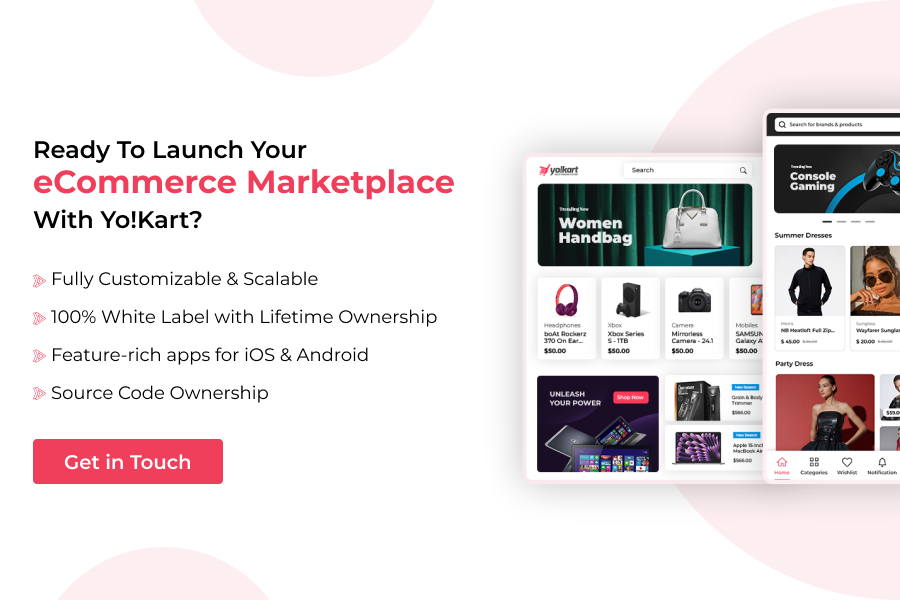
Yo!Kart is a white-label, self-hosted multi-vendor eCommerce marketplace software that enables entrepreneurs to launch niche-specific marketplaces without building a platform from scratch. It supports multiple monetization models, allowing businesses to select revenue streams based on their business model, target audience, and operational requirements.
Revenue Models Supported by Yo!Kart
Yo!Kart supports several revenue-generating options, including:
- Commission Fees: Earn revenue by charging commissions on transactions.
- Seller Subscriptions: Offer paid subscription plans to sellers.
- Subscription Add-On: Extend marketplace monetization through subscription-based functionality.
- Sponsored Ads and Promotions: Generate revenue by offering promotional opportunities to sellers.
- Third-Party Advertisements: Monetize marketplace visibility through external advertising.
In addition to supporting multiple revenue streams, Yo!Kart provides the core infrastructure entrepreneurs need to establish and manage a multi-vendor marketplace.
Why Choose Yo!Kart for Your Marketplace Business?
- Ready-to-Use Marketplace Architecture: Launch with an established multi-vendor eCommerce framework.
- White-Label Branding and Customization: Configure the solution to reflect your brand identity and business requirements.
- One-Time Purchase Model: Access the software through a one-time purchase model, subject to the applicable licensing terms.
- Customizable Source Code: Adapt the platform to meet specific business requirements.
- Pre-Integrated APIs: Connect with supported payment gateways, shipping providers, analytics systems, and other third-party services.
With its ready-made infrastructure and support for multiple monetization options, Yo!Kart provides entrepreneurs with a foundation for launching and growing a marketplace aligned with their business goals.
See How Yo!Kart Supports Marketplace Monetization
Conclusion
Several Multi-vendor marketplaces earn money through commissions, seller subscriptions, listing fees, featured placements, advertising, lead generation, transaction fees, and value-added services.
But that does not mean every marketplace can use the same revenue strategies. Factors like specific niche, business model, target audience, and more play an important role in finalizing the revenue streams for your marketplace.
For startups, focusing on a simple revenue model can make it easier to attract sellers and validate demand. However, as the platform grows, marketplaces can gradually add additional streams to diversify revenue sources.
Ultimately, sustainable monetization requires balancing the marketplace’s operating costs with the economic needs of sellers and the expectations of buyers. By testing pricing, tracking performance, and aligning fees with genuine value, entrepreneurs can develop a revenue strategy that supports long-term marketplace growth.
Frequently Asked Questions
Q 1. What is the main source of Revenue for a Multi-Vendor Marketplace?
Ans. Multi-vendor marketplaces usually rely mainly on transaction commissions as their revenue source. source. They earn a specific percentage of fixed charges when the transaction is complete. Some platforms rely on other revenue streams like subscriptions, listing fees, lead generation, or a combination of models.
Q 2. Can a Multi-Vendor Marketplace Use Multiple Revenue Models?
Ans. Yes, a multi-vendor marketplace can use multiple revenue models. A marketplace can combine commissions with subscriptions, sponsored listings, advertising, or value-added services. It is generally best to start with a clear core model and introduce additional streams when users see sufficient value in them.
Q 3. How Do Marketplaces Earn from Buyers and Sellers?
Ans. Marketplaces charge sellers commission fees on every transaction and extra for advertising or listings. Meanwhile, they charge buyers through checkout service fees or premium subscriptions to access the platform.
Q 4. How Can a Startup Make Money on a Marketplace Without Many Users?
Ans. Instead of incorporating huge commissions or subscription packages, startups should first begin with basic revenue streams that support user engagement on the marketplace.
Q 5. What Is the Difference Between Marketplace Revenue and Gross Merchandise Value (GMV)?
Ans. GMV is the total value of transactions processed through a marketplace over a specified period. Marketplace revenue is the amount the platform earns through commissions, fees, subscriptions, advertising, and other income sources. The two figures should not be treated as interchangeable.
Q 6. How Does Marketplace Software Help Manage Revenue?
Ans. Marketplace software, like Yo!Kart offers built-in revenue streams like commission calculations, subscription plans, payment tracking, seller payouts, listing fees, and reporting, depending on its capabilities. Entrepreneurs should verify that the chosen solution supports their intended monetization model and required payment integrations.
Access All Possible Revenue Streams For Your Multi-Vendor Marketplace
Talk To Our ExpertsPopular Posts