
Back To Home

Yo!Kart vs Shipturtle: Which is the Best eCommerce Solution for Your Multi-Vendor Marketplace
425
Views
Published 14th Jan 2026
Confused between Yo!Kart and Shipturtle? Struggling to decide on the best eCommerce solution to build your multi-vendor marketplace?
Alright! This comparison blog will help you choose the best solution.
However, deciding on the right eCommerce software requires a thorough comparison and analysis. You need to explore all the key differences and understand which one between Yo!Kart and Shipturtle can perfectly align with your specific requirements and be the right fit for your marketplace idea.
This informative craft highlights all the key factors that one must consider when getting started with a multi-vendor marketplace software. By the end of this blog, you will be able to decide on the best eCommerce solution and make an informed decision.
Table of Contents
An Overview of Yo!Kart and Shipturtle
YoKart and Shipturtle are multi-vendor marketplace solutions. Both enable multi-vendor functionalities and can help you operate a multi-vendor marketplace. However, to decide which one of these solutions is reliable and an ideal fit for your business requires a detailed comparison. Let’s get started with an overview before we dive deep into key comparisons between Yo!Kart and Shipturtle.
What is Yo!Kart?
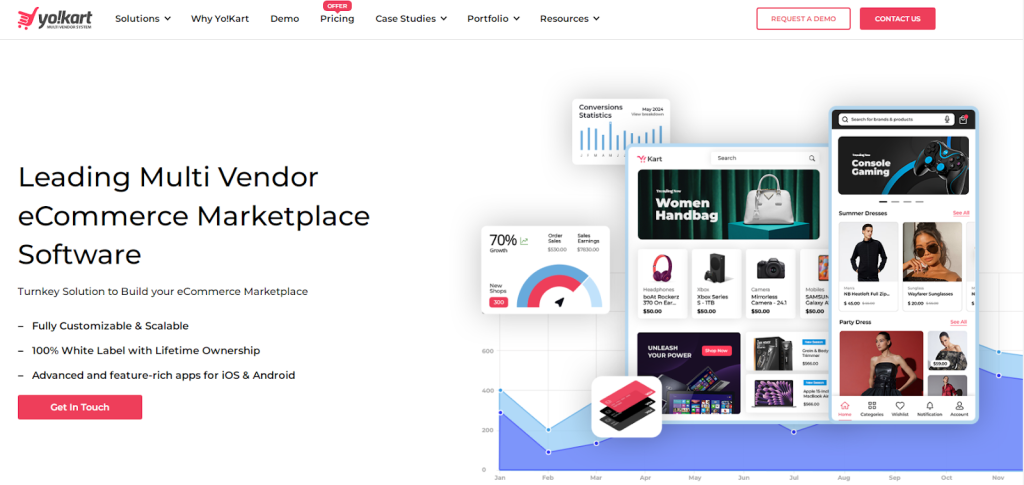
Yo!Kart is a dedicated multi-vendor marketplace software. It allows entrepreneurs and business owners to build their own multi-vendor marketplace similar to Amazon, Alibaba and Etsy independently. It comes with all the necessary features and supports the functionality needed when operating a platform with multiple vendors. Yo!Kart provides separate dashboards for admins, sellers and customers. Participants on the platform can easily complete transitions and play their roles. From a robust web panel to user-friendly mobile apps, Yo!Kart offers a complete multi-vendor marketplace ecosystem.
What is Shipturtle?
Shipturtle is a SaaS-based multi-vendor marketplace plugin. It integrates with online stores built with Shopify, WooCommerce and Magento to transform them into a multi-vendor marketplace. By integrating Shipturtle into single-vendor store businesses can onboard multiple vendors, manage listings, commissions, automate shipping and invoicing. However, Shipturtle lacks when it comes to build a multi-vendor marketplace independently. The plugin requires the foundation of a single-vendor store to enable multi-vendor functionality.

Key Comparisons: Decide on the Best eCommerce Software for Your Multi-Vendor Marketplace
In the comparison below, you will explore all the critical factors that one should look for when choosing a multi-vendor marketplace. This comparison will help you decide on the clear winner between Yo!Kart and Shipturtle.
- Affordability: Which eCommerce Solution is Affordable in the Long Run?
- Hosting Control: Which Solution Wins When it Comes to Offering Control Over Hosting?
- Source Code Ownership: Do Yo!Kart and Shipturtle both Provide Access to the Source Code?
- Third-Party Integrations: Which Platform is more compatible with Integration and Relies on Them?
- Customization Flexibility: Which Multi-Vendor Solution is More Flexible with Customization?
- Scalability: Which Multi-Vendor Marketplace Solution is Future-Proof?
- Ratings and Reviews: See What Users Say about Yo!Kart and Shipturtle
1. Affordability: Which eCommerce Solution is Affordable in the Long Run?
Cost consideration is also an important factor that one should consider when looking for a multi-vendor marketplace software. You need to find a solution that is cost-effective.
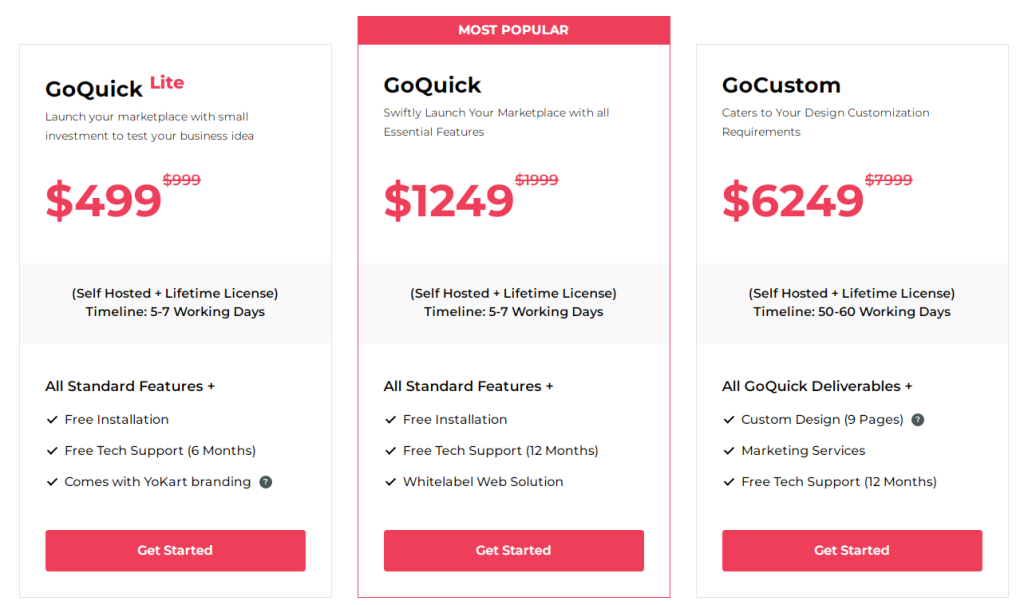
Yo!Kart: Yo!Kart offers a lifetime license to use the software at a one-time payment. You only need to pay for the license. Rest assured that Yo!Kart incurs no recurring or subscription fees. In addition, it comes with all pre-integrated APIs and tools required for shipping, tax management, payment processing and more.
Web App Packages
Web with Mobile Apps
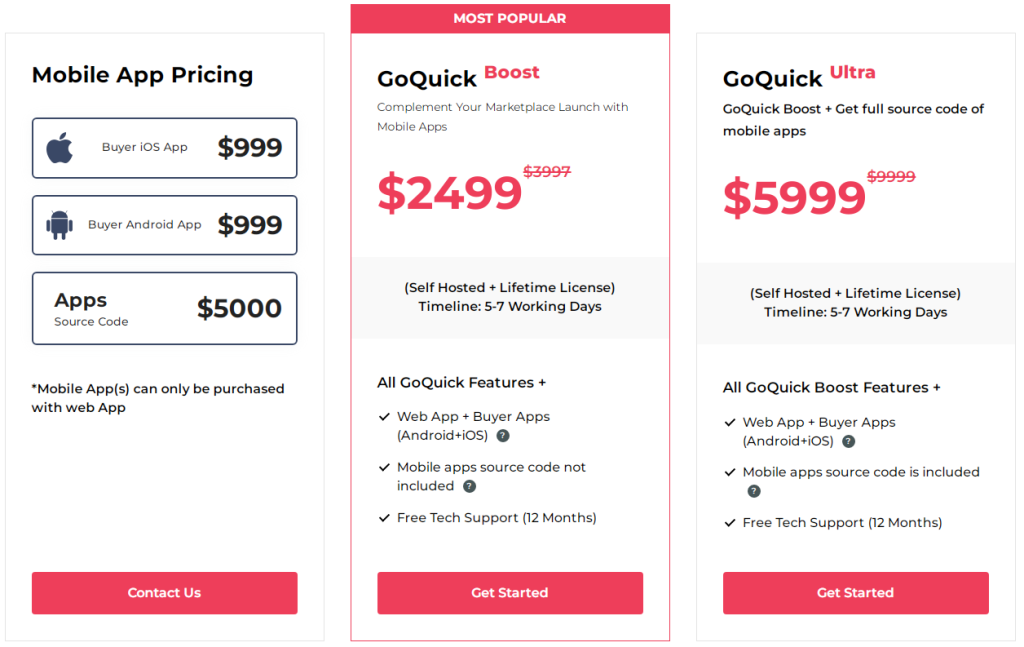
Get a Lifetime License at a One-time Payment
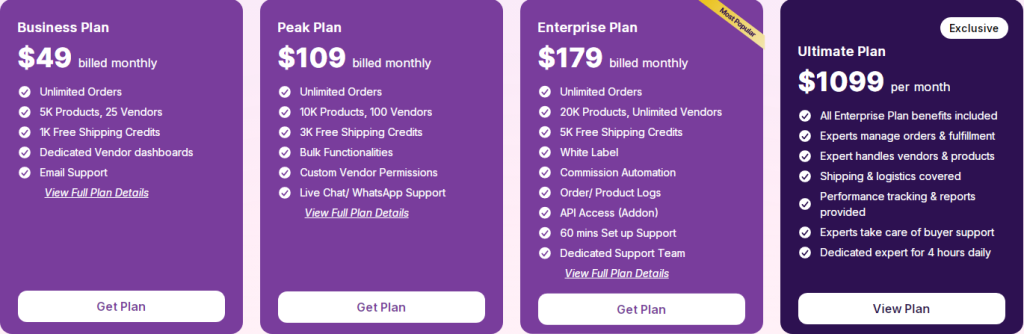
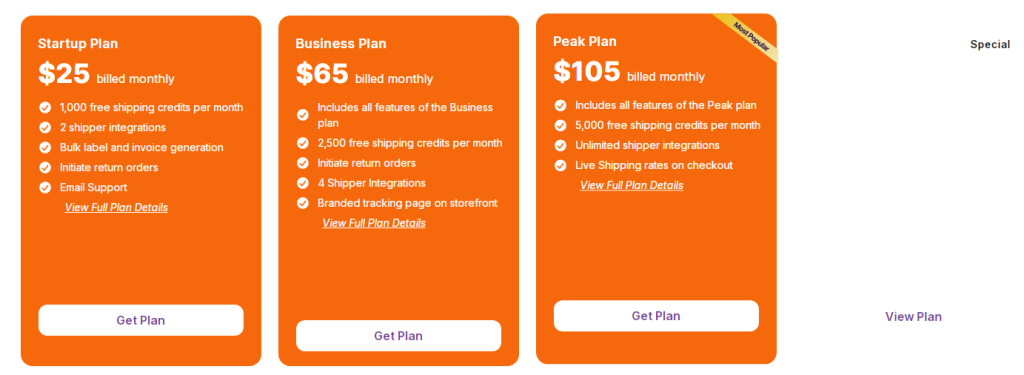
Shipturtle: Shipturtle requires a monthly or yearly subscription fee. In addition, you need to add extra shipping plans, add-ons and other exclusive charges or fees you are already paying for operating your online store.
Marketplace Plan
Shipping Plans
Add-on Charges
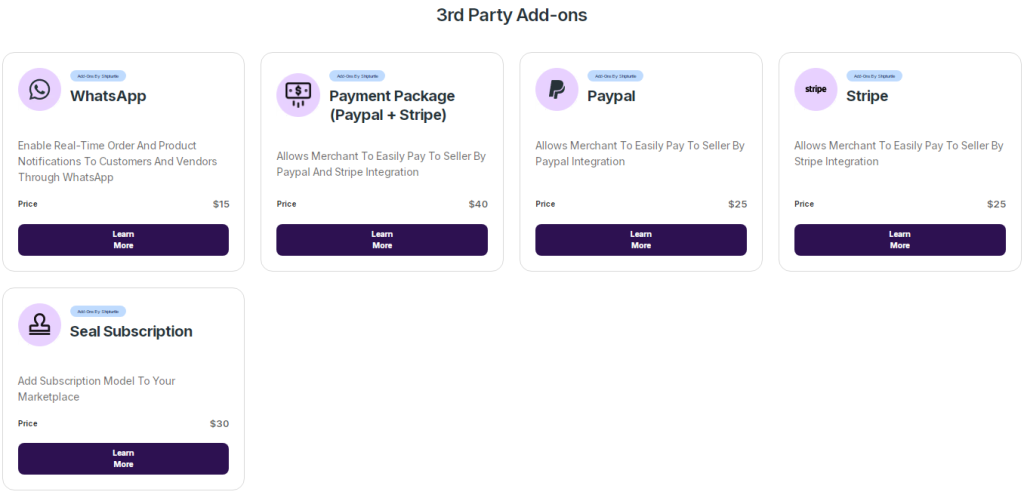
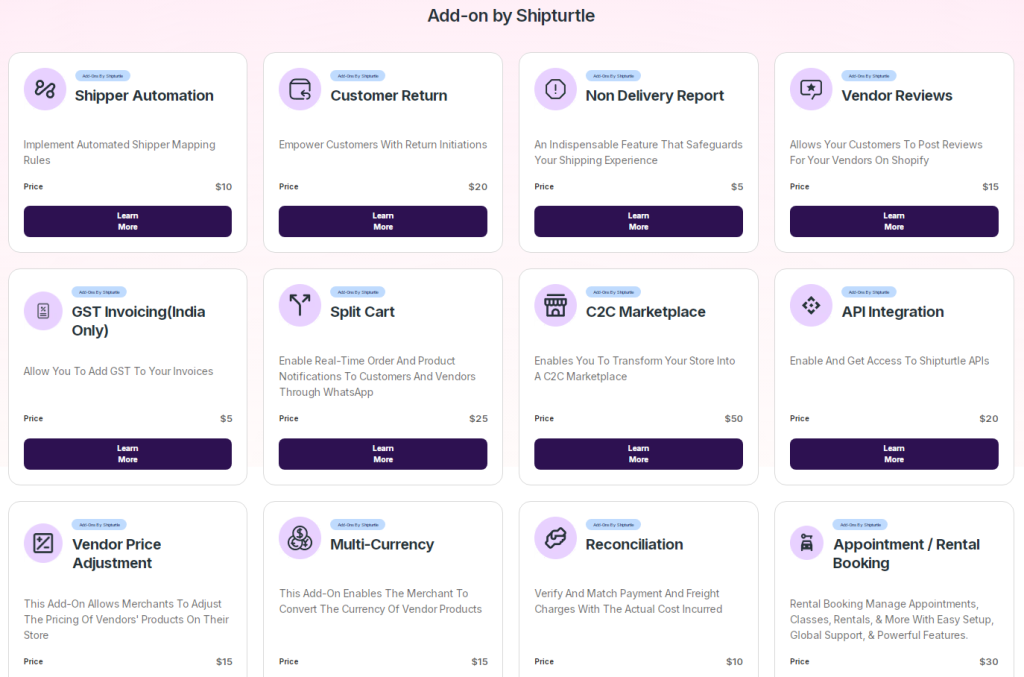
In addition to these add-ons, there are several more you can be charged for.
Let’s understand the pricing difference through the tables below.
Here, we will compare the pricing of YoKart and Shipturtle using Tables 1 and 2 to determine which platform is more cost-effective.
In Table 1, we will compare the white-label plans offered by both solutions.
- Yo!Kart’s White-label Enterprise-level Plan: $1249 (One-Time)
- Shipturtle’s White-label Enterprise-level Plan: $179 (Monthly)
| Platform | Cost You Today | After 5 Years | After 10 Years | After 20 Years |
| Yo!Kart | $1249 | $1249 | $1249 | $1249 |
| Shipturtle | $179 | $10740 | $21480 | $42960 |
However, Shipturtle’s white-label enterprise-level plan poses several restrictions and requires multiple add-ons to enable a number of services that already exist in Yo!Kart without any additional costs.
Services Offered By Yo!Kart and Shipturtle, According to the above Packages Compared.
| Offerings | Yo!Kart | Shipturtle |
| Number of Products (Listings) | Unlimited | 20K |
| Free Tech Support | 1 Year | 60 mins Set up Support |
| Shipping Carrier | Pre-integrated | Add-ons Require |
| Payment Processing | 20+ Pre-integrated | Add-ons Require |
| Return Management Tool | In-built | Add-ons Require |
| Vendor Reviews | In-built | Add-ons Require |
| Service Booking | In-built | Add-ons Require |
| C2C Marketplace | In-Built | Add-ons Require |
| Multi-lingual Support | In-Built | Add-ons Require |
| Multi-Currency Support | In-Built | Add-ons Require |
| Smart Tracking System | Pre-integrated | Add-ons Require |
| Discounts Management | In-Built | Add-ons Require |
| Vendor Subscription | In-Built | Add-ons Require |
Several more services are there for which Shipturtle relies on add-ons and Yo!Kart comes with in-built or pre-integrated solutions.
In Table 2, we will compare Shipturtle’s unlimited plan with Yo!Kart GoQuick as it offers similar, even more features, functionality, flexibility or services than Shipturtle.
- Yo!Kart’s Unlimited Plan (GoQuick): $1249 (One-Time)
- Shipturtle’s Exclusive Unlimited Plan: $1099 (Monthly)
| Platform | Cost You Today | After 5 Years | After 10 Years | After 20 Years |
| Yo!Kart | $1249 | $1249 | $1249 | $1249 |
| Shipturtle | $1099 | $65940 | $131880 | $263760 |
When it comes to choosing a cost-effective solution, people often think of the initial investment. However, you can see a huge difference between the pricing of Yo!Kart and Shipturtle, when compared in the long run. Even Yo!Kart’s highest plan, GoCustom, which offers 9 pages of customization in addition to the GoQuick plan, is available at $6249 only.
| Highlight Yo!Kart is the clear winner when comparing Shipturtle’s pricing plans and services offered. Shipturtle’s subscription fees, add-on charges, and other additional recurring costs can make a huge price difference in the long run. Therefore, if you are looking for a cost-effective Shipturtle alternative, then Yo!Kart can be the most reliable option. |
2. Hosting Control: Which Solution Wins When it Comes to Offering Control Over Hosting?
Complete control over hosting brings several advantages. It’s directly associated with security, ownership, performance and operational efficiency. Let’s explore which one of these solutions between Yo!Kart and Shipturtle offer more control over hosting.
- Yo!Kart: Yo!Kart is a self-hosted eCommerce software.
- Shipturtle: Shipturtle is a hosted (SaaS) solution.
Let’s explore the differences between self-hosted and hosted eCommerce solutions in the table and explanation below.
| Key Comparison | Yo!Kart | Shipturtle |
| Hosting Preference | Yes | No |
| Control | Complete | Limited |
| Data Stored on | Private Server | Third-party Server |
| Data Security | Belongs to you | Third-party dependency |
| Performance | High | High (Sometimes Slow) |
Affordability | High upfront but cost-saving in the long run | Low upfront but expensive in the long run |
What are the Key Differences?
Hosting Preference:
- You can host the platform launch with Yo!Kart on your preferred server.
- Shipturtle doesn’t offer a hosting preference due to its SaaS nature.
Control over the Platform:
- Yo!Kart offers complete control over the platform.
- When you choose Shipturtle, you gain access to the services offered, restricted by the package you choose.
Data Storage and Security:
- Data is stored on your private server and security belongs to you when you choose Yo!Kart
- If you get started with Shipturtle, data is stored on the third-party server and the security belongs to them only.
Marketplace Performance:
- Being a self-hosted solution, Yo!Kart ensures high performance as the platform is hosted on a dedicated server.
- While operating a marketplace with Shipturtle may lead to performance-related challenges due to a common and shared server.
Upfront Investment and Affordability:
- Setting up a self-hosted solution requires a higher upfront investment, as you need to manage server infrastructure. However, in the long run, it can be cost-effective.
- When it comes to upfront investment, Shipturtle requires less comparatively. However, the cost can increase with an increased number of users, transactions and listings, making it more expensive than a self-hosted one.
| Highlight A self-hosted solution like Yo!Kart offers complete control and is affordable in the long run. On the other hand, Shipturtle minimizes upfront investment but lacks when it comes to offering control and flexibility. |
Looking for a Self-Hosted eCommerce Software?
3. Source Code Ownership: Do Yo!Kart and Shipturtle both Provide Access to the Source Code?
Source code is fundamental. It’s a set of instructions prepared using different programming languages and technologies to make the platform functional. The features, functionalities, security, and capabilities of your marketplace rely on the quality of the code. Gaining access or ownership to the source code gives you complete control over your marketplace, from its architecture to functionality; you can flexibly manage everything.
- Yo!Kart: Yo!Kart offers source code ownership alongside a lifetime license to use the software.
- Shipturtle: Shipturtle is a SaaS-based solution that doesn’t enable access to the source code or offer source code ownership.
Let’s take a look at the difference between a solution with source code ownership like Yo!Kart and another without like Shipturtle.
| Key Comparison | Yo!Kart (With Source Code) | Shipturtle (Without Source Code) |
| Control Over the Infrastructure | Complete | Limited |
| Customization Flexibility | Code-Level Access | Restricted |
| Scalability Support | Flexible when Scaling | Restricted by Pricing Tiers |
| Integration Compatibility | Fully Compatible | Limited |
| Updates & Upgrades Managed By | Self-Managed, Processed at Your Preferences | Reliance on Shipturtle |
What are the Key Differences?
Control Over the Infrastructure:
- Yo!Kart provides complete access to the source code that ultimately gives you complete control over the infrastructure.
- Shipturtle retains source code ownership, which means it doesn’t provide access to the code.
Customization Flexibility:
- With Yo!Kart, you can implement code-level customization.
- Shipturtle is also flexible with customization, but it lacks when it comes to code-level implementation.
Scalability:
- Yo!Kart is flexible when it comes to supporting growth and expansion. Its infrastructure is designed with scalability in mind. At the same time, you implement code-level updates if required.
- Shipturtle may lead to several restrictions when growing your business. In addition, scaling your business with Shipturtle may be more expensive. Shipturtle’s packages validate the statement clearly.
Integration Compatibility:
- Yo!Kart allows deep integration with third-party tools and APIs.
- With Shipturtle, you may face limitations with integrations. There is a high chance that you can only integrate tools and APIs that are vendor-supported.
Updates & Upgrades:
- While getting source code ownership, you can decide on updates and upgrades.
- On the other hand, with Shipturtle, you can be forced to upgrade and update. At the same time, you can’t decide when to upgrade.
| Highlight Yo!Kart provides source code ownership which means you can access, modify and implement changes to it. Shipturtle doesn’t mean you can’t access the code. Therefore, Yo!Kart here is getting the edge when it comes to gaining complete control and ownership over the platform or the infrastructure. |
4. Third-Party Integrations: Which Platform is more compatible with Integration and Relies on Them?
You can’t ignore the importance of third-party tools and APIs when operating a multi-vendor marketplace. They help you enable out-of-the-box features, functionality and services on the platform without the need for custom development.
In addition, several operational needs such as payment processing, tax management, shipment and order fulfillment make third-party integration critical. Therefore, you need to find a multi-vendor marketplace software that is compatible with third-party integrations.
At the same time, you need to consider whether the solution heavily relies on them. Because more dependency on add-ons may lead to complexity and challenges on the marketplace. Both Yo!Kart and Shipturtle are multi-vendor solutions. However, they serve differently when it comes to third-party integration and reliance on third-party systems.
- Yo!Kart: Yo!Kart supports third-party integrations and its self-hosted nature makes it fully compatible. However, the solution is especially designed to build multi-vendor marketplaces; it comes with built-in features and is less reliant on third-party integrations.
- Shipturtle: Shipturtle integrates with platforms like Shopify and WooCommerce to enable multi-vendor functionality and is also compatible with integrations. However, the dependency of Shipturtle on third-party integrations is high.
| Highlight Yo!Kart minimizes the need for third-party integration by offering a wide range of built-in features. However, the solution is truly flexible with integrations, especially when it comes to custom integration, Yo!Kart is a more reliable choice. On the other hand, Shipturtle also allows third-party integration. Unlike Yo!Kart, the solution heavily relies on third-party integration. |
5. Customization Flexibility: Which Multi-Vendor Solution is More Flexible with Customization?
When you build a marketplace, you want your platform to reflect your brand. The platform should be aligned with your specific business’s requirements, users’ preferences and brand tone. That’s why you should consider an eCommerce solution that offers more flexibility when it comes to tailoring the marketplace based on your personalized needs.
- Yo!Kart: Customization flexibility is one of the Yo!Kart’s USPs. The solution is fully customizable. Yo!Kart’s source code access guarantees its customization flexibility.
- Shipturtle: Shipturtle is also a customizable solution. However, it may restrict modifications due to its pre-defined parameters. In addition, several users have reported limitations with its CSS edits.
| Highlight Both solutions are customizable. If you are looking for deep customization capabilities without any limitations, you can choose Yo!Kart. On the other hand, you can also choose Shipturtle. However, the solution doesn’t support code-level customization like Yo!Kart. In addition, you need to be mindful that some users have reported issues with customization limitations with Shipturtle’s CSS. |
6. Scalability: Which Multi-Vendor Marketplace Solution is Future-Proof?
A scalable multi-vendor marketplace software enables businesses to handle increasing loads on the platform. It can easily handle a growing number of listings, vendors, buyers and transactions without leading to any performance-related challenges. You can easily grow your business.
- Yo!Kart: Yo!Kart is built to support growth and expansion. The solution has already proven its ability by handling millions of listings, buyers and sellers. If you are looking for a future-proof solution, Yo!Kart can be the one that handles an increasing number of buyers, sellers, listings and transactions without performance degradation.
- Shipturtle: Shipturtle is also a scalable solution. It can also handle increased loads on the marketplace, but at additional cost. Growing your business with Shipturtle requires additional costs. The solution offers different plans separated by the number of products, vendors and transactions.
| Highlight Yo!Kart and Shipturtle are both scalable solutions. They can handle an increasing number of users, transactions and listings. The primary difference is that Shipturtle supports growth at additional costs. On the other hand, Yo!Kart is designed to handle growth and expansion and it incurs no additional costs. Therefore, if you are looking for a solution that supports growth at no additional expense, Yo!Kart can be the best Shipturtle alternative to build your multi-vendor marketplace. |
Launch a Future-Proof Multi-Vendor Marketplace with Yo!Kart
7. Ratings and Reviews: See What Users Say about Yo!Kart and Shipturtle
Checking ratings and reviews on the popular platforms can help you get an overview of the real-world performance. Yo!Kart and Shipturtle both are multi-vendor marketplace software. However, to decide which one of these solutions is the best or can deliver a seamless experience, you need to check ratings and reviews by users.
Ratings on Popular Platforms
| Platform | Yo!Kart | Shipturtle |
| Software Suggest | 4.8/5 | No Rating or Review |
| GoodFirms | 4.8/5 | No Rating or Review |
| Capterra | 4.2/5 | 4.9/5 |
| G2 | 4.6/5 | 4.8/5 |
| Trustpilot | 3.6/5 | 3.0/5 |
| TrustRadius | 9/10 | No Rating or Review |
Review for Yo!Kart
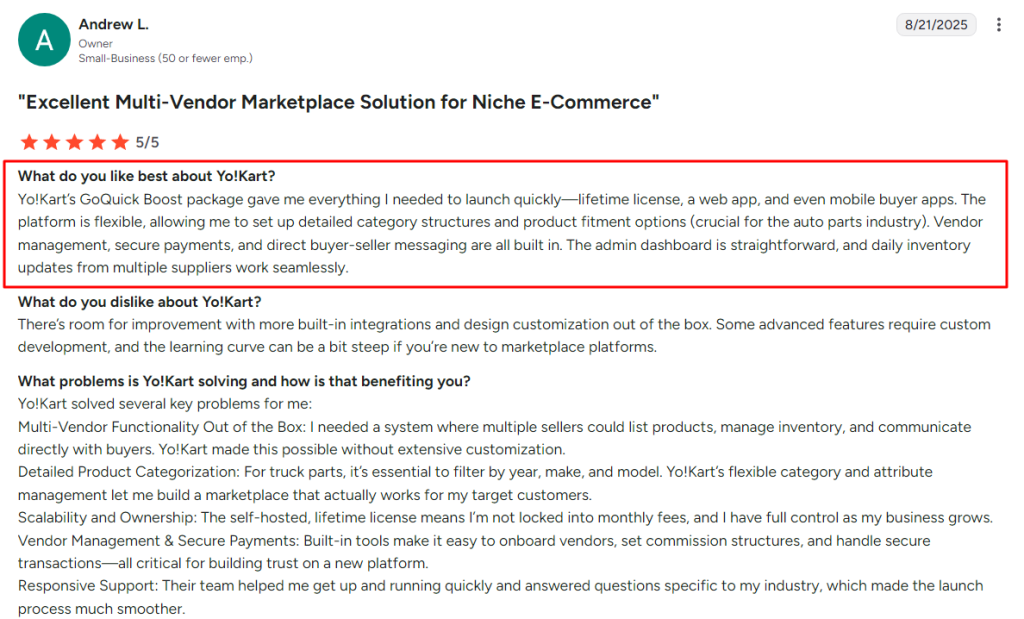
G2: Yo!Kart is an Excellent Multi-Vendor Marketplace Solution for Niche E-Commerce
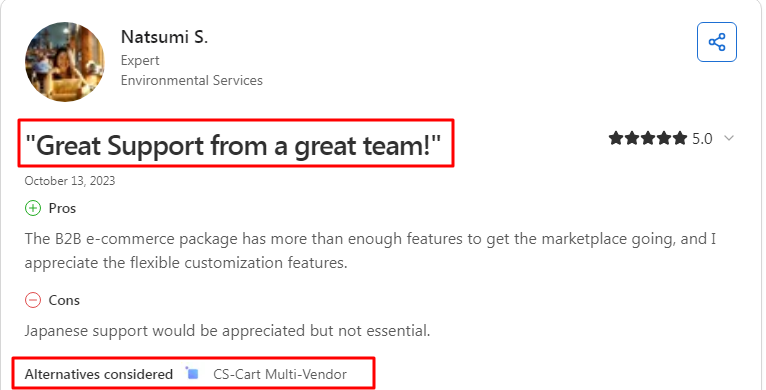
Capterra: Review for Great Customer Support
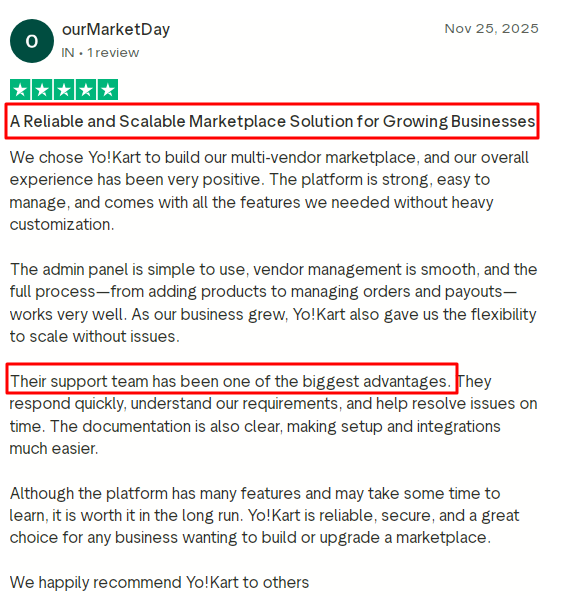
Trustpilot: Review Validates Yo!Kart’s Scalability and Reliability
Review for Shipturtle
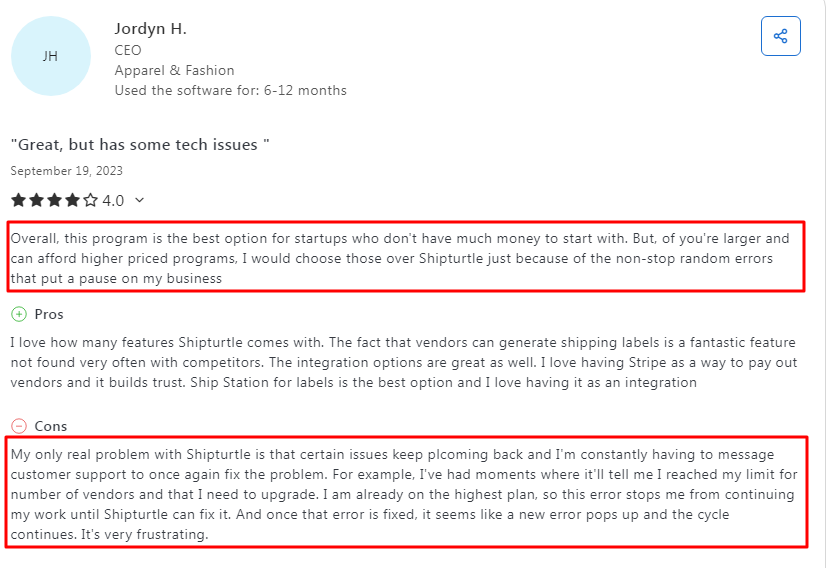
Trustpilot: Review regarding technical issues and customer support

Capterra: User has reported challenges due to constant technical problems and Shipturtle’s limitations, even with the highest plan.
| Highlight YoKart and Shipturtle both the solutions are reliable to start a multi-vendor marketplace. However, based on reviews, Yo!Kart can be the solution that can help you build a scalable, customizable and fully operational multi-vendor marketplace without leading to any significant challenges. However, users using Shipturtle have reported several technical issues, raised support services-related concerns, dependency on add-ons even for necessary features, delays in features implementation and more. |
Why is Yo!Kart The Best Shipturtle Alternative to Build Your Multi-Vendor Marketplace?
Looking for the best Shipturtle alternative? You can choose Yo!Kart for sure. Shipturtle is a plugin that can only enable multi-vendor features by integrating with your existing store. Yo!Kart can help you build a multi-vendor marketplace without the need for any plugin or add-ons.
Shipturtle heavily relies on add-ons for some critical and advanced multi-vendor features. However, Yo!Kart supports out-of-the-box features that can help you operate a multi-vendor platform seamlessly.
Additionally, Yo!Kart is the best Shipturtle alternative to get started with. It can deliver much more than Shipturtle. Let’s explore the advantages of choosing Yo!Kart in the table below.
| Key Comparison | Yo!Kart | Shipturtle |
| Solution Type | Independent Software | Multi-Vendor Plugin |
| Hosting Type | Self-Hosted | Hosted |
| Multi-vendor Features | In-Built | In-Built + Add-on Requires |
| Pricing Model | One-Time | Recurring |
| Licensing Type | Lifetime | Subscription-Based |
| Customizability | Fully Customizable | Limited to Pre-Defined Parameters |
| Scability | Highly scalable | Scalable at Additional Cost |
| Source Code Ownership | ✓ | X |
| Control over the Architecture | ✓ | X |
| Control over the Platform | Complete | Limited, Restricted to SaaS Nature |
| Vendor Lock-in | No | Yes, Due to the SaaS Nature |
| Data Storage | Private Server | Third-Party Server |
| Data Security | Self-Dependancy | Belongs to Service Provider |
| Control over Data | Complete | Complete but Challenging |
Affordability | Higher Upfront but Affordable in the Long Run | Lower Upfront but Expensive in the Long Run |
| Multi-Currency Support | In-Built | Add-on Require |
| Multi-Lingual Support | In-Built | Add-on Require |
| Updates & Upgrades | Self-Managed | Dependency on Provider |
| Payment Gateways | 20+ Pre-Integrated | Add-on Require |
| Shipping Carrier | Pre-integrated | Add-ons Require |
| C2C Marketplace | In-Built | Add-ons Require |
Marketplace Performance | High | High (Sometimes Low due to Shared and congested cloud infrastructure) |
Want to Experience the Differences What YoKart Can Deliver?
Final Thought
In this comparison blog, you have gone through a complete overview of Yo!Kart and Shipturtle. Now you can easily understand and identify which platform is the right fit for your marketplace requirements.
If you want complete control, ownership and flexibility over your marketplace and data, you can choose Yo!Kart.
On the other hand, if you are looking for a plugin to integrate with your existing online store, Shipturtle can be an option to get started with.
FAQs
Q 1. Is Yo!Kart the best alternative to Shipturtle?
Ans. Yes, Yo!Kart can be the best alternative to Shipturtle if you are looking for a self-hosted multi-vendor marketplace software.
Q 2. What are the key differences between Yo!Kart and Shipturtle?
Ans. The key differences between Yo!Kart and Shipturtle are given below.
- Yo!Kart is self-hosted, whereas Shipturtle is hosted, a SaaS-based eCommerce solution.
- Yo!Kart is an independent software, while Shipturtle is a multi-vendor plugin.
- Shipturple charges a recurring subscription fee. On the other hand, Yo!Kart offers a lifetime license at a one-time payment.
- Yo!Kart offers source code ownership, but Shipturtle doesn’t.
- While getting started with a self-hosted solution like Yo!Kart, you gain access to an eCommerce solution that is fully flexible and provides complete control with customization. However, when you choose Shipturtle, it may restrict several domains due to its SaaS nature.
Q 3. What is a multi-vendor marketplace?
Ans. A multi-vendor marketplace is an online platform where multiple vendors list and sell their products or services. Primarily, there are three participants on the marketplace: buyers, sellers and admins.
However, the platform connects a wide range of customers with a variety of products and services. Customers can buy or book products or services online at their convenience. They can make payments, complete purchases, track order status, and post reviews and ratings on the marketplace.
Q 4. What is a self-hosted multi-vendor marketplace software?
Ans. The term self-hosting refers to deploying software on your own infrastructure, rather than on an external cloud service provider’s server. Consequently, self-hosted software is a solution that enables software owners to host the platform on their preferred server. It offers complete control and ownership. Self-hosted multi-vendor marketplaces often operate on a one-time payment model. Yo!Kart is one of the leading self-hosted multi-vendor marketplace software solutions you can choose.
Q 5. What is a hosted multi-vendor marketplace software?
Ans. Hosted multi-vendor software is a pre-hosted solution. They are hosted on the service provider’s server, referred to as cloud hosting. This type of solution is managed and maintained by the provider and is popularly known as SaaS (Software-as-a-Service), which offers access to the services. Suppose you are operating a multi-vendor marketplace using a SaaS-based solution, you need to pay a monthly or yearly recurring subscription charge.
Q 6. Which software type is better to build a multi-vendor marketplace: hosted or self-hosted?
Ans. The selection of software to build your multi-vendor marketplace depends on your specific requirements.
If you are seeking a solution that requires lower initial upfront investment, you can get started with hosted (SaaS) solutions. However, a hosted solution can be expensive in the long run. In addition, you may encounter several limitations and challenges. A hosted solution always offers services tiered by pricing.
On the other hand, if you are looking for a solution that offers complete control and ownership and possesses no restrictions, you can get started with a self-hosted solution like Yo!Kart. It can be cost-efficient in the long run.