
Published Date 10th July 2026
Quick Overview
Launching a successful online marketplace starts with choosing the right platform. This guide compares the top online marketplace platforms in 2026, including Yo!Kart, Sharetribe, Arcadier, and OroMarketplace, helping you evaluate their features, deployment models, scalability, and customization capabilities to find the best fit for your business.
Introduction
The global marketplace economy continues to expand as businesses shift from traditional eCommerce stores to scalable multi-vendor ecosystems. Instead of relying on a single-vendor eCommerce store, businesses are increasingly investing in multi-vendor marketplace platforms that allow multiple vendors to sell through one branded online marketplace. This approach expands product offerings, creates new revenue streams, and delivers a better shopping experience without developing a platform from scratch. As a result, industries ranging from retail and wholesale to healthcare, rentals, education, and professional services are embracing marketplace software to accelerate digital transformation.
However, with numerous marketplace platforms available, selecting the right solution can be challenging. Some solutions are designed for startups looking for a quick launch, while others offer enterprise-grade capabilities for managing thousands of vendors and millions of products. Thus, businesses must evaluate platforms based on factors such as deployment model, customization, integrations, pricing, and long-term scalability.
To simplify your search, this guide compares the top 10 online marketplace platforms in 2026, highlighting their features, flexibility, deployment options, and business suitability.
Table of Contents
- Why Are Online Marketplace Platforms Gaining Popularity in 2026?
- Key Features to Look for in an Online Marketplace Platform
- Top 10 Online Marketplace Platforms in 2026
- Industries Using Online Marketplace Platforms
- Choosing the Right Online Marketplace Platform: Key Factors to Consider
- Conclusion
- FAQs
Why are Online Marketplace Platforms Gaining Popularity in 2026?
Online marketplace solutions have become the preferred choice for businesses aiming to enter the digital commerce market quickly and cost-effectively. Rather than investing months or years in custom development, organizations can leverage ready-to-use marketplace software while maintaining complete control over branding and customer experience.
As marketplace adoption accelerates across industries, these solutions continue to offer the flexibility, scalability, and reliability needed to support sustainable business growth.
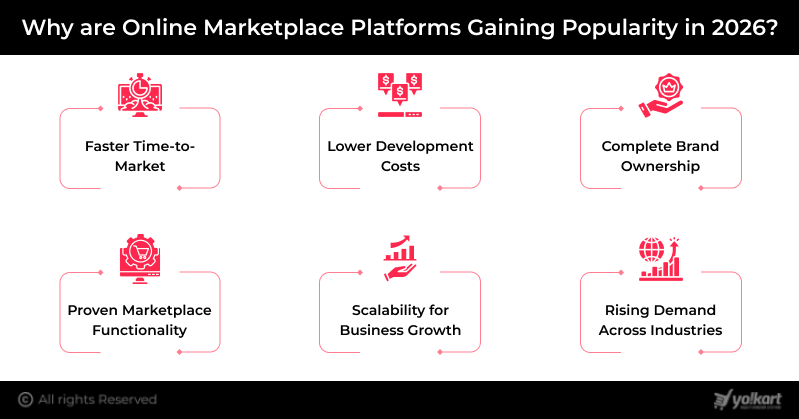
1. Faster Time-to-Market
Building a marketplace from scratch requires extensive planning, development, testing, and deployment. White-label platforms significantly reduce launch time by providing pre-built marketplace functionality, enabling businesses to go live within weeks instead of months.
2. Lower Development Costs
Custom marketplace development involves substantial investment in design, development, infrastructure, quality assurance, and ongoing maintenance. White label solutions, on the other hand, reduce these costs by offering a ready-made foundation that requires only branding and business-specific customization.
3. Complete Brand Ownership
Unlike generic online marketplace solutions, white-label software allows businesses to build a fully branded platform by customizing their logo, color scheme, domain, user interface, and workflows. This ensures a consistent customer experience without exposing third-party branding.
4. Proven Marketplace Functionality
Most online marketplace platforms include essential features such as vendor onboarding, commission management, product catalogs, inventory management, secure payments, order tracking, and analytics. These ready-to-use features minimize development risks while ensuring reliable marketplace operations.
5. Scalability for Business Growth
As marketplaces expand, businesses need software capable of supporting more vendors, products, and transactions. Modern white-label solutions are designed with scalable architectures that accommodate business growth without requiring major system overhauls.
6. Rising Demand Across Industries
Marketplace business models are no longer limited to retail. Businesses in healthcare, manufacturing, wholesale, grocery and food delivery, rentals, education, and professional services are increasingly adopting marketplace platforms to digitize operations and connect buyers with multiple sellers through a unified ecosystem.
Launch Your Marketplace Without the Development Hassle
Key Features to Look for in an Online Marketplace Platform
Choosing the right online marketplace software requires evaluating more than just pricing. The ideal solution should provide the tools needed to simplify marketplace operations, support vendors, enhance customer experiences, and scale as your business grows. When evaluating marketplace software, prioritize the following essential features:
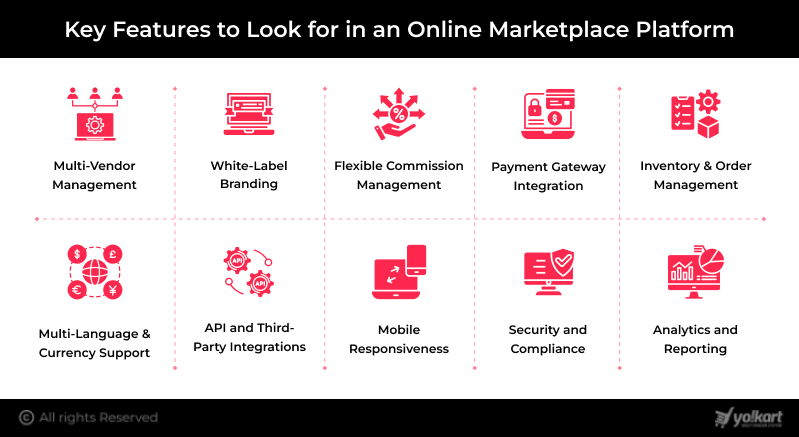
1. Multi-Vendor Management
A robust marketplace platform should simplify vendor registration, profile management, product listings, order processing, commission settings, and seller performance monitoring through a centralized admin dashboard, making it easier to manage multiple sellers efficiently.
2. White-Label Branding
Look for a platform that offers complete customization of branding elements, including logos, themes, colors, email templates, and domain names, creating a seamless brand experience for customers.
3. Flexible Commission Management
Revenue generation is a core aspect of marketplace businesses, which vary across marketplaces. Choose software that supports percentage-based commissions, fixed fees, subscription plans, listing charges, and promotional packages.
4. Payment Gateway Integration
The software should integrate with multiple payment gateways, support secure online transactions, automate vendor payouts, and accommodate regional payment methods to serve customers across different markets.
5. Inventory and Order Management
Efficient inventory synchronization, order tracking, shipping management, returns processing, and automated notifications help streamline marketplace operations while improving customer satisfaction.
6. Multi-Language and Multi-Currency Support
For businesses targeting international expansion, a multilingual interface, multi-currency support, localized tax rules, and region-specific payment options are essential for delivering a localized shopping experience.
7. API and Third-Party Integrations
Seamless integration with CRM systems, ERP accounting software, shipping providers, marketing automation platforms, and analytics solutions enables businesses to automate workflows and improve operational efficiency.
8. Mobile Responsiveness
With mobile commerce accounting for a significant share of online shopping, a marketplace platform should provide responsive web experiences or native mobile applications for buyers, sellers, and administrators to ensure a consistent experience across devices.
9. Security and Compliance
Protecting customer and business data is critical. Look for security features such as SSL encryption, secure payment processing, user authentication, role-based permissions, fraud prevention, and compliance with relevant data protection regulations.
10. Analytics and Reporting
Built-in analytics and reporting tools provide insights into sales performance, vendor activity, customer behavior, inventory trends, and revenue generation, helping marketplace owners make informed, data-driven decisions.
Top 10 Online Marketplace Platforms in 2026
With numerous online marketplace platforms available, finding the right one can be challenging. Each solution offers a unique mix of features, deployment models, customization options, and scalability.
Below, we have compared the top 10 online marketplace platforms in 2026 to help businesses identify the software that best aligns with their marketplace goals, budget, and long-term growth strategy.
1. Yo!Kart
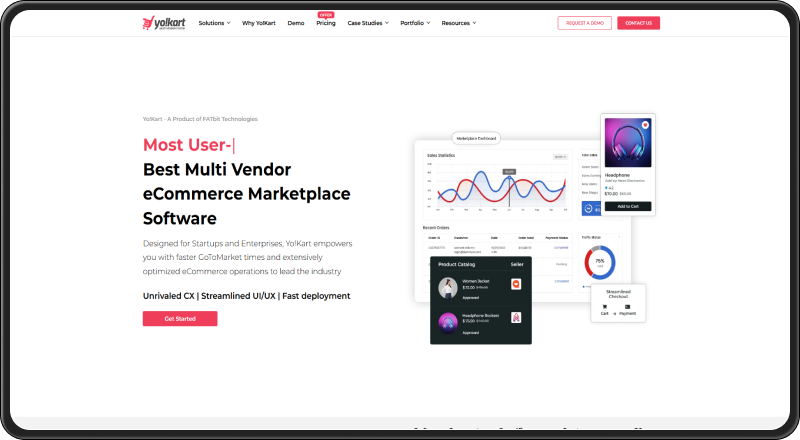
Yo!Kart is a self-hosted online marketplace platform designed for startups, SMEs, and enterprises that want to launch scalable multi-vendor marketplaces. It supports B2B, B2C, P2P, wholesale, and niche marketplace models through a single platform. With customizable source code, extensive customization options, and a one-time licensing model, Yo!Kart enables businesses to build fully branded marketplaces without recurring software subscription fees.
The platform also includes advanced vendor management, secure payment integrations, mobile apps, multilingual support, and enterprise-grade scalability, making it a reliable choice for businesses seeking long-term growth and complete ownership of their marketplace ecosystem.
Key Features
- 100% Online marketplace solution
- Multi-vendor management with admin dashboard
- Multi-language and multi-currency support
- Mobile apps for buyers and sellers
- Multiple payment gateway integrations
- Advanced commission and order management
Projects Completed: 5,000+ clients worldwide
Ratings: 5/5
See Yo!Kart in Action
2. Spryker
Spryker is a composable, enterprise-grade commerce platform designed for businesses building complex B2B marketplaces, enterprise marketplaces, and digital commerce ecosystems. Its API-first and modular architecture enables organizations to create highly customized marketplace experiences while integrating seamlessly with existing enterprise systems. Spryker is particularly suited for large businesses requiring flexibility, scalability, and advanced workflow automation.
Key Features
- Enterprise marketplace platform
- Composable and API-first architecture
- B2B commerce capabilities
- Marketplace management
- ERP and CRM integrations
- Workflow automation
Projects Completed: 150+ enterprise customers worldwide
Ratings: 4.8/5
3. Sharetribe
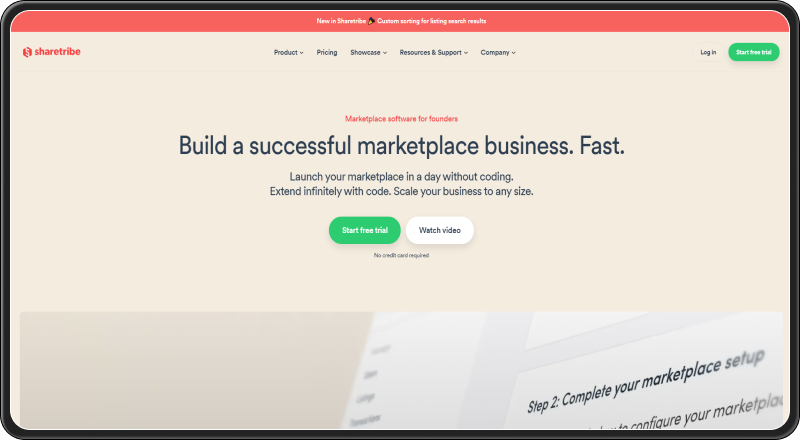
Sharetribe is a cloud-based online marketplace platform built for entrepreneurs and startups launching service, rental, and peer-to-peer marketplaces. Its no-code setup, managed hosting, and API-first architecture enable businesses to launch quickly with minimal technical expertise. As marketplace requirements evolve, developers can further customize the platform, making it a practical choice for validating and growing new marketplace ideas.
Key Features
- No-code marketplace builder
- Booking and service marketplace support
- API-first architecture
- Stripe payment integration
- Vendor management
- Responsive marketplace templates
Projects Completed: 1,000+
Ratings: 4.7/5
4. Arcadier

Arcadier is a SaaS-based marketplace platform that enables businesses to launch B2B, B2C, service, and rental marketplaces using customizable templates. The platform combines built-in marketplace functionality with developer-friendly APIs, allowing businesses to launch quickly without managing technical infrastructure. Its subscription-based model and flexible deployment make it suitable for businesses seeking a fast and hassle-free marketplace solution.
Key Features
- Online branding
- Marketplace templates
- API integrations
- Vendor onboarding
- Commission management
- Multi-currency support
Projects Completed: 500+
Ratings: 4.5/5
5. Shuup
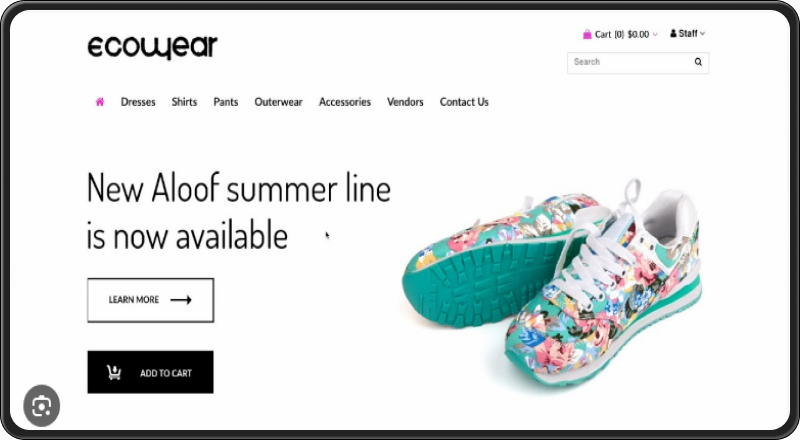
Shuup is an open-source marketplace platform designed for businesses that require complete flexibility and customization. Its modular architecture allows developers to build tailored B2B, B2C, and multi-vendor marketplaces with advanced integrations. The platform supports enterprise-grade commerce while giving businesses full control over their technology stack. Shuup is best suited for organizations with in-house development expertise. Shuup offers complete control over marketplace functionality, workflows, and technology infrastructure.
Key Features
- Open-source architecture
- B2B & B2C marketplace support
- API-first framework
- Multi-vendor management
- Custom checkout workflows
- Enterprise integrations
Projects Completed: 150+
Ratings: 4.5/5
6. Cocorico
Cocorico is an open-source marketplace solution focused on service, booking, and rental marketplaces. It allows businesses to build customized platforms where customers can connect with service providers through flexible booking workflows. With full access to the source code, organizations can tailor the platform to their unique operational requirements while maintaining complete control over customization.
Key Features
- Booking management
- Service marketplace support
- Open-source customization
- Vendor profiles
- Secure payment integration
- Reservation management
Projects Completed: 260+
Ratings: 4.4/5
7. OroMarketplace
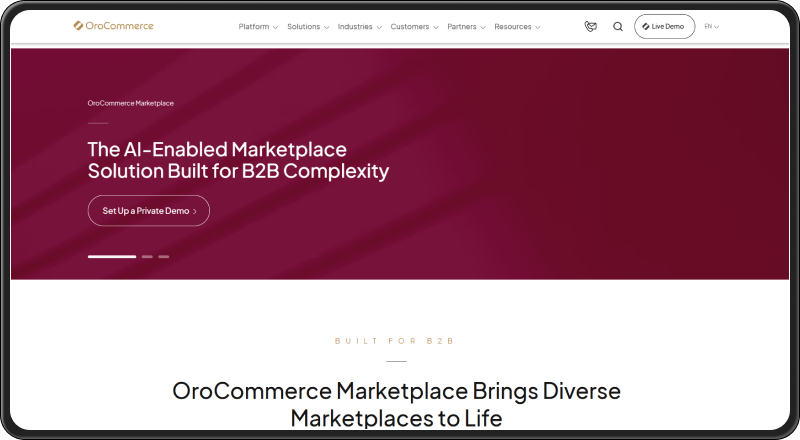
OroMarketplace is an enterprise-grade B2B marketplace platform developed for manufacturers, distributors, wholesalers, and procurement businesses. It provides advanced features such as customer-specific pricing, RFQ management, workflow automation, and enterprise integrations. The platform is designed to support complex B2B buying processes while delivering scalability and high performance. Moreover, its scalable architecture makes it well-suited for large organizations with sophisticated B2B commerce requirements.
Key Features
- Enterprise B2B marketplace
- Customer-specific pricing
- RFQ management
- ERP & CRM integration
- API-first architecture
- Workflow automation
Projects Completed: 170+
Ratings: 4.3/5
Turn Your Marketplace Idea Into a Successful Business
8. Nautical Commerce
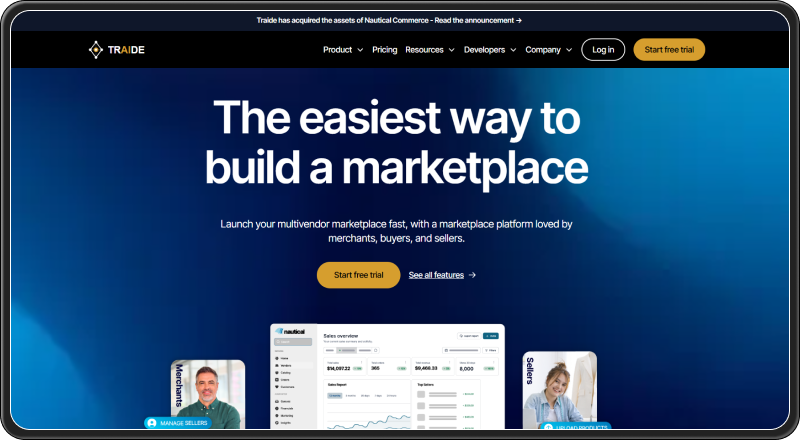
Nautical Commerce is a modern headless marketplace platform that enables businesses to create scalable online marketplaces using API-first technology. Its composable architecture provides greater flexibility for building custom buyer and seller experiences while maintaining a powerful backend. It supports multi-vendor operations, payment processing, and workflow automation, making it an ideal choice for businesses seeking a modern and scalable marketplace infrastructure.
Key Features
- Headless commerce
- API-first architecture
- Vendor management
- Order automation
- Payment integrations
- Composable commerce support
Projects Completed: 200+
Ratings: 4.2/5
9. Spree Commerce
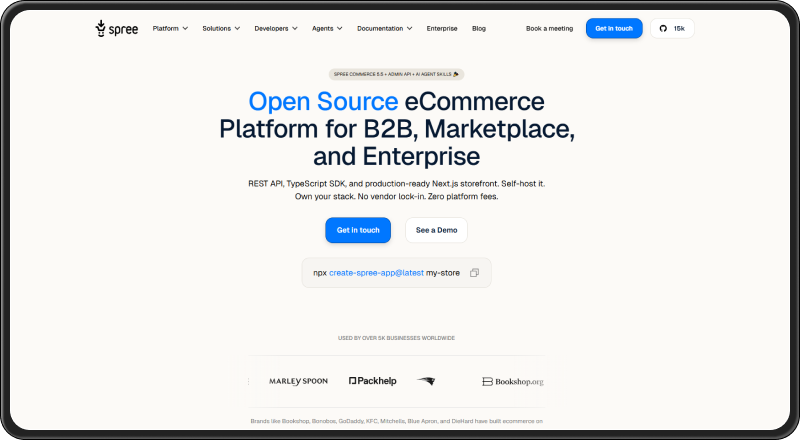
Spree Commerce is an open-source commerce platform that helps developers build fully customized online marketplaces and eCommerce applications. Its API-first architecture and modular framework allow businesses to create tailored marketplace experiences without vendor lock-in. The platform integrates easily with third-party systems and supports extensive customization. It is well suited for businesses with experienced development teams.
Key Features
- Open-source framework
- REST & GraphQL APIs
- Multi-store support
- Custom workflows
- Third-party integrations
- Mobile-ready architecture
Projects Completed: 185+
Ratings: 4/5
10. Marketcube.io
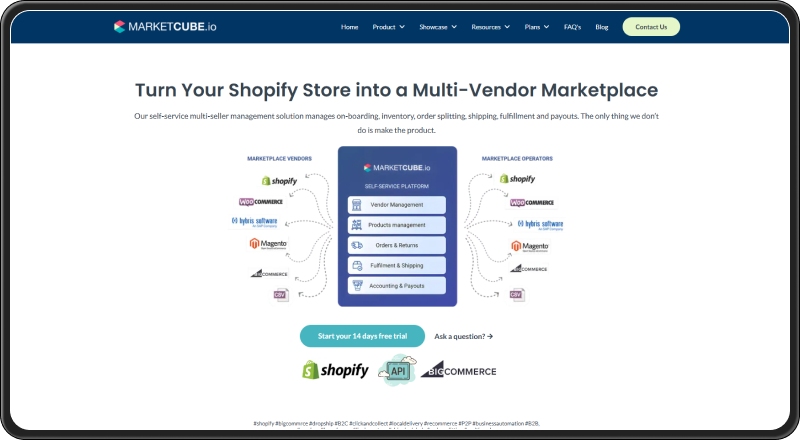
Marketcube.io is a cloud-based online marketplace platform that enables businesses to launch branded multi-vendor marketplaces without extensive development. It offers built-in tools for vendor onboarding, subscription management, payment processing, and marketplace administration. Designed for SMEs and growing businesses, the platform offers an accessible SaaS solution for efficiently managing marketplace operations.
Key Features
- White-label branding
- Vendor onboarding
- Subscription management
- Analytics dashboard
- Payment gateway integration
- Marketplace automation
Projects Completed: 85+
Ratings: 3.7/5
Industries Using Online Marketplace Platforms
Online marketplace platforms have evolved far beyond traditional eCommerce. Today, businesses across numerous industries are leveraging marketplace technology to connect buyers and sellers through branded digital ecosystems tailored to their unique business models.
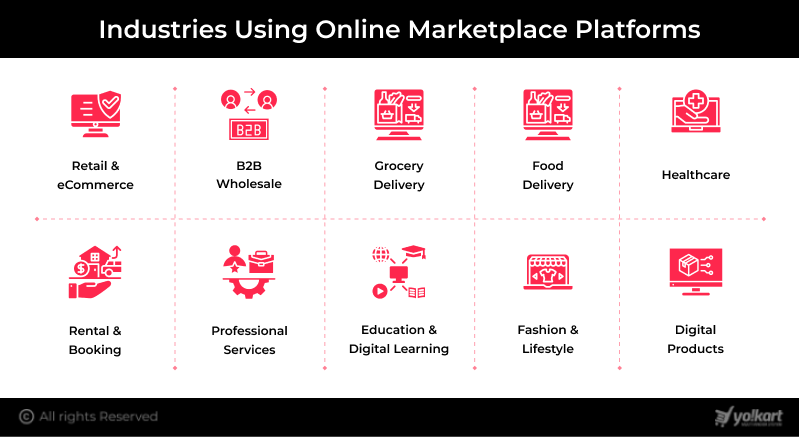
1. Retail & eCommerce
Retail businesses use multi-vendor marketplace platforms to expand product offerings, onboard multiple sellers, and deliver to customers a wider selection through a single online storefront.
2. B2B Wholesale
Manufacturers, distributors, and wholesalers build procurement marketplaces that simplify bulk purchasing with custom pricing, RFQ management, and business-specific purchasing workflows.
3. Grocery Delivery
Online grocery marketplaces connect customers with supermarkets, local grocery stores, and specialty food retailers, offering convenient ordering, scheduled deliveries, and real-time order tracking.
4. Food Delivery
Restaurants, cloud kitchens, and food vendors operate through centralized platforms that streamline online ordering, payment processing, delivery coordination, and customer management.
5. Healthcare
Healthcare marketplaces connect patients with hospitals, clinics, pharmacies, diagnostic laboratories, and healthcare professionals through secure, digital healthcare ecosystems.
6. Rental & Booking
Property rentals, vehicle rentals, equipment sharing, and accommodation rental businesses use marketplace platforms with integrated booking and reservation systems to simplify scheduling and asset management.
7. Professional Services
Freelancers, consultants, tutors, home service providers, and agencies use marketplace platforms to connect with customers, manage appointments, and process secure payments.
8. Education & Digital Learning
Educational institutions and independent educators leverage marketplace software to offer online courses, tutoring sessions, digital learning resources, and certification programs.
9. Fashion & Lifestyle
Fashion brands, boutiques, and independent designers build multi-vendor marketplaces to showcase diverse product collections while providing customers with a unified shopping experience.
10. Digital Products
Software vendors, creators, and businesses sell digital products such as software, templates, eBooks, stock media, and digital assets through secure marketplace platforms with automated delivery and subscription models.
Choosing the Right Online Marketplace Platform: Key Factors to Consider
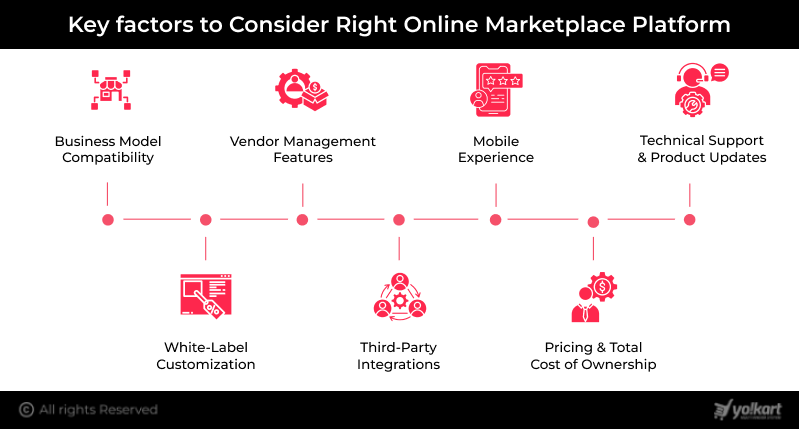
Selecting the right online multi-vendor marketplace platform is a strategic decision that can influence your marketplace’s growth, operational efficiency, and long-term success. While many platforms offer similar core functionalities, the best choice depends on your business objectives, target audience, and future scalability requirements. From customization and integrations to vendor management and pricing, every factor plays a role in determining how well the platform can support your business as it grows. Before making a decision, evaluate the following factors carefully to ensure you invest in a solution that aligns with your current needs and future expansion plans.
1. Business Model Compatibility
Choose a platform that supports your marketplace model, whether it’s B2B, B2C, P2P, rental, service-based, wholesale, or hyperlocal commerce. Platforms like Yo!Kart are designed to support multiple marketplace models from a single solution, while platforms such as OroMarketplace primarily focus on enterprise B2B commerce. Selecting software that aligns with your business model reduces customization efforts and accelerates deployment.
2. White-Label Customization
Look for a truly white-label solution that allows complete control over branding customization, including your logo, domain, color scheme, user interface, and customer experience. Businesses should also evaluate whether the platform provides source code access for advanced customization.
3. Vendor Management Features
Efficient vendor management is the backbone of any successful marketplace. Prioritize features such as vendor onboarding, product approvals, commission management, payout automation, performance tracking, and seller dashboards to simplify day-to-day marketplace operations.
4. Third-Party Integrations
A modern marketplace should integrate seamlessly with payment gateways, shipping providers, CRM systems, ERP software, accounting platforms, marketing automation tools, and analytics solutions. API-first platforms such as Yo!Kart, Nautical Commerce, and Spree Commerce offer flexible integration capabilities that help businesses build connected digital ecosystems.
5. Mobile Experience
With mobile commerce continuing to grow, ensure the platform offers a responsive website or dedicated mobile applications for buyers, sellers, and administrators to provide a seamless user experience across devices. Additionally, a consistent cross-device experience improves engagement and supports higher conversions.
6. Pricing and Total Cost of Ownership
Evaluate the overall investment rather than just the initial price. Compare one-time licensing, subscription fees, customization costs, hosting expenses, maintenance, and future upgrades. Self-hosted platforms like Yo!Kart offers one-time licensing, while SaaS solutions such as Sharetribe and Arcadier operate on recurring subscription models.
7. Technical Support and Product Updates
Reliable customer support and regular software updates ensure your marketplace remains secure, compatible with evolving technologies, and equipped with new features. Consider the quality of documentation, implementation assistance, and ongoing technical support offered by the platform provider.
Turn Your Marketplace Vision Into Reality
Conclusion
The continued rise of the marketplace economy has made online marketplace platforms a strategic investment for businesses looking to launch, scale, and diversify their digital commerce operations. Rather than spending months on custom development, organizations can leverage ready-made marketplace software to accelerate time-to-market while benefiting from built-in features, scalability, and customization.
Whether you’re building a B2B procurement marketplace, a B2C retail platform, a wholesale marketplace, or a niche online marketplace, selecting the right software is critical for long-term success. Platforms such as Yo!Kart, Sharetribe, Arcadier, Shuup, and OroMarketplace each offer distinct advantages depending on your business requirements.
Ultimately, the best online marketplace platform is the one that aligns with your business model, growth strategy, technical requirements, and budget. By carefully evaluating customization capabilities, deployment options, integrations, vendor management, scalability, security, and total cost of ownership, businesses can confidently invest in a future-ready marketplace platform that supports sustainable growth, enhances customer experiences, and creates long-term competitive value.
FAQs
1. What is an online marketplace platform?
An online marketplace platform is pre-built marketplace software that helps businesses rebrand and customize the platform with their own logo, domain, colors, and features. In addition to that, leveraging a ready-made solution is more affordable than building a marketplace from scratch.
2. How is an online marketplace different from custom marketplace development?
Online marketplace software offers ready-to-use functionality with faster deployment and lower costs. Custom development offers complete flexibility but typically requires more time, higher investment, and ongoing development resources.
3. Which industries benefit most from online marketplace software?
Online marketplace platforms are widely used in industries, including:
- Retail
- Wholesale
- Grocery delivery
- Food delivery
- Healthcare
- Education
- Rentals
- Professional services
- Automotive
- Digital products
4. What features should businesses prioritize when choosing an online marketplace platform?
Key features while choosing an online marketplace platform include:
- Vendor management
- Commission management
- Secure payment integration
- Inventory management
- Mobile responsiveness
- Multilingual support
- API integrations
- Analytics
- Robust security capabilities.
5. Can an Online marketplace platform support multiple vendors?
Yes, online marketplace platforms are specifically designed to manage multiple vendors, allowing each seller to maintain independent product catalogs, pricing, inventory, and order management while the marketplace owner oversees platform operations.
6. How do marketplace owners generate revenue?
Marketplace owners typically generate revenue through various channels, including:
- Commissions on sales
- Vendor subscriptions
- Listing fees
- Featured product promotions
- Advertising packages
- Transaction fees
- Premium seller services
7. Is online marketplace software suitable for startups?
Yes, online marketplace software solutions are an excellent choice for startups because they reduce development time, lower upfront investment, and provide proven marketplace functionality that allows businesses to validate their ideas and scale efficiently.
8. How do I choose the best online marketplace platform for my business?
Start by evaluating your business model, target audience, budget, customization requirements, scalability needs, deployment preferences, and integration capabilities. Selecting a platform that aligns with your long-term growth strategy will provide the best return on investment.
Power Your Business With the Right Enterprise Marketplace Software
Contact UsPopular Posts