

Published Date 06th May, 2026
The global eCommerce market is expected to grow at an annual growth rate of 6.84% (CAGR 2026–2030), resulting in a projected market volume of $5.05 trillion by 2030. (Source: Statista)
The eCommerce revolution is gaining traction with each passing day. With over 2.86 billion online shoppers (globally) in 2026, marketplace platforms are pulling in more traffic than any other digital channel, presenting the opportunity to launch your own multi-vendor marketplace platform.
But here’s the hard truth: choosing the wrong multi-vendor marketplace software can cost you months of development time, thousands of dollars, and a frustrating user experience that drives both buyers and sellers away. The right platform, on the other hand, can have you live in weeks, with a scalable, feature-rich marketplace that competes with the best.
This blog breaks down the top 30 multi-vendor marketplace software solutions available in 2026, evaluates what each one does well, and makes a clear case for why Yo!Kart consistently leads the pack for serious marketplace builders.
Table of Contents
Why Launch a Multi-Vendor Marketplace in 2026?
Before we dive into the list, let’s talk about why the marketplace model is the most compelling eCommerce business structure right now.
U.S. eCommerce retail marketplace sales are expected to reach $1.72 trillion by 2027, up from $868 billion in 2025. By 2027, online sales will make up about 22.6% of total US retail sales. (Source: SellersCommerce)
Furthermore, marketplaces benefit from powerful network effects: more sellers attract more buyers, which attract more sellers. Unlike a single-brand store, a marketplace generates revenue from every transaction through various revenue models, including commissions, subscriptions, listing fees, or all three. You own and provide the digital infrastructure for others to do the selling.
Key Benefits:
- Lower inventory risk: You connect buyers and sellers without holding stock.
- Multiple revenue streams: Commissions, subscriptions, ads, featured listings.
- Massive scalability: Platforms like Amazon and Alibaba have proven the ceiling is virtually unlimited.
- Faster growth through vendor-driven supply: Your sellers market your platform for you.
Ready to Launch Your Multi-Vendor Marketplace?
What to Look for in Multi-Vendor Marketplace Software?
With so many options available in the market, the decision to select one can be arduous. Moreover, not all marketplace solutions are created equal. Therefore, to provide you with assistance in selecting the right software, a list of critical factors to evaluate is given below:
- Customizable Source Code Ownership: Do you own your platform, or are you renting it indefinitely?
- Mobile-Readiness: With 75% of global eCommerce traffic originating from smartphones (2026), mobile apps are non-negotiable.
- Vendor Management: Onboarding, commission structures, storefronts, and seller analytics.
- Payment Gateway Diversity: Different markets rely on different payment methods. Thus, your platform should be flexible.
- Scalability: Can it handle 100 vendors today and 10,000 vendors tomorrow?
- Customizability: Your marketplace needs to reflect your brand, your niche, and your rules.
- Total Cost of Ownership: One-time license vs. never-ending monthly SaaS fees.
Suggested Read: Top Features a Modern Multi-Vendor Marketplace Should Have
Top 30 Multi-Vendor Marketplace Software in 2026
The multi-vendor marketplace software is now offering far more than just basic buying and selling functionality. From AI-powered automation and mobile commerce to subscription models and multi-currency support, today’s marketplace software is built to help entrepreneurs launch, scale, and compete efficiently.
To help you identify the right fit, a list of the top 30 multi-vendor marketplace software is given below:
1. Yo!Kart: Best Multi-Vendor Marketplace Software to Launch Your eCommerce Empire
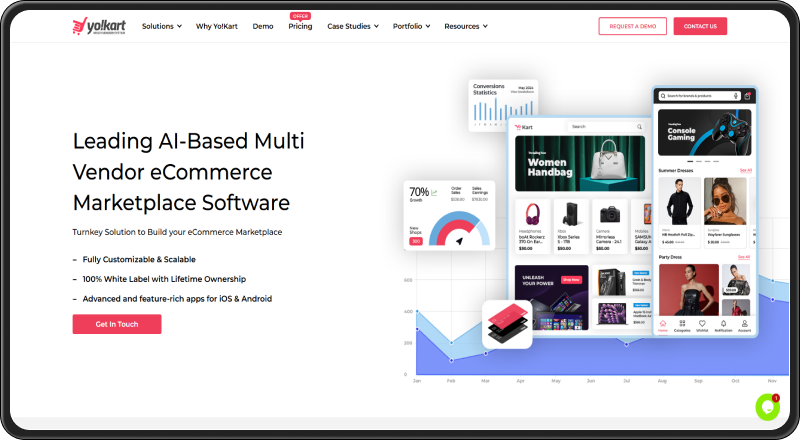
Yo!Kart is a purpose-built, self-hosted multi-vendor marketplace software developed by FATbit Technologies. Unlike generic eCommerce builders retrofitted with multi-vendor plugins, Yo!Kart is engineered from the ground up to efficiently manage marketplace operations, such as multiple vendors, complex commission structures, independent storefronts, and buyer-seller communication.
With over 5,000 global clients across 60+ countries, Yo!Kart has powered marketplaces in fashion, electronics, auto parts, B2B wholesale, grocery, and more. Its latest release, V10.3, introduces a refreshed UI/UX, AI-powered features, reimagined workflows, and new pre-integrated APIs, making it one of the most capable marketplace solutions available in 2026.
What genuinely sets Yo!Kart apart is its one-time licensing model, starting from just $1,249, you get a lifetime license, customizable source code ownership, ready-to-deploy iOS and Android apps, with 20+ pre-integrated payment gateways including Stripe Connect, PayPal, and digital wallets, and one year of free technical support. There are no recurring SaaS fees cutting your margins.
Furthermore, Yo!Kart supports B2B, B2C, and P2P marketplace models, making it versatile enough for any niche. Its white-label architecture means your marketplace looks and feels completely yours from day one.
Pricing:
- Starting from $1,249 (Lifetime License)
- Customizable Source Code Included
- 1-Year Free Technical Support
- Custom plans available
Best For: Startups, SMBs, and Enterprises across all verticals. Ideal for anyone who wants full ownership without monthly fees.
Yo!Kart has powered 5,000+ marketplaces globally, from Fortune 500 companies to first-time entrepreneurs.
Explore Yo!Kart’s Marketplace Features Live
2. Sharetribe: The SaaS Marketplace Builder for Non-Technical Founders
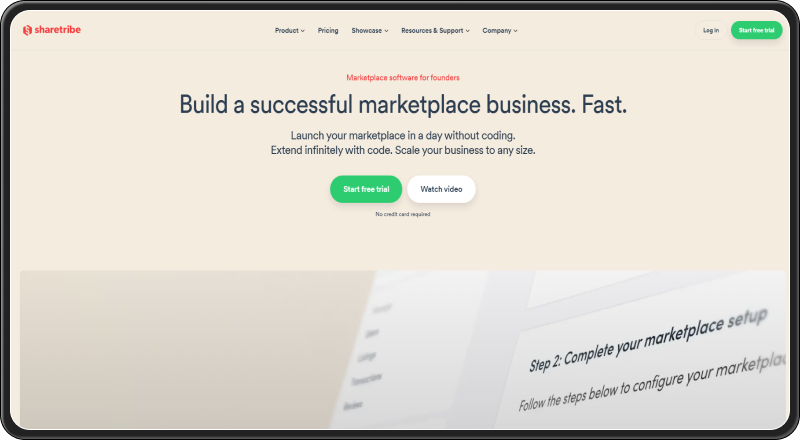
Sharetribe offers a no-code platform for building peer-to-peer and service marketplaces. Although it’s fast to set up and beginner-friendly, you’re locked into a SaaS subscription and have limited control over the underlying code. It is great for validating a concept quickly, but less suitable for serious scale or custom requirements.
Pricing:
- From $99/month
- No customizable source code
- Monthly SaaS fees apply
Best For: Early-stage founders testing marketplace ideas with minimal technical resources.
3. CS-Cart Multi-Vendor: A Robust PHP-Based Marketplace Solution
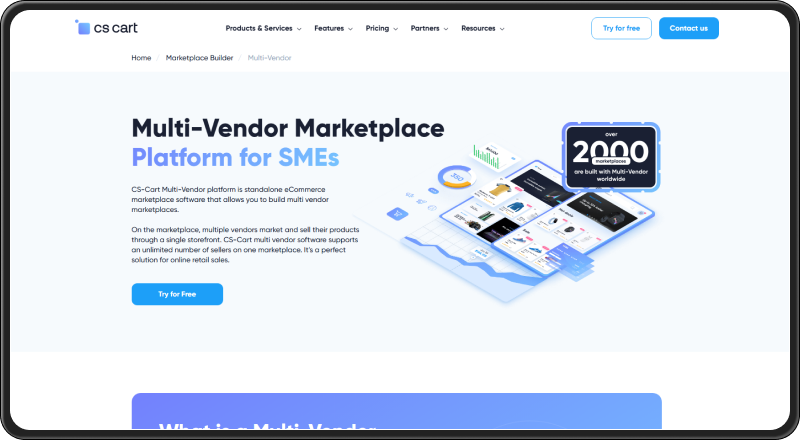
CS-Cart Multi-Vendor is a well-established, self-hosted marketplace solution with a solid feature set and a large developer community. It supports multiple storefronts, flexible commission models, and has over 1,400 add-ons available. However, its pricing is higher, and customization often requires developer involvement.
Pricing:
- From $3,590 (One-time)
- Add-ons cost extra
- Support plans available
Best For: Mid-size businesses with technical resources and budget for ongoing development.
4. Magento (Adobe Commerce): Enterprise-Grade eCommerce with Marketplace Extensions
Magento is the go-to platform for large enterprises with complex requirements. While not a native multi-vendor platform, the marketplace functionality can be extended with plugins. It requires significant technical expertise and development budget; thus, not suitable for rapid launch or small teams.
Pricing:
- Magento Open Source: Free
- Adobe Commerce: Custom pricing (often $20K+/year)
Best For: Large enterprises with dedicated development teams and six-figure budgets.
5. Shopify + Multi-Vendor Marketplace App: The World’s Most Popular eCommerce Platform, Extended
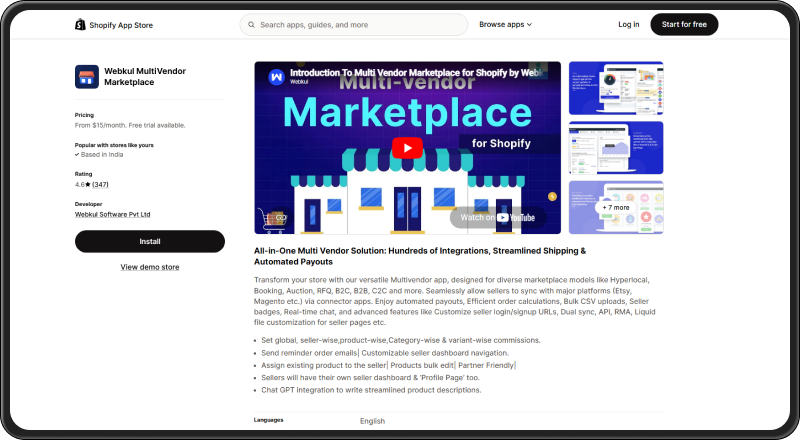
Shopify itself is a single-vendor platform, but third-party apps like Multi-Vendor Marketplace by Webkul extend its capabilities. While Shopify’s ecosystem is unmatched for ease of use, the multi-vendor functionality is grafted on, not native. Additionally, monthly fees add up quickly at scale.
Pricing:
- Shopify from $29/month + App from $10/month
- No customizable source code ownership.
Best For: Small businesses already using Shopify who want basic vendor functionality.
6. WooCommerce + Dokan/WCFM: WordPress-Based Marketplace with Plugin Power
WooCommerce, combined with plugins like Dokan or WC Vendor,s transforms a WordPress site into a multi-vendor marketplace. The setup is flexible and relatively affordable upfront, but performance at scale can be an issue, and you’re dependent on multiple plugins staying compatible.
Pricing:
- WooCommerce: Free
- Dokan from $149/year
- Hosting and maintenance extra
Best For: WordPress developers and budget-conscious startups comfortable with plugin management.
7. Marketplacer: Enterprise Marketplace Infrastructure
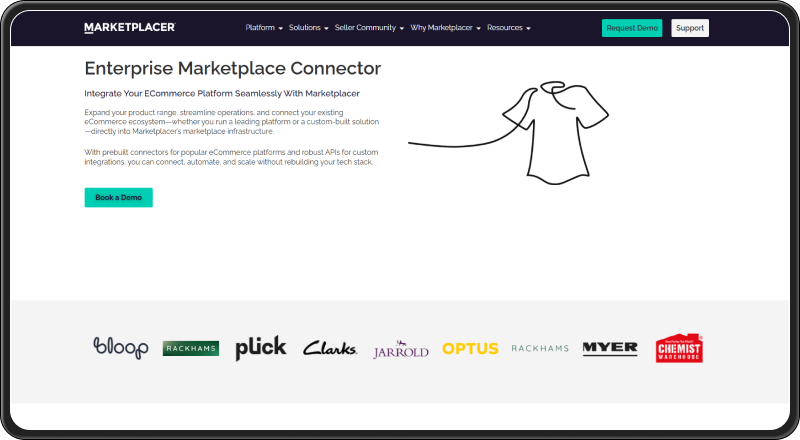
Marketplacer is a cloud-based enterprise marketplace platform used by global retailers like Myer and Skins. It’s built for large-scale, complex deployments and integrates with existing retail infrastructure. High cost makes it inaccessible for most startups.
Pricing:
- Custom enterprise pricing
- Typically $2,000+/month
Best For: Established retailers expanding into marketplace models with large operational budgets.
8. Spryker: Composable Commerce for Tech-Forward Enterprises
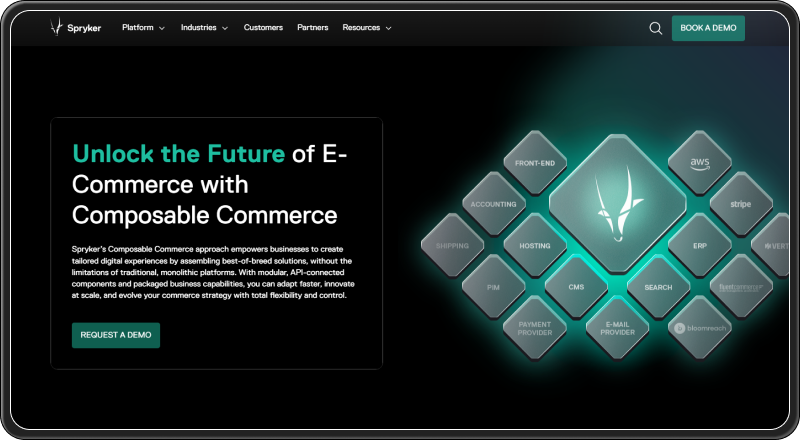
Spryker takes a modular, composable approach to commerce, ideal for enterprises that need deep customization. Its marketplace capabilities are strong, but implementation requires significant engineering effort and long timelines.
Pricing:
- Custom enterprise pricing
Best For: Digital-first enterprises and tech companies building complex marketplace ecosystems.
9. Vendasta: White-Label Digital Marketing Marketplace Platform
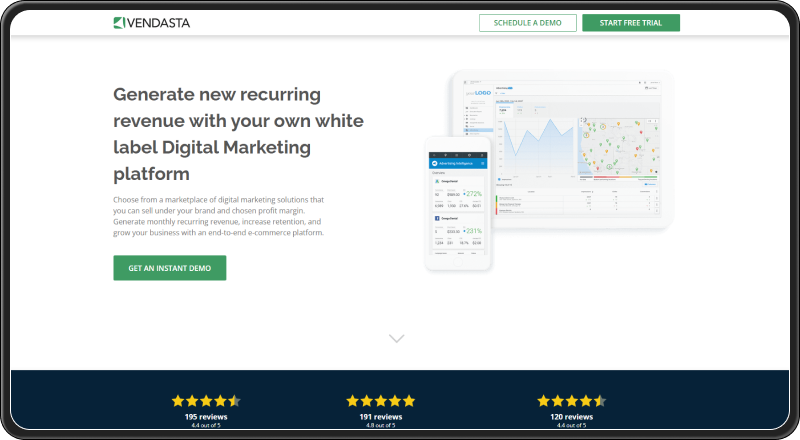
Vendasta is unique; it’s primarily a platform for agencies and resellers to build white-label digital product marketplaces for local businesses. It is not a typical product marketplace, but powerful in its niche.
Pricing:
- From $99/month (non-white-label)
- White-label plans available, starting from $499/month
Best For: Digital marketing agencies and resellers building local business service marketplaces.
10. Kreezalid: The Low-Code Marketplace Builder
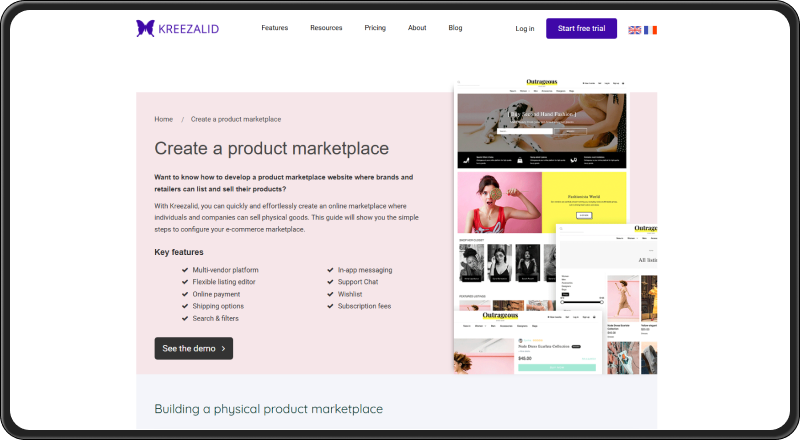
Kreezalid positions itself as a Sharetribe alternative with a slightly richer feature set for product and rental marketplaces. It operates as a hosted SaaS model, which means no server management. However, customization is limited, and you’re tied to monthly fees.
Pricing:
- From €249/month (approx. $291)
- SaaS model, no code ownership
Best For: Non-technical founders building niche rental or service marketplaces.
Launch Your Marketplace with Built-In Mobile Apps and AI Features
11. Arcadier: API-First Marketplace Platform
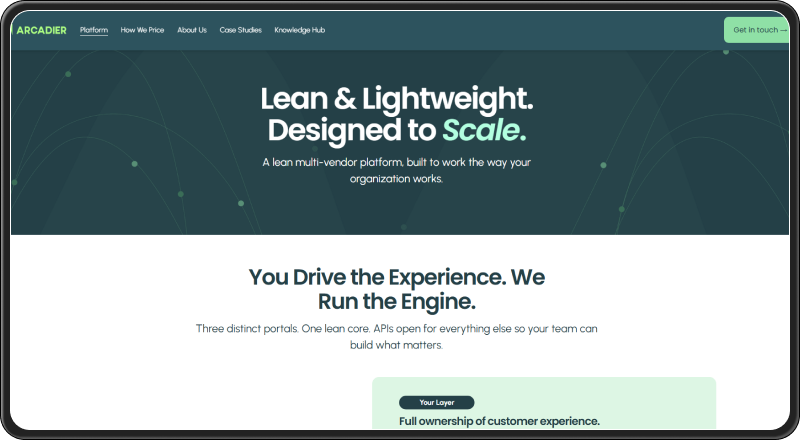
Arcadier provides a cloud-based marketplace builder with strong API capabilities, making it developer-friendly for custom integrations. Moreover, it supports product, service, and rental marketplace models. Pricing is subscription-based.
Pricing:
- Custom enterprise plans
Best For: Tech-savvy teams building service or rental marketplaces requiring custom integrations.
12. Near Me: Community and Peer-to-Peer Marketplace Platform
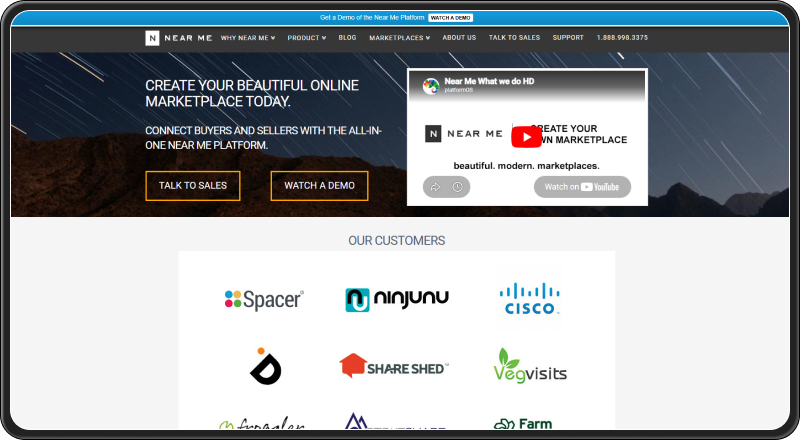
Near Me specializes in community-based and peer-to-peer marketplaces for services and rentals. Popular with sharing economy businesses. Its open-source roots give flexibility, but setup complexity can be daunting.
Pricing:
- Custom pricing
- Enterprise focus
Best For: Sharing economy startups and community marketplace builders.
13. Yclas: Open-Source Classifieds and Marketplace
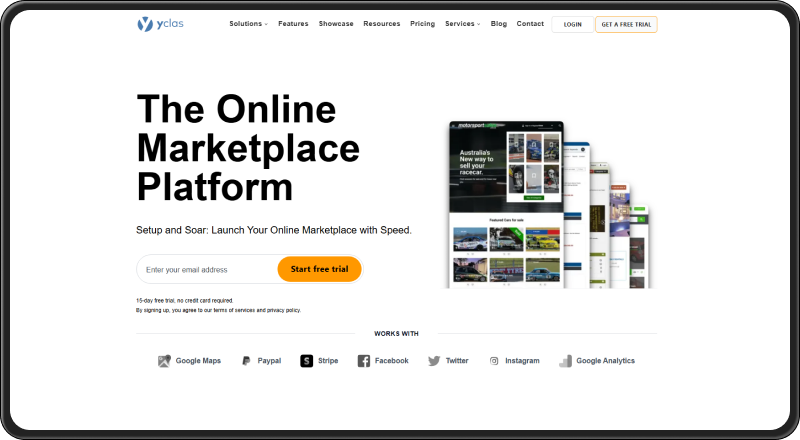
Yclas is a PHP-based open-source classifieds platform that can be extended into a marketplace. It’s free to self-host and highly customizable, but requires significant development effort to build something polished.
Pricing:
- From $99/month
Best For: Developers and technical founders building classified-style marketplaces on a budget.
14. Cocorico: Open-Source Rental and Service Marketplace
Cocorico is a Symfony-based open-source platform focused on rental and service bookings. This solution is well-suited for Airbnb-style marketplaces, but the technical setup is complex, and community support is limited.
Pricing:
- Free (Open Source)
- Custom dev required
Best For: Technical teams building rental or service booking marketplaces.
15. Mirakl: Enterprise Marketplace Operator Platform
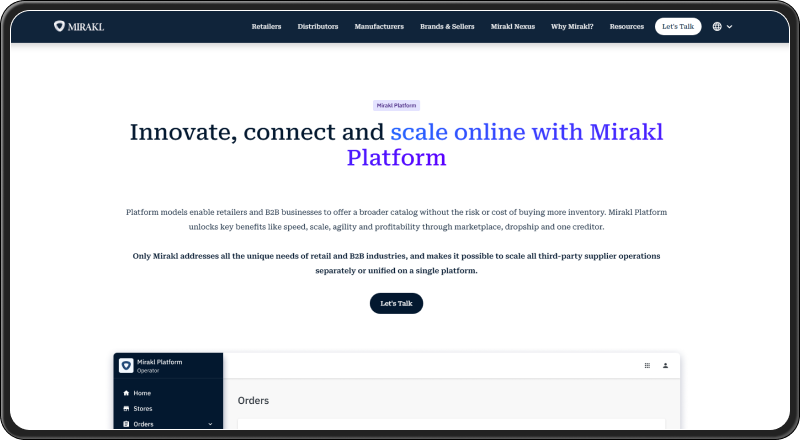
Mirakl powers the backend of major retail marketplaces for brands like Carrefour, Best Buy, and H&M. It’s an operator platform, meaning it integrates with your existing eCommerce system to add marketplace functionality. Undoubtedly powerful but extremely expensive.
Pricing:
- Custom enterprise pricing
- Highly complex implementation
Best For: Global retailers and enterprises adding marketplace capability to existing platforms.
Suggested Read: Mirakl vs Yo!Kart: The Best Multi-vendor Marketplace Software
16. OroMarketplace: B2B-Focused Marketplace by OroCommerce
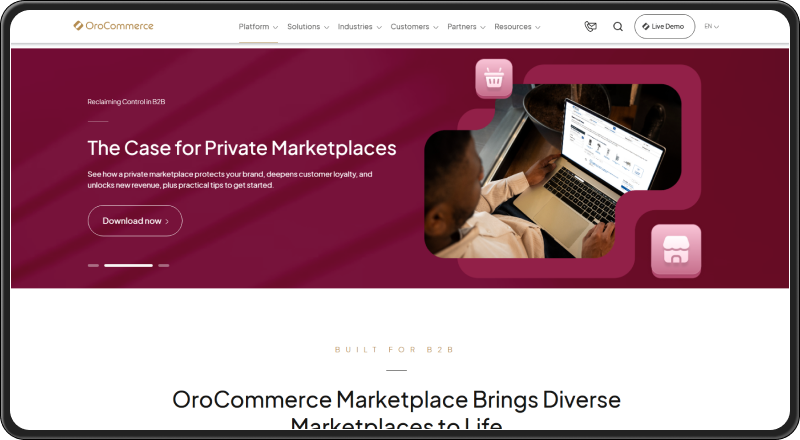
OroMarketplace is purpose-built for B2B marketplace models, including complex pricing, RFQ workflows, corporate accounts, and advanced product catalogs. Hence, a strong choice for wholesale or industrial marketplace operators.
Pricing:
- Custom pricing
- Enterprise deployment
Best For: B2B enterprises in wholesale, manufacturing, or distribution.
17. Webkul Multi Vendor Marketplace: Modular Marketplace Add-Ons for Multiple Platforms
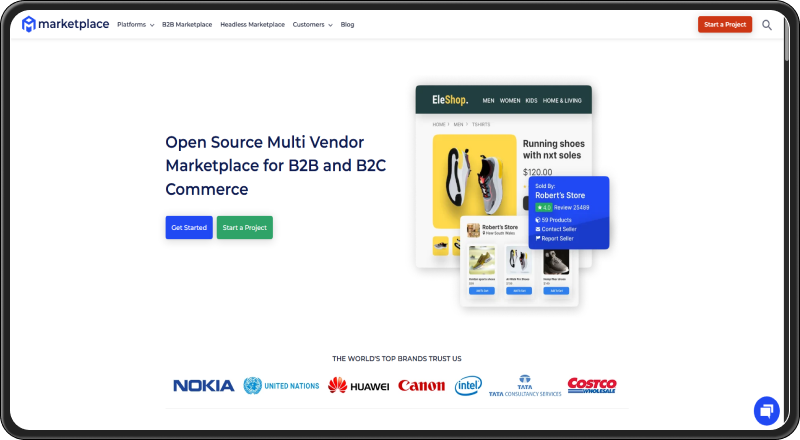
Webkul offers marketplace modules for Shopify, Magento, WooCommerce, and PrestaShop. While not a standalone platform, their extensions are highly regarded and widely deployed. However, the modular approach means you need a host platform to begin with.
Pricing:
- From $299 (one-time, per platform)
- Host platform costs are separate
Best For: Businesses already on Shopify, Magento, or WooCommerce wanting to add multi-vendor features.
18. OpenCart Multi-Seller: Affordable Marketplace via OpenCart
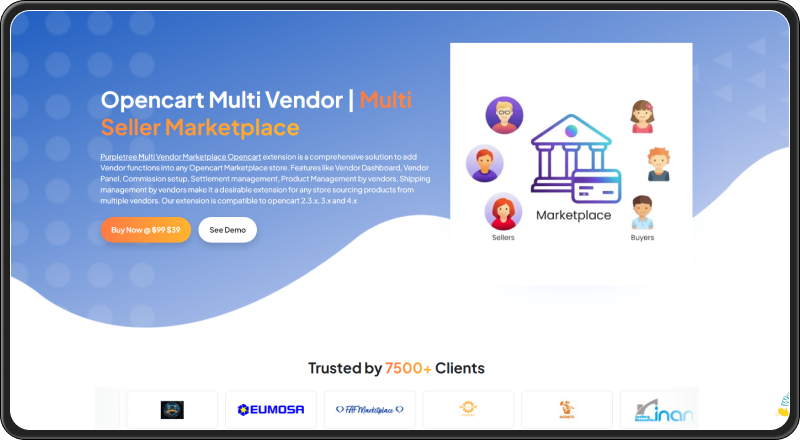
OpenCart is a free, lightweight eCommerce platform that can be extended with multi-vendor plugins. It’s affordable and easy to host, but the platform hasn’t kept pace with modern UX expectations and requires substantial customization.
Pricing:
- Free (Core)
- Multi-vendor extension from $99
Best For: Budget-conscious developers who want control without heavy investment.
19. Prestashop + Multi-Vendor Module: European eCommerce Platform with Marketplace Capability
PrestaShop is popular in Europe and Latin America. With the right marketplace module, it can support multiple vendors. Its open-source nature is a plus, but building a fully capable marketplace requires dedicated development effort.
Pricing:
- Free (Core)
- Marketplace module from €333
- Development costs vary
Best For: European businesses familiar with PrestaShop looking for marketplace capability.
20. BigCommerce Multi-Vendor (via Feedonomics/3P): Enterprise SaaS Commerce with Marketplace Extensions
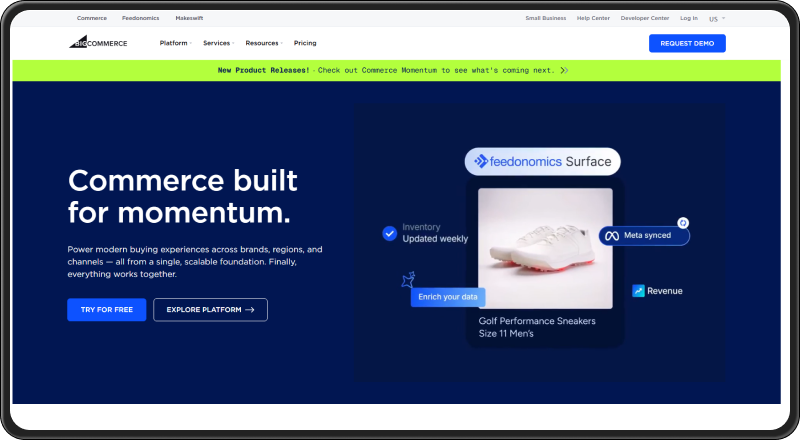
BigCommerce is a capable enterprise SaaS commerce platform. Multi-vendor functionality requires third-party apps, and the combination can work well for mid-to-large sellers. However, the SaaS model means recurring fees and limited customizable source code access.
Pricing:
- BigCommerce from $29/month
- App costs additional
Best For: Mid-to-large retailers extending existing BigCommerce stores with marketplace functionality.
Suggested Read: Yo!Kart vs BigCommerce: Which is an Ideal Option to Build a Multi-Vendor Marketplace
21. VTEX Marketplace: Composable Commerce for Latin American and Global Markets
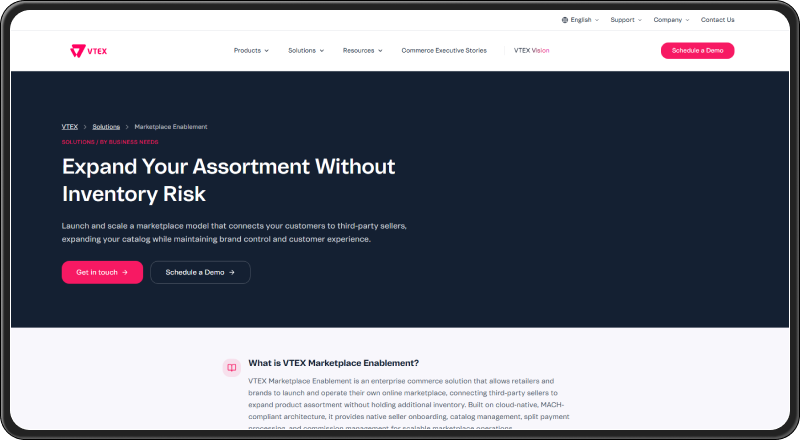
VTEX has built a strong reputation in Latin America and is expanding globally. Its marketplace module supports both B2B and B2C models. It’s an enterprise-grade, headless commerce platform with strong fulfillment integrations.
Pricing:
- Custom enterprise pricing
Best For: Enterprises in Latin America and global retailers seeking headless commerce.
22. Clarity eCommerce: Custom Enterprise Marketplace Development Framework
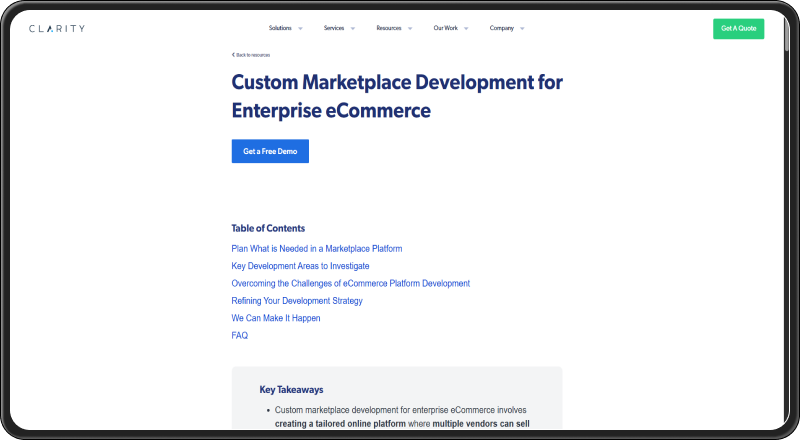
Clarity eCommerce is a NET-based platform for enterprises with complex B2B and B2C marketplace needs. It’s more of a development framework than a ready-to-launch product, and requires significant professional services investment.
Pricing:
- $599/month
- Micro-enterprise deployments
Best For: U.S.-based enterprises needing deeply customized marketplace solutions.
Avoid Recurring Fee and Own Your Marketplace
23. GreenRope (Marketplace Suite): CRM-Led Marketplace for Service Businesses
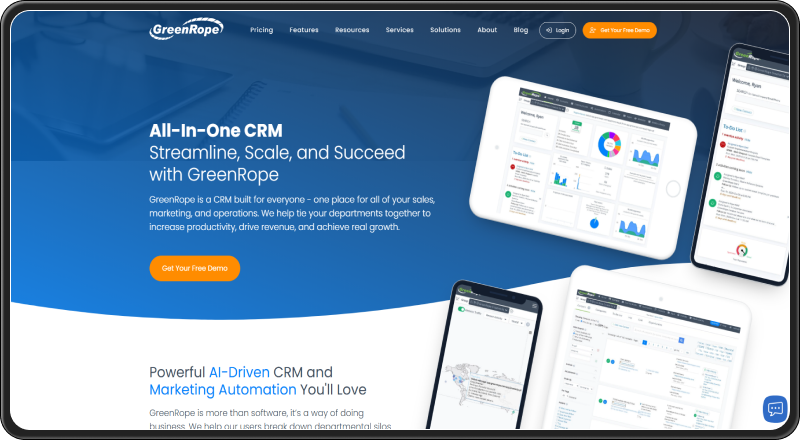
GreenRope takes a CRM-first approach to marketplace management. It’s ideal for service-based marketplaces where customer relationship data is critical, though it lacks the robustness needed for large product marketplaces.
Pricing:
- From $99/month
- All-in-one CRM + marketplace
Best For: Service businesses and consulting firms building client-facing marketplaces.
24. Shuup: Open-Source Multi-Vendor Marketplace (Python/Django)
Shuup is an open-source multi-vendor marketplace platform built on Python/Django. It has solid marketplace features out of the box and is free to use, but the technical setup is demanding, and community support is relatively small.
Pricing:
- Free (Open Source)
- Commercial license from $299/month
Best For: Python developers and technical teams who want full control without licensing costs.
25. Storeden: Italian Multi-Channel eCommerce with Marketplace Tools
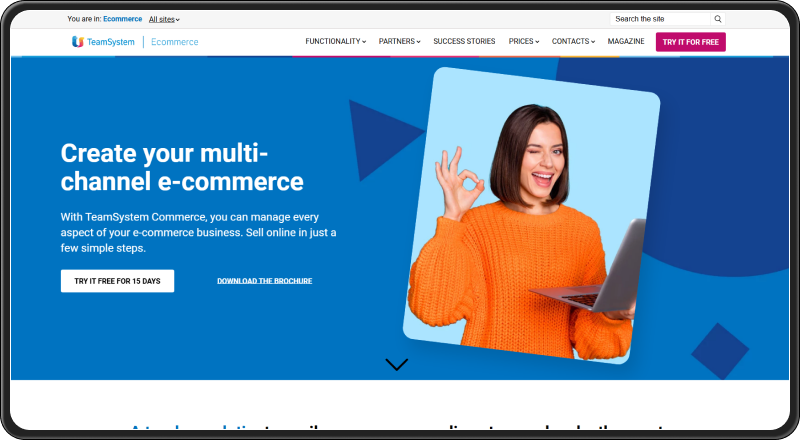
Storeden is a multi-channel eCommerce platform popular in Italy and Southern Europe. It supports marketplace-style features and multi-channel selling. Limited global presence and language support can be a constraint.
Pricing:
- From €29/month
- SaaS model
Best For: Italian and Southern European businesses building multi-channel marketplaces.
26. StoreHippo: Mobile-First Multi-Vendor eCommerce Platform
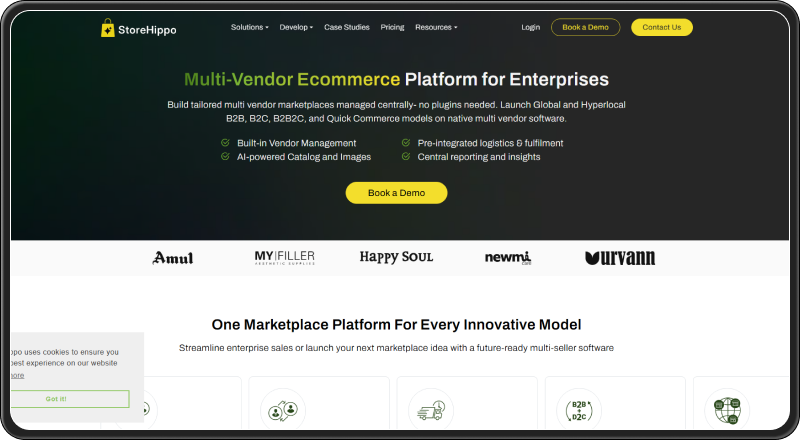
StoreHippo is an Indian SaaS platform designed with a mobile-first architecture. It supports multi-vendor, multi-store, and multi-lingual setups and is gaining traction in Asian markets. However, the SaaS model limits flexibility for complex use cases.
Pricing:
- From ₹15,000/month (~$157)
- SaaS, no customizable source code.
Best For: Indian and Southeast Asian businesses wanting a mobile-first marketplace solution.
27. Shoppingfeed: Feed Management and Marketplace Distribution Tool
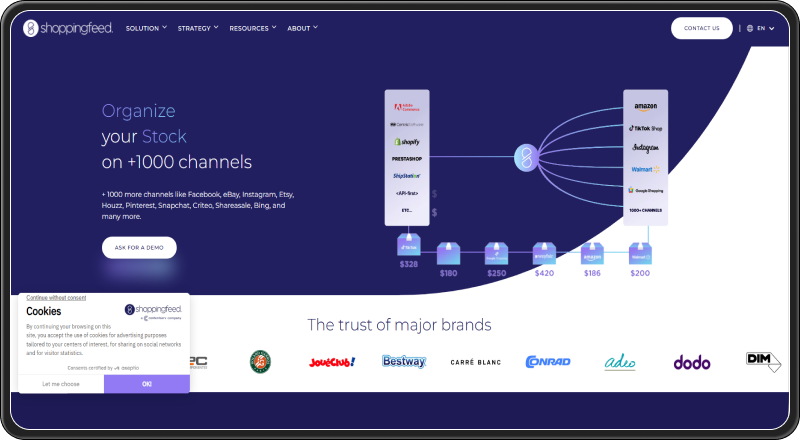
Shoppingfeed focuses on syndicating product listings across multiple selling channels. This solution is not built for a standalone marketplace. Useful for retailers who want to sell on Amazon, eBay, and other platforms simultaneously.
Pricing
- Channel syndication, not marketplace building
Best For: Multi-channel retailers distributing products across existing external marketplaces.
28. Kooomo: Cloud Commerce Platform with Marketplace Capabilities
Kooomo is an Irish SaaS commerce platform with multi-vendor marketplace functionality targeting mid-size retailers. It has solid European payment and tax integrations and a growing partner ecosystem.
Pricing:
- Custom pricing
- Enterprise-focused SaaS
Best For: European mid-size retailers building marketplace functionality into existing commerce operations.
29. X-Cart (with Multivendor Module): PHP eCommerce with Marketplace Extension
X-Cart is a PHP-based eCommerce platform that supports marketplace functionality via its MultiVendor add-on. It’s self-hosted, offers customizable source code access, and has a strong payment integration ecosystem. Less actively developed than some rivals.
Pricing:
- X-Cart + Multivendor from ~$495
- Hosting costs separate
Best For: Technical teams wanting a self-hosted PHP marketplace with code access.
30. Mailchimp Open Commerce: JavaScript-First Headless Marketplace Framework
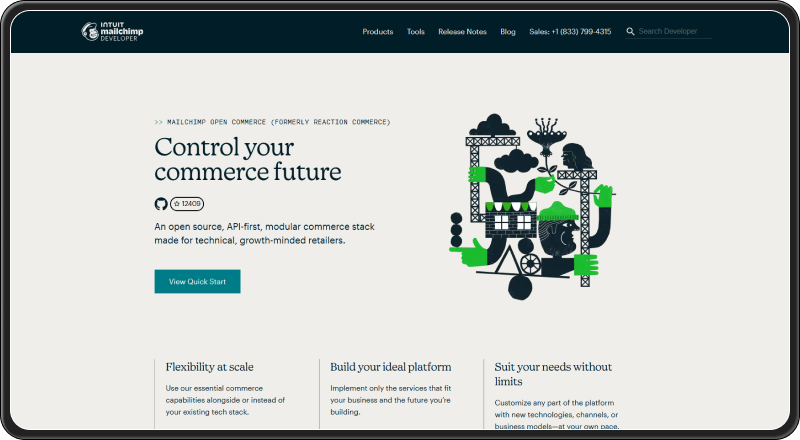
Reaction Commerce is a modern, API-first open-source platform built with Node.js and React. Highly flexible for developers, it supports multi-vendor use cases but is a framework, not a turnkey marketplace solution. Best for engineering-led teams with significant dev capacity.
Pricing:
- Free (Open Source)
- Significant custom dev required
Best For: Engineering-led startups and agencies building custom marketplace experiences.
Multi-Vendor Marketplace Software Comparison Table
Use this quick-reference table to compare the top 6 software side by side across the criteria that matter most.
| Feature | Yo!Kart | Sharetribe | CS-Cart | Magento | WooCommerce MV | Shopify+ |
| Customizable Source Code Ownership | Yes | No | Yes | Yes | Yes | No |
| One-Time License Fee | From $1,249 | Monthly only | From $1,450 | Dev cost | Plugin cost | Monthly |
| Ready Mobile Apps (iOS/Android) | Included | Extra cost | Add-on | Custom dev | Plugin needed | Extra cost |
| Multi-Vendor | Native | Native | Native | Extension | Plugin | Not native |
| Payment Gateways | Pre-integrated | Limited | Yes | Extensions | Plugins | Yes |
| AI-Powered Features | Yes (V10.3) | No | Limited | Limited | No | Basic |
| B2B/B2C/P2P Marketplace | All three | Limited | Mostly B2C | With dev | Plugins | Limited |
| 1-Year Free Technical Support | Yes | Paid plans | Paid | Community | Community | Basic |
| White Label | Yes | Partial | Yes | Yes | Yes | Shopify brand |
| Monthly SaaS Fees | None | Recurring | None | None | None | Recurring |
| Scalability (Enterprise) | High | Medium | High | Very High | Medium | High |
| Ease of Setup | Fast | Fast | Medium | Complex | Medium | Fast |
| Global Client Base | 5,000+ | 1,000+ | 35,000+ | 260,000+ | 5M+ (general) | 4.6M+ (general) |
Why is Yo!Kart the Best Multi-Vendor Marketplace Platform in 2026?
We’ve evaluated 30 multi-vendor marketplace software. Each one has its own strengths and limitations, but Yo!Kart emerges as one of the best readymade marketplace software, due to various reasons. Let’s have a look at them:
1. You Own Your Platform, Forever
Most SaaS platforms charge you monthly for software you’ll never own. But with Yo!Kart’s one-time licensing model, starting at $1,249, you receive the customizable source code and a lifetime license. It does not charge any recurring fees. Hence, your marketplace generates revenue for you, not your software provider.
2. Purpose-Built for Multi-Vendor Operations
Unlike Shopify or WooCommerce, which require plugins to add marketplace features, Yo!Kart is built for multi-vendor commerce. Vendor onboarding, commission management, independent storefronts, seller analytics, and buyer-seller messaging are all native features, not added as afterthoughts.
3. Ready Mobile Apps Included
With 75% of global eCommerce traffic coming from mobile devices in 2026, mobile apps are no longer optional. Yo!Kart packages include ready-to-deploy iOS and Android apps for both buyers and sellers, apps that would cost tens of thousands of dollars to develop from scratch.
4. 20+ Payment Gateways Pre-Integrated
Different geographies rely on different payment methods. Considering that, Yo!Kart supports 20+ payment gateways, including Stripe Connect, PayPal, digital wallets, Pay at Store, and Cash on Delivery.
5. AI-Powered Features in V10.3
Yo!Kart’s latest version introduces AI-powered features to enhance the buyer journey and marketplace operations. As 70% of eCommerce platforms are expected to employ AI solutions by 2026, Yo!Kart is keeping pace with where the industry is heading.
6. Supports B2B, B2C, and P2P Models
Whether you’re building an Etsy-style artisan marketplace, an Amazon-style general marketplace, or an Alibaba-style B2B wholesale platform, Yo!Kart’s architecture accommodates all three models.
7. 100% White Label
Your marketplace should carry your brand, not your provider’s. Yo!Kart is fully white-labelled, meaning your customers see only your brand. No ‘Powered by’ watermarks, no third-party branding, no compromise on your brand identity.
8. Market-Tested by 5,000+ Clients Globally
Yo!Kart has powered over 5,000 marketplaces across 60+ countries, from venture-backed startups to Fortune 500 companies. Notable clients include UNI Diamonds, eWheelers, Creative Africa, MyCart, and EU-DevNet. This global track record is a testament to the solution’s reliability and versatility.
9. 1-Year Free Technical Support
Every Yo!Kart purchase includes one year of free technical support. Beyond that, FATbit Technologies’ in-house agile team is available for customizations, new feature development, and ongoing support, ensuring your marketplace evolves alongside your business.
10. True Cost Efficiency Over Time
Compare the $1,249 one-time cost (Yo!Kart GoQuick Package) against a SaaS competitor at $299/month. Over five years, a SaaS subscription could cost you $17,940, whereas Yo!Kart costs $1,249. The math is clear.
Make the Smart Investment Move for Your Marketplace
Who Is Yo!Kart Built For?
Yo!Kart is purpose-designed to serve a wide spectrum of marketplace builders, including:
- First-time entrepreneurs launching a niche marketplace with a limited upfront budget.
- Funded startups that need a scalable foundation without wasting runway on custom development.
- SMBs expanding from single-vendor stores into full multi-vendor operations.
- Enterprises building industry-specific B2B or B2C marketplaces at scale.
- International businesses that need multi-lingual, multi-currency marketplace infrastructure.
Final Verdict
The opportunity of launching an eCommerce marketplace in 2026 is enormous. Global marketplace sales are approaching $7 trillion, mobile commerce is accelerating, and new verticals from B2B wholesale to secondhand goods are ripe for disruption.
For that, choosing the right multi-vendor marketplace software is the single most important technical decision you’ll make. Of all 30 platforms reviewed, Yo!Kart consistently delivers the best combination of feature depth, total cost efficiency, deployment speed, and true ownership. Hence, it is not just the most affordable option but the most complete, flexible, and business-aligned choice for anyone serious about building a marketplace.
Build, Own, and Scale Your Multi-Vendor Marketplace
Get StartedPopular Posts